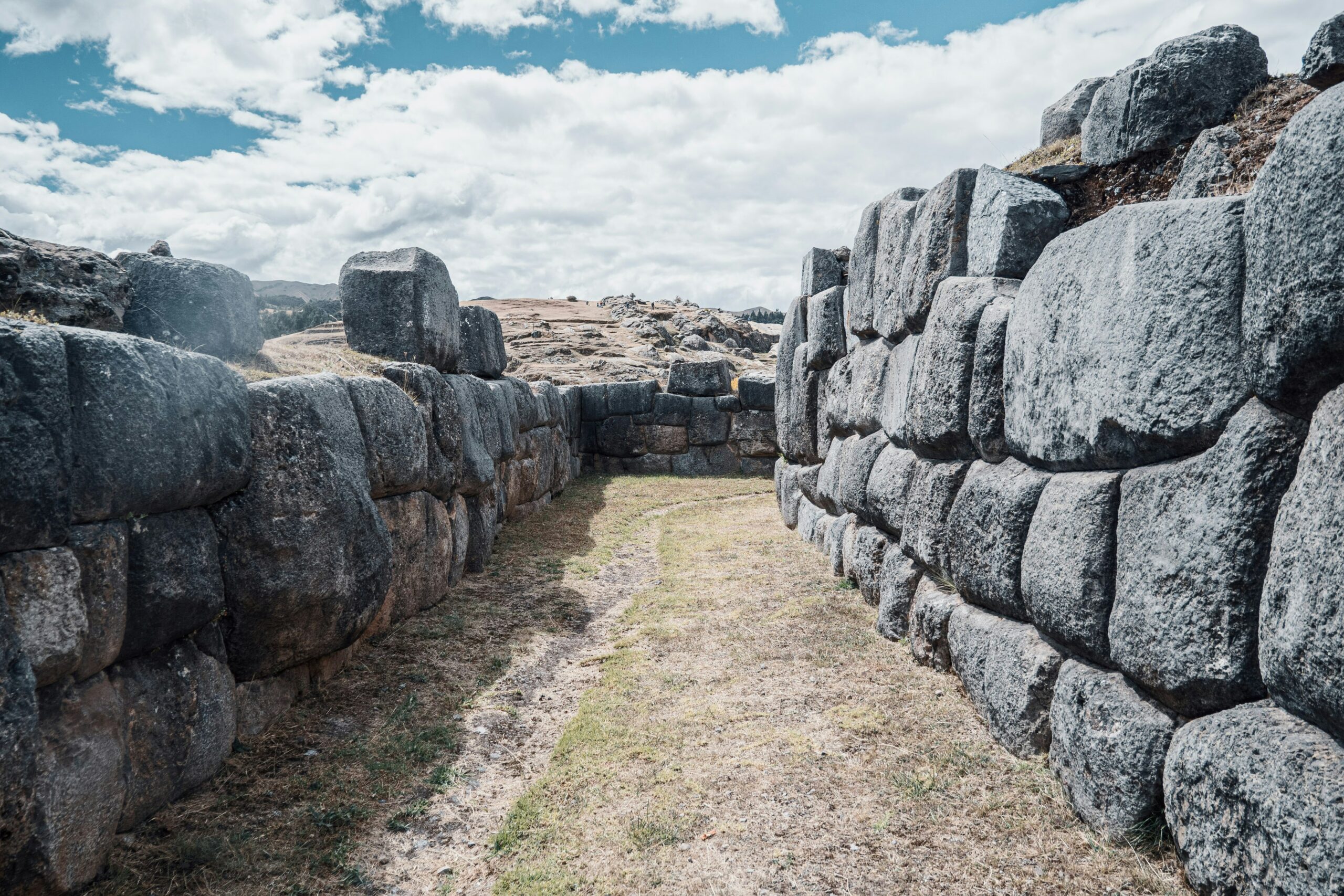
The enduring allure of ancient civilizations often lies in their architectural marvels, structures that have defied the ravages of time and continue to inspire awe. Among these, the practice of polygonal masonry stands out as a testament to ingenuity and mastery of stonework. Unlike the precise, interlocking rectangular blocks of ashlar masonry, polygonal masonry features irregularly shaped stones, fitted together with uncanny accuracy to form robust and visually striking walls. This article delves into the ancient techniques employed to craft these remarkable structures, revealing the secrets behind their strength and aesthetics.
Polygonal masonry, characterized by its use of stones with multiple, often curvilinear, faces, represents a fascinating deviation from more standardized construction methods. Its defining feature is the precise fitting of these irregularly shaped stones, with the edges of each block meticulously worked to conform to the contour of its neighbors. This creates a visually dynamic surface, where the interplay of light and shadow accentuates the organic flow of the stonework. The absence of mortar in many of these constructions further emphasizes the incredible precision required; the stones are held in place by their sheer weight and the intimate nature of their interlocking joints.
Defining Characteristics and Variations
The term “polygonal” itself hints at the geometric complexity involved. While some examples might feature a predominance of stones with four to six sides, truly masterful polygonal masonry often incorporates blocks with an astonishing number of facets, seamlessly flowing into one another. The degree of irregularity can vary significantly. Some structures exhibit a more restrained form of polygonal work, where the stones are somewhat blocky but still exhibit distinct, non-rectangular shapes. Others, particularly the most celebrated examples, showcase a breathtaking level of complexity, with stones curving and undulating to form the walls.
The Purpose Behind the Practice: Strength and Aesthetics
The adoption of polygonal masonry was not merely an aesthetic choice; it was underpinned by practical considerations. The irregular interlocking of stones provided exceptional structural integrity. Unlike ashlar masonry, where a single fractured block could compromise a significant portion of the wall, in polygonal masonry, the load was distributed across a network of precisely fitted elements. This made these structures remarkably resistant to seismic activity and other forces that could destabilize more conventionally built walls. Furthermore, the sheer weight and density of the tightly fitted stones contributed to their stability and longevity.
Distinguishing Polygonal from Other Masonry Techniques
It is crucial to differentiate polygonal masonry from other ancient stoneworking traditions. Ashlar masonry, as mentioned, relies on finely dressed rectangular blocks, often laid in regular courses with thin mortar joints. Cyclopean masonry, while also utilizing large stones, often features rough-hewn, irregularly placed blocks with significant gaps between them, sometimes filled with smaller stones or earth. Polygonal masonry occupies a unique middle ground, demanding a high degree of finishing and precision in fitting, but rejecting the rectilinear uniformity of ashlar.
Historical and Geographical Spread
Polygonal masonry is not confined to a single region or culture. While it is famously associated with ancient Greece, particularly the Mycenaean civilization and later Classical periods, similar techniques have been observed in other parts of the world. Examples can be found in the Inca Empire of South America, where the stonework of Machu Picchu and Sacsayhuamán showcases an almost unbelievable level of precision in fitting massive, irregularly shaped stones. This widespread adoption, despite vast geographical distances and the apparent lack of direct cultural exchange, hints at fundamental principles of engineering and construction that transcend specific societies.
Polygonal masonry, an ancient construction technique characterized by the precise fitting of irregularly shaped stones without the use of mortar, has intrigued historians and archaeologists alike. This method, often seen in the ruins of the Inca civilization and other pre-Columbian cultures, showcases remarkable engineering skills and an understanding of geology. For those interested in the broader implications of historical construction techniques on modern economies, a related article discusses Mexico’s potential rise as an economic superpower, exploring how its rich cultural heritage and innovative practices could influence its future. You can read more about this topic in the article here: Is Mexico the New Economic Superpower?.
The Quarrying and Initial Shaping: Extracting the Raw Material
The journey of polygonal masonry begins long before the stones are lifted into place. The quarrying process, the extraction of massive stone blocks from the earth, was a monumental undertaking in itself, requiring immense labor and sophisticated understanding of geological properties. The subsequent initial shaping of these quarried behemoths was the crucial first step in preparing them for their intricate destiny.
Locating and Accessing Suitable Stone Deposits
The success of any significant stoneworking project hinges on the availability of suitable raw materials. Ancient builders meticulously identified their quarries, seeking out geological formations that offered workable stone with the desired density and durability. Proximity to the construction site was also a major consideration, as the transportation of massive blocks over long distances was prohibitively difficult and resource-intensive. The type of stone itself played a role; harder stones like granite and basalt were more challenging to work but offered greater longevity, while softer stones like limestone were easier to shape but susceptible to erosion.
Traditional Quarrying Techniques: Wedges, Chisels, and Fire
The methods employed to extract stone from the earth were remarkably ingenious, relying on basic physics and a deep understanding of stone’s properties. One common technique involved driving wooden wedges into natural fissures within the rock. These wedges would then be soaked with water, causing them to expand and exert pressure, widening the cracks and eventually cleaving the stone. Another method involved using metal chisels and hammers to painstakingly chip away at the rock face, gradually freeing the desired block. Fire-setting was also employed; large fires were built against the rock face, heating the stone. Rapid cooling, often by dousing the hot rock with water, caused thermal shock and cracking, allowing for easier extraction.
The Role of Observation and Geological Knowledge
It is clear that ancient quarry masters possessed a sophisticated, albeit empirical, understanding of geology. They could recognize weaknesses in the rock, predict how it would fracture, and select the most advantageous locations for extraction. This knowledge was likely passed down through generations, refined by practical experience rather than formal scientific study. The choice of quarry and the techniques employed directly influenced the size and initial shape of the blocks, setting the stage for the later, more intricate shaping processes.
Initial Breakdown and Transport Challenges
Once a large block was freed, its immense weight presented the next significant hurdle. Primitive tools and immense manpower were necessary for the initial breakdown into more manageable pieces and for their subsequent transport. Levers, rollers, and sledges were likely employed, often assisted by teams of oxen or human laborers. The sheer logistical challenge of moving these materials underscores the immense dedication and organizational capabilities of ancient societies.
The Art of the Fit: Precision Shaping and Dressing

Once quarried and roughly shaped, the true artistry of polygonal masonry began to emerge in the meticulous process of shaping and dressing each individual stone. This phase demanded extraordinary skill, patience, and an unwavering commitment to achieving an exact fit. It was a process of subtraction, where material was carefully removed to create the desired contours and interlocking surfaces.
Tools of the Trade: Chisels, Mallets, and Abrasives
The primary instruments for this delicate work were a variety of chisels, each designed for specific tasks, from rough shaping to fine finishing. These were typically made of bronze or iron. Mallets, usually made of wood, were used to strike the chisels. For achieving exceptionally smooth surfaces and precise angles, abrasive materials like sand and water were employed, acting as a natural grinding paste. The repetitive striking of chisel against stone, guided by practiced hands, was the soundscape of the polygonal mason’s workshop.
The Intuitive Nature of Geometric Matching
Unlike the straightforward geometry of rectangular blocks, polygonal masonry involved a more intuitive and complex geometric matching process. A mason would select a stone and then, by dry-fitting it against its intended neighbors, would carefully observe the gaps and high points. Using this visual feedback, the stone would be removed, worked upon with their tools, and then re-fitted. This iterative process of fitting, marking, striking, and re-fitting continued until the stone conformed perfectly to its intended position, creating a tight, seamless joint without the need for mortar.
Developing the Complex Facets and Curves
The creation of the multifaceted surfaces of polygonal blocks was a testament to the mason’s ability to visualize and execute complex three-dimensional forms. Each facet had to be angled and positioned precisely to mate with the adjacent stones. This often involved creating subtle curves and undulations, especially in the most refined examples, to ensure maximum contact area and load distribution. The skill was in understanding how the angles of one stone would complement the angles of another, creating a stable and interlocking system.
The Unseen Skill of Negative Space Creation
Much of the mason’s skill lay in understanding and working with “negative space.” They weren’t just shaping the stone itself but were also, by extension, defining the precise shape of the void that the stone would occupy. This required a deep spatial awareness and the ability to project how the final interlocking would occur. The accuracy was such that in many cases, it would be impossible to insert a sheet of paper between adjacent stones.
The Importance of Trial and Error (and Experience)
While precision was paramount, the process was undoubtedly not without its elements of trial and error, especially in the early stages of a mason’s career. However, for experienced masters, this minimized potential mistakes that could render a valuable, massive stone unusable. The accumulated experience of hundreds of years of this craft would have led to the development of highly refined techniques and an almost instinctual understanding of how to work the stone.
The Art of Assembly: Building with Precision

The painstaking shaping of individual stones culminates in the equally intricate process of assembly. This is where the true magic of polygonal masonry is revealed, as the seemingly random collection of irregular blocks transforms into a solid, cohesive, and aesthetically breathtaking wall. The techniques employed to lift, position, and interlock these massive stones were as vital as the shaping itself.
Hoisting and Positioning Massive Blocks
The sheer weight of the stones presented a significant challenge for the assembly process. Ancient builders likely utilized a combination of ramps, levers, and sheer manpower to lift and maneuver the blocks into their intended positions. Wooden scaffolding would have been erected to allow workers to access higher sections of the wall. The precise maneuvering of each stone was critical; a slight miscalculation could lead to a costly and time-consuming correction.
The Zero-Mortar Technique: Gravity and Interlocking
A hallmark of much of the finest polygonal masonry is the complete absence of mortar. This is not due to a lack of awareness of its existence but rather a deliberate choice to rely on the sheer weight and the intricate interlocking of the stones to hold the structure together. The precisely shaped faces of each block would mate with their neighbors, creating a tight bond where friction and gravity played crucial roles in maintaining stability. This zero-mortar approach significantly enhances the longevity and seismic resistance of the structures.
Creating Stability Through Interlocking Patterns
The inherent stability of polygonal masonry stems from the intricate ways in which the stones are interlocked. Unlike ashlar masonry, where horizontal courses are paramount, polygonal walls often exhibit a more complex tapestry of interlocking elements. Adjacent stones would not only share horizontal contact but would also be keyed into each other, creating a lattice-like effect that distributed stresses evenly. The irregular shapes, when fitted perfectly, created a strong, unified mass.
The Role of Gravity and Friction
Gravity is the silent, yet powerful, force that underpins the stability of these structures. The immense weight of the stones presses them firmly together, creating significant friction between their surfaces. This friction, combined with the interlocking of their irregular forms, prevents any single stone from shifting or toppling. The tighter the fit, the greater the friction and the more stable the wall becomes.
Ensuring Structural Integrity Through Careful Placement
The placement of each stone was not arbitrary. Builders would have carefully considered the weight and shape of each block in relation to its position in the wall. Larger, heavier stones might have been placed at the base to provide a solid foundation, while lighter stones could be used higher up. The pattern of interlocking would have been designed to progressively strengthen the wall as it rose, ensuring that no single point of weakness could compromise its integrity.
Polygonal masonry, a technique characterized by its intricate stonework and precise fitting, has fascinated historians and archaeologists alike. The construction methods used in these ancient structures often reflect a deep understanding of geology and engineering. For those interested in exploring the broader implications of ancient civilizations and their environmental challenges, a related article discusses the impact of climate on historical societies and can be found here: ancient climate collapse. This connection highlights how the ingenuity of past builders was not only a response to their immediate surroundings but also a reflection of the changing world around them.
Advanced Sophistication and Refinements: Beyond Basic Fitting
| Technique | Details |
|---|---|
| Material | Stone blocks cut and shaped to fit together without mortar |
| Construction | Blocks arranged in polygonal patterns for stability |
| Tools | Chisels, hammers, and other hand tools for shaping the stones |
| Time Period | Commonly used in ancient civilizations such as the Inca and Mycenaean |
While the fundamental principles of quarrying, shaping, and assembly are crucial, truly exceptional examples of polygonal masonry showcase advanced techniques and refinements that elevate them to the realm of art. These are the subtle but significant details that distinguish masterful craftsmanship from merely competent construction.
The Use of Curvilinear and Concave/Convex Surfaces
Some of the most awe-inspiring polygonal structures feature stones with not only multifaceted, but also distinctly curvilinear, concave, and convex surfaces. This suggests an even more profound understanding of geometry and stone manipulation. The ability to create these flowing, organic shapes that still interlocked perfectly speaks to an extraordinary level of skill and an almost artistic sensibility. It transformed the wall from a static barrier into a dynamic, sculptural element.
The “Jigsaw Puzzle” Analogy and its Limitations
The analogy of a jigsaw puzzle is often used to describe polygonal masonry, but it is important to recognize its limitations. While it captures the idea of a complex fit, a jigsaw puzzle is designed to be disassembled and reassembled. Polygonal masonry, by contrast, is intended to be a permanent, monolithic structure. The shapes are not arbitrary cuts but are meticulously designed to create a load-bearing system.
Incorporating Intricate Interior Details
The sophistication of polygonal masonry sometimes extended beyond the visible exterior. Evidence suggests that in some instances, internal structures and drainage systems were also integrated using similar precise stoneworking techniques. This indicates a holistic approach to construction where every element was carefully considered and executed with the same level of dedication.
The Mystery of the Measuring and Marking Systems
While the evidence of their skill is undeniable, the precise methods used by ancient masons for measuring and marking the complex angles and curves remain somewhat mysterious. It is likely that they employed sophisticated systems of plumb bobs, levels, and sighting tools, perhaps combined with carefully crafted templates. However, the exact nature of these instruments and their application continues to be a subject of scholarly debate and fascination.
Recognizing the Human Element: Skill, Dedication, and Time
Ultimately, the extraordinary achievements in polygonal masonry are a testament to the human capacity for immense skill, unwavering dedication, and an almost unfathomable investment of time. These structures were not built quickly; they were the product of generations of accumulated knowledge and the painstaking labor of countless skilled individuals. The enduring presence of these buildings speaks volumes about the ingenuity and perseverance of our ancient ancestors.
Legacy and Enduring Influence: The Enduring Power of Polygonal Masonry
The legacy of polygonal masonry extends far beyond the physical structures that remain. Its ingenuity and aesthetic appeal have left an indelible mark on architectural history, inspiring builders and artists for centuries. The techniques, though often challenging to replicate, continue to be studied and admired, offering valuable insights into the fundamental principles of construction and the enduring power of human craftsmanship.
Inspiration for Modern Architects and Engineers
While modern construction relies on different materials and methods, the principles of precise interlocking and load distribution inherent in polygonal masonry continue to inform contemporary architectural and engineering practices. The pursuit of structural integrity and aesthetic harmony, so evident in these ancient works, remains a core goal for designers today. Some contemporary architects even draw direct inspiration from the visual language of polygonal stonework, incorporating similar textures and patterns into their designs.
Preserving a Rich Architectural Heritage
The ongoing preservation and study of polygonal masonry sites are crucial for safeguarding our architectural heritage. These structures are not merely piles of stones; they are tangible links to the past, offering invaluable insights into the lives, technologies, and artistic sensibilities of ancient civilizations. Understanding how these walls were built helps us appreciate the challenges and triumphs of our predecessors.
The Symbolism of Strength and Durability
Polygonal masonry has become a symbol of strength, durability, and timelessness. The very act of fitting irregularly shaped stones so perfectly to create impenetrable walls speaks to a mastery of materials and an understanding of fundamental forces. This resonates with viewers, offering a sense of permanence and resilience that is often sought after in our ever-changing world.
The Unanswered Questions and Future Research
Despite extensive study, many questions surrounding the precise techniques of polygonal masonry remain unanswered. Future research, employing advanced imaging technologies and scientific analysis, holds the promise of unlocking even more secrets of these ancient wonders. The ongoing fascination with these structures ensures that the study and appreciation of polygonal masonry will continue for generations to come.

The Greatest Technology Humanity Ever Lost
FAQs
What is polygonal masonry?
Polygonal masonry is a construction technique where stones are cut and fit together in irregular, angular shapes to form a wall or structure. This style of masonry was commonly used in ancient civilizations such as the Inca, Greek, and Roman cultures.
How was polygonal masonry built?
To build polygonal masonry, skilled craftsmen would carefully select and shape stones to fit together without the use of mortar. The irregular shapes of the stones required precise cutting and fitting to create a strong and stable structure.
What tools were used to build polygonal masonry?
Craftsmen used a variety of tools to shape and fit the stones, including chisels, hammers, and other hand tools. These tools were used to carefully shape the stones to fit together in the desired pattern.
Where can examples of polygonal masonry be found?
Examples of polygonal masonry can be found in ancient ruins and structures around the world, including the walls of the ancient city of Cusco in Peru, the Acropolis in Athens, and various Roman fortifications.
What are the advantages of polygonal masonry?
Polygonal masonry is known for its strength and durability, as the irregular shapes of the stones create interlocking patterns that can withstand seismic activity and other natural forces. Additionally, the lack of mortar allows for better drainage and ventilation within the structure.