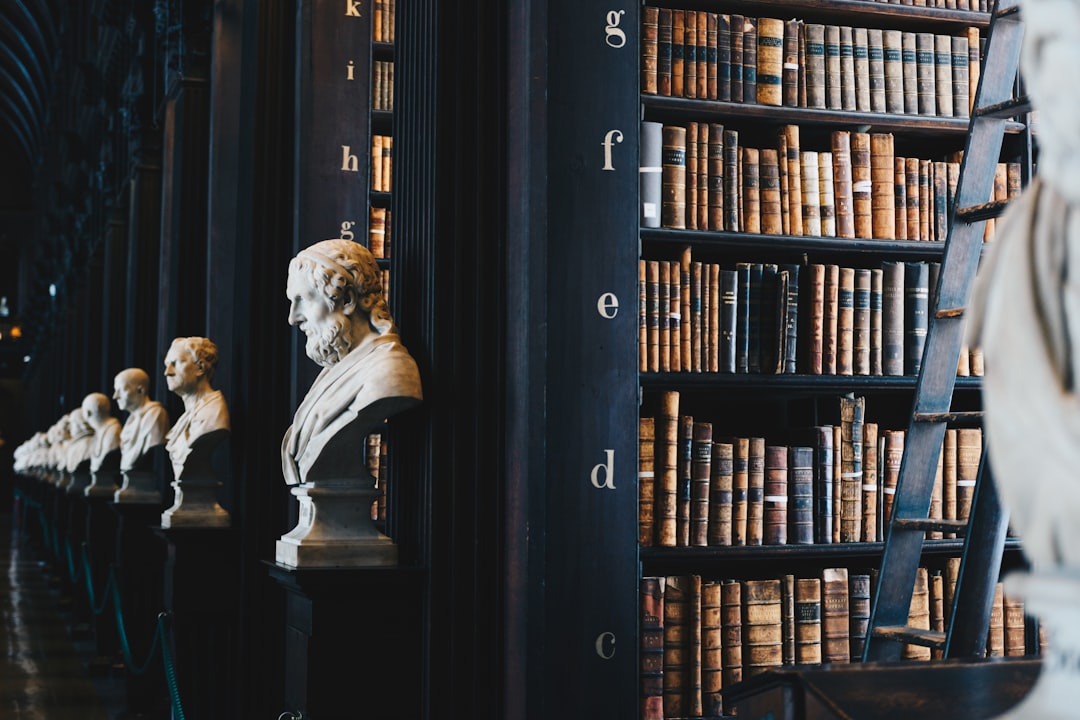
In the annals of history, ancient libraries stand as monumental repositories of knowledge, yet they were not immune to the forces that sought to control and restrict the dissemination of information. These institutions, often revered as sanctuaries of learning, were paradoxically also arenas of censorship and limitation. The knowledge contained within their walls was frequently subject to the whims of those in power, who understood that controlling information was tantamount to controlling society itself.
The restrictions placed on knowledge in ancient libraries were not merely arbitrary; they were deeply intertwined with the cultural, political, and religious contexts of the time. The ancient world witnessed a complex interplay between knowledge and power, where libraries served as both guardians and gatekeepers of information. The scrolls and manuscripts housed within these libraries were not just collections of texts; they were embodiments of ideologies, beliefs, and narratives that shaped civilizations.
As such, the restrictions imposed on these texts reflected broader societal values and conflicts. Understanding the nature of these restrictions provides insight into how knowledge was perceived, valued, and ultimately controlled in ancient societies.
Key Takeaways
- Ancient libraries imposed restrictions on knowledge access based on religious and political influence.
- Censorship played a significant role in controlling the dissemination of knowledge in ancient libraries.
- Prohibited subjects and materials in ancient libraries included works that challenged the status quo.
- Class and gender had a significant impact on knowledge access in ancient libraries.
- Secret societies and underground networks played a crucial role in preserving forbidden knowledge in ancient libraries.
The Role of Censorship in Ancient Libraries
Censorship in ancient libraries was a multifaceted phenomenon that manifested in various forms, from outright destruction of texts to more subtle forms of suppression. Rulers and religious authorities often dictated what could be preserved and what should be discarded, leading to a selective memory that favored certain narratives over others. This practice was not limited to any single culture or civilization; it was a common thread that wove through the fabric of many ancient societies.
The motivations behind censorship were as diverse as the texts themselves, ranging from the desire to maintain social order to the need to protect sacred beliefs. The consequences of censorship were profound. By controlling access to knowledge, authorities could shape public perception and influence the course of history.
For instance, in ancient Rome, the works of philosophers who challenged the status quo were often banned or destroyed. Similarly, in ancient Egypt, texts that contradicted the prevailing religious doctrines faced erasure. This manipulation of knowledge not only stifled intellectual growth but also created a legacy of ignorance that would echo through generations.
Religious and Political Influence on Knowledge Access

The intersection of religion and politics played a pivotal role in determining access to knowledge in ancient libraries. Religious institutions often held significant sway over what constituted acceptable knowledge, leading to a hierarchy of information that favored certain beliefs while marginalizing others. In many cases, religious texts were deemed sacred and inviolable, while secular works were subjected to scrutiny and potential censorship.
This dynamic created an environment where knowledge was not only a tool for enlightenment but also a weapon for ideological warfare. Political power further complicated this landscape. Rulers frequently aligned themselves with religious authorities to legitimize their reigns, resulting in a symbiotic relationship that reinforced knowledge restrictions.
For example, in ancient Mesopotamia, kings often commissioned scribes to produce texts that glorified their achievements while suppressing dissenting voices. This manipulation of knowledge served to consolidate power and maintain control over the populace, illustrating how intertwined religion and politics were in shaping access to information.
Prohibited Subjects and Materials in Ancient Libraries
| Library | Prohibited Subjects | Prohibited Materials |
|---|---|---|
| Alexandria Library | Political dissent, anti-government literature | Books made of papyrus |
| Pergamum Library | Works of Epicurus | Parchment scrolls |
| Rome Library | Subversive religious texts | Books written in Greek |
Certain subjects and materials were systematically prohibited in ancient libraries, reflecting societal taboos and the prevailing moral codes of the time.
Topics such as heresy, dissent, and even scientific inquiry could lead to severe repercussions for both authors and readers alike.
The fear of retribution ensured that many potentially transformative ideas remained hidden from public view. Moreover, the categorization of prohibited subjects varied significantly across cultures and epochs. In some societies, texts related to magic or alchemy were viewed with suspicion and often destroyed, while in others, they were preserved as valuable sources of knowledge.
This inconsistency highlights the subjective nature of censorship and its dependence on cultural context. The result was a fragmented intellectual landscape where certain ideas flourished while others languished in obscurity.
The Impact of Class and Gender on Knowledge Access
Access to knowledge in ancient libraries was not equally distributed; it was profoundly influenced by class and gender dynamics. The elite classes often enjoyed privileged access to educational resources, allowing them to engage with a broader spectrum of knowledge. In contrast, lower classes faced significant barriers to entry, with many being denied access to libraries altogether.
This disparity perpetuated social hierarchies and limited opportunities for intellectual advancement among marginalized groups. Gender also played a critical role in determining access to knowledge.
Libraries often reflected these biases, with texts authored by women being overlooked or dismissed as inferior. The result was a historical narrative that largely ignored the contributions of half the population, further entrenching gender inequalities in knowledge production and dissemination.
Methods of Preserving and Transmitting Restricted Knowledge

Despite the challenges posed by censorship and societal restrictions, various methods emerged for preserving and transmitting restricted knowledge in ancient libraries. One such method involved the use of coded language or allegory, allowing authors to convey controversial ideas without attracting the ire of authorities. This practice enabled scholars to engage with forbidden subjects while maintaining a veneer of compliance with prevailing norms.
Additionally, oral traditions played a crucial role in preserving knowledge that might have been deemed too dangerous for written form. Storytellers and bards became custodians of wisdom, passing down narratives that challenged dominant ideologies through generations. These oral histories often contained kernels of truth that contradicted official accounts, serving as a form of resistance against censorship.
The interplay between written texts and oral traditions created a rich tapestry of knowledge transmission that defied simple categorization.
The Role of Secret Societies and Underground Networks in Preserving Forbidden Knowledge
Throughout history, secret societies and underground networks have emerged as vital players in the preservation of forbidden knowledge. These clandestine groups often operated outside the bounds of mainstream society, creating safe spaces for intellectual exchange and exploration of taboo subjects. By fostering an environment where ideas could be freely discussed without fear of reprisal, these networks became crucial for safeguarding knowledge that challenged established norms.
The existence of such societies underscores the resilience of human curiosity and the relentless pursuit of truth. In ancient Greece, for instance, philosophical schools often operated under a veil of secrecy, allowing thinkers like Plato and Aristotle to explore ideas that might have been deemed heretical by the state or religious authorities. Similarly, during periods of intense persecution, underground networks facilitated the transmission of texts that would otherwise have been lost to history.
These efforts highlight the lengths to which individuals would go to preserve knowledge in the face of oppression.
The Consequences of Challenging Knowledge Restrictions in Ancient Libraries
Challenging knowledge restrictions in ancient libraries often came at a steep price for individuals who dared to defy authority. Those who sought to disseminate forbidden ideas faced severe repercussions ranging from social ostracism to imprisonment or even execution. The fear of retribution served as a powerful deterrent against intellectual dissent, creating an atmosphere where conformity was rewarded while innovation was punished.
However, history has shown that such challenges can also lead to transformative change. Figures like Socrates and Galileo Galilei exemplify how questioning established norms can spark revolutions in thought and understanding. Their legacies serve as reminders that the pursuit of knowledge is often fraught with danger but can ultimately lead to profound societal shifts.
The consequences faced by those who challenged restrictions highlight both the risks involved in seeking truth and the potential for progress when individuals refuse to accept limitations on their intellectual freedom.
The Evolution of Knowledge Restrictions in Ancient Libraries
The evolution of knowledge restrictions in ancient libraries reflects broader societal changes over time. As civilizations rose and fell, so too did their approaches to information control. In some instances, periods of relative openness allowed for greater intellectual exchange and innovation; however, these moments were often followed by waves of repression as new powers sought to consolidate control over knowledge.
The transition from oral traditions to written texts marked a significant turning point in this evolution. While writing allowed for greater preservation of ideas, it also made it easier for authorities to monitor and censor content. As literacy rates increased among certain segments of society, so too did the potential for dissenting voices to emerge.
This dynamic created a push-and-pull relationship between those seeking knowledge and those attempting to restrict it—a tension that would continue throughout history.
Modern Perspectives on Ancient Library Knowledge Restrictions
In contemporary discourse, scholars reflect on ancient library knowledge restrictions with a critical lens that seeks to understand their implications for modern society. The lessons learned from history serve as cautionary tales about the dangers of censorship and the importance of safeguarding intellectual freedom. As societies grapple with issues related to information control today—whether through government regulation or corporate influence—the legacy of ancient libraries remains relevant.
Modern perspectives also emphasize the need for inclusivity in knowledge production and dissemination. Recognizing the historical biases that shaped access to information allows contemporary scholars to advocate for more equitable systems that honor diverse voices and perspectives. By examining how ancient societies navigated issues of censorship and access, modern thinkers can better understand their own challenges while striving for a more just intellectual landscape.
Preserving and Accessing Restricted Knowledge in the Digital Age
The advent of the digital age has transformed how restricted knowledge is preserved and accessed, offering both opportunities and challenges reminiscent of those faced by ancient libraries. On one hand, digital platforms provide unprecedented access to information across geographical boundaries; on the other hand, they also raise concerns about surveillance, data privacy, and new forms of censorship. Digital archives have emerged as vital tools for preserving texts that might otherwise be lost or forgotten due to historical restrictions.
Initiatives aimed at digitizing rare manuscripts allow scholars and enthusiasts alike to engage with previously inaccessible materials while fostering greater awareness about issues related to censorship throughout history. However, as digital spaces become increasingly commercialized, questions arise about who controls access to this wealth of information—echoing age-old struggles over knowledge ownership. In conclusion, understanding the complexities surrounding ancient library knowledge restrictions offers valuable insights into contemporary issues related to information control and access.
By examining how past societies navigated these challenges, modern thinkers can better appreciate the importance of safeguarding intellectual freedom while advocating for inclusive practices that honor diverse voices within our ever-evolving landscape of knowledge.
In exploring the theme of ancient library knowledge restriction, one can gain further insights from the article available at this link. The article delves into the historical context of how access to knowledge was often limited by various societal structures, reflecting on the implications of such restrictions in the ancient world.
WATCH THIS! The 20 Things History Buried To Protect Us
FAQs
What is ancient library knowledge restriction?
Ancient library knowledge restriction refers to the practice of limiting access to certain knowledge or information within libraries in ancient times. This could be due to religious, political, or cultural reasons.
Why were certain knowledge restricted in ancient libraries?
Knowledge was often restricted in ancient libraries due to the desire to control information and maintain power. Rulers, religious leaders, and other authorities often sought to limit access to certain knowledge in order to maintain their authority and influence over the population.
What types of knowledge were typically restricted in ancient libraries?
Restricted knowledge in ancient libraries could include religious texts, political writings, scientific discoveries, and philosophical teachings that were deemed controversial or subversive by those in power.
How were knowledge restrictions enforced in ancient libraries?
Knowledge restrictions in ancient libraries were enforced through various means, including censorship, the destruction of certain texts, and the prohibition of certain individuals from accessing specific materials.
Did all ancient libraries have knowledge restrictions?
Not all ancient libraries had knowledge restrictions, but many did, particularly those that were closely associated with religious or political institutions.
What were the consequences of knowledge restrictions in ancient libraries?
Knowledge restrictions in ancient libraries limited the free exchange of ideas and hindered intellectual and cultural development. They also contributed to the suppression of dissenting voices and the perpetuation of certain power structures.