The sands of time have long guarded the secrets of ancient Egypt, but upon closer inspection, subtle whispers of their ingenious engineering begin to emerge. For centuries, scholars and archaeologists have marveled at the monumental constructions – the pyramids, obelisks, and temples – that stand as testaments to a civilization’s ambition and organizational prowess. While theories abound regarding the methods employed, a growing body of evidence points towards a sophisticated understanding of mechanics and precise workmanship, suggesting the presence of what can only be described as “machine marks.” These are not the uniformly crisp lines of modern manufacturing, but rather distinctive patterns etched into stone and metal that, when analyzed by contemporary eyes, hint at the use of tools and techniques far more advanced than previously assumed.
The sheer scale and precision of ancient Egyptian stone masonry have always been a source of wonder. The ability to quarry, transport, and shape colossal blocks of granite, a notoriously hard igneous rock, with remarkable accuracy, raises fundamental questions about their tooling. While simple copper chisels and stone pounders were undoubtedly in use, the efficiency and repeatability of the cuts observed on many monumental stones suggest the involvement of more powerful and consistent forces, possibly driven by mechanical principles.
The Nature of the Marks: More Than Human Effort
Examining the surfaces of many ancient Egyptian obelisks and sarcophagi reveals striations, grooves, and scoring that are remarkably uniform over significant distances. These are not the haphazard marks of manual labor, where inconsistencies in pressure and angle would be unavoidable. Instead, they exhibit a degree of parallelism and regularity that is highly indicative of a repeated mechanical action. Imagine a saw or a milling tool moving across the surface, leaving a consistent trail. The depth, width, and spacing of these markings provide a forensic fingerprint of the tools that created them.
Sophisticated Abrasives and Cutting Techniques
The prevailing theory for cutting granite historically involved pounding with harder stones and the use of abrasive materials like sand. However, the smooth, almost polished finishes seen in certain areas, along with the deep, clean cuts, challenge this paradigm. The observed marks suggest the application of concentrated pressure and significant abrasion. The presence of dolerite pounders, a harder stone, has been established. Yet, the speed at which they could have achieved such results, particularly on large blocks, often seems insufficient without a mechanized application of force. The uniformity of the grooves points towards a tool that could maintain a consistent angle and pressure, a feat difficult to achieve with purely manual labor for extended periods on hard materials like granite.
The “Saw Marks” Debate: Circular Motion and Power
Perhaps the most compelling evidence for mechanical assistance comes from the enigmatic “saw marks” found on various artifacts. These exhibit a pattern consistent with the use of a saw blade, either linear or, more surprisingly, circular. The precision and regularity of these cuts, particularly in creating fine channels or removing excess material, are difficult to reconcile with hand-operated tools alone. While some argue these could be the result of prolonged manual sawing with advanced abrasives, the characteristic curvature and consistent depth of some grooves lean towards the involvement of a powered cutting mechanism. The ability to achieve such intricate shapes and intricate details within solid granite implies a tool that could be guided with exceptional stability and controlled motion.
Recent discussions surrounding ancient Egypt have brought to light intriguing theories about machine marks found on various artifacts and structures, suggesting advanced technology may have been utilized in their construction. For those interested in exploring how ancient civilizations approached engineering and logistics, a related article can be found at this link, which delves into modern supply chain innovations and their historical parallels.
The Precision of the Pyramids: A Symphony of Stone
The construction of the pyramids, particularly the Great Pyramid of Giza, represents one of humanity’s most enduring engineering achievements. The sheer number of precisely cut and fitted blocks, some weighing many tons, has fueled speculation about the methods employed. While the ramp theory remains popular, the meticulous accuracy of the stonework itself suggests the use of tools that could ensure near-perfect alignment and fit.
Alignment and Leveling: Beyond the Plumb Bob
The astonishing levelness of the pyramid bases and the precise alignment of the casing stones speak volumes about the builders’ mastery of surveying and construction. While simple tools like plumb bobs and A-frames would have been essential for basic alignment, achieving the near-perfect horizontality and verticality across vast surfaces, especially in the foundational layers, hints at more sophisticated leveling techniques. The precise cutting of the individual stones also plays a crucial role. If blocks were not cut to near-perfect dimensions and angles, achieving such a seamless and stable structure would be exponentially more challenging.
Geometric Precision: The Role of Mechanical Guides
The remarkable geometric accuracy of the pyramids, both in their overall form and in the placement of internal chambers and passages, suggests the use of precise measuring and cutting tools. The ability to create perfect right angles, parallel lines, and consistent slopes over such large scales implies that the cutting process itself was not left to chance. Mechanical guides, jigs, or templates, potentially operated by some form of mechanized drive, could have ensured the consistent replication of these geometric specifications across thousands of individual stone blocks.
The “Square-Edged” Grooves: Evidence of Machining
Within the quarries and on the surfaces of many pyramid stones, archaeologists have discovered a particular type of groove. These grooves are often remarkably straight, parallel, and possess a consistent depth and width, creating a visually squared edge. This is distinct from the more irregular scoring sometimes seen from manual pounding. The consistent nature of these markings strongly suggests a tool that moved in a linear fashion with a sharp cutting edge, a characteristic of machining operations more than simple shaping. The precision required to create these edges, which facilitated the tight fitting of blocks, points towards a highly controlled cutting process.
Metalworking Marvels: Precision Beyond Expectation
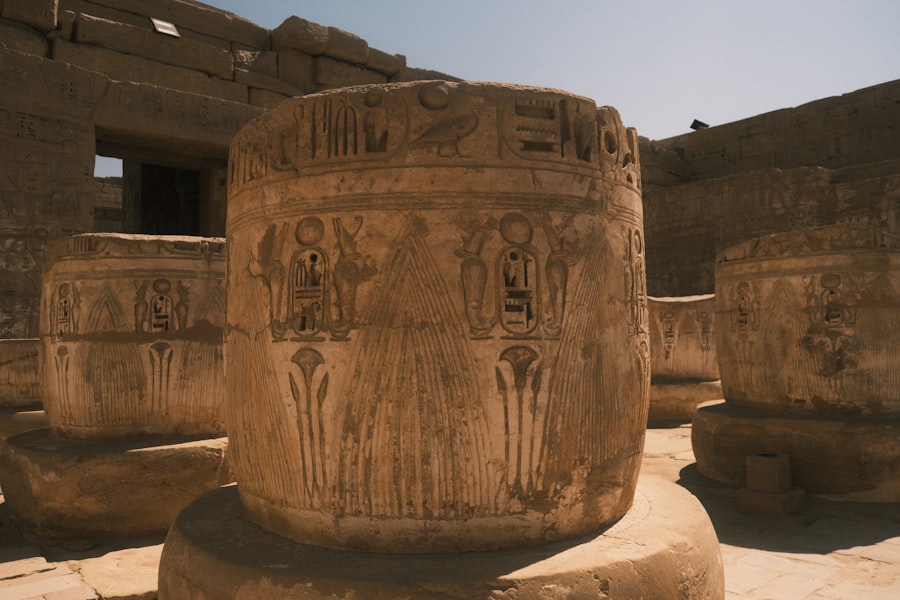
While stone dominates the monumental constructions, the ancient Egyptians were also skilled metallurgists. Their work with copper, bronze, and even gold – crafting tools, jewelry, and intricate decorative elements – showcases a level of precision that further supports the idea of advanced tooling.
The Fine Details of Copper and Bronze Objects
The intricate details found in many ancient Egyptian metal artifacts, from delicate filigree jewelry to finely wrought tool blades, demonstrate a mastery of metal manipulation. The uniform thickness of hammered metal sheets, the sharp edges of cutting tools, and the precise shaping of complex forms all suggest the use of specialized tools and techniques that went beyond simple hammering and filing. Achieving such fine detail often requires tools that can exert controlled pressure and create precise lines and curves.
“Milling” Marks on Metal: A Glimpse of Sophistication
Evidence of what appear to be “milling” marks has been observed on some ancient Egyptian metal objects. These are fine, parallel striations on the surface that are indicative of a rotating cutting tool, similar to modern milling machines. While the scale and sophistication might differ from contemporary implementations, the presence of such markings on even small artifacts suggests the Egyptians understood the principles of turning or rotating abrasive elements to shape and finish metal with a high degree of accuracy. This implies a level of mechanical understanding not typically associated with early metalworking.
The Debate on Tool Materials and Power Sources
The exact materials and power sources for these hypothesized machines remain largely speculative. However, the hardness of the granite and the precision of the metalwork point towards tools that were either made of significantly harder materials, or employed abrasive slurries and controlled high-pressure application far more effectively than simple manual methods. The energy required to drive such tools could have come from water power, animal power, or even sophisticated manual leverage systems that resembled early forms of mechanical advantage.
Obelisks: Stretching Towards the Heavens with Mechanical Precision
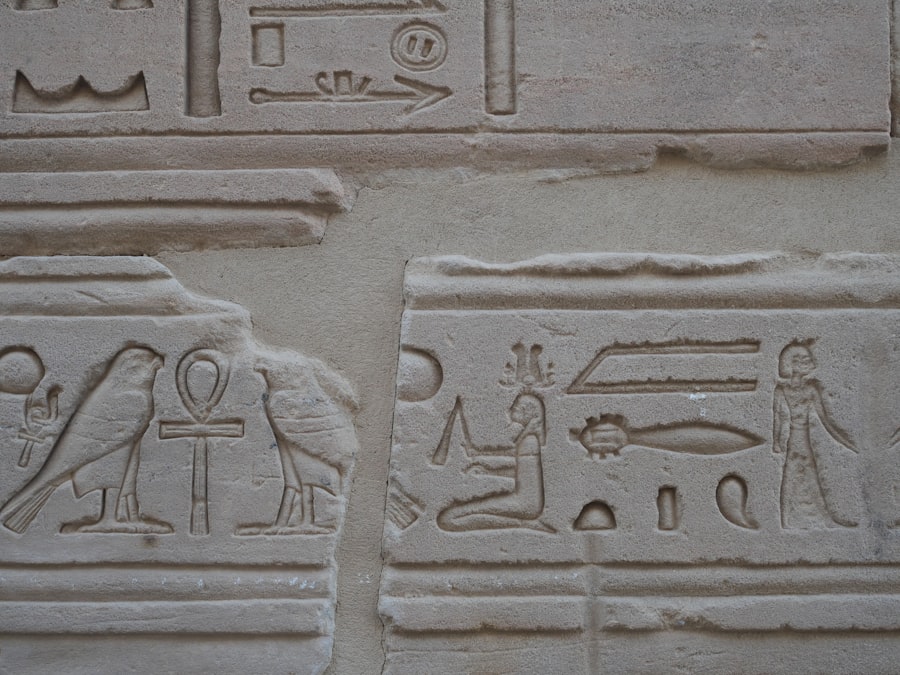
The creation and erection of obelisks are among the most awe-inspiring feats of ancient Egyptian engineering. The process of quarrying, shaping, and then standing these colossal monoliths required immense skill, planning, and undoubtedly, specialized tools. The surface details etched into their granite bodies offer clues to the methods employed.
Smooth Surfaces and Straight Lines: The Result of Guided Motion
The remarkable smoothness and the distinct straight lines that often characterize the sides of obelisks suggest a methodical and controlled shaping process. While manual smoothing with abrasives is possible, the extent of uniformity and the absence of significant undulations point towards tools that were guided along a straight path with consistent pressure. This hints at some form of fixed track or guide that the cutting implement moved along, a principle fundamental to mechanized operations.
The Mystery of the Pyramidal Apex: Precision Finishing
The perfect pyramidal apex of many obelisks, known as a pyramidion, is a testament to the builders’ ability to achieve precise geometric forms in hard stone. The final finishing of these tips, often covered in gold leaf, required an exceptionally smooth and accurate surface. This final shaping and polishing would have demanded tools that could work with extreme precision, possibly involving some form of rotating polishing tool or a carefully controlled abrasive grinding process.
Evidence of Reciprocating Motion: The “Chisel” Marks
Even when examining the finer details of obelisk inscriptions and hieroglyphs, one can often discern patterns that are distinct from simple hand-carving. These exhibit a controlled, somewhat repetitive motion, as if a chisel-like tool was being driven with a consistent force and stroke. The depth and regularity of these marks could indicate the use of a mechanized hammer or striker, imparting more power and consistency than could be achieved with manual hammering alone.
Recent studies have shed light on the intriguing machine marks found on ancient Egyptian artifacts, suggesting advanced technology may have been utilized in their creation. This revelation has sparked discussions among historians and archaeologists about the capabilities of ancient civilizations. For a deeper exploration of how these findings challenge our understanding of ancient rulers, you can read more in this insightful article on the topic of deception in ancient history. Check it out here: deceptions of ancient rulers.
The Socio-Economic Implications: A Society Built on Innovation
| Machine Marks | Related Data/Metrics |
|---|---|
| Stone Cutting | Measurement of precision in stone cutting |
| Tool Usage | Analysis of tool marks on ancient artifacts |
| Material Composition | Study of materials used in ancient Egyptian machinery |
The potential existence of ancient Egyptian machines and the marks they left behind have profound implications for our understanding of their society, economy, and intellectual capacity. It suggests a civilization that was not only capable of meticulous planning and organization but also possessed a deep understanding of mechanics and engineering.
A Shift in Labor and Organization: From Manual to Assisted
If machines were employed, it would necessitate a significant shift in the organization of labor. Instead of solely relying on manual effort, a class of skilled mechanics and operators would have been required. This would have had a ripple effect on the social structure, potentially leading to greater specialization and a more complex economic system. The ability to achieve results faster and with greater precision would have freed up labor for other endeavors, contributing to the flourishing of arts, sciences, and administration.
The Knowledge Base: A Gradual Evolution of Technology
The development of such sophisticated tools and machines would not have occurred overnight. It implies a gradual accumulation of knowledge and technological innovation over long periods. This “machine mark” evidence, therefore, doesn’t necessarily point to singular revolutionary inventions but rather a continuous refinement of existing techniques and a progressive understanding of mechanical principles. The durability of their constructions suggests a robust and reliable set of technologies.
The Silent Testimony: Unlocking Future Discoveries
The ongoing analysis of these “machine marks” is crucial for unlocking further secrets of ancient Egypt. By comparing the patterns and characteristics of these markings with what is possible with known ancient technologies, researchers can refine their hypotheses and potentially uncover direct evidence of the tools themselves. This field of study is still in its nascent stages, and with advancements in imaging technology, material science, and comparative analysis, the silent testimony of these stone and metal surfaces promises to reveal even more about the ingenuity of this remarkable civilization. The quest to understand ancient Egypt’s machine marks is a testament to humanity’s enduring fascination with the past and our desire to comprehend the full extent of human capability.

Ancient Egypt’s Greatest Engineering Mystery
FAQs
What are ancient Egypt machine marks?
Ancient Egypt machine marks are the tool marks left behind on ancient Egyptian artifacts and structures, indicating the use of various tools and machines in their construction and creation.
What do ancient Egypt machine marks reveal about ancient Egyptian technology?
Ancient Egypt machine marks reveal that the ancient Egyptians had advanced knowledge and use of various tools and machines, including saws, drills, and lathes, in their construction and manufacturing processes.
Where can ancient Egypt machine marks be found?
Ancient Egypt machine marks can be found on a wide range of artifacts and structures, including statues, obelisks, and temple walls, throughout ancient Egyptian archaeological sites.
What do ancient Egypt machine marks tell us about ancient Egyptian craftsmanship?
Ancient Egypt machine marks indicate that ancient Egyptian craftsmen were highly skilled and used sophisticated tools and machines to create intricate and precise designs in their artwork and architecture.
How do archaeologists and historians study ancient Egypt machine marks?
Archaeologists and historians study ancient Egypt machine marks through careful examination and analysis of the tool marks, as well as through experimental archaeology to replicate the techniques and tools used by ancient Egyptian craftsmen.