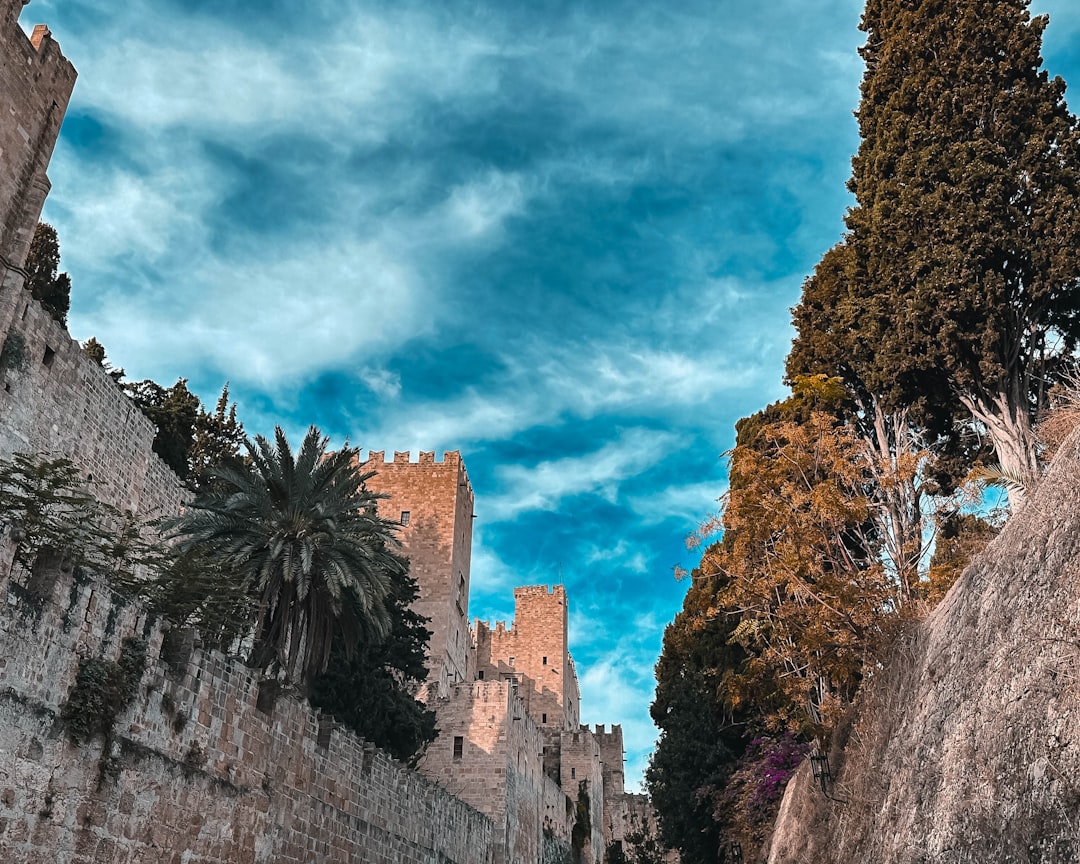
The enduring strength of ancient walls speaks to a profound connection with human history and ingenuity. These imposing structures, weathered by centuries and often millennia, stand as silent witnesses to the rise and fall of civilizations, the ebb and flow of empires, and the quiet persistence of human endeavor. Their continued existence is not merely a testament to the materials used in their construction or the sheer scale of their creation, but rather a reflection of the underlying principles of design, the adaptability of human societies, and the symbolic weight they have accumulated over time. They are more than just barriers; they are narratives etched in stone, offering invaluable insights into the lives, aspirations, and challenges of those who built them.
The longevity of ancient walls is intrinsically linked to the deliberate and often sophisticated choices made by their creators regarding materials and construction techniques. These builders understood, through trial and error and generations of accumulated knowledge, that durability was paramount. Their success lay in a keen understanding of the properties of the earth and stone around them, coupled with an innate grasp of engineering principles that, while not expressed in modern mathematical formulae, consistently yielded results of remarkable resilience.
Selecting the Right Stuff: From Rough-Hewn Stone to Precisely Cut Blocks
The very essence of a wall’s endurance begins with its constituent parts. Ancient civilizations were masters of identifying and exploiting the most suitable local resources. In regions blessed with abundant quarries, large, irregularly shaped, or roughly hewn stones formed the backbone of many fortifications and monumental structures. The sheer mass of these individual units, when properly fitted, provided an immense inertia that resisted external forces. Examples of this abound from the megalithic constructions of the Neolithic period to the cyclopean masonry of Mycenaean Greece. The weight and interlocking nature of these stones, sometimes requiring immense human labor to move and position, created a stable and formidable barrier.
- The Art of the Ashlar: With the advancement of civilization and the development of more sophisticated tools, the practice of dressing stone to precise dimensions, known as ashlar masonry, emerged. This technique involved cutting blocks of stone into regular shapes, often with nearly perfect faces and edges. The resultant regularity allowed for tighter joints, minimizing the gaps where water could penetrate and freeze, causing expansion and damage. The precision of ashlar also enabled the creation of smoother, more uniform surfaces, which were aesthetically pleasing and often contributed to structural integrity by distributing stresses more evenly. The Parthenon in Athens, with its impeccably fitted marble blocks, exemplifies the pinnacle of this art, showcasing both aesthetic beauty and remarkable structural resilience.
- The Versatility of Mudbrick and Adobe: In arid and semi-arid regions where stone was less accessible or harder to work, mudbrick and adobe became the primary building materials. While seemingly less robust than stone, these materials possessed their own unique strengths, particularly when employed with an understanding of local climatic conditions. Sun-dried mudbricks, often mixed with straw for added tensile strength, were laid in courses and typically plastered over to protect them from erosion. The thermal mass of adobe walls provided excellent insulation, regulating indoor temperatures and contributing to the lived experience of inhabitants. While susceptible to water damage, structures like the Great Wall of China, built in sections using rammed earth and adobe in drier climates, demonstrate the surprising longevity achievable with these materials when combined with strategic design and maintenance.
Engineering for the Ages: Stability, Load Bearing, and Drainage
Beyond the selection of materials, ancient engineers possessed an intuitive understanding of how to construct walls that would stand the test of time. Their designs often incorporated elements that addressed fundamental engineering challenges, ensuring stability and dissipating forces that could lead to collapse.
- The Power of the Batter: A common feature in ancient defensive walls, particularly those built on sloping terrain, is the ‘batter’ – a slight inward inclination of the wall’s face as it rises. This seemingly simple design choice significantly enhances stability. By shifting the center of gravity lower and wider, the battered wall becomes more resistant to toppling, especially under the pressure of siege engines or natural seismic activity. The massive defensive walls of ancient cities like Babylon and Troy often exhibit this characteristic, providing a visual cue to their inherent structural soundness.
- Foundation and Drainage: The Unseen Heroes: The strength of any wall begins below ground. Ancient builders understood the crucial importance of a solid foundation. This often involved digging deep trenches, sometimes down to bedrock, to ensure that the immense weight of the wall was supported on stable ground. Furthermore, they recognized the destructive potential of water. Sophisticated drainage systems, often incorporating channels, culverts, and permeable layers within the foundation, were implemented to divert rainwater and groundwater away from the wall’s base. This prevented saturation, which could weaken foundations and lead to frost heave in colder climates. The intricate network of drains beneath the Roman Colosseum, for instance, is a testament to their foresight in water management.
- The Interlocking and Bonding of Masonry: The way in which individual stones or bricks were arranged was critical to a wall’s integrity. Techniques like ‘rubble-filling’ – where the core of a thick wall was packed with smaller stones and mortar – provided internal cohesion. The careful bonding of courses, where joints in one layer were staggered relative to the layer below, prevented the formation of continuous vertical weaknesses, distributing stresses more effectively. The enduring Roman walls, characterized by their consistent use of opus reticulatum and opus incertum, showcase this mastery of interlocking and bonding, allowing them to withstand the ravages of time and even earthquakes.
The resilience of ancient walls can be attributed to a combination of superior construction techniques, the use of durable materials, and the strategic placement of these structures in relation to their environment. For a deeper understanding of how historical factors influence modern economic structures, you may find it interesting to explore the article on shifting wealth and the implications of moving out of the US dollar. This article provides insights into how historical decisions shape current financial landscapes, much like the enduring nature of ancient architecture. You can read more about it here: Shifting Wealth: Moving Out of the US Dollar.
Symbolic Fortifications: Beyond Defense to Dominion and Divine Protection
Ancient walls were rarely constructed with purely utilitarian purposes in mind. While their defensive capabilities were undeniably important, their design and placement also served to project power, delineate sacred spaces, and embody a society’s collective identity and aspirations. The enduring presence of these structures, therefore, is also tied to their symbolic resonance, which has continued to imbue them with significance across generations.
Defining Boundaries: From City Limits to Sacred Precincts
The act of building a wall was, in essence, an act of definition. It created a clear, tangible boundary between the ordered world within and the chaotic (or perceived as such) world outside. This spatial demarcation was fundamental to the organization of ancient societies.
- The Citadel and the City: The most common manifestation of this boundary was the city wall, enclosing residential areas, administrative centers, and marketplaces. These walls served not only as physical defenses against invaders but also as markers of civic identity and belonging. To be within the walls was to be part of the community, benefiting from its protection and adhering to its laws. The imposing walls of cities like Jericho, dating back to the early Bronze Age, represent some of the earliest known examples of this deliberate urban enclosure, signifying a desire for security and social order.
- The Sacred Enclosure: Beyond the secular city, walls also played a crucial role in defining sacred spaces. Temples, sanctuaries, and burial grounds were often surrounded by their own distinct walls, elevating them and setting them apart from the mundane world. These sacred enclosures served as places of worship, communion with the divine, and ritual performance. The sacred precinct of Delphi, dedicated to Apollo, was enclosed by a series of walls, guiding pilgrims and separating the hallowed ground from the surrounding landscape. The intricate stonework and monumental gateways of these sacred walls often reflected the perceived grandeur of the deities they protected.
Projecting Power and Authority: The Imperial Edifice
For empires and powerful city-states, walls were not merely defensive but also potent symbols of dominance and authority. They were carefully designed to awe onlookers and to intimidate potential rivals, showcasing the wealth, technological prowess, and organizational capacity of the ruling power.
- Monumental Scale and Imperial Grandeur: The sheer scale of some ancient walls speaks volumes about the power of their builders. The Great Wall of China, stretching for thousands of miles, is the ultimate testament to imperial ambition and the ability to mobilize vast resources and manpower. While its defensive effectiveness is debated, its symbolic impact as a declaration of Chinese strength and territorial integrity is undeniable. Similarly, the mammoth walls of Rome, particularly those of the Servian Walls, projected an image of an unassailable and expanding power.
- Strategic Placement and Psychological Warfare: The location of a wall could be as significant as its construction. Placing fortifications on prominent hills or along strategic waterways was a clear signal of control over important trade routes or defensive positions. The psychological impact of imposing walls, perceived as an insurmountable barrier, could also deter aggression without the need for direct conflict. The fear of facing such defenses was a weapon in itself, contributing to the endurance of these structures not just in stone but in the collective imagination.
The Divine Embrace: Walls as Guardians of the Soul
In many ancient cultures, walls were also believed to possess a deeper, spiritual significance, offering protection not just from physical threats but also from malevolent forces. The act of building and inhabiting walled cities was, in itself, a form of ritualized protection, a way of creating a divinely sanctioned order.
- Cosmic Order and Protection from Chaos: Many creation myths and cosmologies depict a separation between order and chaos, light and darkness. Walled cities could be seen as microcosms of this cosmic order, with the walls acting as a bulwark against the formless, chaotic forces that lay beyond. The ritualistic construction and consecration of city walls in some cultures reinforced this perception of divine protection.
- The Threshold of the Sacred: The transition from the outside world to the inside of a walled precinct, especially a sacred one, was often accompanied by ceremony. Walls acted as thresholds, mediating between the profane and the sacred, the human and the divine. The careful design of gateways, often embellished with statues or inscriptions, further emphasized this symbolic transition and the protective embrace of the divine.
The Echoes of Labor: Human Sacrifice and Monumental Effort

The enduring strength of ancient walls is inextricably linked to the immense human effort, and at times, the profound human cost, that went into their construction. These structures are not inanimate objects but rather embodiments of the collective will, the ingenuity, and the sheer labor of countless individuals. Their creation often represents a significant societal investment, demanding the mobilization of large workforces and the overcoming of formidable logistical challenges.
The Backbone of Ancient Economies: Mobilizing the Workforce
The construction of substantial walls was a undertaking that could define the economic and social landscape of a region for generations. It required a level of organization and resource allocation that was often only achievable by powerful centralized states or wealthy city-states.
- Conscription and Corvée Labor: In many ancient societies, the workforce for monumental construction projects was drawn from the general population through systems of conscription or corvée labor. This meant that citizens were obligated to contribute their time and effort to public works, including the building and maintenance of fortifications. While this could be a burden, it also fostered a sense of collective ownership and responsibility for the city’s defenses. The construction of the Servian Walls in Rome, for example, involved a significant portion of the Roman male population during their periods of service.
- Skilled Artisans and Specialized Trades: Beyond the sheer numbers, the construction of enduring walls also relied on the expertise of skilled artisans and specialized trades. Stonemasons, quarrymen, carpenters, and engineers were essential to transforming raw materials into the robust structures we see today. The training and development of these skills represent a vital element of ancient economic and technological progress. The sophisticated carving and fitting of stones in places like ancient Petra or Machu Picchu highlight the advanced craftsmanship involved.
The Price of Permanence: Human Sacrifice and Exploitation
While the focus on endurance and ingenuity is crucial, it is also important to acknowledge the darker side of monumental construction in the ancient world. In some instances, the “enduring strength” of these walls was achieved through extreme exploitation and, tragically, human sacrifice.
- Rituals of Foundation and Dedication: Archaeological evidence from various cultures suggests that, in certain periods and locations, human sacrifice may have been incorporated into the foundations or dedication ceremonies of important structures, including walls. The belief was that the sacrifice of life would imbue the edifice with a potent, enduring spiritual force, safeguarding it and guaranteeing its strength. While controversial and open to interpretation, the presence of human remains found in association with ancient building projects cannot be entirely ignored.
- The Exploitation of Enslaved Populations: In many ancient societies, enslaved individuals formed a significant, and often the most exploited, segment of the labor force. The construction of massive walls and fortifications frequently relied heavily on their unfree labor, undertaken under harsh conditions and with little regard for their well-being or lives. The sheer scale of projects like the Egyptian pyramids or the Roman aqueducts likely involved the involuntary labor of vast numbers of enslaved people, adding a somber layer to the narrative of their enduring strength.
The Adaptive Resilience of Ancient Walls

The survival of ancient walls over vast stretches of time is not solely about their initial construction; it is also a story of continuous adaptation, repair, and repurposing. These structures were not static monuments but dynamic entities, evolving in response to changing threats, societal needs, and environmental pressures.
The Necessity of Maintenance and Repair
Even the most robust ancient walls required ongoing attention to remain functional. The relentless forces of nature, coupled with the wear and tear of continuous use, necessitated regular maintenance and timely repairs.
- Patching and Reinforcement: As cracks appeared or stones eroded, ancient builders and later inhabitants would actively patch and reinforce damaged sections. This involved replacing fallen stones, repointing mortar joints, and sometimes adding buttresses or reinforcing walls where they were weakest. The visible layers of repair on many ancient walls tell the story of their continuous struggle against decay and damage. The Roman walls often show evidence of multiple phases of repair and reinforcement over centuries.
- The Role of Occupiers and Successors: When cities or regions changed hands, new rulers or inhabitants would often inherit existing fortifications. In many cases, they would not only maintain the existing walls but also expand or modify them to suit their own defensive strategies and architectural tastes. This continuous occupation and adaptation ensured that the walls remained relevant and functional, contributing to their long-term survival. The layers of construction and modification visible in the walls of Jerusalem, for instance, reflect millennia of occupation and defense.
Repurposing and Redeploying Ancient Walls
As the military significance of certain ancient walls waned, or as urban landscapes evolved, their function often shifted. These enduring structures were frequently repurposed, finding new life in altered contexts, which contributed to their continued preservation.
- From Defense to Civic Infrastructure: In later periods, city walls that were no longer militarily vital might have been incorporated into new civic projects. Sections could be incorporated into buildings, used as foundations for new constructions, or even incorporated into later defensive systems with altered strategic priorities. The reuse of Roman walls in medieval cities provides examples of this adaptive repurposing.
- The Embrace of Ruin and Tourism: In more recent centuries, some ancient walls, particularly those that have fallen into disrepair, have found a new purpose as historical and archaeological sites. Their enduring presence, even in ruin, attracts scholars, tourists, and artists, fostering a sense of historical connection and contributing to their preservation as cultural heritage. The Roman Forum, with its surviving walls and foundations, exemplifies this transition from active structures to cherished ruins.
The enduring presence of ancient walls can often be attributed to the advanced construction techniques and materials used by early civilizations. These techniques, which included the use of durable stone and innovative bonding methods, have allowed many structures to withstand the test of time. For a deeper understanding of the craftsmanship behind these ancient marvels, you can explore an insightful article on ancient metallurgy and its impact on construction methods by following this link. This resource sheds light on how the mastery of metalworking played a crucial role in the durability of ancient architecture.
The Enduring Legacy: Inspiration, Identity, and the Future of Masonry
| Reasons | Explanation |
|---|---|
| Quality of materials | Ancient walls were often built with durable materials such as stone or brick, which contributes to their longevity. |
| Skilled craftsmanship | Ancient builders possessed advanced construction techniques and skills, resulting in sturdy and well-constructed walls. |
| Strategic location | Many ancient walls were strategically positioned to withstand natural elements and potential threats, contributing to their endurance. |
| Regular maintenance | Historical records indicate that ancient walls were regularly maintained and repaired, prolonging their lifespan. |
| Cultural significance | Ancient walls often hold cultural and historical significance, leading to preservation efforts that help them remain standing. |
The enduring strength of ancient walls extends far beyond their physical presence. They continue to inspire architects and engineers, shape our understanding of history and identity, and offer valuable lessons for the future of construction. Their stories, etched in stone and earth, resonate across time, reminding us of the enduring power of human ambition and the timeless pursuit of creating structures that defy obsolescence.
Architectural and Engineering Inspiration
The principles employed in the construction of ancient walls have continued to inform architectural and engineering practices throughout history. Their ingenuity remains a source of admiration and a practical guide for those seeking to build structures that are both functional and enduring.
- Rediscovery and Emulation: Throughout history, architects and engineers have studied ancient structures, rediscovering and emulating their techniques. The rediscovery of Roman concrete and architectural principles during the Renaissance, for example, had a profound impact on Western architecture. The study of ancient fortifications continues to offer insights into structural stability, material science, and defensive design.
- Modern Applications of Ancient Principles: While modern construction relies on advanced technologies, many fundamental principles of ancient wall building remain relevant. The importance of solid foundations, effective drainage, and load distribution are still paramount in contemporary engineering. Even the aesthetic qualities and symbolic power of ancient masonry continue to inspire contemporary designs that seek to evoke a sense of history and permanence.
A Touchstone for Identity and Heritage
Ancient walls often serve as powerful touchstones for collective identity and cultural heritage. They connect present-day communities to their ancestors, providing a tangible link to past achievements and struggles.
- National and Regional Pride: Iconic ancient walls, such as the Great Wall of China or Hadrian’s Wall in Britain, are often sources of national pride and potent symbols of historical identity. They are featured in national narratives, art, and literature, reinforcing a sense of shared history and belonging.
- The Preservation of Cultural Landscapes: The preservation of ancient walls is crucial for maintaining the integrity of historical urban landscapes and cultural heritage sites. They are integral components of the places where they stand, contributing to their unique character and their ability to tell a story about human history. International organizations like UNESCO recognize the immense value of these structures and work to ensure their protection for future generations.
Lessons for the Future of Construction
In an era increasingly focused on sustainability and longevity, the enduring strength of ancient walls offers valuable lessons for the future of construction. Their ability to stand for millennia, often with relatively low-impact materials, provides a compelling contrast to some of the disposable aspects of modern building practices.
- Sustainable Materials and Techniques: The use of locally sourced and natural materials, as exemplified by ancient masons, aligns with modern principles of sustainable construction. The emphasis on durability and longevity, rather than rapid obsolescence, offers a model for creating structures that have a reduced environmental footprint over their lifecycle.
- The Value of Enduring Design: Ancient walls teach us the importance of designing for longevity. Their robust construction, thoughtful use of materials, and adaptive resilience demonstrate that with careful planning and execution, it is possible to create structures that can withstand the test of time and evolving human needs. As we face new environmental and societal challenges, the enduring strength of ancient walls provides a powerful reminder of the fundamental importance of building wisely and with a long-term perspective.

The Walls That Shouldn’t Still Be Standing
FAQs
1. What are some common materials used to build ancient walls?
Ancient walls were typically constructed using materials such as stone, brick, mud bricks, and wood. These materials were readily available and durable, allowing the walls to withstand the test of time.
2. How were ancient walls constructed to withstand the elements?
Ancient walls were often built with sloping or angled surfaces to help deflect the force of wind and rain. Additionally, some walls were constructed with drainage systems to prevent water from accumulating and causing damage.
3. What techniques were used to reinforce ancient walls?
Ancient builders used various techniques to reinforce walls, such as incorporating arches, buttresses, and bonding materials like mortar or clay. These methods helped distribute the weight of the walls and provided additional stability.
4. What role did ancient walls play in defense and security?
Ancient walls were crucial for providing defense and security for cities and settlements. They served as barriers to protect against invasions and attacks, and also helped to demarcate boundaries and control access to the area within the walls.
5. How have ancient walls influenced modern architecture and construction?
The construction techniques and design principles used in ancient walls have had a lasting impact on modern architecture and construction. Many of the methods and materials used in ancient walls continue to be employed in contemporary building practices, demonstrating the enduring legacy of ancient wall construction.