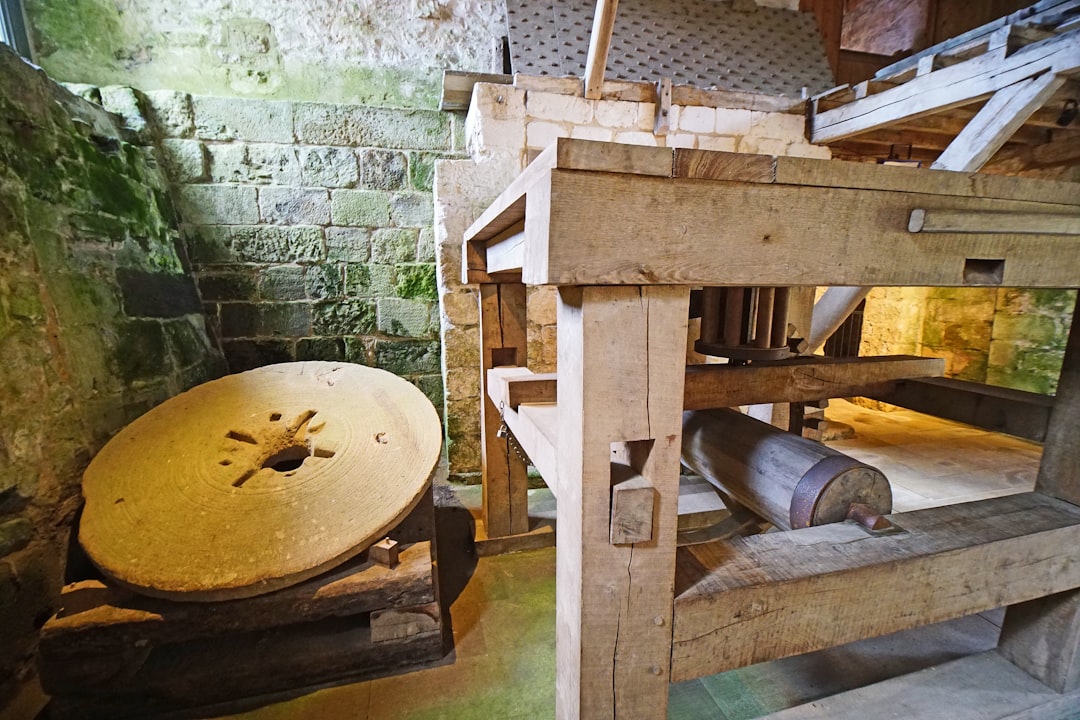
The quest for forgotten ancient technology is a captivating pursuit that blends historical curiosity with technological speculation. Archaeologists, engineers, and amateur enthusiasts alike delve into the remnants of past civilizations, seeking clues to lost knowledge and sophisticated inventions that have slipped through the sands of time. This article will explore the allure and challenges of unearthing these hidden marvels, examining the types of technologies being sought, the methods employed in their discovery, and the profound implications their rediscovery could hold for the modern world.
The phrase “ancient technology” conjures images of a time when humanity, though lacking modern scientific understanding, possessed an uncanny ability to build, design, and manipulate their environment with remarkable ingenuity. It speaks to a sense of mystery, a suspicion that our ancestors were not as primitive as our often-linear view of progress suggests. The allure lies in challenging our preconceptions about human capability and in the romantic notion of uncovering secrets that could fundamentally alter our understanding of history and our own potential.
The Grand Illusion of Simplicity
Many societies believed to be technologically unsophisticated often surprise modern observers with their feats of engineering, astronomy, and mathematics. Whether it be the precision of megalithic constructions, the anatomical accuracy of ancient medical texts, or the complex irrigation systems of early agricultural communities, these achievements point to a deep and often intuitive understanding of natural laws. The idea of unearthing even more advanced, yet unacknowledged, technologies adds an extra layer of mystique.
The Glimpse Behind the Veil
The discovery of any artifact that speaks to advanced knowledge can be seen as a glimpse behind the veil of history, offering a tangible connection to minds that have long since turned to dust. Imagine uncovering a working mechanism that defies current explanations of its era, or a material with properties scientists can only dream of replicating today. These are the moments that fuel the imagination and drive the relentless search for more.
Challenging the Narrative of Progress
The pursuit of forgotten ancient technology also challenges the prevailing narrative of linear progress. It suggests that technological development might not be a straightforward march forward, but rather a cyclical process, with periods of great advancement followed by declines and losses of knowledge. This perspective opens up the possibility that past societies may have reached intellectual and technological heights comparable to, or even exceeding, our own in certain specialized fields.
In exploring the fascinating realm of forgotten ancient technology, one cannot overlook the intriguing discoveries surrounding ancient scribes and their hidden writings. An insightful article titled “Unveiling Ancient Scribe Secrets: Hidden Writings” delves into the techniques and tools used by these early writers, shedding light on their advanced methods of communication and record-keeping. To learn more about these remarkable findings, you can read the article here: Unveiling Ancient Scribe Secrets: Hidden Writings.
Categories of Forgotten Ingenuity
The spectrum of forgotten ancient technology is vast, encompassing everything from rudimentary tools with ingenious efficiency to mechanisms that seem to anticipate modern scientific principles. Categorizing these discoveries helps to focus the search and understand the potential impact of each find.
Megalithic Marvels and Astronomical Precision
The construction of sites like Stonehenge, the Pyramids of Giza, and Machu Picchu continues to baffle engineers and archaeologists. The sheer scale of these projects, often achieved with rudimentary tools and immense human labor, points to sophisticated planning, an understanding of geometry, and potentially advanced surveying techniques. The alignment of these structures with celestial events further suggests a profound knowledge of astronomy and the cosmos.
The Mystery of the Moving Stones
One of the most enduring questions surrounding megalithic sites is how the massive stones were quarried, transported, and erected. While theories involving ramps, levers, and immense manpower abound, the precision and efficiency with which these tasks were accomplished remain remarkable. The possibility of lost vibrational or acoustic technologies, or even undiscovered engineering principles, is a recurring theme in the speculation surrounding these monuments.
Celestial Cartography and calendars
The precise alignment of ancient structures with solstices, equinoxes, and other astronomical phenomena indicates a deep understanding of celestial movements. The development of sophisticated calendars and observational tools, the blueprints for which may still be hidden, would have been crucial for agriculture, religious practices, and societal organization. Unearthing these instruments or the knowledge behind them could reveal a more advanced mathematical and astronomical framework than currently attributed to these civilizations.
Exploring the mysteries of forgotten ancient technology can reveal fascinating insights into the ingenuity of past civilizations. Many researchers believe that these lost innovations may have been far more advanced than we realize. For those interested in delving deeper into this subject, a related article discusses the various theories surrounding these ancient advancements and what they might mean for our understanding of history. You can read more about it in this intriguing piece on lost ancient technology.
Lost Metallurgy and Advanced Material Science
The ability of ancient cultures to work with metals, often to a level of purity and craftsmanship that is difficult to replicate today without modern equipment, is another fertile ground for discovery. Beyond simple tools and ornamentation, these civilizations may have possessed knowledge of alloys, tempering techniques, and manufacturing processes that have been lost.
The Damascus Steel Enigma
The legend of Damascus steel, a material renowned for its strength, flexibility, and distinctive wavy patterns, is a prime example of lost metallurgical knowledge. Despite extensive research, the exact method of its creation and the specific ingredients that contributed to its legendary properties have remained elusive. The potential to rediscover techniques for forging such superior materials could have significant implications for modern manufacturing and engineering.
Chemical Synthesis and Rare Earth Elements
It is also possible that ancient peoples had a rudimentary understanding of chemical synthesis, perhaps discovered through trial and error or passed down through oral traditions. The use of certain pigments, dyes, or even medicinal compounds suggests a knowledge of chemical reactions and material properties that went beyond mere observation. The presence of materials with specific properties, like certain historical glass or ceramic compositions, might hint at a more sophisticated understanding of heat treatment and material composition.
Ancient Computing Devices and Information Storage
While the concept of “computing” is intrinsically modern, the idea that ancient civilizations devised methods for calculation, data storage, or complex information processing predates electronic devices is increasingly being explored.
The Antikythera Mechanism: A Precursor to Complexity
The Antikythera mechanism, a shipwrecked artifact discovered in 1901, has revolutionized our understanding of ancient Greek technological capabilities. This intricate bronze device, dating back to the 2nd century BCE, is a complex astronomical calculator, capable of predicting celestial positions and eclipses with remarkable accuracy. Its discovery suggests that the Greeks possessed a level of mechanical engineering and applied mathematics far beyond what was previously assumed.
Beyond the Abacus: Mechanisms for Calculation
The Antikythera mechanism implies that there may have been other, perhaps less complex but still sophisticated, mechanical devices used for calculation and record-keeping. Imagine the possibility of gear-based counting devices, sophisticated sundials that incorporate complex astronomical functions, or even early forms of mechanical logic systems. The discovery of such “proto-computing” devices would fundamentally alter our understanding of intellectual history.
Lost Libraries and Oral Traditions: Repositories of Knowledge
Beyond physical artifacts, ancient societies possessed vast repositories of knowledge, often held within extensive libraries or passed down through intricate oral traditions. The loss of these intellectual treasures, whether through natural disaster, conflict, or deliberate destruction, represents a profound loss of ancient technological understanding. The rediscovery of lost texts, or even detailed accounts of previously unknown oral traditions, could unlock vast reserves of forgotten ingenuity.
The Enigma of Ancient Power Sources and Propulsion
The question of how ancient civilizations powered their ambitious constructions and complex mechanisms is a perpetual source of fascination. While human and animal labor were undoubtedly primary, the possibility of harnessing natural forces in ways we no longer understand is a tantalizing prospect.
Unraveling the Mysteries of Ancient Hydraulics and Pneumatics
Evidence of sophisticated hydraulic and pneumatic systems exists in various ancient cultures, from aqueducts and fountains to potentially even rudimentary air-powered devices. The understanding and manipulation of fluid dynamics and air pressure, while seemingly basic, could have been leveraged in more advanced ways than conventionally believed. Imagine irrigation systems that utilized pressure differentials in ingenious ways, or even early forms of power transmission using compressed air.
The Dawn of Renewable Energy?
Could ancient civilizations have tapped into natural energy sources in ways we have forgotten? Beyond the obvious use of wind for sailing and water for mills, there is speculation about the potential use of geothermal energy, solar concentrators, or even early forms of acoustic vibration for power generation. While harder to prove without direct evidence, the persistent questions surrounding the energy requirements of certain ancient feats keep these possibilities alive.
Propulsion Beyond the Wheel
While the wheel was a revolutionary invention, the question of how extremely

The Walls That Shouldn’t Still Be Standing

FAQs

What is forgotten ancient technology?
Forgotten ancient technology refers to advanced technological knowledge and innovations from ancient civilizations that have been lost or forgotten over time. This can include knowledge of engineering, construction, medicine, and other fields that were developed by ancient societies.
What are some examples of forgotten ancient technology?
Examples of forgotten ancient technology include the construction techniques used to build structures like the pyramids of Egypt and the megalithic monuments of Stonehenge, as well as the medical knowledge and surgical techniques practiced by ancient civilizations such as the Greeks and Romans.
Why has ancient technology been forgotten?
Ancient technology has been forgotten for a variety of reasons, including the loss of written records, the decline of civilizations, and the destruction of ancient structures. Additionally, the lack of understanding or recognition of the advanced knowledge and techniques used by ancient societies has contributed to the loss of this technology.
How is forgotten ancient technology being rediscovered?
Forgotten ancient technology is being rediscovered through archaeological research, the study of ancient texts and manuscripts, and the use of modern technology such as 3D scanning and imaging to analyze ancient structures and artifacts. Additionally, interdisciplinary collaboration among historians, archaeologists, engineers, and other experts is helping to shed light on ancient technological achievements.
What can we learn from forgotten ancient technology?
Studying forgotten ancient technology can provide valuable insights into the capabilities and achievements of ancient civilizations, as well as inspire new innovations and advancements in modern technology. By understanding how ancient societies solved complex problems and developed sophisticated technologies, we can gain a deeper appreciation for the ingenuity of our ancestors and learn from their experiences.