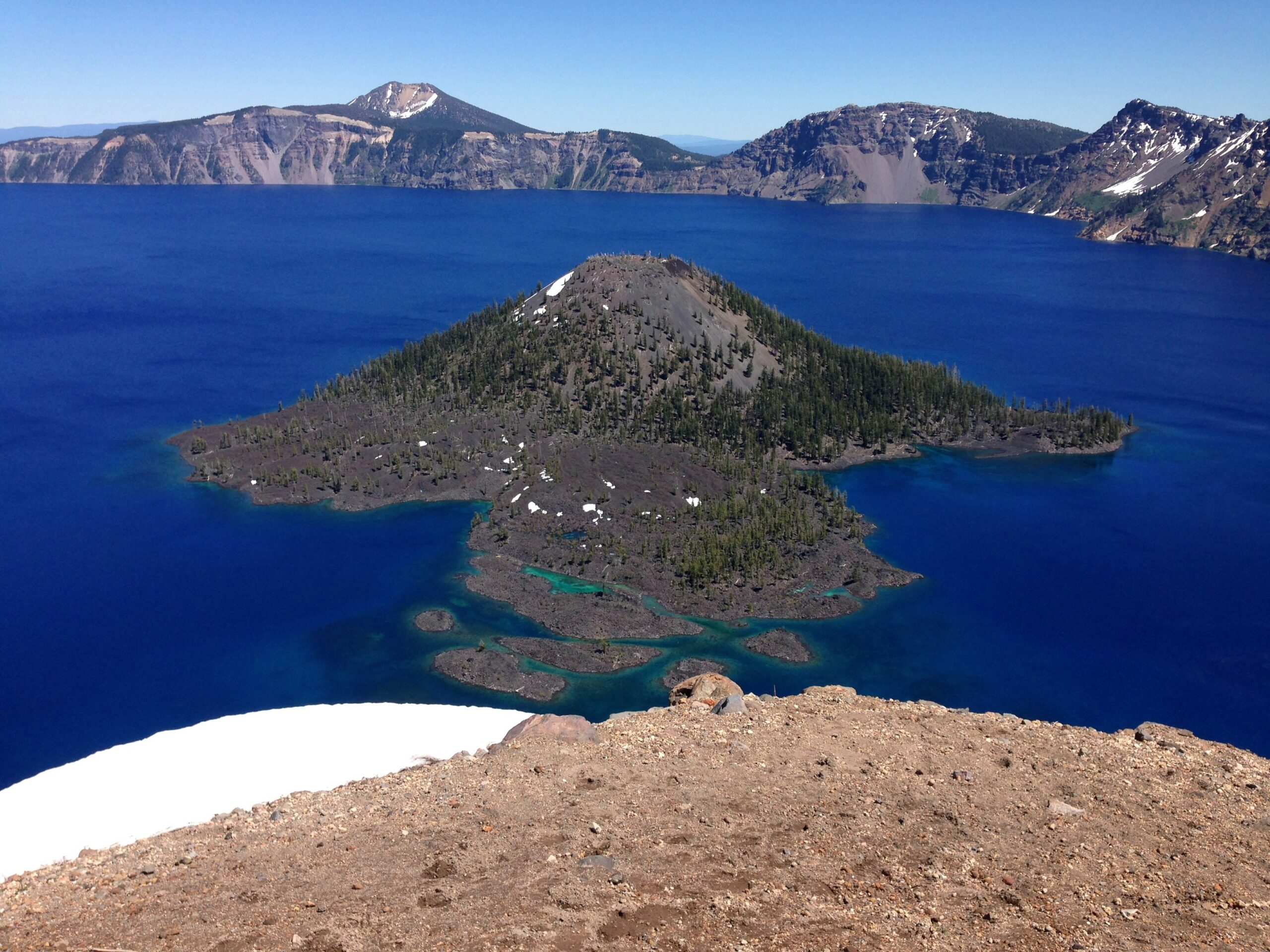
The sapphire depths of Crater Lake, a jewel nestled within Oregon’s Cascade Range, conceal a tumultuous past. While today it evokes an image of tranquility and awe-inspiring beauty, this iconic caldera owes its existence to a series of cataclysmic volcanic eruptions that reshaped the landscape and left an indelible mark on Earth’s history. To understand Crater Lake is to delve into a narrative of immense power, geological drama, and the slow, inexorable forces that sculpt our planet. This is the story of its explosive events, a history etched in ash, lava, and the very shape of the land.
Before the dramatic implosion that formed Crater Lake, the towering stratovolcano known as Mount Mazama dominated the skyline. For millennia, Mazama stood as a formidable presence, its slopes sculpted by cyclical eruptions of lava and ash. However, the story of Crater Lake’s formation doesn’t begin with a single, isolated event but rather with a complex geological history stretching back hundreds of thousands of years.
Ancestral Volcanoes and Early Activity
The geological journey that led to Mazama’s eventual demise began with the eruption of earlier volcanoes in the region. These precursor eruptions laid the groundwork for the magmatic system that would ultimately fuel the catastrophic events.
The Columbia River Basalts: A Foundation of Fire
The earliest volcanic activity in the broader Cascade region involved the vast outpouring of basaltic lava flows from the Columbia River Basalt Group. While these eruptions predated Mount Mazama by millions of years, they established the underlying geological structure and tectonic forces that would influence later volcanic activity. These ancient lava flows, covering vast swaths of the Pacific Northwest, provided the foundation upon which the more recent Cascade volcanoes, including Mazama, would eventually rise.
The Formation of Mount Mazama: A Symbiosis of Lava and Ash
Mount Mazama itself began to form approximately 400,000 years ago. Unlike many shield volcanoes that erupt primarily fluid basaltic lava, Mazama was a stratovolcano, built from alternating layers of viscous lava flows (andesite and dacite) and explosive pyroclastic material, including ash and cinders. This type of eruption is characterized by its explosive nature, where gas-rich magma fragments and is ejected high into the atmosphere.
Early Building Phases and Lava Flows
The initial stages of Mazama’s growth involved effusive eruptions, where lava flowed relatively smoothly down its flanks. These flows contributed to the broad, conical shape of the volcano, gradually increasing its stature. Evidence of these early lava flows can still be found in the geological record, forming distinct layers within the volcano’s edifice.
Intermittent Explosive Episodes
However, Mazama was not solely characterized by gentle lava flows. Throughout its life, the volcano experienced periods of intense explosive activity. These eruptions spewed ash, pumice, and volcanic bombs, contributing to the build-up of pyroclastic deposits on its slopes and surrounding areas. These explosive phases were critical in shaping the volcano’s eventual structure and developing the unstable magma chamber beneath it.
The Magma Chamber: A Reservoir of Destructive Power
At the heart of any major volcanic eruption lies the magma chamber – a vast reservoir of molten rock beneath the Earth’s crust. For Mount Mazama, this subterranean chamber was not merely a passive pool but a dynamic and increasingly volatile system, accumulating immense pressure over centuries, a prelude to its eventual catastrophic release.
The Ascent of Magma
Magma, less dense than the surrounding solid rock, slowly migrates upwards from the Earth’s mantle. This process is driven by deep geological forces and the specific composition of the magma itself. As magma ascends, it can accumulate in chambers within the crust, where it can remain for extended periods, undergoing changes in temperature, pressure, and chemical composition.
Pressure Buildup and Chemical Evolution
Within the magma chamber beneath Mazama, multiple factors contributed to the immense pressure buildup. Dissolved gases within the magma, such as water vapor and carbon dioxide, exsolve as the magma rises closer to the surface and pressure decreases. This exsolution process significantly increases the pressure within the chamber. Furthermore, repeated intrusions of fresh, hotter magma from deeper within the Earth could reheat and destabilize the existing magma, leading to more vigorous degassing and further pressure accumulation. The chemical evolution of the magma, from more basaltic to more silica-rich (dacitic), also played a crucial role. Silica-rich magmas trap gases more effectively, leading to higher pressures and more explosive eruptions.
The eruption history of Crater Lake is a fascinating topic that highlights the geological processes that shaped this stunning natural wonder. For those interested in understanding how such geological events can influence broader economic and environmental factors, a related article discusses the impact of nearshoring on global trade frameworks. You can read more about it here: The Impact of Nearshoring on Global Trade Frameworks. This article provides insights into how geographical changes, including those caused by volcanic activity, can affect trade dynamics and economic strategies.
The Climactic Eruption: The Birth of Crater Lake
The culmination of Mount Mazama’s long and active life was a cataclysmic eruption of unimaginable scale, an event that forever altered the landscape and birthed Crater Lake. This event, known as the “Mazama eruption,” was one of the most significant volcanic events in North America in the last 70,000 years.
The Stages of the Mazama Eruption
The Mazama eruption was not a single, instantaneous event but a series of powerful phases that unfolded over a relatively short geological period, likely spanning days to weeks. Each phase contributed to the destruction of the volcano and the creation of the iconic lake.
Plinian Phase: The Ejection of Ash and Pumice
The eruption began with an explosive Plinian phase, named after the Roman writer Pliny the Younger, who famously described the eruption of Mount Vesuvius. This phase is characterized by a massive and sustained ejection of volcanic ash, pumice, and gas high into the stratosphere.
The Ash Column: A Stratospheric Menace
A towering column of incandescent ash and gas, reaching tens of kilometers into the atmosphere, erupted violently from the summit of Mount Mazama. This ash column was so immense that it darkened the sky for hundreds, even thousands, of miles around.
Pumice Flows and Pyroclastic Surges
As the eruption intensified, the weight of the ash and gas column became too great to sustain itself. This led to the collapse of the eruption column, generating devastating pyroclastic flows and surges. These are superheated avalanches of gas, ash, and rock fragments that race down the volcano’s slopes at incredible speeds, incinerating everything in their path. Vast quantities of pumice, a lightweight, frothy volcanic rock, were produced and dispersed over a wide area.
The Caldera Collapse: The Volcano’s Final Act
The most dramatic phase of the Mazama eruption was the caldera collapse. As immense volumes of magma were rapidly expelled from the magma chamber, the overlying rock structure lost its support.
Subsidence and Inward Collapse
Without the molten rock to prop it up, the summit of Mount Mazama began to sink. This sinking was not a gentle settling but a rapid inward collapse, creating a massive depression at the volcano’s crest.
Formation of the Depression
The sheer scale of the collapse was immense, forming a caldera over eight kilometers in diameter and more than 1,200 meters deep at its peak. This colossal void was the physical manifestation of the volcano’s internal devastation. The collapse likely occurred in stages, with enormous blocks of the volcano’s summit collapsing incrementally.
The Aftermath: A Lake is Born
In the immediate aftermath of the eruption, the newly formed caldera was a scene of desolation and continuing geological activity. However, the forces of nature were already at work to transform this barren landscape into something extraordinary.
Filling the Void: Precipitation and Snowmelt
The massive depression left by the caldera collapse began to fill with water. Crater Lake’s elevation of 6,178 feet (1,883 meters) means it receives substantial precipitation in the form of snow. Over time, this accumulated precipitation, coupled with snowmelt, began to fill the caldera.
A Relatively Pure Water Source
The caldera walls are composed of relatively impermeable volcanic rock, limiting groundwater inflow. This, combined with the lack of significant river inlets, means that Crater Lake is primarily fed by precipitation and snowmelt. This unique hydrological situation contributes to the extraordinary clarity and purity of the lake’s waters.
The Purity of the Waters: A Geological Quarantine
The lack of inlets and outlets, combined with the impermeable nature of the caldera walls, effectively isolates Crater Lake’s water. This geological quarantine prevents sediments and dissolved minerals from entering the lake in significant quantities, contributing to its exceptionally clear, deep blue color. The water is so pure that it can appear almost black in deeper sections due to the absorption of light.
Younger Volcanic Activity: The Phoenix Within the Ashes

The cataclysmic Mazama eruption was not the end of volcanic activity in the region. Within the vast caldera, new volcanic formations emerged, a testament to the enduring geothermal energy beneath the surface and the persistent drive of geological processes to reshape the landscape.
Crater Lake, known for its stunning beauty, has a fascinating eruption history that has shaped its formation over thousands of years. For those interested in understanding the broader implications of natural disasters on ancient civilizations, a related article explores the impact of such events on economies and societies. You can read more about this in the article on the fall of ancient economies, which provides valuable insights into how eruptions and other calamities influenced human development. To learn more, visit this article.
Wizard Island and the Phantom Ship: New Emersions
Following the main eruption and caldera collapse, the forces of volcanism continued to manifest within the newly formed depression, giving rise to distinct volcanic features that are now iconic landmarks.
Wizard Island: A Volcanic Cone Rises
One of the most striking features within Crater Lake is Wizard Island, a cinder cone rising approximately 760 feet (230 meters) above the lake’s surface. This island is the remnant of a smaller, post-caldera eruption.
Formation of a Cinder Cone
Wizard Island formed through a series of relatively small, explosive eruptions that ejected pyroclastic material, primarily cinders and ash, to build its distinctive cone shape. The eruptions were likely driven by a smaller magma chamber that formed after the main Mazama event. The presence of a well-preserved crater at its summit is evidence of its volcanic origin.
Lava Flows and Summit Crater
Following the construction of the cinder cone, a lava flow emanated from the summit crater, forming the island’s western slopes. The summit crater itself, though eroded by time, still provides visual evidence of the final explosive stages of Wizard Island’s formation.
The Phantom Ship: A Volcanic Remnant
Another notable volcanic feature is the Phantom Ship, a small, rocky islet that emerges dramatically from the lake’s surface. This feature represents a remnant of a prehistoric lava flow that extended from the slopes of the original Mount Mazama, but which was not entirely destroyed during the caldera collapse.
Erosion and Persistence
The Phantom Ship is primarily composed of andesite, a type of volcanic rock. It is a testament to the erosive power of the lake and the atmosphere, with the softer surrounding rock having been worn away over millennia, leaving this more resistant remnant standing defiant. Its rugged appearance and its isolation contribute to its mystique.
Continued Hydrothermal Activity
Even after the formation of Wizard Island and other post-caldera features, the geothermal energy beneath Crater Lake has continued to influence the lake’s environment, albeit in subtler ways than the grand eruptions of the past.
Fumaroles and Gas Emissions
Evidence of ongoing hydrothermal activity can be observed in the form of fumaroles, vents that release steam and gases from beneath the lake’s surface. While not as spectacular as major eruptions, these emissions indicate that the volcanic system is still active, albeit at a much lower intensity.
Dissolved Gases and Lake Chemistry
The gases released through hydrothermal vents, primarily sulfur dioxide and carbon dioxide, can dissolve in the lake water. This dissolution can influence the lake’s chemistry and contribute to the unique conditions found within its depths. Scientists monitor these gas emissions as indicators of the underlying volcanic system’s health.
Subaqueous Volcanism: A Hidden Threat?
While no major subaqueous (underwater) eruptions have been documented at Crater Lake in recent human history, the potential for such events remains. The geological conditions suggest that pockets of molten rock may still exist beneath the lakebed, and future seismic activity or changes in the magma chamber could theoretically trigger underwater volcanic activity.
Understanding the Past, Preparing for the Future: The Legacy of Explosive Events

The history of Crater Lake is a powerful reminder of the dynamic and often destructive forces that shape our planet. The cataclysmic eruptions that created this natural wonder also provide invaluable insights for understanding volcanic processes and mitigating future risks.
Geological Insights and Monitoring
The study of Crater Lake’s formation and ongoing activity offers crucial information for volcanologists and geologists worldwide, contributing to the understanding of caldera formation and the behavior of large volcanic systems.
Caldera Formation Models
The Mazama eruption serves as a prime example for refining models of caldera collapse. By studying the geological evidence left behind – the ash deposits, the stratigraphy, and the morphology of the caldera – scientists can better understand the mechanics of such massive volcanic events and predict their likelihood in other volcanic regions.
The Role of Magma Chamber Dynamics
Research at Crater Lake helps unravel the complex dynamics within magma chambers. Understanding how pressure builds, how magma evolves, and how the system becomes unstable are critical for both scientific understanding and hazard assessment.
Seismic Monitoring and Ground Deformation
The U.S. Geological Survey (USGS) actively monitors the Mount Mazama volcanic system. This monitoring includes seismic networks to detect earthquakes that could indicate magma movement and GPS stations to measure any subtle changes in the ground’s elevation, which could signal swelling or deflation of the magma chamber.
Early Warning Systems
The data collected from these monitoring efforts contributes to early warning systems for potential volcanic unrest. While Crater Lake is not currently considered highly active, ongoing monitoring ensures that any significant changes are detected promptly, allowing for appropriate public safety measures.
The Enduring Impact on the Landscape and Ecosystem
The explosive events that formed Crater Lake have had a profound and lasting impact on the surrounding landscape and the development of its unique ecosystem. The stark beauty of the caldera and the clarity of its waters are direct consequences of this violent geological history.
Shaping the Cascades Landscape
The Mazama eruption was a significant event in shaping the broader Cascade Mountains. The vast quantities of ash deposited across the region influenced soil development, drainage patterns, and vegetation regrowth for millennia. The caldera itself stands as a dominant geological feature, an ever-present reminder of the volcano’s past power.
Post-Eruption Vegetation Succession
Following the eruption, the landscape was initially barren. However, over thousands of years, pioneer species of plants began to colonize the ash deposits, slowly re-establishing a diverse ecosystem. This process of ecological succession, driven by the aftermath of volcanic activity, is a fascinating area of study.
The Unique Ecology of Crater Lake
The pristine waters and unique geological setting of Crater Lake have fostered a distinct ecological environment. The clear water, the depth, and the relatively cool temperatures create specific conditions that support a specialized assemblage of aquatic life.
Adaptations to a Pure Environment
The fish and other organisms found in Crater Lake have adapted to its exceptionally pure and relatively low-nutrient environment. The rainbow trout and kokanee salmon, introduced species, have thrived in these conditions, becoming an integral part of the lake’s ecosystem.
Lessons from the Deep: A Reflection of Earth’s Power
Crater Lake is more than just a stunning natural landmark; it is a living testament to the immense power of Earth’s geological forces. Its history of explosive events serves as a profound teacher, reminding us of the planet’s constant state of flux and the importance of understanding and respecting the natural world.
The Cycle of Destruction and Creation
From the fiery birth of Mount Mazama to its dramatic collapse and the subsequent formation of a serene lake, Crater Lake embodies the cyclical nature of geological processes. Destruction paves the way for creation, and even the most violent events can ultimately lead to new forms of beauty and life.
A Window into Earth’s History
The geological layers and formations of Crater Lake provide a detailed archive of its fiery past. Scientists can read this archive like a book, uncovering the intricate details of volcanic eruptions, magma chamber evolution, and the subsequent geological and ecological responses.
Inspiring Awe and Scientific Inquiry
The awe-inspiring beauty of Crater Lake draws millions of visitors each year, inspiring a sense of wonder and connection with the natural world. Simultaneously, its geological significance continues to drive scientific inquiry, pushing the boundaries of our understanding of volcanology, geochronology, and Earth science as a whole. The history of its explosive events is not merely a tale of destruction but a foundational narrative of geological wonder and scientific discovery.

Scientists Found Earth’s Hidden Timestamp
FAQs
What is the history of eruptions at Crater Lake?
Crater Lake has a history of volcanic eruptions, with the most recent major eruption occurring around 7,700 years ago. This eruption resulted in the collapse of Mount Mazama, forming the caldera that now contains Crater Lake.
How many eruptions have occurred at Crater Lake?
There have been at least 10 significant eruptions at Crater Lake over the past 100,000 years. These eruptions have shaped the landscape of the area and contributed to the formation of the iconic Crater Lake.
What type of volcanic activity is present at Crater Lake?
Crater Lake is part of the Cascade Range, which is known for its volcanic activity. The area around Crater Lake is characterized by volcanic peaks and lava flows, and the lake itself fills the caldera left behind by the collapse of Mount Mazama.
Is Crater Lake still an active volcanic area?
While there is currently no active volcanic activity at Crater Lake, the area is still considered geologically active. The presence of hot springs and fumaroles around the lake indicates that there is still some residual volcanic activity in the area.
What are the potential hazards associated with volcanic activity at Crater Lake?
Although there is currently no imminent threat of volcanic activity at Crater Lake, the area is monitored for signs of potential eruptions. The main hazards associated with volcanic activity at Crater Lake would include ashfall, lava flows, and potential lahars (mudflows) that could impact surrounding areas.