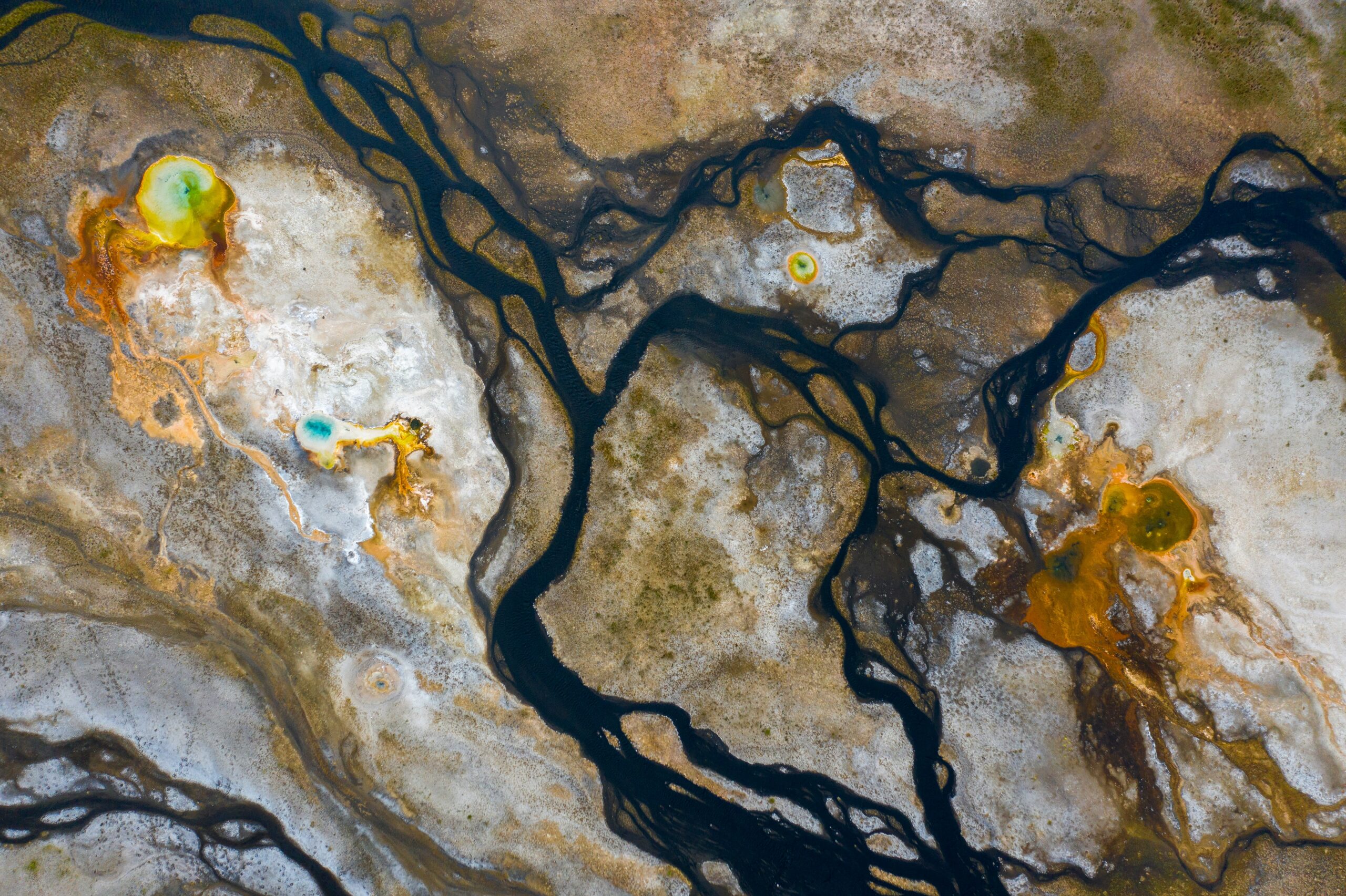
Chemical fingerprint geology, a burgeoning field within the earth sciences, offers a sophisticated lens through which to understand the origins, history, and interactions of geological materials. This approach leverages the unique and often subtle chemical signatures – the “fingerprints” – that are imprinted upon rocks, minerals, and even fluids during their formation and subsequent alteration. By meticulously analyzing these chemical traces, geologists can unveil secrets about deep time, decipher complex geological processes, and even address critical environmental and resource management challenges. The fundamental principle is that every geological event, from the crystallization of magma to the slow weathering of a mountainside, leaves an indelible chemical mark, a testament to the specific conditions under which it occurred.
At the heart of chemical fingerprint geology lies the understanding that the Earth’s crust and mantle are not homogeneous entities. Instead, they are mosaics of materials with distinct chemical compositions. These compositions are dictated by a variety of factors, including the original building blocks of the solar system, the processes of differentiation within the Earth, and the subsequent geological events that have reshaped the planet.
Elemental Abundance: The Building Blocks
The most basic level of chemical fingerprinting involves analyzing the relative abundance of major, minor, and trace elements within a geological sample. Each element, defined by its unique number of protons, possesses specific chemical properties that influence its behavior during geological processes. For instance, elements with similar ionic radii and charges tend to behave similarly during magma crystallization. This means that the suite of elements present in a granite, for example, can reflect the composition of the source magma and the degree to which it has fractionated.
Major Elements: The Bulk Composition
Major elements – those comprising more than 1% of a rock by weight, such as silicon (Si), aluminum (Al), iron (Fe), magnesium (Mg), calcium (Ca), sodium (Na), potassium (K), and titanium (Ti) – provide a broad overview of a rock’s composition. Analyzing their proportions can readily distinguish between different rock types, such as mafic basalts (rich in Mg and Fe) and felsic granites (rich in Si, Al, Na, and K). Variations in the ratios of these major elements can also hint at magmatic processes like partial melting or fractional crystallization.
Minor and Trace Elements: The Subtle Clues
Minor elements (0.1% to 1% by weight) and trace elements (less than 0.1% by weight) are present in smaller quantities but can offer far more discriminatory information. Certain trace elements, known as incompatible elements, are preferentially excluded from the crystal lattices of common rock-forming minerals during magma crystallization. Their enrichment in the remaining melt can therefore serve as a powerful indicator of the extent of fractional crystallization. Conversely, the depletion of certain trace elements can signify the removal of specific minerals from the magma.
Isotopic Ratios: The Unchanging Clocks
Perhaps the most powerful tools in chemical fingerprint geology are isotopic analyses. Isotopes of an element have the same number of protons but different numbers of neutrons, resulting in different atomic masses. While their chemical behavior is virtually identical, their mass differences are exploited to track geological processes and determine ages. The key principle is that during physical and chemical processes, slight mass-dependent fractionation can occur. Crucially, radioactive isotopes decay at predictable rates, acting as precise geological clocks.
Stable Isotopes: Tracing Processes
Stable isotopes, such as oxygen ($delta^{18}$O), hydrogen ($delta$D), carbon ($delta^{13}$C), and sulfur ($delta^{34}$S), do not undergo radioactive decay. Their variations in geological materials are primarily due to physical processes like evaporation, precipitation, and phase changes, as well as chemical processes like oxidation, reduction, and mineral precipitation. For example, $delta^{18}$O values in minerals can reveal information about the temperature and source of the water involved in hydrothermal alteration. $delta^{13}$C values in carbonate rocks can distinguish between marine and terrestrial organic matter, providing insights into ancient environments.
Radiogenic Isotopes: Dating and Provenance
Radiogenic isotopes are produced by the radioactive decay of parent isotopes. The ratio of parent to daughter isotopes in a rock or mineral acts as a geochronometer, allowing geologists to determine the age of its formation or alteration. Common isotope systems include Uranium-Lead (U-Pb) for dating zircon, Potassium-Argon (K-Ar) and Argon-Argon (Ar-Ar) for dating various minerals like micas and feldspars, and Rubidium-Strontium (Rb-Sr) and Samarium-Neodymium (Sm-Nd) for deciphering the evolution of large igneous provinces and mantle reservoirs. Furthermore, the isotopic composition of radiogenic systems can also reveal the origin of magmas, as different mantle sources will have distinct isotopic signatures that are inherited from the early solar system.
Chemical fingerprint geology is a fascinating field that utilizes the unique chemical compositions of rocks and minerals to trace their origins and understand geological processes. For those interested in exploring the broader implications of chemical analysis, including its impact on various sectors, a related article can be found at Surviving a Depression: What Happens to Your Bank Accounts. This article delves into the financial aspects of navigating economic challenges, highlighting the importance of understanding underlying systems, much like how chemical fingerprints reveal the history of geological materials.
Applications in Provenance Studies: Tracing the Origins of Sediments
One of the most significant applications of chemical fingerprint geology is in provenance studies, which aim to determine the source of detrital sediments. Sediments are the fragmented remnants of pre-existing rocks, and their chemical composition often retains imprints of their parent material. By comparing the chemical fingerprints of sedimentary rocks with those of potential source rocks, geologists can reconstruct ancient landscapes and understand sediment transport pathways.
Distinguishing Source Regions
Sedimentary basins draw material from surrounding landmasses. The overall chemical composition of the sediments deposited in a basin will reflect the integrated composition of these eroded source areas. By analyzing the abundance of major and trace elements, as well as isotopic ratios, in sandstone or mudstone samples, geologists can identify the dominant rock types that were eroded.
Major and Trace Element Signatures
For example, sandstones derived from granitic terrains will typically exhibit higher concentrations of silica and alkali elements (Na and K) compared to those derived from mafic volcanic terrains, which will be richer in iron and magnesium. Trace element patterns, particularly those of rare earth elements (REEs), can be highly diagnostic. The enrichment or depletion of specific REEs relative to a normalizing factor, such as mid-ocean ridge basalt (MORB), can provide a unique spectral fingerprint of the source lithology.
Isotopic Fingerprints of Source Rocks
Isotopic compositions, particularly Sm-Nd and Pb isotopes, are exceptionally powerful in provenance studies. Different crustal provinces and mantle sources have distinct isotopic signatures developed over billions of years due to variations in the initial isotopic ratios and the subsequent enrichment or depletion of parent and daughter isotopes through geological processes. For instance, the $epsilon_{text{Nd}}$ values (a measure of the deviation of the $^{143}$Nd/$^{144}$Nd ratio from that of a depleted mantle reservoir) of sediments can effectively distinguish between source areas with ancient continental crust versus those with younger, more juvenile crust. Similarly, lead isotope ratios (e.g., $^{206}$Pb/$^{204}$Pb, $^{207}$Pb/$^{204}$Pb, $^{208}$Pb/$^{204}$Pb) can discriminate between granitoid sources, volcanic terranes, and even different types of ore deposits.
Unraveling Sediment Transport History
Beyond simply identifying the source rock, chemical fingerprints can also shed light on the transport history of sediments. The degree of chemical weathering experienced by a sediment en route to deposition can alter its chemical composition. Highly weathered sediments tend to be enriched in immobile elements like aluminum and titanium, and depleted in mobile elements like sodium and calcium.
Chemical Weathering Indices
Indices derived from the ratios of different elements can quantify the extent of chemical weathering. For instance, the CIA (Chemical Index of Alteration), often calculated as {Al$_2$O$_3$ / (Al$_2$O$_3$ + CaO + Na$_2$O + K$_2$O)} x 100, increases with increasing weathering. Sediments from arid environments or those that have undergone short transport distances will generally exhibit lower CIA values, indicating less weathering, compared to sediments from humid climates or those transported over long distances.
Isotopic Fractionation During Transport
In some cases, isotopic fractionation can even occur during sediment transport, particularly in the case of heavy minerals or during the dissolution and reprecipitation of fine-grained material. While less common than source discrimination, these subtle isotopic shifts can offer additional clues about sedimentary processes.
Unveiling Magmatic Diversity: Fingerprinting the Genesis of Igneous Rocks

The formation of igneous rocks from molten magma is a complex process involving melting, differentiation, assimilation, and mixing. Each of these processes leaves a distinct chemical imprint on the resulting molten material and ultimately on the solidified igneous rock. Chemical fingerprinting of igneous rocks is therefore crucial for understanding the Earth’s magmatic plumbing systems, tectonic settings, and the evolution of continental crust.
Distinguishing Magma Sources
The chemical and isotopic composition of a magma directly reflects the composition of its source material in the Earth’s mantle or crust. By analyzing igneous rocks, geologists can infer whether a magma originated from a depleted mantle reservoir, a enriched mantle plume, or melted continental crust.
Trace Element Patterns as Source Indicators
Trace element distributions, particularly the patterns of rare earth elements and high field strength elements (HFSEs) like Zr, Hf, Nb, and Ta, are highly sensitive to the melting processes in the mantle and crust. For example, magmas derived from partial melting of eclogite (a high-pressure, mafic rock) will have distinct REE patterns compared to those derived from partial melting of peridotite (the dominant rock of the upper mantle).
Isotopic Signatures of Mantle Reservoirs
Isotopic ratios, especially $epsilon_{text{Nd}}$ and $epsilon_{text{Hf}}$, are invaluable for tracing mantle reservoirs. The depleted mantle (DM), which has lost incompatible elements over time through the extraction of melts, has a distinct isotopic signature from the enriched mantle (EM) reservoirs, which have accumulated incompatible elements. Oceanic basalts erupted at mid-ocean ridges (MORBs) typically have depleted isotopic signatures, while those erupted at oceanic islands (OIBs) often show a wider range of isotopic compositions, reflecting contributions from various enriched mantle sources, including recycled crustal material. Continental flood basalts, on the other hand, can exhibit isotopic signatures that indicate melting of both mantle and crustal sources.
Tracing Fractional Crystallization and Magma Evolution
As magma cools and crystallizes, certain minerals form preferentially based on their stability under specific temperature and pressure conditions. The chemical composition of the remaining melt changes as these minerals are removed, a process known as fractional crystallization. This process leads to the evolution of magma compositions, producing a suite of related igneous rocks.
Element Partitioning Between Melt and Crystals
The chemical fingerprints that record fractional crystallization are the systematic variations in major and trace element concentrations as minerals crystallize out of the melt. Elements that are readily incorporated into the liquid phase and have unfavorable partitioning coefficients into common rock-forming minerals will become progressively enriched in the residual melt. Conversely, elements that are strongly incompatible with forming minerals will be significantly enriched.
Isotope Fractionation During Crystallization
While the bulk isotopic composition of a magma is generally inherited from its source, isotopic fractionation can occur during the crystallization of specific minerals due to slight differences in mass between isotopic species. For instance, lighter isotopes of an element may preferentially enter the solid phase. Such effects are often subtle but can be detected with highly precise isotopic measurements and can provide further constraints on crystallization processes.
Understanding Magma Mixing and Assimilation
Magmas can interact with each other and with the surrounding host rocks through processes of mixing and assimilation. These events can significantly alter the chemical and isotopic composition of magmas, creating hybrid compositions that are distinct from their original parental magmas.
Hybrid Chemical Signatures
Magma mixing produces igneous rocks with a blend of chemical characteristics from the interacting magmas. For example, mixing between a mafic magma and a felsic magma can result in intermediate compositions that do not fit simple fractional crystallization trends. Trace element patterns and isotopic ratios in such rocks will often show mixing trends between the end-member compositions.
Assimilation of Country Rock
Assimilation occurs when a magma melts and incorporates surrounding host rocks. The chemistry and isotopes of the assimilated material are then incorporated into the magma, altering its original composition. For instance, a basaltic magma ascending through continental crust might assimilate crustal material, leading to an increase in silica content and a shift in isotopic ratios towards those of the continental crust. Detecting assimilation requires careful analysis of trace element and isotopic compositions to identify the admixture of foreign material.
Decoding Hydrothermal Systems: Chemical Fingerprints of Fluid-Rock Interaction

Hydrothermal systems, where hot, chemically active fluids circulate through the Earth’s crust, play a critical role in ore formation, geothermal energy production, and the alteration of rocks. The chemical signatures of these fluids and the minerals they precipitate or react with are invaluable for understanding the dynamics, temperatures, and origins of these systems.
Fluid Composition and Origin
Hydrothermal fluids can originate from various sources, including magmatic intrusions, meteoric water, or even metamorphic devolatilization. Their chemical composition is a direct reflection of their source and the minerals they have interacted with along their pathway.
Major and Minor Element Signatures of Fluids
The concentration of dissolved ions – such as Na$^+$, K$^+$, Ca$^{2+}$, Mg$^{2+}$, Cl$^-$, SO$_4^{2-}$ – in hydrothermal fluids provides insights into their origin and the extent of water-rock interaction. For example, saline fluids enriched in Cl$^-$ can indicate a magmatic or evaporitic origin, while fluids dominated by meteoric water might show different ionic ratios.
Isotopic Tracers of Fluid Sources
Stable isotopes of oxygen ($delta^{18}$O) and hydrogen ($delta$D) are vital for discerning the origin of hydrothermal fluids. Meteoric water typically has characteristic $delta^{18}$O and $delta$D values that vary with latitude and altitude. Magmatic water, on the other hand, generally has distinct isotopic signatures. By analyzing the isotopic composition of water extracted from fluid inclusions or the alteration minerals themselves, geologists can determine whether a hydrothermal system is dominated by magmatic, meteoric, or a mixture of both water sources.
Mineral Alteration Assemblages: Recording P-T-X Conditions
As hydrothermal fluids interact with pre-existing rocks, they cause mineral alteration. The resulting suite of alteration minerals, known as an alteration assemblage, is highly sensitive to the temperature, pressure, and chemical environment (X) of the fluid. The chemical composition of these alteration minerals provides a direct record of these conditions.
Geochemical Thermometers and Barometers
Certain minerals and mineral pairs can act as geochemical thermometers and barometers. For instance, the partitioning of elements like K and Na between coexisting feldspars or micas can be used to estimate temperatures. Similarly, the stability of certain mineral phases as a function of pressure – such as the transition between chlorite and biotite – can provide pressure estimates.
Fluid Inclusions: Trapping Ancient Fluids
Fluid inclusions are microscopic pockets of ancient fluid trapped within growing mineral crystals. Analyzing the composition of these trapped fluids, often through microthermometry and Raman spectroscopy, provides direct chemical and isotopic information about the hydrothermal fluids at the time of mineral formation. The vapor and liquid phases within inclusions can be analyzed for dissolved salts, gases (like CO$_2$ and CH$_4$), and their isotopic composition, offering a snapshot of the conditions within the hydrothermal system.
Ore Genesis: Tracing Mineralizing Fluids
Hydrothermal systems are the primary loci for the formation of many economically important ore deposits. Understanding the chemical fingerprints of the mineralizing fluids is crucial for exploring for and understanding these deposits.
Metal Transport and Deposition
The solubility and transport of metals in hydrothermal fluids are governed by complex geochemical reactions, including complexation with ligands like chloride and sulfide. The deposition of metals, leading to ore formation, is often triggered by changes in fluid chemistry, such as cooling, boiling, or interaction with reactive wall rocks. Analyzing the trace element composition of gangue minerals (non-ore minerals associated with ore) and the ore minerals themselves can reveal the chemistry of the mineralizing fluids and the processes that led to metal precipitation.
Sulfur Isotope Geochemistry in Sulfide Deposits
Sulfur isotopes ($delta^{34}$S) are particularly useful in the study of ore deposits, especially those rich in sulfide minerals. Variations in $delta^{34}$S values can help distinguish between magmatic, marine, or bacterial sources of sulfur, and can provide clues about the oxidation-reduction state of the mineralizing fluids and the processes of sulfur precipitation.
Chemical fingerprint geology plays a crucial role in understanding the origins and compositions of various geological materials, providing insights into historical events and processes. For instance, the study of ancient maps, such as the Piri Reis map, can reveal significant information about the geographical knowledge of past civilizations and their interactions with the environment. A related article that delves into the intriguing aspects of this map and its implications can be found here. By examining such historical artifacts through the lens of chemical fingerprinting, researchers can uncover hidden narratives about our planet’s geological history.
Applications in Environmental Geochemistry: Tracking Pollution and Contamination
| Chemical Fingerprint Geology Metrics | Value |
|---|---|
| Mineral Composition | Quartz, Feldspar, Mica |
| Elemental Analysis | Silicon, Aluminum, Iron, Calcium |
| Trace Elements | Copper, Zinc, Lead, Nickel |
| Isotopic Ratios | Oxygen-18/Oxygen-16, Carbon-13/Carbon-12 |
The principles of chemical fingerprinting are not confined to understanding deep geological time but are also critical for addressing contemporary environmental challenges. By analyzing the chemical signatures of pollutants and their interactions with geological materials, scientists can track their sources, pathways, and fate in the environment.
Identifying Pollution Sources
Industrial activities, agricultural practices, and waste disposal can all introduce contaminants into the environment. Chemical fingerprinting can help identify the specific sources of these pollutants, enabling targeted remediation efforts.
Metal Contamination in Soils and Sediments
Heavy metals, such as lead (Pb), mercury (Hg), cadmium (Cd), and arsenic (As), can be released into the environment from mining operations, industrial emissions, or the use of certain products. Analyzing the isotopic composition of these metals in contaminated soils and sediments can provide unique fingerprints to discriminate between different sources. For example, lead isotope ratios can differentiate between lead derived from past mining activities, lead-acid batteries, or industrial smelting.
Organic Pollutant Fingerprinting
Organic pollutants, including polycyclic aromatic hydrocarbons (PAHs) and polychlorinated biphenyls (PCBs), also possess characteristic chemical signatures. The relative proportions of different isomers or the presence of specific functional groups can help pinpoint the source of the contamination, such as petroleum products, coal tar, or specific industrial processes.
Tracing Contaminant Transport and Fate
Once released into the environment, contaminants can be transported through soil, groundwater, and surface water. Chemical fingerprinting helps elucidate these transport pathways and the processes that affect the chemical speciation and mobility of contaminants.
Groundwater Contamination Investigations
Groundwater contamination is a significant concern for drinking water supplies. Analyzing the chemical and isotopic composition of groundwater samples, along with the surrounding geological materials, can reveal the origin of pollutants, their movement within aquifers, and the extent of contamination. For instance, the detection of specific artificial isotopes in groundwater might indicate leakage from nuclear waste sites.
Biogeochemical Cycling of Pollutants
The fate of pollutants in the environment is often dictated by biogeochemical processes. Chemical fingerprinting can help unravel these processes by analyzing the redox state, mineral associations, and isotopic signatures of contaminants as they are transformed or sequestered by microbial activity or mineral reactions.
Advanced Techniques and Future Directions
The field of chemical fingerprint geology is continuously evolving with the development of more sensitive analytical techniques and the integration of computational methods. These advancements are pushing the boundaries of what can be deciphered from geological samples.
High-Resolution Analytical Techniques
The demand for more precise and sensitive chemical and isotopic analysis drives the development of advanced techniques.
Inductively Coupled Plasma Mass Spectrometry (ICP-MS)
ICP-MS has revolutionized trace element and isotopic analysis by providing exceptionally low detection limits and the ability to measure multiple isotopes simultaneously. This allows for the fingerprinting of even minute quantities of elements and isotopes in complex geological matrices.
Secondary Ion Mass Spectrometry (SIMS) and Atom Probe Tomography (APT)
Techniques like SIMS and APT offer nanoscale chemical and isotopic imaging. They allow geologists to analyze the chemical composition of individual mineral grains, precipitates, and even within crystal lattices, providing unprecedented detail about micro-scale geological processes.
Noble Gas Geochemistry
The study of noble gases (He, Ne, Ar, Kr, Xe) in geological materials provides unique insights into processes ranging from mantle outgassing and crustal evolution to the dating of groundwater. Their inert nature means they are largely unaffected by chemical reactions, making them sensitive tracers of deep Earth processes and fluid movement.
Geochemical Modeling and Big Data
The increasing volume of geochemical data generated by advanced analytical techniques necessitates sophisticated computational tools for analysis and interpretation.
Geochemical Modeling Software
Sophisticated software allows geologists to model complex geochemical reactions, simulate magmatic processes, and predict the behavior of contaminants in the environment. This modeling, guided by empirical data, helps test hypotheses and refine our understanding of geological systems.
Machine Learning and Artificial Intelligence
The application of machine learning algorithms and artificial intelligence is beginning to transform chemical fingerprint geology. These tools can identify subtle patterns and correlations in large datasets that might be missed by human analysis, leading to new discoveries and more robust interpretations. For example, machine learning can be used to classify rock types based on their elemental compositions or to predict the likelihood of ore deposit formation in a given region.
The Interdisciplinary Nature of Chemical Fingerprint Geology
Future progress in chemical fingerprint geology will undoubtedly involve greater interdisciplinary collaboration. Integrating geological data with insights from geochemistry, physics, biology, and computer science will be essential to tackle the Earth’s most pressing scientific and societal challenges, from understanding mantle dynamics and the origins of life to mitigating climate change and managing natural resources sustainably. The ability to read the chemical stories etched into the Earth’s materials will continue to unlock profound insights into our planet’s past, present, and future.

Scientists Found Earth’s Hidden Timestamp
FAQs
What is a chemical fingerprint in geology?
A chemical fingerprint in geology refers to the unique chemical composition of a rock or mineral that can be used to identify its origin or source. This composition is determined by analyzing the presence and abundance of specific elements and isotopes within the sample.
How is a chemical fingerprint used in geology?
Chemical fingerprints are used in geology to trace the origin of rocks and minerals, identify geological processes such as weathering and metamorphism, and understand the formation and evolution of Earth’s crust. This information can also be used in environmental studies and resource exploration.
What techniques are used to analyze chemical fingerprints in geology?
Various analytical techniques are used to analyze chemical fingerprints in geology, including mass spectrometry, X-ray fluorescence, electron microprobe analysis, and stable isotope analysis. These techniques allow geologists to determine the elemental and isotopic composition of rocks and minerals with high precision.
What are the applications of chemical fingerprinting in geology?
Chemical fingerprinting in geology has applications in mineral exploration, environmental monitoring, forensic geology, and understanding the geological history of a region. It can also be used to study the movement of fluids and the formation of ore deposits.
Can chemical fingerprints be used to identify the source of environmental contaminants?
Yes, chemical fingerprints can be used to identify the source of environmental contaminants such as pollutants and toxins. By comparing the chemical composition of the contaminants with known sources, geologists can determine the origin and potential impact of the contaminants on the environment.