Unearthing Ancient Syria: Archaeological Discoveries
For millennia, the land of Syria has been a crossroads of civilizations, a fertile cradle where empires rose and fell, leaving behind a rich tapestry of history etched in stone, pottery, and bone. Its strategic location, bridging Mesopotamia, Egypt, and the Mediterranean, made it a coveted prize and a hub of cultural exchange. Today, archaeological expeditions, often fraught with challenges, continue to peel back the layers of time, revealing astonishing insights into the lives, beliefs, and innovations of its ancient inhabitants. These unearthed treasures not only illuminate Syria’s pre-eminence in the ancient world but also offer a profound connection to humanity’s shared past, urging preservation and deeper understanding in the face of modern complexities.
The story of civilization in Syria begins not with grand palaces, but with the humble settlements of prehistoric peoples. These early communities, while often overlooked, laid the groundwork for the complex societies that would follow, adapting to their environment and developing fundamental technologies. The archaeological record from this era, though fragmented, offers tantalizing glimpses into their daily lives, their evolving social structures, and their relationship with the natural world.
The Natufian Period: Hunter-Gatherers and the Seeds of Sedentism
The Natufian culture, flourishing between roughly 12,500 and 9,500 BCE, represents a pivotal stage in the transition from nomadic hunter-gatherer lifestyles to more settled communities. Sites like Ain Mallaha (Eynan) in Israel, and its Syrian counterparts, reveal evidence of semi-permanent dwellings, often circular in design, suggesting a degree of sedentism.
Early Dwellings and Settlement Patterns
Excavations have uncovered evidence of pit houses and larger, stone-built structures, indicating a shift towards more durable architecture. The density of artifacts within these settlements suggests that people were spending significant periods of time in one location, perhaps linked to the increasing availability of wild grains in the Fertile Crescent.
Subsistence Strategies and Early Farming Innovations
The Natufians were highly skilled hunter-gatherers, exploiting a diverse range of resources. Evidence of animal bones, plant remains, and ground-stone tools used for processing wild cereals points to sophisticated subsistence strategies. Crucially, there is also evidence of early experimentation with cultivating wild grains, a precursor to full-scale agriculture that would revolutionize human society.
Burial Practices and Early Spiritual Beliefs
The discovery of burials within or near settlements provides insights into Natufian social organization and their nascent spiritual beliefs. Elaborate burials, sometimes accompanied by grave goods, suggest a developing sense of community and perhaps an early understanding of the afterlife. The presence of decorated skulls hints at complex ritualistic practices.
The Pre-Pottery Neolithic: The Revolution of Agriculture
The Pre-Pottery Neolithic (PPN) period, spanning from roughly 9,500 to 7,000 BCE, marks a profound transformation with the widespread adoption of full-scale agriculture and animal domestication. This era witnessed the emergence of larger, more organized villages and the development of new technologies that facilitated this agricultural revolution.
Tell es-Sultan (Jericho): A Monumental Early Settlement
While primarily associated with the West Bank, Tell es-Sultan’s influence and contemporaries in Syria highlight the widespread nature of early Neolithic development. The remarkable Neolithic Tower and a massive stone wall at Jericho, dating to the PPN, are some of the earliest monumental constructions known, suggesting a need for communal defense or perhaps a symbolic representation of community strength and identity.
Halafian Culture: The Dawn of Pottery and Artistic Flourishing
The Halafian culture, flourishing in northern Syria and southeastern Anatolia from around 6100 to 5100 BCE, is renowned for its distinctive and highly sophisticated pottery. This period witnessed a significant leap in ceramic technology and artistic expression, setting a new standard for craftsmanship in the ancient Near East.
Exquisite Halafian Pottery: A Signature of the Era
The hallmark of the Halafian period is its finely made, thin-walled pottery, often decorated with intricate geometric patterns, stylized animals, and human figures in vibrant red and black slip. The quality of firing and the remarkable uniformity of production suggest specialized craftspeople and a complex exchange network.
Hamlet and Village Life: Social Organization in the Halafian Period
Halafian settlements were typically small to medium-sized villages, often characterized by multi-roomed houses built around a central courtyard. The presence of distinct craft areas and evidence of communal structures hint at evolving social organization and a growing interdependence within these communities.
Ritual Practices and possible religious centers
While direct evidence of religious structures is often scarce, the discovery of anthropomorphic figurines and the symbolic decoration on their pottery suggest a rich spiritual life. The uniform nature of Halafian material culture across a wide geographic area also points to shared beliefs and practices, potentially including rudimentary forms of organized religion.
Recent discoveries in Ancient Syria archaeology have shed light on the sophisticated societies that once thrived in the region. These findings not only enhance our understanding of the cultural and technological advancements of ancient civilizations but also highlight the importance of preserving such historical sites. For a deeper exploration of how archaeological evidence is revealing the complexities of ancient advanced civilizations, you can read more in this related article: Uncovering Evidence of Ancient Advanced Civilizations.
City-States and Empires: The Bronze Age and Beyond
As Syria moved into the Bronze Age, the landscape transformed dramatically with the emergence of powerful city-states and the rise and fall of vast empires. The fertile river valleys and strategic trade routes fostered urbanism, monumental architecture, and the development of complex administrative and economic systems.
Ebla: A Lost City Reborn
One of the most significant discoveries in Syrian archaeology is the ancient city of Ebla (modern Tell Mardikh). Flourishing in the 3rd millennium BCE, Ebla rose to become a powerful city-state that controlled a vast network of trade routes. Its rediscovery in the mid-20th century was nothing short of sensational, revealing a sophisticated urban center with a rich written archive.
The Royal Palace and its Administration
The excavation of Ebla’s Royal Palace revealed a vast administrative complex, including numerous rooms filled with thousands of clay tablets. These cuneiform tablets, written in Sumerian and Eblaite, provide unparalleled insights into Ebla’s political structure, economic activities, royal decrees, and international relations.
The Archives of Ebla: A Window into Ancient Governance
The discovery of the Eblaite archives is considered one of the most important archaeological finds of the 20th century. The tablets detail extensive trade networks stretching to Mesopotamia and Egypt, offering a unique perspective on the diplomatic and economic interactions of the early Bronze Age. They reveal a sophisticated bureaucracy, complex legal systems, and a vibrant cultural life.
Religious Practices and Temple Structures
Evidence of temples and votive offerings at Ebla points to a complex religious system. The names of deities mentioned in the archives and the iconography found on seals and artifacts provide clues to their pantheon and their religious beliefs.
Ugarit: The Gateway to the Mediterranean and its Epic Literature
Ugarit, located on the Syrian coast near modern Latakia, was another crucial center of power during the Late Bronze Age. Its strategic position facilitated its role as a major trading port, connecting Mesopotamia, Anatolia, Egypt, and the Aegean world. The city’s discovery yielded a remarkable trove of information, including its unique script and epic poems.
The Royal Palace and the City’s Layout
The well-preserved ruins of Ugarit’s Royal Palace, along with its administrative buildings and residential quarters, offer a detailed picture of urban planning and aristocratic life. The city’s layout suggests a well-organized society with distinct zones for palaces, temples, and commercial activities.
The Archives of Ugarit: Bilingual and Biculturalism
Similar to Ebla, Ugarit possessed extensive archives. Among the most significant are tablets written in Akkadian (the diplomatic language of the time) and in the indigenous Ugaritic language, written in a unique alphabetic cuneiform script. These archives illuminate Ugarit’s complex political landscape, its economic dealings, and its religious traditions.
The Ras Shamra Tablets: Canaanite Mythology and Epic Poetry
The Ras Shamra tablets unearthed at Ugarit are of immense importance for understanding Canaanite religion and literature. They contain a wealth of myths and epics, including the Baal Cycle, which provides invaluable insights into the beliefs, rituals, and mythological narratives of the ancient Levant. These texts have also shed light on parallels with biblical narratives.
The Hittites and the Great Kingdoms: Shifting Powers
Syria’s history in the Bronze Age was also shaped by the influence of powerful empires from neighboring regions. The Hittites, who established a vast empire in Anatolia, exerted significant control over parts of northern Syria for centuries, leaving their mark on the region’s culture and political landscape. Subsequent powers, such as the Assyrians and Babylonians, would also vie for dominance in the region.
Hittite Influence and Archaeological Traces
Hittite presence in Syria is evident in archaeological remains, including fortifications, administrative centers, and inscribed objects. Their control over important trade routes and their interactions with Syrian polities are well documented in both Hittite and local archives.
The Neo-Assyrian and Neo-Babylonian Periods: Imperial Dominance
Later Bronze Age and early Iron Age Syria experienced periods of control by the Neo-Assyrian and Neo-Babylonian empires. These empires left behind monumental inscriptions, administrative records, and evidence of their architectural styles, reflecting their vast imperial reach and their methods of governance over conquered territories.
Roman and Byzantine Syria: Roads, Ruins, and Riverside Cities

With the advent of the Roman Empire, Syria entered a new phase, becoming a vital province that connected Rome to its eastern territories. Roman dominance brought a period of relative peace, prosperity, and extensive infrastructural development, leading to the construction of magnificent cities, roads, and public buildings that still stand today.
Palmyra: The Rose of the Desert
Perhaps the most iconic of Roman Syria’s cities, Palmyra, emerged as a prosperous caravan city on the fringes of the Roman Empire. Its strategic location facilitated its role as a crucial hub for trade between the Roman world and Persia, leading to immense wealth and a unique cultural fusion.
The Grand Colonnade and Roman Urbanism
The breathtaking remains of Palmyra’s Grand Colonnade, lined with towering columns, exemplify the city’s prosperity and its embrace of Roman architectural styles. The well-preserved urban plan, including temples, theaters, and public baths, showcases sophisticated Roman urban planning.
The Funerary Towers and Unique Funerary Art
Palmyra’s distinctive funerary towers, elaborate tombs built for its wealthy inhabitants, are a testament to their elaborate funerary customs and their artistic sensibilities. The sarcophagi and tomb reliefs found within these structures offer a unique glimpse into Palmyrene society, their beliefs about death, and their cultural identity, a blend of Roman and local traditions.
The Palmyrene Dialect and Cultural Syncretism
The inscriptions found in Palmyra reveal a distinct local dialect, a testament to the city’s independent cultural development. The art and architecture of Palmyra demonstrate a remarkable syncretism, blending Roman artistic conventions with Semitic religious motifs, creating a unique and enduring aesthetic.
Apamea and Dura-Europos: Strategic Cities and Cultural Crossroads
Other significant Roman cities in Syria, such as Apamea and Dura-Europos, played crucial roles as military strongholds and cultural centers. Their archaeological remains offer a diverse range of insights into Roman provincial life, religious practices, and cross-cultural interactions.
Apamea: A Major Roman Military and Administrative Center
Apamea, strategically located on the Orontes River, served as a vital Roman military base and administrative capital. Its impressive colonnaded street, theater, and hippodrome speak to its importance as a major Roman city, showcasing grand public architecture designed to impress and to serve the needs of the provincial administration and populace.
Dura-Europos: The “Pompeii of the East” and its Remarkable Preservation
Dura-Europos, a frontier city overlooking the Euphrates River, has provided archaeologists with an unparalleled window into Roman and Parthian life. Its remarkable preservation, due to being buried by Roman defenses against a Persian siege, has yielded a wealth of unique artifacts, including well-preserved houses, temples, and an astonishingly intact synagogue and church, offering some of the earliest pictorial evidence of Christian art.
The Synagogue of Dura-Europos: Early Christian Art and Jewish Life
The painted frescoes within the Dura-Europos synagogue are among the oldest and most significant examples of Jewish art discovered. They depict scenes from the Hebrew Bible, offering invaluable insights into Jewish life, religious practices, and artistic traditions in a Roman provincial setting.
The Christian Church of Dura-Europos: Nascent Christian Iconography
The tiny domed church at Dura-Europos, dating to the mid-3rd century CE, provides some of the earliest visual evidence of Christian worship and iconography. The surviving frescoes, though damaged, offer precious clues about the development of Christian art and symbolism during the early centuries of the faith.
Byzantine Legacy: Churches and Monasteries
As the Roman Empire transitioned into the Byzantine Empire, Syria continued to be a significant region, with a flourishing of Christian art and architecture. Numerous churches, monasteries, and religious sites were established, many of which bear witness to the artistic and spiritual achievements of the Byzantine era.
Early Christian Basilicas and Monastic Settlements
Many Syrian cities became important centers of Christianity, and archaeological excavations have revealed early Christian basilicas with characteristic Roman and Byzantine architectural features. Evidence of monastic settlements dotted the landscape, highlighting the spiritual landscape of Byzantine Syria.
Mosaics and Religious Artistry
The Byzantine period in Syria is also marked by the production of exquisite mosaics. Many churches are adorned with vibrant and intricate mosaic panels, depicting biblical scenes, saints, and decorative motifs, showcasing the continuation of artistic traditions and the profound religious devotion of the era.
The Islamic Era: Fortresses, Mosques, and Flourishing Cities

With the advent of Islam, Syria entered a new era of cultural and political transformation. Under various Islamic dynasties, from the Umayyads to the Ayyubids and Mamluks, Syria flourished as a center of learning, trade, and architectural innovation. A new architectural vocabulary emerged, characterized by grand mosques, imposing fortresses, and sophisticated urban planning.
The Umayyad Dynasty: The Golden Age of Damascus
Damascus, already an ancient city, became the capital of the vast Umayyad Caliphate (661-750 CE), marking a period of unprecedented prosperity and cultural achievement. The Umayyads transformed Damascus into a magnificent imperial capital, leaving behind a rich architectural legacy.
The Great Mosque of Damascus: A Masterpiece of Umayyad Architecture
The Great Mosque of Damascus, originally a Roman temple and then a Byzantine church, was transformed by the Umayyads into one of Islam’s most sacred and architecturally significant mosques. Its vast courtyard, intricate mosaics, and imposing prayer hall are testaments to Umayyad artistry and imperial ambition. The surviving mosaics, depicting lush landscapes and architectural scenes, are particularly renowned for their beauty and detail, showcasing a blend of classical and Persian influences.
Umayyad Palaces and Desert Castles
Beyond Damascus, the Umayyads established a network of palatial residences and desert castles throughout Syria. Sites like Qasr al-Hayr al-Sharqi and Qasr al-Hayr al-Gharbi, though in various states of preservation, offer insights into Umayyad court life, their administrative structures, and their engagement with the desert environment. These structures often featured sophisticated irrigation systems and recreational facilities.
The Crusades and Ayyubid Fortifications
The period of the Crusades saw considerable conflict and the construction of formidable fortifications across Syria. The Ayyubid dynasty, famously led by Saladin, successfully recaptured Jerusalem and fortified key cities and strategic points to defend against Crusader incursions.
Krak des Chevaliers and the Crusader Fortresses
While Crusader castles like Krak des Chevaliers are iconic, their presence spurred significant defensive measures from the local Islamic rulers. The Ayyubids and later Mamluks extensively fortified Syrian cities and strategic locations, creating impressive defensive networks.
Ayyubid Architecture: Mosques and Madrasas
Following the Crusades, the Ayyubid dynasty left a significant architectural legacy, particularly in Damascus and Aleppo. They commissioned numerous mosques, madrasas (Islamic schools), and mausoleums, often characterized by their use of fine stone work, intricate carvings, and imposing domes and minarets.
The Mamluk Period: Urban Development and Artistic Patronage
The Mamluk Sultanate (1260-1516 CE) further consolidated Islamic rule in Syria, continuing the tradition of urban development and architectural patronage. Their reign saw the construction of impressive mosques, complexes, and charitable institutions, many of which remain prominent landmarks today.
Mamluk Complexes and Educational Institutions
Mamluk rulers were renowned patrons of architecture and learning. They commissioned vast complexes that often included mosques, madrasas, hospitals, and sufistic hospices, serving both religious and social functions. These complexes are characterized by their grand scale, intricate stone carving, and decorative tilework.
Military Architecture and City Defenses
The Mamluks also invested heavily in military architecture, strengthening existing fortifications and building new citadels and city walls to defend against external threats and internal unrest. Their defensive structures are a testament to evolved military engineering knowledge.
Recent discoveries in Ancient Syria archaeology have shed light on the region’s rich history and cultural significance. Researchers have uncovered artifacts that reveal the complexities of trade and social structures in ancient times. For those interested in understanding how historical trade practices have evolved, a related article discusses the modern implications of trade dynamics in the context of global frameworks. You can read more about this fascinating topic in the article found here.
Contemporary Challenges and the Future of Syrian Heritage
| Site | Excavation Period | Discoveries |
|---|---|---|
| Ebla | 1964-1975 | Cuneiform tablets, palace structures |
| Ugarit | 1929-present | Library of cuneiform tablets, royal palace |
| Palmrya | 1929-present | Temple of Bel, Roman theater |
The archaeological landscape of Syria, rich and deeply significant, faces unprecedented challenges in the modern era. Decades of conflict, political instability, and socio-economic pressures have taken a devastating toll on its invaluable heritage. The ongoing efforts to preserve and protect these ancient sites are an urgent global concern.
The Impact of Conflict and Destruction
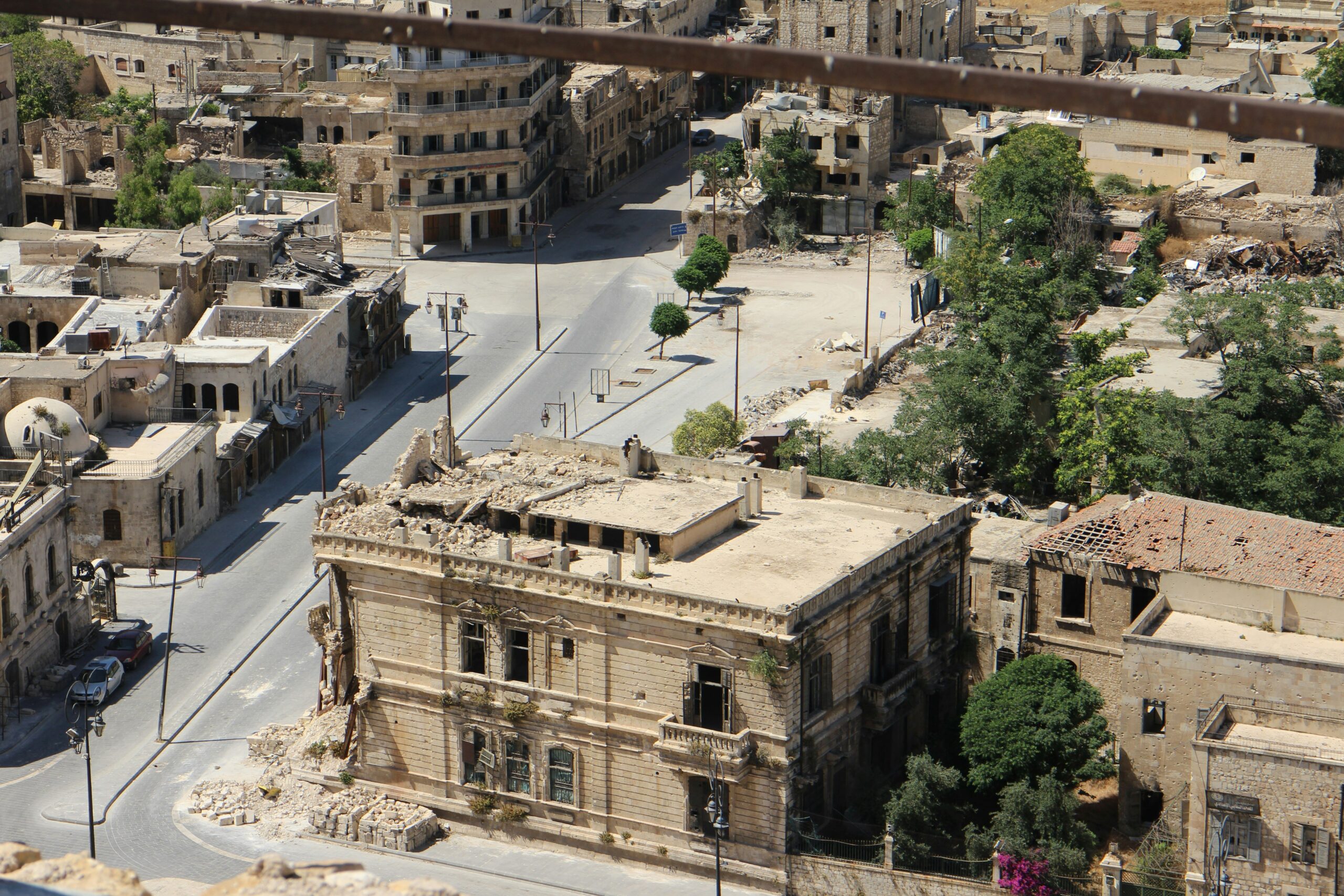
The protracted civil war in Syria has led to widespread destruction and looting of archaeological sites across the country. Ancient cities, historical monuments, and museum collections have been directly targeted, damaged, or degraded by unrest, shelling, and illegal excavations. Sites like Palmyra have suffered direct hits and extensive damage, eliciting international condemnation and calls for protection.
Looting and the Illicit Trafficking of Antiquities
The breakdown of law and order has created fertile ground for the looting of archaeological sites and the illicit trafficking of antiquities. This illegal trade not only robs Syria of its cultural heritage but also fuels organized crime and misinformation, obscuring the true history and context of these artifacts.
International Efforts for Preservation and Recovery
Despite the immense difficulties, international organizations, heritage professionals, and local activists are working tirelessly to document, preserve, and, where possible, recover Syrian antiquities. Remote sensing technologies, digital documentation projects, and international collaborations are being employed to monitor sites and to aid in the eventual restoration and repatriation of stolen artifacts.
The Role of Archaeology in Post-Conflict Reconstruction
The meticulous work of archaeologists holds immense potential for post-conflict reconstruction and national identity building in Syria. Re-excavating, restoring, and interpreting the nation’s rich archaeological heritage can not only provide economic opportunities but also foster a sense of continuity, pride, and shared history for its people once peace is restored. The unearthing of ancient Syria is not merely about discovering the past; it is about safeguarding humanity’s collective memory and ensuring that the whispers from dawn of civilization continue to resonate for generations to come.

What Heated These Minerals? (The Abu Hureyra Mystery)
FAQs
What is Ancient Syria archaeology?
Ancient Syria archaeology refers to the study and excavation of historical sites and artifacts in the region of modern-day Syria, dating back to ancient civilizations such as the Sumerians, Akkadians, Assyrians, and others.
What are some notable archaeological sites in Ancient Syria?
Some notable archaeological sites in Ancient Syria include Ebla, Mari, Ugarit, Palmyra, and the ancient city of Damascus. These sites have provided valuable insights into the history, culture, and daily life of ancient civilizations in the region.
What have archaeologists discovered in Ancient Syria?
Archaeologists have discovered a wide range of artifacts in Ancient Syria, including pottery, sculptures, inscriptions, tools, weapons, and architectural remains. These discoveries have helped to piece together the history and development of ancient societies in the region.
How has Ancient Syria archaeology contributed to our understanding of history?
Ancient Syria archaeology has contributed significantly to our understanding of the development of early civilizations, trade routes, religious practices, social structures, and technological advancements in the region. It has also shed light on the interactions between different ancient cultures.
What are some challenges facing Ancient Syria archaeology?
Some challenges facing Ancient Syria archaeology include political instability, armed conflict, looting of archaeological sites, and the destruction of cultural heritage during periods of war. These challenges have hindered the preservation and study of ancient artifacts and sites in the region.