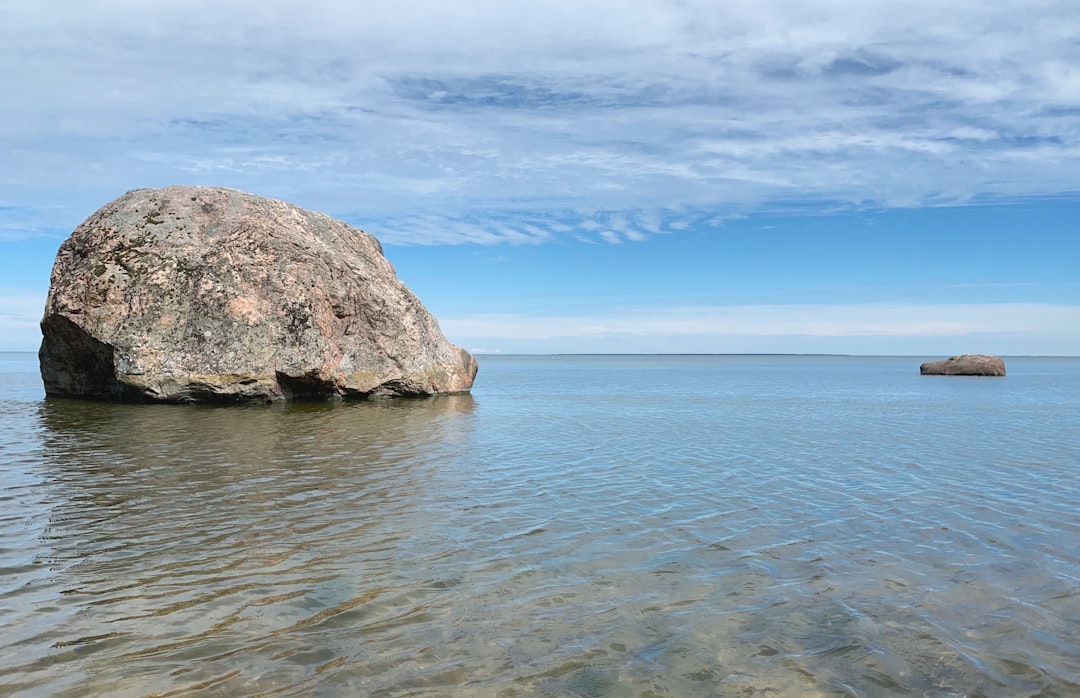
Madison Boulder stands as a monolithic testament to the raw power of nature, a colossal stone resting incongruously upon the landscape of Madison, New Hampshire. Its sheer immensity has earned it a place of distinction as the largest known glacial erratic in all of New England. This geological marvel, estimated to weigh a staggering 5,000 tons and stretching an impressive 83 feet in length, has captivated the imaginations of scientists and curious visitors alike for generations. It is more than just a large rock; it is a silent storyteller, a profound artifact from a bygone era, whispering tales of ancient ice sheets and the transformative forces that shaped the very ground beneath our feet. For those with an inclination towards the earth’s natural history, or simply a desire to witness something truly awe-inspiring, Madison Boulder offers an unforgettable experience.
The Power of the Ice Age
To truly appreciate the significance of Madison Boulder, one must delve into the dramatic events of the Pleistocene Epoch, commonly known as the Ice Age. This period, which spanned from roughly 2.6 million to 11,700 years ago, witnessed the repeated advance and retreat of massive continental ice sheets that covered vast portions of North America. These glaciers, immense rivers of ice, were not merely passive blankets of snow and ice; they were dynamic agents of geological change, possessing unimaginable power to sculpt landscapes, erode mountains, and transport colossal amounts of material. Their influence is evident across New England, from the U-shaped valleys and drumlins to the scattered boulders and gravel deposits that define its topography. The very existence of Madison Boulder is a direct consequence of these glacial behemoths and their extraordinary capacity for movement.
Defining the Term: What is a Glacial Boulder?
A glacial erratic, by definition, is a rock or boulder that has been transported from its original geological location by a glacier. Crucially, these erratics are typically composed of rock types that are alien to the bedrock of the area where they are now found. This stark incongruity is a key indicator of their glacial origins. The immense weight and size of these transported rocks often meant they could not be moved by any other natural force, such as water flow or seismic activity. Imagine a glacier acting as a gargantuan conveyor belt, picking up entire sections of bedrock, carrying them for miles, and then unceremoniously depositing them as the ice melts and recedes. Madison Boulder embodies this phenomenon on a grand scale, a displaced giant left stranded by the retreating ice.
The Mechanics of Transportation
The glacial transportation of such massive objects is a feat that defies easy comprehension. As glaciers advanced, they would scour the underlying land, plucking rocks and bedrock fragments and incorporating them into their icy matrix. These incorporated rocks, acting like sandpaper against the bedrock below, would further erode the landscape and become embedded within the glacier itself. Larger boulders, like Madison Boulder, would have been trapped within the ice, perhaps carried at the base or within the glacier’s interior. The sheer bulk of the ice sheet provided the necessary force to overcome friction and gravity, allowing these immense stones to be moved considerable distances. Their final resting place is determined by the patterns of melting, where the ice would eventually calve or retreat, unloading its enormous cargo.
Madison Boulder is renowned for being one of the largest glacial erratics in North America, attracting climbers and nature enthusiasts alike. This massive boulder, weighing an estimated 5,000 tons, was transported by glacial activity during the last Ice Age and has become a significant geological landmark. Its impressive size and unique history make it a popular destination for those interested in both outdoor recreation and geological studies. For a deeper understanding of how topography influences human interactions and conflicts, you can explore the article on this topic at Navigating Conflict: Topography’s Role.
The Geological Story of Madison Boulder
Unraveling its Origins: The Source Rock
The scientific investigation into Madison Boulder has focused intently on identifying its source rock. Unlike the local bedrock of Madison, New Hampshire, which is primarily composed of metamorphic rocks like schist and granite, Madison Boulder is understood to be composed of a distinctive type of metamorphic rock. Geologists have painstakingly analyzed its mineral composition, texture, and structural characteristics. Through this detailed examination, they have been able to trace its likely origin to a specific geological formation located significantly further to the north. This monumental journey, spanning many miles, underscores the immense power and reach of the ice sheets during the last glacial maximum. The identification of its source is a critical piece of the puzzle, allowing scientists to reconstruct the ice flow paths that delivered this geological titan to its current location.
The Journey North to South: Tracing the Ice Flow
The prevailing scientific consensus points to a massive glacial lobe, likely originating from formations in the White Mountains or even further north into Quebec, Canada, as the vehicle for Madison Boulder’s long migration. Understanding the direction of ice flow is a cornerstone of glacial geology. Features like striations (scratches on bedrock), till fabric (the orientation of stones in glacial deposits), and the distribution of erratics themselves all provide clues to the direction of glacial movement. The placement and composition of Madison Boulder strongly indicate a southerly flow of glacial ice. This ancient river of ice, at its peak, would have been thousands of feet thick, a truly awe-inspiring force carving its path across the land, carrying with it the massive stone that would eventually become Madison Boulder.
A Frozen Cargo: The Mechanics of Deposition
The deposition of Madison Boulder would have occurred during the deglaciation phase, as the immense ice sheet began to melt and retreat. As the ice thinned and became less stable, it would have shed its rocky burden. Larger, more resistant boulders like Madison Boulder would have been among the last materials to be released. They were likely deposited either as the glacier melted slowly in place, leaving the boulder perched on the newly exposed ground, or potentially carried on calving icebergs that then grounded in meltwater lakes or streams. The specific context of its deposition is debated among geologists, with various theories suggesting it was dropped as the ice directly melted, or perhaps carried by icebergs before eventually settling. Regardless of the precise mechanism, the result is the same: a colossal stone deposited far from its origin, a defining feature of the Madison landscape.
The Immense Scale: Dimensions and Weight
Measuring a Giant: Length and Width
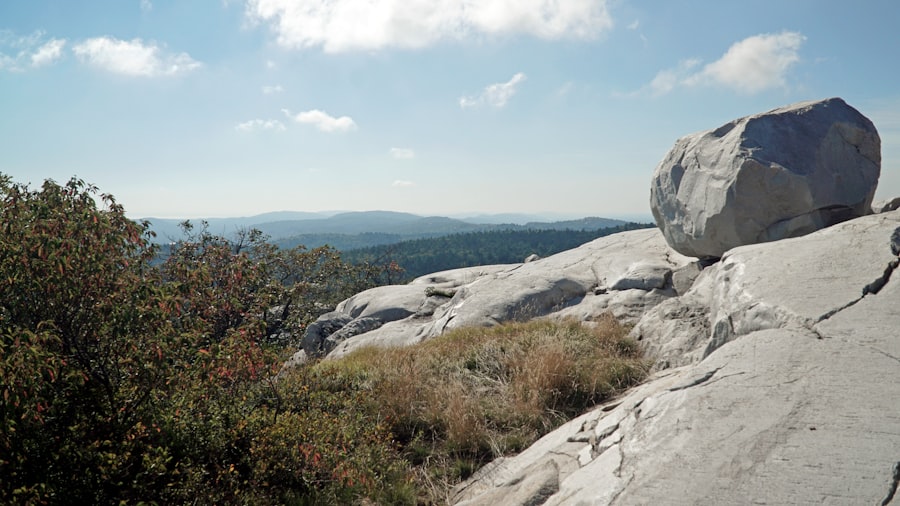
The sheer physical presence of Madison Boulder is its most immediate and striking characteristic. Measuring a substantial 83 feet in length, it is an imposing spectacle that commands attention. Its width, while not as precisely documented in popular accounts, is also significant, contributing to its colossal footprint. When standing before it, the scale is difficult to fully grasp. It requires a conscious effort to comprehend that this immense mass of rock has been moved and deposited by natural forces. The measurement of its length provides a tangible, relatable metric for its grandeur, allowing visitors to visualize the extent of this geological anomaly.
Estimating the Heft: Weight of the Boulder
Estimating the weight of Madison Boulder is a complex undertaking, but one that has been consistently addressed by geologists. Based on its estimated volume and the density of its rock type, scientists have arrived at figures of approximately 5,000 tons. This staggering weight is equivalent to that of several hundred large elephants or dozens of fully loaded semi-trailer trucks. It is this immense weight that fundamentally distinguishes it as a glacial erratic. No other natural force known to operate on Earth could realistically displace and position such a gargantuan object. The 5,000-ton figure serves as a powerful reminder of the incredible forces unleashed during the Ice Age.
A Monument of Stone: The Boulder’s Form
Beyond its measurements, the form of Madison Boulder is also of geological interest. It is not a perfectly spherical or cubical object, but rather a blocky, irregular mass. This shape is indicative of the way it was fractured from its parent bedrock and subsequently shaped by the erosive forces of glacial transport. While the ice may have smoothed some of its surfaces, its general form reflects the natural stresses and fractures within the original rock formation. Its current resting position, partially embedded in the soil, has also contributed to its stability and longevity. The rugged contours and varied surfaces of the boulder offer a tactile connection to its ancient past.
Madison Boulder as a Natural Attraction

A Destination for Geology Enthusiasts
Madison Boulder has long been a beacon for geology enthusiasts and students from around the world. Its status as the largest glacial erratic in New England makes it a prime example for illustrating the principles of glacial geology in action. Field trips often direct budding geologists to this site, where they can witness firsthand the tangible evidence of Ice Age processes. The boulder provides a real-world laboratory, allowing for discussions on topics such as glacial erosion, transportation, deposition, and the identification of rock types. Its accessibility makes it an invaluable educational tool, bringing abstract geological concepts to life.
More Than Just a Rock: A Window into Natural History
For the broader public, Madison Boulder offers a captivating glimpse into the deep natural history of the region. It serves as a potent reminder that the landscapes we see today are the result of incredibly dynamic geological processes that unfolded over vast stretches of time. Visitors come not just to see a large rock, but to connect with a story of planetary change, of ancient ice, and the profound transformations that have shaped our planet. It sparks curiosity about the forces that have sculpted the Earth and encourages a deeper appreciation for the natural world. Its presence encourages contemplation of time scales far beyond human experience.
Accessibility and Visitor Experience
Located within the town of Madison, the boulder is generally accessible to visitors. While specific facilities may vary, its presence is often marked by informational signage that provides context and geological explanations. Visitors are encouraged to approach with respect for the natural environment. The experience of standing beside such an immense geological feature is profound. It evokes a sense of wonder and a deep appreciation for the forces of nature. The surrounding landscape also contributes to the overall experience, offering a serene setting in which to contemplate the geological marvel.
Madison Boulder is famous for being one of the largest glacial erratics in North America, attracting visitors and geology enthusiasts alike. Its impressive size and unique history make it a significant landmark in the region. For those interested in understanding how natural formations can influence human activities and conflicts, a related article discusses the complexities of global power dynamics in the context of proxy wars. You can read more about this fascinating topic in the article on the rise of proxy wars, which explores how geographical features can play a role in shaping political landscapes. To learn more, click here: the rise of proxy wars.
Preservation and Future Significance
| Aspect | Details |
|---|---|
| Name | Madison Boulder |
| Location | Madison, New Hampshire, USA |
| Size | 83 feet long, 23 feet high, and 37 feet wide |
| Composition | Granite |
| Weight | Approximately 5,000 tons |
| Formation | Glacial erratic deposited during the last ice age |
| Significance | One of the largest known glacial erratics in North America |
Protecting a Geological Treasure
As a significant geological landmark, the preservation of Madison Boulder is a matter of ongoing importance. Efforts are typically made to protect it from unnecessary damage or alteration. While it is a natural object, human activity can pose risks, from vandalism to excessive foot traffic that could erode the surrounding soil and destabilize the boulder. Responsible visitation and adherence to any posted guidelines are crucial in ensuring its continued existence for future generations. The goal is to balance accessibility with the long-term protection of this unique natural heritage.
Educational and Scientific Value
The educational and scientific value of Madison Boulder cannot be overstated. It continues to be a subject of study for geologists, contributing to our understanding of glacial dynamics and the geological history of New England. For students and the public alike, it serves as an enduring symbol of the Ice Age and a powerful tool for fostering scientific literacy. Its presence inspires curiosity and encourages a deeper engagement with the natural sciences.
A Lasting Legacy of the Ice Age
Madison Boulder represents a tangible and awe-inspiring legacy of the last great Ice Age. It is a stark and undeniable reminder of a time when massive glaciers roamed the Earth, reshaping continents and leaving behind enduring monuments like this colossal stone. Its sheer size and the incredible journey it undertook make it a truly remarkable geological wonder. As long as glaciers remain frozen in time within our collective understanding, Madison Boulder will stand as a powerful, silent sentinel, a testament to the immense power and enduring artistry of nature. Its presence in Madison is not just a geological curiosity; it is a profound connection to the planet’s ancient past, a story etched in stone for all to witness and ponder.

The Boulder That Shouldn’t Exist
FAQs
What is Madison Boulder?
Madison Boulder is a massive glacial erratic located in Madison, New Hampshire. It is one of the largest known glacial erratics in North America.
Why is Madison Boulder famous?
Madison Boulder is famous for its immense size and the fact that it was transported by glaciers during the last Ice Age. It is also a popular tourist attraction and a significant geological landmark.
How big is Madison Boulder?
Madison Boulder measures about 83 feet in length, 23 feet in height, and 37 feet in width. It weighs an estimated 5,000 tons.
What is a glacial erratic?
A glacial erratic is a large rock or boulder that was transported and deposited by a glacier. These rocks are often different in composition from the surrounding bedrock and can be found in areas where glaciers once existed.
Can visitors explore Madison Boulder?
Yes, visitors can explore Madison Boulder. There is a designated trail and viewing area where visitors can observe and learn about the boulder’s history and geological significance.