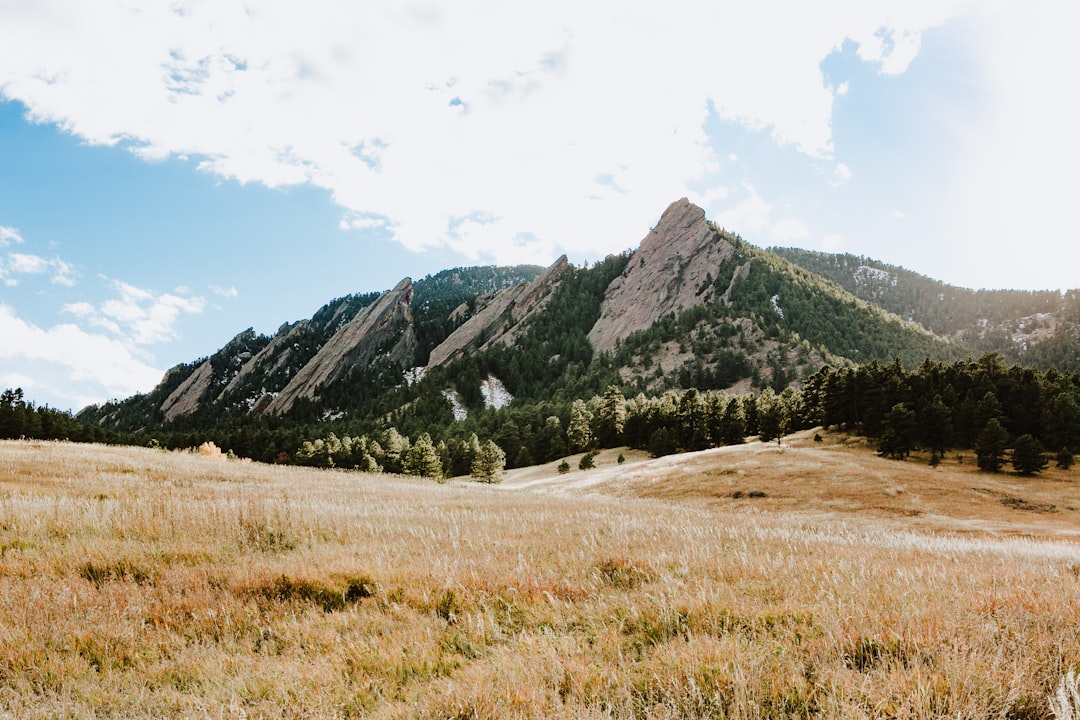
A colossal granite boulder, resting incongruously amidst the rolling emerald hills, has become the latest enigma captivating local residents and geologists alike. The sheer size and unexpected placement of this immense stone, dubbed “The Outlander” by some, has ignited a flurry of speculation, ranging from ancient glacial activity to more whimsical theories involving celestial intervention. This article delves into the mystery of this out-of-place boulder, exploring its potential origins, the challenges of its containment, the scientific investigations underway, and the burgeoning impact it has had on the local community.
The boulder’s presence is undeniable, a stark interruption to the otherwise pastoral landscape. Sited on land owned by the Miller family, renowned for their quiet stewardship of the region for generations, the rock has become a focal point of local curiosity. Its smooth, weathered surface speaks of untold millennia, yet its current location defies easy explanation. Standing at an estimated thirty feet in height and boasting a circumference of nearly a hundred feet, it is a behemoth that dominates its immediate surroundings. The sheer scale renders it a humbling presence, a silent testament to forces far grander than human comprehension.
A Featureless Giant
Unlike many geological formations that bear distinct markings or layers, this boulder presents a largely uniform, grey granite face. This uniformity, while aesthetically striking for its stark simplicity, adds to the mystery. Geologists are accustomed to reading the stories etched into stone by time, pressure, and elemental forces. The lack of obvious stratigraphy or fossil evidence makes pinpointing its exact geological provenance a more formidable challenge. It is, in essence, a blank canvas onto which various theories are projected.
Local Lore and Whispers
Generations have passed since the countryside took on its current familiar contours. The Miller family, and indeed their neighbors stretching back as far as oral tradition allows, have no recollection of such a colossal stone being present. This absence from living memory is a critical piece of the puzzle, suggesting that the boulder’s arrival, or its emergence to its current conspicuous state, is a relatively recent event in geological terms, or that it was submerged or otherwise hidden for a significant period. The lack of prior documentation, of even a whisper of such a feature in historical records or local folklore preceding the Miller’s current tenure, further deepens the intrigue. This silence from the past amplifies the drama of its present-day revelation.
In the ongoing discussion about economic stability and unexpected disruptions, the article titled “The Impending US Dollar Collapse: 2025 Prediction” provides an intriguing perspective on how external factors can influence financial systems, much like how a boulder that doesn’t belong in a particular environment can disrupt its surroundings. For more insights on this topic, you can read the article here: The Impending US Dollar Collapse: 2025 Prediction.
Unraveling the Theories: Glacial Giants and Other Possibilities
The most immediate and scientifically plausible explanations for such a large, erratically placed boulder revolve around the powerful forces of glaciation. These colossal ice sheets, which once covered vast swathes of the Earth’s surface, were capable of transporting enormous quantities of rock and debris over hundreds, even thousands, of miles.
The Glacial Erratics Hypothesis
The concept of glacial erratics is well-established in geology. These are rocks that have been transported far from their origin by the movement of a glacier, often deposited randomly when the ice melts. The presence of a boulder of this magnitude strongly suggests a glacial origin. However, the precise glacial advance that would have deposited it here, and the rock’s original source, are key questions that researchers are diligently working to answer. Identifying the source rock of the boulder would be a significant breakthrough, allowing geologists to trace its journey.
The Northward Flow
Evidence from the wider geological landscape suggests that the region was indeed in the path of past glacial movements. Geologists are currently analyzing the prevailing directions of glacial flow during the Pleistocene epoch. If the boulder’s composition matches rock types found in areas known to have been covered by ice sheets emanating from a particular direction, it would lend considerable weight to the glacial erratic theory. The orientation of any striations or polish on the boulder’s surface, often caused by friction with other rocks or the ice itself, could also offer clues to its transport.
The Absence of Glacial Features
Curiously, the immediate vicinity of the boulder shows a relative lack of other typical glacial features, such as moraines or U-shaped valleys, which would normally accompany significant glacial deposition. This absence has led some to question whether the glacial theory, in its simplest form, fully accounts for the boulder’s presence. Could it be an outlier from a less significant glacial event, or was it deposited in a manner that left few other discernible traces? This subtle discrepancy keeps the door open to alternative, though less likely, interpretations.
Beyond the Ice Age: Other Explanations
While glaciation remains the frontrunner, the sheer scale and singular nature of the boulder have prompted consideration of other, albeit less probable, geological phenomena.
Landslides of Old
Ancient landslides, particularly those occurring in mountainous regions that have since eroded, could in theory transport massive stones. However, for a boulder of this size to be moved significant distances by a landslide would require extremely steep terrain and a cataclysmic event, the aftermath of which would likely leave more substantial evidence of disturbed earth. The current topography around the boulder is generally undulating, not indicative of the dramatic slopes typically associated with such massive rockfalls.
Volcanic Origins?
Extreme volcanic activity, such as the eruption of massive pumice rafts or the movement of pyroclastic flows, can involve the transport of substantial rock. However, there is no geological evidence of significant volcanic activity in the immediate region that would explain the boulder’s origin. The granite composition itself is not typically a direct product of recent volcanic eruptions.
The Whimsical and Wonderful: Folk Tales and Modern Mythology
As often happens when faced with profound natural mysteries, the community has embraced a spectrum of explanations that extend beyond strict scientific inquiry.
Tales of Giants and Gods
Local folklore, passed down through generations, often features tales of giants or powerful deities shaping the landscape. Some older residents have wryly suggested that the boulder is a forgotten implement of a mythical giant, perhaps a misplaced stepping stone or a discarded plaything. While these stories offer no scientific basis, they underscore the sheer awe the boulder inspires. These narratives provide a rich cultural tapestry, weaving the boulder into the traditional understanding of the land, even if it’s through fantastical interpretation.
The “Art” of Nature
In a more metaphorical sense, some view the boulder as a unique piece of natural art, placed by an unseen hand to provoke contemplation. It serves as a reminder of the planet’s immense power and the vastness of geological time, elements that often get lost in the everyday human experience. This perspective emphasizes the boulder’s aesthetic and philosophical impact rather than its origin.
The Practicalities of Placement: A Logistical Nightmare
The sheer mass of the boulder presents significant logistical challenges, not only for scientific study but also for anyone contemplating its removal or even its accessible study. Its size renders any conventional form of excavation or transport virtually impossible.
Access and Examination
Getting close enough to the boulder for detailed geological examination requires careful planning. Footpaths have been carved out to allow researchers and curious visitors safe passage, but the immediate area around the colossal stone remains relatively untouched, preserving its natural setting. The sheer scale makes it difficult to examine the boulder from all angles without specialized equipment or considerable effort. Every inch of its surface is a potential clue, but accessing those clues is a significant undertaking.
The Limitations of Equipment
Standard geological tools and even heavy machinery might struggle to lift or manipulate a stone of this magnitude. cranes capable of lifting such weight are rare, and the logistics of transporting them to a relatively remote location would be incredibly complex. This practical limitation means that extensive on-site analysis is often the only feasible approach. The idea of simply “moving” the boulder is not a realistic consideration.
Preservation and Protection
There is a growing consensus among locals and authorities that the boulder should be preserved in situ. Its uniqueness and the mystery surrounding it have already made it a minor tourist attraction, and measures are being put in place to protect the surrounding environment from excessive foot traffic. The desire is to allow people to appreciate the boulder without damaging the delicate ecosystem it now occupies.
Environmental Concerns
The Miller family, in collaboration with local conservation groups, is actively working to minimize the environmental impact of increased visitor numbers. Ensuring the long-term preservation of the site is a priority, balancing public interest with ecological responsibility. This includes managing waste, preventing erosion, and educating visitors on responsible behavior.
The “Leave it Be” Philosophy
Many who have encountered the boulder advocate for leaving it exactly where it is, undisturbed. Its dramatic presence is viewed as a gift, a natural wonder that should be appreciated as a singular event. This perspective is rooted in a deep respect for nature’s power and the desire to not interfere with a phenomenon that is, in itself, a powerful statement.
Scientific Investigations: On the Trail of the Truth
Geologists and other earth scientists are actively engaged in a multifaceted investigation to unlock the secrets of the Outlander. This involves both fieldwork and laboratory analysis, employing a range of sophisticated techniques.
Geochemical Analysis: Fingerprinting the Rock
One of the primary scientific aims is to determine the boulder’s geochemical composition. By analyzing samples of the granite, scientists can identify its unique mineral makeup and chemical signature. This “fingerprint” can then be compared to known rock formations in the wider region and beyond.
Identifying the Source Bedrock
The hope is that this analysis will reveal a match with a specific geological formation, thereby pinpointing the boulder’s original source. This is a crucial step in tracing its journey and understanding the geological forces that moved it. This process is akin to forensic science, but on a geological timescale.
Dating Techniques
Further analysis may involve employing radiometric dating techniques on the minerals within the boulder to ascertain its age and potentially the age of the geological event that transported it. These techniques, while complex, can provide incredibly precise timelines for geological processes.
Geophysical Surveys: Peering Beneath the Surface
In addition to surface analysis, geophysical surveys are being conducted to understand the subsurface conditions around the boulder. Techniques like ground-penetrating radar and seismic surveys can reveal information about the underlying soil and bedrock, potentially indicating if the boulder is resting on something or if there are other buried geological features.
Mapping Subsurface Structure
These surveys can help map the immediate subsurface, looking for evidence of a larger buried portion of the boulder or other geological anomalies that might shed light on its deposition. It’s about understanding the context in which the boulder has been placed.
Understanding Ground Stability
Geophysical data also helps assess the stability of the ground around the boulder, which is important for both safety and for understanding the long-term implications of its presence. Is it firmly rooted, or is it resting precariously?
Comparative Geology: The Big Picture
Scientists are also undertaking broader geological studies of the region. This involves examining the known glacial history of the area, the types of rocks found in surrounding landscapes, and any documented geological events that might have occurred over millennia.
Regional Glacial Mapping
Detailed maps of past glacial movements are being consulted and refined to see if the boulder’s location aligns with known ice flow paths. The presence or absence of ice sheets with debris-carrying capacity is a critical factor.
Studying Similar Erratic Boulders
Researchers are also looking at other known, albeit likely smaller, erratic boulders in the broader geographical area. Studying their origins and transport mechanisms can provide valuable comparative data. This comparative approach helps to normalize the unusual by placing it within a broader geological framework.
In exploring the intriguing phenomenon of how certain elements in our environment can seem out of place, one might find it interesting to read about the broader implications of climate on historical events. For instance, the article on the Bronze Age Collapse discusses how climate changes may have contributed to societal shifts and upheavals. You can find more information on this topic in the article here. This connection highlights how environmental factors can influence not just physical landscapes, but also the course of human history.
The Impact on the Community: From Curiosity to Catalyst
| Location | Size | Weight | Composition |
|---|---|---|---|
| Mountain Trail | Large | 2000 lbs | Granite |
| City Park | Medium | 1500 lbs | Sandstone |
| Beach Shore | Small | 500 lbs | Limestone |
The Outlander has had a profound and undeniably positive impact on the local community, transforming a quiet rural area into a hub of intellectual curiosity and a modest tourist destination.
A Boon for Local Tourism
The boulder’s mystique has drawn visitors from near and far, eager to witness this geological anomaly firsthand. Local businesses, from quaint bed and breakfasts to family-run cafes, have seen a noticeable increase in patronage. This influx of visitors, while small in the grand scheme of tourism, is significant for the local economy.
Supporting Local Businesses
The economic ripple effect is palpable. Visitors seeking accommodation, meals, and souvenirs are directly contributing to the sustainability of local enterprises. This unexpected economic stimulus has been welcomed by the community, providing a new avenue for growth and development.
Increased Local Pride
There’s a palpable sense of pride among the residents for being the custodians of such a unique natural wonder. The boulder has become a symbol of their region, a talking point that fosters a sense of shared identity and accomplishment.
Education and Engagement
The boulder has become a powerful educational tool, sparking interest in earth science among people of all ages. Schools are incorporating visits to the site into their curriculum, and local geologists and historians are frequently invited to give talks and presentations.
Inspiring Future Scientists
By igniting curiosity about the natural world, the boulder has the potential to inspire the next generation of geologists, geographers, and other earth scientists. Seeing firsthand a tangible geological mystery can be far more impactful than reading about it in a textbook.
Public Lectures and Workshops
The local community center now frequently hosts public lectures and workshops focused on geology, glaciation, and the specific history of the region. These events attract a diverse audience, fostering a greater understanding and appreciation for the earth sciences.
A Catalyst for Conservation
The increased attention on the boulder has also highlighted the importance of preserving the surrounding natural environment. The efforts undertaken to protect the site from overuse have inadvertently raised broader awareness about conservation issues in the region.
Protecting the Natural Landscape
The dedication to preserving the area around the boulder serves as a model for responsible tourism and conservation efforts for other natural sites. It demonstrates that it is possible to share a wonder with the public while simultaneously safeguarding its ecological integrity.
Fostering Environmental Stewardship
The community’s involvement in the boulder’s preservation has fostered a stronger sense of environmental stewardship among residents. They are now more attuned to the delicate balance of their local ecosystem and their role in protecting it.
The boulder, an enigmatic giant resting out of place, is more than just a geological curiosity. It is a catalyst for scientific inquiry, a boost for the local economy, and a powerful symbol of the enduring mysteries and wonders of our planet. As investigations continue, the story of this out-of-place boulder is far from over, promising further discoveries and continued fascination for years to come. Its very presence challenges our understanding of the natural world, and in doing so, enriches our appreciation for its power and its enduring enigma.

The Boulder That Shouldn’t Exist
FAQs
What is the article “This Boulder Doesn’t Belong Here” about?
The article “This Boulder Doesn’t Belong Here” discusses the phenomenon of erratic boulders, which are large rocks that have been transported and deposited by glaciers or other geological processes to locations where they are not native.
How do erratic boulders differ from other types of rocks?
Erratic boulders differ from other types of rocks in that they are typically much larger and have been transported significant distances from their original source by glacial or geological processes.
What causes erratic boulders to be moved from their original locations?
Erratic boulders are typically moved from their original locations by the advance and retreat of glaciers during ice ages, or by other geological processes such as landslides or rockfalls.
Where can erratic boulders be found?
Erratic boulders can be found in various locations around the world, including areas that were once covered by glaciers, as well as in regions with a history of geological activity such as earthquakes and landslides.
Why are erratic boulders significant to geologists and scientists?
Erratic boulders are significant to geologists and scientists because they provide valuable insights into past geological events, such as the movement of glaciers and the shifting of tectonic plates. Studying erratic boulders can help researchers better understand the Earth’s history and the processes that have shaped its landscape.