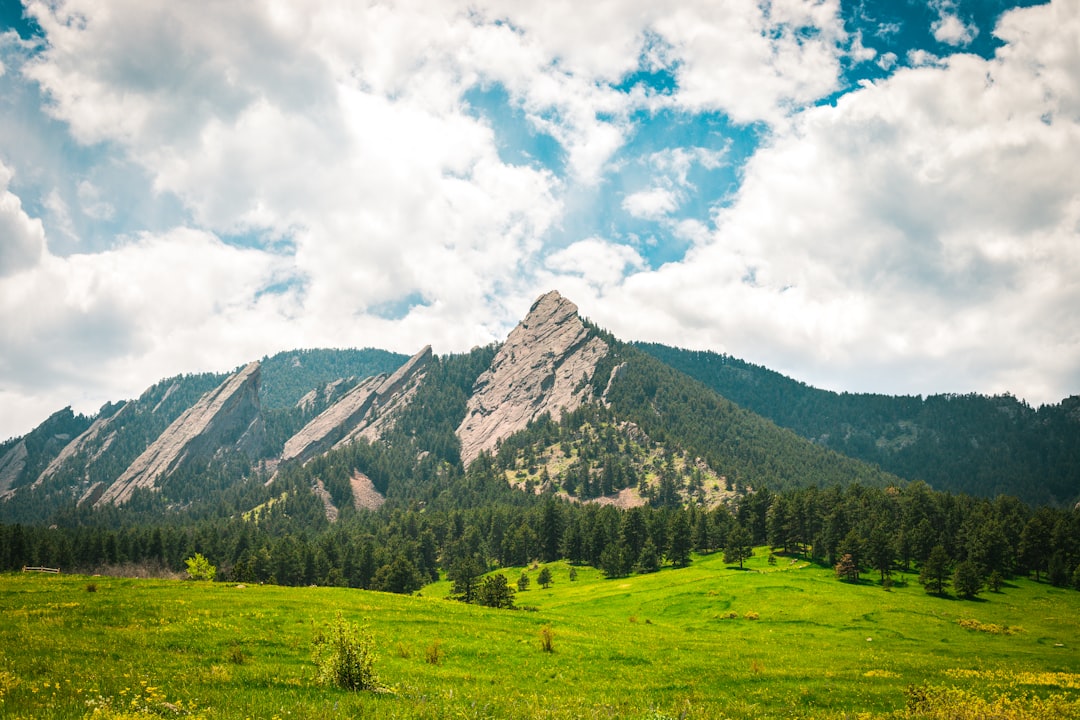
The Whispering Plateau, a vast expanse of windswept grassland etched with the scars of ancient geological upheaval, held one secret that defied explanation – a colossal granite boulder, impossibly balanced. Dubbed “The Sentinel” by the few who dared venture this far into the wilderness, it was a monolith that seemed to mock the very laws of physics. For generations, it had stood, a silent, enigmatic witness to the passage of time, its existence a testament to forces unknown and an enduring puzzle for all who encountered it.
The dimensions of The Sentinel were, by themselves, awe-inspiring. It measured approximately twenty meters in length, fifteen meters in width, and a staggering ten meters in height. Its mass was estimated to be in the tens of thousands of tonnes. Yet, it did not rest upon a broad, stable base. Instead, it teetered precariously, perched atop a smaller, irregularly shaped rock, no larger than a modest boulder. This smaller rock, barely three meters across, provided an area of contact so minuscule, so seemingly inadequate, that any rational observer would expect The Sentinel to topple with the slightest tremor, a gust of wind, or even a sudden atmospheric pressure change. The slightest shift would send tonnes of granite crashing to the earth, reshaping the plateau with a thunderous roar.
The Physics of the Impossible
From a purely mechanical standpoint, The Sentinel’s position was an affront to common sense. A body in equilibrium requires its center of gravity to be directly above its support base. In The Sentinel’s case, the sheer immensity of the upper boulder meant its center of gravity was far beyond the minuscule footprint of its resting point. Traditional physics suggested that even the slightest deviation from a perfectly centered distribution of mass would result in an overwhelming torque, forcing the boulder to fall. Yet, it remained steadfast, an anomaly that had stumped geologists, physicists, and curious adventurers for centuries.
The Illusion of Balance
One of the most debated aspects of The Sentinel’s existence was whether its balance was truly as precarious as it appeared. Some theories proposed that the boulder was not, in fact, on the verge of falling, but rather in a state of surprisingly stable equilibrium due to imperceptible adjustments in its contact points. This suggested a level of natural engineering that was baffling. Could microscopic geological shifts, imperceptible to the human eye, be constantly re-aligning the boulder to maintain its precarious perch? This notion implied a dynamic stability, a constant, silent dance with gravity.
The Role of the Lower Rock
The nature of the supporting rock was equally perplexing. It was composed of a similar granite, but its jagged, uneven surface offered no obvious points of purchase for the immense mass above. If the boulder was resting, it was doing so on a series of sharp, almost knife-edge protrusions. The pressure exerted on these points would be astronomically high, yet the supporting rock showed no signs of fracturing or significant erosion under the immense, concentrated stress. This suggested a material strength or a unique geological interaction that defied conventional understanding.
The phenomenon of the boulder that shouldn’t exist raises intriguing questions about geological anomalies and their implications for our understanding of natural landscapes. A related article that delves into the broader environmental challenges we face is titled “The Threat of Sinking Island Nations.” This piece explores how climate change and rising sea levels threaten the very existence of island nations, drawing parallels to the unexpected presence of geological features like the boulder. For more insights, you can read the article here: The Threat of Sinking Island Nations.
Legends and Lore: Whispers of the Ancients
The mystery of The Sentinel was not confined to scientific circles. Local indigenous tribes, who had for millennia roamed the Whispering Plateau, held the boulder in deep reverence. Their oral traditions were replete with stories that intertwined the boulder’s existence with the very origins of their people and the spiritual forces that governed their world. These were not mere folk tales; they were accounts steeped in an understanding of the land and its power that transcended empirical observation.
The Giants’ Plaything
One prevalent legend spoke of ancient giants who once roamed the plateau. It was said that The Sentinel was their favorite toy, a colossal game piece they would carelessly toss and balance for their amusement. The story suggested that the giants, in their immense power, could command the very forces of nature, including gravity, to their will. Their departure from the world, according to these tales, left behind their magnificent plaything, forever a monument to their lost might. This narrative, while fantastical, resonated with the impossible nature of the boulder’s position.
The Sky Serpent’s Perch
Another legend described The Sentinel as the resting place of a celestial serpent, a creature of immense power that descended from the heavens to survey the earthly realm. The boulder, in this telling, was a sacred perch, imbued with earthly energies that allowed the serpent to draw strength and wisdom. The serpent’s presence was said to maintain the boulder’s balance, its subtle movements harmonizing with the earth’s energies. This myth imbued the boulder with a spiritual significance, suggesting that its stability was not merely mechanical but also deeply connected to cosmic forces.
The Earth’s Heartbeat
A more philosophical interpretation suggested that The Sentinel was a tangible manifestation of the earth’s own heartbeat. The vibrations and energies of the planet, when concentrated in a specific way, could theoretically create pockets of unusual stability. The boulder, in this view, was a focal point, a place where the earth’s life force was so potent that it could suspend such an immense object against the pull of gravity. This concept hinted at a deeper, more interconnected understanding of natural phenomena.
The Unanswered Geological Questions
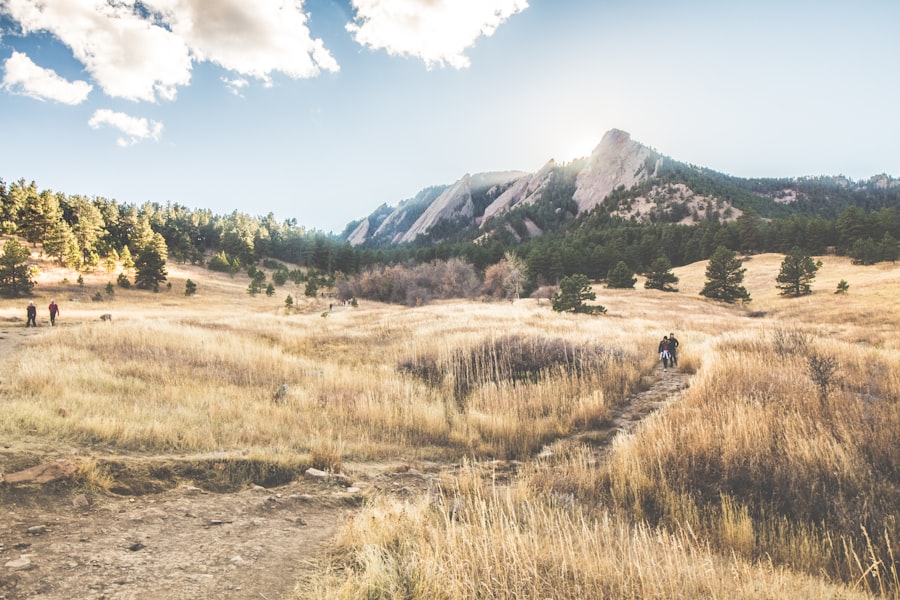
While folklore offered poetic explanations, the scientific community grappled with the tangible, observable facts of The Sentinel. Its geological composition, the surrounding bedrock, and the environmental conditions of the plateau all presented a complex web of data that stubbornly refused to yield a definitive answer. Initial geological surveys were conducted with great anticipation, but the results only deepened the enigma.
Mineralogical Anomalies
Initial spectroscopic analysis revealed that The Sentinel was composed of a common, coarse-grained granite. However, there were subtle anomalies in its mineral composition that were difficult to reconcile with the surrounding geological strata. It was as if the boulder was an alien presence on the plateau, an outlier whose origins did not quite perfectly align with its current location. The precise proportions of feldspar, quartz, and mica, while broadly similar, exhibited variations that were statistically significant and unexplained by local geological processes.
The Nature of the Contact Points
The most critical area of investigation was the interface between The Sentinel and the supporting rock. Detailed photographic evidence and high-resolution laser scans revealed that the contact points were incredibly small, often no more than a few square centimeters. These points were not smooth or polished; they were jagged, irregular, and seemed to possess an unusual resistance to wear. This suggested either an extraordinary hardness of the rock at these specific contact points or a peculiar interlocking mechanism that defied ordinary friction.
Erosion Patterns: A Contradiction
The surrounding landscape of the Whispering Plateau was sculpted by millennia of wind and water erosion. Yet, The Sentinel itself, and particularly the supporting rock, displayed remarkably little evidence of significant erosion. If the boulder had been in its current position for the vast timescale suggested by its presence, one would expect to see substantial weathering and signs of gradual wear at the contact points and on the exposed surfaces. The relative lack of erosion posed a significant counter-argument to the idea of a long-standing, naturally formed equilibrium.
Scientific Expeditions and Their Frustrations
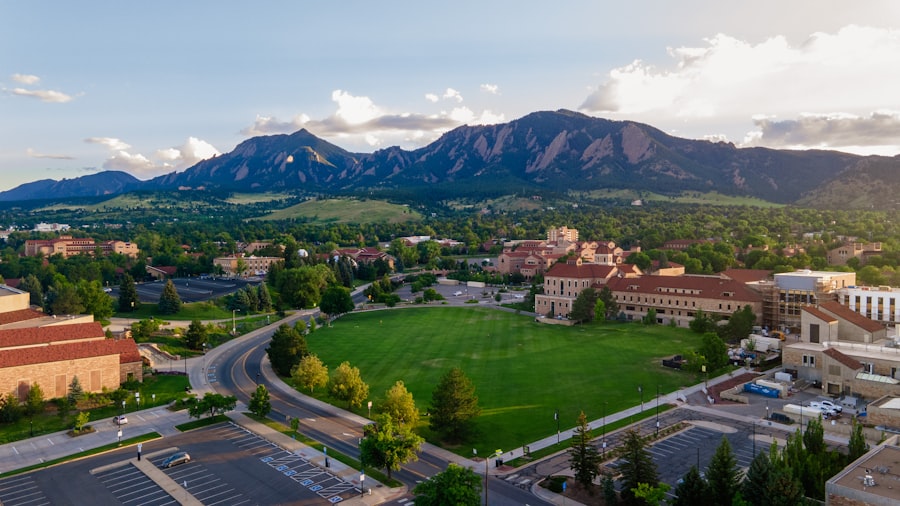
Over the decades, numerous scientific expeditions descended upon the Whispering Plateau, armed with the latest technology and a burning desire to unravel The Sentinel’s secret. Each expedition, however, left bearing more questions than answers, their meticulous data contributing to, rather than resolving, the overall mystery.
Early Geological Surveys
The initial surveys, conducted in the early 20th century, relied on rudimentary geological tools and observational methods. While they documented the boulder’s immense size and precarious position, they lacked the sophisticated instrumentation to delve deeper. These early expeditions established the baseline enigma, planting the seeds of scientific curiosity that would fuel future endeavors.
Seismic and Micro-tremor Monitoring
More recent expeditions employed advanced seismic and micro-tremor monitoring equipment. The goal was to detect any subtle vibrations or shifts that might indicate an ongoing process of stabilization or any impending instability. While the data revealed a remarkably consistent lack of significant seismic activity localized to the boulder, it also failed to show any evidence of the subtle, constant adjustments that could theoretically maintain its balance. The plateau remained remarkably quiescent, almost as if holding its breath.
Advanced Imaging and Material Analysis
In the late 20th and early 21st centuries, expeditions utilized cutting-edge technologies like ground-penetrating radar, lidar scanning, and advanced material analysis techniques. These tools aimed to map the internal structure of The Sentinel and the supporting rock, as well as to analyze the precise composition and properties of their surfaces at the microscopic level. The results were often contradictory, hinting at unusual densities and internal structures within The Sentinel itself, but nothing that definitively explained its improbable stability.
The phenomenon of the boulder that shouldn’t exist has intrigued many, leading to various theories about its origins and significance. Interestingly, this topic resonates with the exploration of ancient structures and their unique properties, as discussed in a related article that delves into the acoustic characteristics of Stonehenge. This piece highlights how the placement of stones can create remarkable sound effects, much like the mysterious boulder that challenges our understanding of geology and history. For more insights, you can read the article on Stonehenge’s acoustic properties.
Theories and Speculations: Seeking Solutions
| Location | Coordinates | Height | Composition |
|---|---|---|---|
| Glacial erratic | 39.9986° N, 105.2906° W | Approximately 8 feet | Red granite |
Despite centuries of observation and multiple scientific expeditions, no single theory has definitively explained The Sentinel’s impossible existence. The lack of conclusive evidence has led to a proliferation of speculative hypotheses, ranging from the scientifically plausible but unproven to the decidedly fringe.
Glacial Transport and Periglacial Freeze-Thaw Cycles
One of the more grounded theories suggested that the boulder was deposited by a glacier during an ice age, its current position a result of the glacier’s retreat. The supporting rock, in this scenario, might have been a pre-existing feature. However, the extremely precise and improbable balance point remains a significant challenge for this theory. Furthermore, the lack of significant glacial scour marks on the surrounding plateau also cast doubt on extensive glacial activity in the immediate vicinity of the boulder. The freeze-thaw cycles of periglacial environments could theoretically have created the initial precarious placement, but maintaining it for millennia is another matter.
Wind Erosion and Aeolian Sculpting
Another hypothesis focused on the erosive power of wind on the plateau. It proposed that over vast periods, wind, carrying abrasive particles, could have sculpted both the boulder and the supporting rock in such a way as to achieve this seemingly impossible balance. The prevailing winds on the plateau are indeed strong, but the uniformity of such selective erosion required to create such a specific and stable contact point is difficult to imagine. The jagged nature of the supporting rock also seems counter-intuitive for wind erosion to have created a perfect, albeit small, balancing platform for such a massive object.
Impact Event and Exotic Material Properties
A more dramatic theory posited that The Sentinel was part of a meteorite impact. The immense forces of such an event could have, in theory, placed the boulder in its current position. This would also allow for the possibility of exotic material properties within the boulder or the supporting rock that are not commonly found on Earth, explaining their unusual stability. However, the absence of a discernible impact crater and the homogeneous granite composition made this theory difficult to substantiate. Also, the surrounding bedrock showed no signs of the intense heat and shockwaves associated with a significant meteor impact.
The Unseen Force: Acknowledging the Unknown
As data accumulated and theories were posited and rebutted, the scientific community, and indeed anyone who stood in the shadow of The Sentinel, was forced to confront the possibility of an unseen force or a complex interplay of geological factors that remained beyond current understanding. Perhaps the answer lay not in a single, isolated explanation, but in a confluence of rare and improbable circumstances. The existence of The Sentinel, a silent anomaly on the Windswept Plateau, served as a powerful reminder of the vastness of the unknown and the enduring mysteries that our planet still held. It was a testament to the fact that, at times, reality could indeed be stranger, and more wondrous, than fiction, leaving humanity humbled before the sheer enigma of its own world. The boulder, impossibly balanced, continued its silent vigil, a profound question etched in granite, waiting for an answer that might forever remain just beyond reach.

The Boulder That Shouldn’t Exist
FAQs
What is the Boulder That Shouldn’t Exist?
The Boulder That Shouldn’t Exist is a massive rock formation located in a remote area, known for its unusual size and shape.
How did the Boulder That Shouldn’t Exist form?
The formation of the Boulder That Shouldn’t Exist is believed to be the result of geological processes such as erosion, weathering, and tectonic activity over millions of years.
Where is the Boulder That Shouldn’t Exist located?
The Boulder That Shouldn’t Exist is located in a remote area, often requiring a hike or off-road vehicle to access. Its specific location may vary depending on the article or source.
What makes the Boulder That Shouldn’t Exist unique?
The Boulder That Shouldn’t Exist is unique due to its unusually large size, distinct shape, and the mystery surrounding its formation in an otherwise flat or rocky landscape.
Is the Boulder That Shouldn’t Exist a popular tourist attraction?
While the Boulder That Shouldn’t Exist may attract some curious visitors, its remote location and lack of amenities make it less of a mainstream tourist attraction compared to other natural landmarks.