The Earth has experienced numerous dramatic transformations throughout its long history, but few periods capture the human imagination quite like the Ice Age. This epoch, characterized by recurring glacial periods and immense ice sheets that reshaped continents, remains a source of fascination and scientific inquiry. Uncovering the mysteries of the Ice Age is a colossal undertaking, requiring the careful interpretation of geological clues, fossil evidence, and sophisticated climate modeling. It is a journey into a world vastly different from our own, a world of colossal glaciers, megafauna, and early human ancestors struggling to survive in a harsh and unforgiving environment.
The term “Ice Age” is not a monolithic descriptor but rather refers to extended periods in Earth’s history when global temperatures dropped significantly, leading to the formation of permanent ice sheets and glaciers. Scientists distinguish between several major Ice Ages, with the most recent and well-studied being the Quaternary glaciation, which began approximately 2.6 million years ago and continues in some form today. Within this Quaternary Ice Age, there have been numerous cycles of glacial and interglacial periods, characterized by the advance and retreat of ice sheets.
The Pleistocene Epoch: The Most Recent Ice Age
The Pleistocene epoch, spanning from roughly 2.6 million to 11,700 years ago, is the period most commonly associated with the Ice Age. It was a time of dramatic climatic swings, with ice sheets advancing and receding across North America, Europe, and Asia. These glacial cycles, often lasting tens to hundreds of thousands of years, profoundly impacted global sea levels, landscapes, and the evolution of life. During the peak of glacial periods, vast ice sheets, sometimes kilometers thick, covered significant portions of the Northern Hemisphere. These colossal masses of ice exerted immense pressure, carving out valleys, shaping mountains, and depositing vast quantities of sediment.
Glacial and Interglacial Cycles: The Rhythmic Advance and Retreat
The hallmark of the Pleistocene was its cyclical nature. Periods of intense glaciation, known as glacial periods, were interspersed with warmer phases called interglacial periods. During interglacials, temperatures rose, ice sheets melted, and sea levels increased, allowing for the recolonization of glaciated areas. Understanding the periodicity and amplitude of these cycles is crucial to comprehending Ice Age dynamics. Scientists analyze ice cores, deep-sea sediment cores, and terrestrial geological records to reconstruct these past climate fluctuations.
Astronomical Forcing and Milankovitch Cycles
A primary driver of these glacial-interglacial cycles is believed to be variations in Earth’s orbit and axial tilt, known as Milankovitch cycles. These long-term astronomical variations influence the amount and distribution of solar radiation reaching Earth’s surface. Subtle changes in eccentricity (the shape of Earth’s orbit), obliquity (the tilt of Earth’s axis), and precession (the wobble of Earth’s axis) can tip the planetary climate system towards either cooling and ice formation or warming and ice melt. While these orbital changes provide the fundamental rhythm, other feedback mechanisms, such as atmospheric greenhouse gas concentrations, play a critical role in amplifying or dampening the effects.
The mysteries of the Ice Age continue to captivate researchers and enthusiasts alike, shedding light on the enigmatic climate changes and the evolution of prehistoric life. For those interested in exploring related historical events, an intriguing article titled “The Battle of Belgium: Flanders vs. Wallonia” delves into the complexities of regional identities and conflicts that have shaped modern Belgium. You can read more about it by visiting this link: The Battle of Belgium: Flanders vs. Wallonia.
Other Ice Ages: A Deeper Past
The Quaternary glaciation is not the only Ice Age in Earth’s history. Scientists have identified several other major periods of widespread glaciation in the geological record, dating back hundreds of millions of years. These include the Huronian glaciation (around 2.4 to 2.1 billion years ago), the Andean-Saharan glaciation (around 450 to 420 million years ago), and

The Boulder That Shouldn’t Exist
FAQs
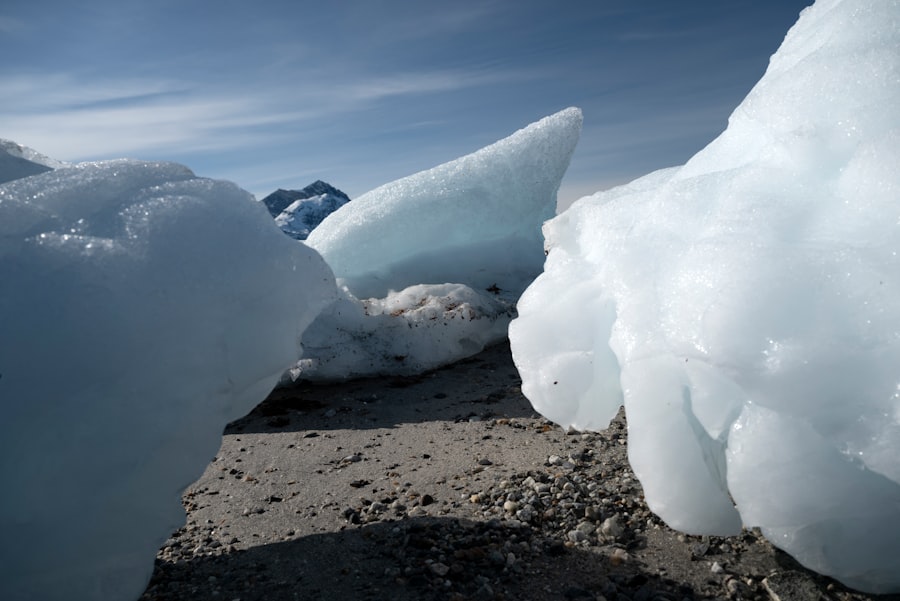
What is the Ice Age?
The Ice Age is a period in Earth’s history when the temperature was significantly colder than it is today, resulting in the expansion of ice sheets and glaciers.
When did the Ice Age occur?
The Ice Age occurred during several periods in Earth’s history, with the most recent one ending around 11,700 years ago.
What caused the Ice Age?
The causes of the Ice Age are complex and include factors such as changes in Earth’s orbit, variations in the sun’s energy output, and the movement of tectonic plates.
How did the Ice Age impact the Earth’s environment and species?
During the Ice Age, large parts of the Earth were covered in ice, leading to lower sea levels, changes in vegetation, and the migration and adaptation of various species.
What are some mysteries of the Ice Age that scientists are still trying to solve?
Some mysteries of the Ice Age include the exact causes of the rapid climate changes, the disappearance of certain species, and the impact of human activity during this time.