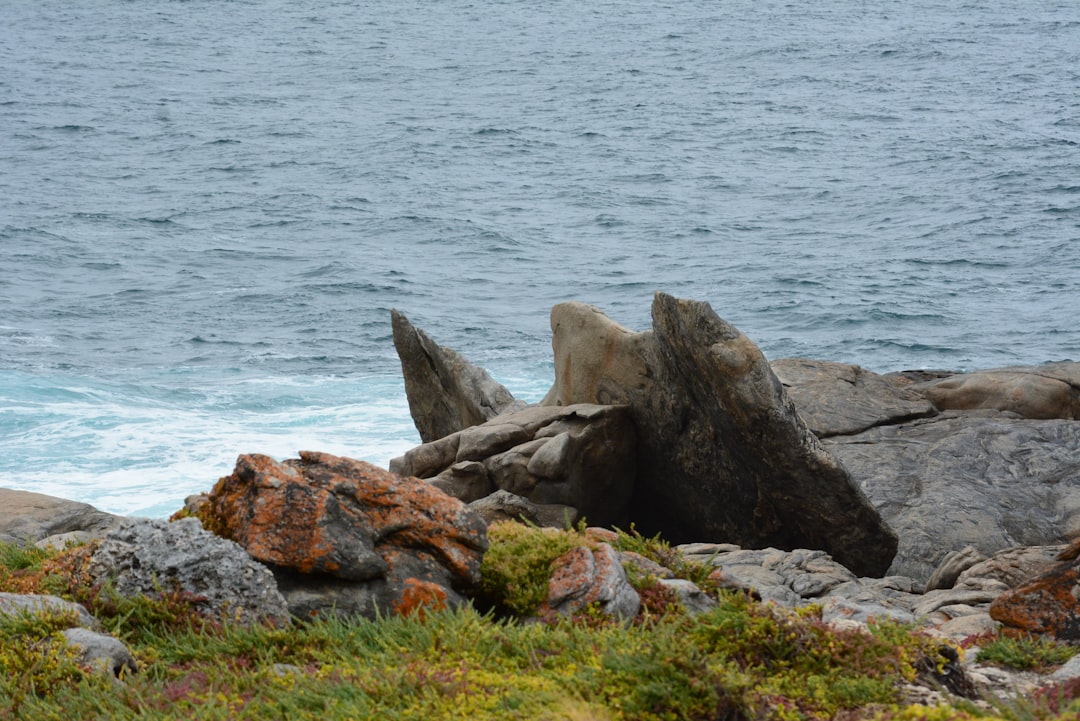
The silent, ancient giants of our planet, rocks, are often perceived as stubbornly rooted to their terrestrial homes. Yet, beneath their stoic exteriors lies a history of incredible journeys, some of which have spanned vast oceans. The idea of a rock traveling across the immense expanse of saline water might seem fantastical, conjuring images of solitary boulders adrift on the waves. However, the reality is a testament to the powerful forces of nature, a narrative woven from geological processes, atmospheric phenomena, and the relentless churn of the sea. The journey of rocks across oceans is not a singular, dramatic event, but rather a series of interconnected mechanisms, each contributing to the grand tapestry of Earth’s ever-changing surface. These rocky travelers, whether microscopic grains or substantial fragments, bear witness to epochs of geological upheaval, climatic shifts, and the slow, inexorable march of time. Their voyages are etched into the very fabric of continents, revealing how distant lands were once intimately connected and how the dynamics of our planet’s crust and atmosphere have orchestrated these seemingly passive migrations.
The initial impetus for any rock’s oceanic odyssey lies in its detachment from its parent landmass. This separation is a foundational step, transforming a stationary entity into a potential traveler. The processes by which rocks are dislodged are as varied as the rocks themselves, ranging from the subtle erosion of millennia to the cataclysmic force of geological events. Understanding these origins is crucial to appreciating the subsequent journey across the water.
Weathering: The Slow Dismantling of Mountains
Weathering, the persistent breakdown of rocks, minerals, and soil, is the primary sculptor of landscapes and the silent initiator of many rocky journeys. It operates on multiple fronts, slowly chipping away at solid rock, reducing its mass and preparing it for transport.
Physical Weathering: The Power of Ice and Expansion
Physical weathering involves the mechanical disintegration of rocks without a change in their chemical composition. One of its most potent agents is frost wedging. In regions with fluctuating temperatures, water seeps into cracks and fissures within rocks. When temperatures drop below freezing, this water expands as it turns to ice, exerting immense pressure on the surrounding rock. Repeated cycles of freezing and thawing can widen these cracks, eventually breaking off fragments of rock. Thermal expansion and contraction also play a role. Rocks absorb heat during the day, causing them to expand, and cool and contract at night. Over long periods, this differential expansion and contraction can weaken the rock structure, leading to exfoliation – the peeling away of layers. In arid environments, the rapid heating and cooling of rocks can cause similar stresses, leading to their fragmentation.
Chemical Weathering: The Dissolving and Transforming Force
Chemical weathering, on the other hand, alters the chemical composition of rocks, making them more susceptible to erosion. Water, a universal solvent, is a key player. It can dissolve soluble minerals, gradually weakening the rock. Acid rain, formed when atmospheric pollutants like sulfur dioxide and nitrogen oxides dissolve in rainwater, accelerates this process. Carbonic acid, formed when carbon dioxide dissolves in water, is particularly effective at weathering carbonate rocks like limestone. Oxidation, the reaction of minerals with oxygen, is another significant chemical process. For example, iron-bearing minerals can rust, forming iron oxides that weaken the rock and give it a reddish hue. Hydrolysis, the reaction of water with minerals, can transform minerals into clay minerals, which are softer and more easily eroded.
Erosion: The Moving Force That Lifts and Carries
Once rocks have been weakened by weathering, erosion takes over, initiating their movement towards and into bodies of water. Erosion is the process by which earth materials are worn away and transported by natural forces such as wind or water.
Gravity’s Steadfast Pull: Mass Movement on Slopes
Gravity is a constant force, and on slopes, it drives mass movement. Landslides, rockfalls, and debris flows are dramatic examples of this. Large masses of rock can detach from mountainsides due to instability, often triggered by heavy rainfall or earthquakes, and tumble down into river valleys or directly into the sea. Even slower, less dramatic movements like soil creep, where the surface layer of soil gradually moves downslope, can transport weathered rock fragments towards waterways.
Rivers: Arteries of Transport to the Sea
Rivers are arguably the most significant agents of rock transport from land to the ocean. They act as conveyor belts, carrying everything from fine silt and sand to pebbles and larger cobbles. The speed and volume of a river’s flow determine its carrying capacity. During periods of heavy rainfall or snowmelt, rivers swell, increasing their velocity and their ability to transport larger, heavier materials. As rivers meander and erode their banks, they pick up material, transporting it downstream. Eventually, these rivers discharge their load into lakes or, most commonly, into the vast expanse of the ocean. The sediment deposited at the river mouth, known as a delta, is a testament to the immense amount of rock material transported from the interior of continents.
The fascinating journey of rocks across the ocean has intrigued scientists for years, shedding light on geological processes and the movement of tectonic plates. For those interested in how ancient maps can reveal secrets about our planet’s past, a related article explores the implications of a 1513 map that unveils an ice-free Antarctica. This discovery not only challenges our understanding of historical geography but also provides insights into how landmasses have shifted over time. To learn more about this intriguing topic, you can read the article here: Antarctica Revealed: 1513 Map Unveils Ice-Free Continent.
The Oceanic Embrace: How Rocks Navigate the Watery Depths
Once rocks or their fragments enter the ocean, a new set of forces dictates their journey. The ocean is not a passive repository but a dynamic environment with currents, waves, and vast distances to traverse. The mode of transport shifts, from the terrestrial to the marine, and the nature of the journey changes dramatically.
Currents and Waves: The Ocean’s Impelling Forces
Ocean currents, driven by a combination of wind, temperature differences, and salinity, are the primary movers of vast quantities of water and the sediment suspended within it. These massive circulatory systems can transport fine sand, silt, and even small pebbles across enormous distances. The Gulf Stream, for instance, a powerful warm current in the Atlantic, moves vast volumes of water and associated sediment from the tropics towards the higher latitudes. Similarly, deep ocean currents can transport materials across the ocean floor. Waves, particularly during storms, possess considerable energy. They can churn up sediment on the seabed, lifting and redistributing it. Coastal erosion, driven by wave action, is a continuous process that supplies the ocean with a steady stream of terrestrial material. Storm surges, the abnormal rise of water generated by a storm, can also carry significant amounts of debris, including rocks, further out to sea.
Ice as an Unlikely Mariner: The Role of Glacial Transport
During periods of glaciation, ice plays a monumental role in transporting rocks across land and, critically, into the ocean. Glaciers, massive bodies of ice, act as powerful erosional and transportational agents. As glaciers flow, they pick up and entrain vast amounts of debris, from fine dust to enormous boulders. This material is carried within the ice mass.
Glacial Icebergs: Floating Islands of Rock
When glaciers reach the sea, icebergs calve off and float away. These icebergs are essentially floating platforms, carrying with them the rocks they picked up on land. As the iceberg melts, it deposits its rocky cargo, often far from its original source. This process, known as glacial marine deposition, is responsible for depositing a wide variety of rock types, including those found in bedrock many miles inland, in marine sediments. The erratic distribution of certain rock types in marine environments can be a direct indicator of past glacial activity and iceberg transport.
Sea Ice and Ice Sheets: Distributing Cargo
Beyond icebergs, sea ice and expanding ice sheets also contribute to rock transport. Sea ice can freeze around exposed rocks or sediment on coastlines and then drift with ocean currents, carrying its load. Similarly, large ice sheets, such as those that covered parts of North America and Europe during past ice ages, would have extended to the coastlines, incorporating rocks and then releasing them as they melted or calved into the ocean.
The Submerged Odyssey: Life and Death on the Ocean Floor

The journey doesn’t end with deposition in the ocean. Once rocks reach the seabed, they become part of underwater geological processes. They can be transported further, buried, or even become part of new geological structures.
Sedimentation and Burial: Becoming Part of the Seabed
The vast majority of rocks that enter the ocean end up as sediment on the seafloor. Fine particles like silt and clay are carried by currents and eventually settle out of the water column. Larger particles like sand and pebbles may be deposited closer to shore or transported by stronger currents. Over geological time, these layers of sediment accumulate, burying the older layers. This process of sedimentation is a slow but continuous transformation, effectively creating new rock formations from the weathered remnants of continents. The pressure from overlying sediment and the action of groundwater can lead to lithification, the process by which loose sediment is compacted and cemented into solid rock.
Submarine Landslides and Turbidity Currents: Rapid Relocation
The ocean floor is not always a placid environment. Submarine landslides, triggered by earthquakes or the overloading of sediment on steep slopes, can involve the rapid movement of vast quantities of rock and sediment. These slides can reshape the ocean floor and transport material downslope for many miles. Turbidity currents are fast-moving, dense underwater flows of sediment-laden water. They are often initiated by submarine landslides or the collapse of sediment piles on the continental shelf. These currents can scour the seabed and transport sediment to the deep ocean, effectively relocating rocks and their fragments across the ocean floor.
Plate Tectonics: The Ultimate Oceanic Rock Relocator
Perhaps the most profound and long-term mechanism for moving oceanic rocks, and indeed entire landmasses, is plate tectonics. The Earth’s lithosphere is broken into large tectonic plates that move relative to each other. Subduction zones, where one plate slides beneath another, are critical in consuming oceanic crust and the rocks it contains.
Subduction and Recycling: Returning to the Earth’s Mantle
When oceanic plates converge with continental plates or other oceanic plates, the denser oceanic plate is forced downwards into the Earth’s mantle. This process, known as subduction, effectively recycles oceanic crust and any rocks it carries. These rocks are brought to great depths, where the intense heat and pressure can lead to their melting and incorporation into magma. This magma can then rise to the surface as volcanic eruptions, forming new igneous rocks, thus completing a cycle of rock formation, erosion, transport, and re-melting.
Seafloor Spreading and Continental Drift: Reshaping Oceans
Conversely, at mid-ocean ridges, new oceanic crust is continuously being created through volcanic activity. This process, called seafloor spreading, pushes older oceanic crust away from the ridge. Over millions of years, this can lead to the widening of ocean basins and the movement of continents relative to each other – a concept famously known as continental drift. This slow but relentless process can effectively transport rocks from one side of an ocean to the other, albeit over immense timescales.
Evidence in the Rocks: Tracing the Ancient Journeys

The story of rocks crossing oceans is not solely a theoretical construct; it is written in the geological record found on both continents and in the ocean floor. Geologists piece together these narratives by examining the rocks themselves and their relationships to other geological features.
Sedimentology and Stratigraphy: Reading the Layers of Time
The study of sediments (sedimentology) and the layering of rocks (stratigraphy) provides crucial insights into past environments and transport mechanisms. By analyzing the types of rocks found in marine sediments, their grain size, shape, and mineral composition, geologists can infer their origins and the forces that transported them. For example, finding rounded pebbles of a specific igneous rock type in a sediment layer far from any visible igneous outcrop can suggest transport by rivers or ice. The distinct layering of sediments, often laid down sequentially over millions of years, creates a historical record that can be correlated across significant distances.
Paleomagnetism: A Compass in the Rocks
Rocks, particularly igneous rocks, can record the Earth’s magnetic field at the time they formed. This property, known as paleomagnetism, allows geologists to determine the past orientation and position of continents and ocean floors. By analyzing the magnetic signatures in rocks from different locations, scientists can reconstruct how the Earth’s plates have moved over time, providing compelling evidence for past oceanic connections between landmasses that are now separated by vast oceans. Apparent polar wander paths derived from paleomagnetic data are a powerful tool in understanding continental drift and the formation and closure of ocean basins.
Isotopic Geochemistry: The Fingerprints of Origin
Isotopic analysis of rocks offers another powerful way to trace their origins and journeys. Different geological processes and source materials will have characteristic isotopic ratios of certain elements. By measuring these ratios in rocks found in marine sediments or on distant continents, geologists can identify their likely parent material and the path they may have taken. For instance, the isotopic composition of oxygen or strontium in marine sediments can reveal whether the material originated from a particular continental landmass or from the weathering of specific types of rocks. This chemical fingerprinting acts as a geological detective, identifying the “who” and “where” of a rock’s past.
The fascinating journey of how rocks crossed the ocean has intrigued scientists and geologists for years, shedding light on the natural processes that shape our planet. A related article discusses the complexities of navigating border disputes, which often arise due to the shifting landscapes influenced by geological changes. This connection between geology and geopolitics highlights how natural phenomena can impact human interactions and territorial claims. For more insights on this topic, you can read the article navigating border disputes.
The Ongoing Migration: Rocks in the Modern Ocean
| Rock Type | Distance Crossed (miles) | Method of Transportation |
|---|---|---|
| Basalt | 2,500 | Glacial Transport |
| Granite | 3,000 | Ocean Currents |
| Limestone | 1,800 | Icebergs |
The journey of rocks across oceans is not merely a chapter in Earth’s ancient history; it is a continuous and ongoing process. The forces that initiated these migrations millennia ago are still at play, shaping our planet in subtle and significant ways.
Contemporary Erosion and Sediment Transport: The Present-Day Flow
Human activities, such as deforestation and agriculture, can accelerate erosion rates, leading to increased sedimentation in rivers and eventually in the ocean. Coastal erosion, driven by rising sea levels and increased storm intensity, continues to break down landmasses and transport rock material into the sea. Dredging operations for navigation and construction also contribute to the disturbance and redistribution of seabed sediments. These modern processes, though perhaps on a smaller scale than some ancient events, are still actively engaged in the business of moving rocks across oceanic divides.
The Impact of Climate Change: Amplifying the Voyage
Climate change is exacerbating many of the natural processes that drive oceanic rock transport. Rising global temperatures are leading to increased melting of glaciers and ice sheets, releasing more icebergs laden with rocks into the oceans. Changes in precipitation patterns can intensify river flows and increase the likelihood of landslides, further contributing to sediment loads entering the sea. Sea level rise is also contributing to increased coastal erosion. These amplified forces mean that rocks continue their silent, watery journeys, their modern expeditions shaped by a warming planet.
Future Geological Landscapes: The Legacy of the Travelers
The rocks currently traversing the oceans will, over geological time, become integrated into new geological formations. They might form layers in sedimentary basins, become part of new volcanic arcs, or be subducted back into the Earth’s mantle. The journeys of these rocky travelers are not just about their movement; they are about the construction and deconstruction of our planet’s surface, about the slow unfolding of geological history. The rocks that cross oceans today are contributing to the geological landscapes of tomorrow, carrying with them the stories of continents and their eventual, inevitable reunion in the grand, slow-moving cycles of Earth. Their voyages underscore the dynamic nature of our planet and the deep, interconnected history that binds its seemingly disparate parts.

The Boulder That Shouldn’t Exist
FAQs
1. How do rocks cross the ocean?
Rocks can cross the ocean through a process called “rafting,” where they are carried across the water by natural forces such as icebergs, floating vegetation, or even human activity.
2. What is the role of icebergs in transporting rocks across the ocean?
Icebergs can pick up rocks and sediments as they move across the ocean, and when they melt, these materials are deposited in new locations, effectively transporting the rocks across the ocean.
3. Can rocks be carried across the ocean by floating vegetation?
Yes, rocks can be carried across the ocean by floating vegetation such as trees, logs, or other plant materials that are swept into the water and then drift across the ocean’s surface.
4. How do human activities contribute to the transportation of rocks across the ocean?
Human activities such as shipping and trade can inadvertently transport rocks across the ocean. Rocks can become attached to ships’ hulls or cargo, and when these ships travel across the ocean, they can deposit the rocks in new locations.
5. What are some examples of rocks that have crossed the ocean through natural processes?
Examples of rocks that have crossed the ocean through natural processes include pumice stones, which can float on the ocean’s surface after volcanic eruptions, and glacial erratics, which are large rocks transported by glaciers and then deposited in new locations as the ice melts.