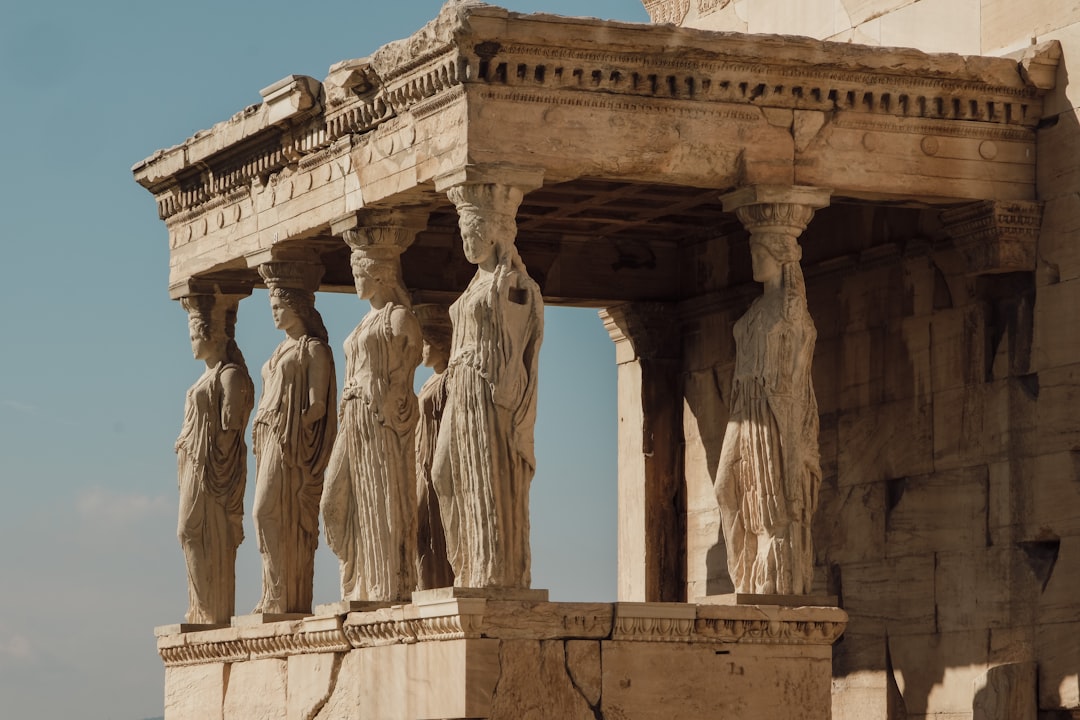
The dust motes danced in the simulated Attic sunlight, illuminating intricately crafted pottery and the stern gaze of marble statuary. A narrator’s voice, resonant and authoritative, filled the hushed studio: “For over a millennium, a civilization bloomed on the shores of the Aegean, a beacon of thought, art, and political innovation that would irrevocably shape the course of human history. This is the story of Ancient Greece – its exhilarating ascent, its glorious zenith, and its eventual, inevitable decline.” This is the premise of “The Rise and Fall of Ancient Greece,” a comprehensive historical documentary that embarks on an ambitious journey through the millennia, meticulously examining the forces that forged one of the most influential cultures the world has ever known.
The documentary, a sprawling epic in its own right, eschews a purely chronological approach for a more thematic exploration, weaving together archaeological evidence, textual analysis, and expert commentary to present a nuanced and compelling narrative. It’s a testament to the enduring power of this ancient civilization, a story that continues to resonate with timeless questions about governance, philosophy, warfare, and the very essence of humanity. From the nascent whispers of Minoan and Mycenaean cultures to the intellectual fireworks of Athens and the martial might of Sparta, the documentary systematically dissects the intricate tapestry of Greek civilization, revealing the seeds of its triumphs and the precursors to its eventual fragmentation.
I. The Cradle of Civilization: Echoes from the Aegean
The film opens not with the polished marble of Olympus, but with the sun-drenched ruins of Crete and the formidable citadel of Mycenae. This initial segment, “The Cradle of Civilization,” delves into the pre-Hellenic and early Greek societies, emphasizing that the grand edifice of Classical Greece was built upon foundations laid by earlier, often enigmatic, cultures.
The Minoan Enigma
- Palatial Splendor and Maritime Mastery: The documentary paints a vivid picture of Minoan Crete, showcasing the vibrant frescoes of Knossos, depicting bulls, dolphins, and graceful processions. Through CGI reconstructions and expert interviews with archaeologists, viewers are transported to a society seemingly at peace, characterized by elaborate palaces, sophisticated plumbing, and a thriving maritime trade network. The emphasis is on their technological advancements and their apparent lack of defensive fortifications, suggesting a period of relative peace and prosperity fostered by their naval dominance.
- The Written Word: Linear A and its Mysteries: The intriguing presence of Linear A script is highlighted, reminding viewers that much about Minoan civilization remains tantalizingly out of reach. The inability to fully decipher this script serves as a potent metaphor for the transient nature of history and the challenges of reconstructing the past from fragmented evidence.
The Rise of the Mycenaeans
- Fortress Cities and Warrior Kings: In stark contrast to the Minoans, the documentary shifts its focus to mainland Greece and the Mycenaeans. The imposing cyclopean walls of Mycenae and Tiryns are presented as symbols of a more militaristic society. The discovery of the “Warrior Graves” at Mycenae, filled with bronze weapons, gold masks, and intricate armor, provides tangible evidence of a hierarchical and warlike aristocracy.
- The Trojan War: Myth and Reality: The documentary grapples with the legacy of the Trojan War, exploring the archaeological evidence that supports the existence of a conflict around the site of Troy. While acknowledging the epic nature of Homer’s tales, it carefully distinguishes between poetic embellishment and historical likelihood, prompting viewers to consider the complex relationship between myth and historical memory.
The Dark Ages and the Dawn of the Polis
- Collapse and Reemergence: The film doesn’t shy away from the period often referred to as the “Greek Dark Ages,” detailing the widespread destruction, population decline, and loss of literacy that followed the collapse of Mycenaean civilization. However, it also emphasizes this period as a crucial crucible from which a new Greek identity would emerge.
- The Birth of the Polis: The foundational development of the polis, or city-state, is meticulously charted. The documentary explains how communities began to coalesce around local sanctuaries and marketplaces, fostering a sense of collective identity and self-governance that would become the defining characteristic of Archaic and Classical Greece. This section powerfully illustrates how societal collapse can, paradoxically, pave the way for radical new forms of social and political organization.
For those interested in exploring the intricate connections between ancient Greek history and modern technological advancements, a fascinating article titled “Blue Origin’s Role in Lunar Defense” delves into the implications of space exploration on contemporary society. This piece highlights how the spirit of innovation that characterized ancient Greek civilization continues to influence today’s scientific endeavors. To read more about this intriguing intersection of history and technology, visit Blue Origin’s Role in Lunar Defense.
II. The Golden Age of Athens: The Zenith of Hellenic Culture
The documentary then pivots to what is arguably the most celebrated era of Ancient Greece: the Golden Age of Athens. This segment, titled “The Golden Age of Athens,” is a vibrant exploration of the intellectual, artistic, and political achievements that cemented Athens’ legendary status.
The Birth of Democracy
- From Tyranny to the Demos: The film traces the evolution of Athenian governance, detailing the reforms of Solon and Cleisthenes that laid the groundwork for democracy. The concept of isonomia (equality before the law) and the institution of the ekklesia (assembly) are explained with clarity, highlighting the radical nature of direct democracy in a pre-modern world. The documentary carefully distinguishes Athenian democracy from its modern counterparts, emphasizing its exclusive nature, which largely excluded women, slaves, and foreigners.
- The Power of the Citizen: The emphasis is placed on the active participation of male citizens in the political life of Athens. Expert historians discuss the responsibilities and privileges of citizenship, the importance of rhetoric and debate in the public sphere, and the concept of civic duty that permeated Athenian society.
The Flourishing of Philosophy and Thought
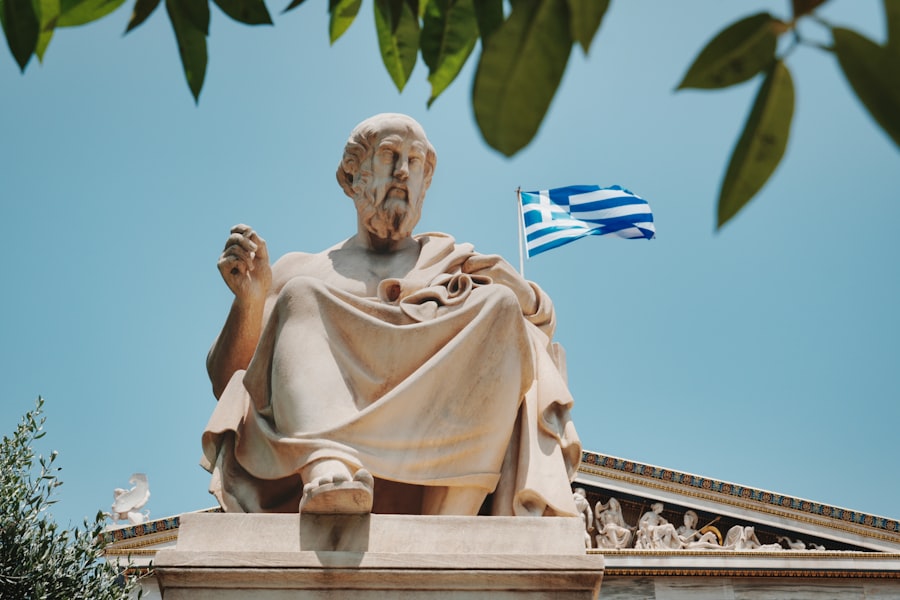
- Socrates, Plato, and Aristotle: The Pillars of Western Philosophy: This section is dedicated to the intellectual giants who emerged from Athens. Through animated sequences and expert interviews, the documentary introduces the Socratic method, Plato’s theory of Forms, and Aristotle’s systematic approach to knowledge. The profound and lasting impact of these thinkers on Western philosophy, ethics, and political science is underscored, demonstrating how a single city-state could become a crucible for ideas that continue to shape our understanding of the world.
- The Tragic Dramatists and the Exploration of the Human Condition: The cinematic representations of Aeschylus, Sophocles, and Euripides performing their tragedies evoke the power and emotional resonance of Athenian theatre. The documentary explores how these plays, performed at the Festival of Dionysus, served not only as entertainment but also as a profound exploration of moral dilemmas, justice, fate, and the complexities of the human psyche. The innovative use of masks and chorus is explained, offering a glimpse into the theatrical conventions of the time.
Artistic and Architectural Marvels
- The Parthenon and the Acropolis: The majestic Parthenon stands as a monument to Athenian achievement. The documentary utilizes breathtaking drone footage and detailed CGI reconstructions to showcase the architectural brilliance and artistic sophistication of the Acropolis. Expert art historians discuss the sculptures of Phidias, the pedimental figures, and the metopes, explaining their thematic significance and their role in celebrating Athenian power and piety.
- Sculpture and the Ideal Human Form: The evolution of Greek sculpture from the Archaic kouros to the Classical ideals of beauty and proportion is meticulously documented. The serene expressiveness and anatomical accuracy of works like the Discobolus and the Doryphoros are analyzed, highlighting the Greek pursuit of achieving the perfect, idealized human form in art.
III. The Shadow of Conflict: Warfare and Empire
No historical narrative of Ancient Greece would be complete without an examination of its perpetual state of conflict. This segment, “The Shadow of Conflict,” delves into the military endeavors and imperial ambitions that characterized different periods of Greek history.
The Persian Wars: A United Front Against a Mighty Empire
- David vs. Goliath at Marathon: The Battle of Marathon, a pivotal moment in Greek history, is recreated with dramatic flair. The documentary emphasizes the strategic genius of the Athenian hoplites and the inspirational leadership that allowed a smaller force to repel the vast Persian army. The significance of this victory in fostering a sense of pan-Hellenic identity is explored.
- Salamis and Plataea: The Turning Tide: The naval triumph at Salamis and the decisive land victory at Plataea are presented as crucial battles that secured Greek independence. The documentary highlights the strategic brilliance of Themistocles and the unwavering courage of the Greek soldiers who fought for their freedom against overwhelming odds. The lasting impact of these victories on the geopolitical landscape of the Aegean is carefully analyzed.
The Peloponnesian War: The Fall of the Golden Age
- Athens vs. Sparta: A Clash of Ideologies: The devastating Peloponnesian War, a protracted conflict that pitted Athens against its perennial rival, Sparta, is portrayed as the beginning of the decline of the Golden Age. The documentary contrasts the democratic, naval power of Athens with the oligarchic, land-based military might of Sparta, illustrating how their fundamental differences fueled an intractable rivalry.
- Thucydides’ Masterpiece: The Anatomy of War: The documentary extensively features the work of Thucydides, the historian of the Peloponnesian War, highlighting his rigorous methodology and his insightful analysis of the causes and consequences of conflict. His depiction of the plague in Athens and the moral decay that set in during the war are presented as cautionary tales about the devastating human cost of prolonged warfare.
The Rise of Macedon and the End of the Polis Era
- Philip II’s Unification: The rise of Philip II of Macedon is depicted as a pivotal moment that signaled the end of the independent city-state era. The documentary details his military innovations, his shrewd diplomacy, and his eventual conquest of the Greek city-states, skillfully exploiting their internal divisions.
- Alexander the Great’s Empire: The legendary campaigns of Alexander the Great are chronicled, showcasing his military genius and his vast conquests from Greece to India. The documentary explores the Hellenistic period that followed, a diffusion of Greek culture and influence across a vast empire, and the eventual fragmentation of Alexander’s dominion. This marks a significant shift from the era of independent poleis to a more expansive, but ultimately less cohesive, Hellenistic world.
IV. The Legacy of the Hellenes: Enduring Influence
The final segment, “The Legacy of the Hellenes,” shifts its focus from the decline of independent Greece to the enduring and profound impact of its civilization on subsequent eras and the modern world.
The Transmission of Knowledge
- The Library of Alexandria: The documentary highlights the Library of Alexandria as a vital center for the preservation and dissemination of Greek knowledge. Through vivid CGI reconstructions, viewers witness the vast collection of scrolls and the scholars who worked within its hallowed halls, contributing to advancements in mathematics, astronomy, medicine, and literature.
- The Roman Embrace: The film meticulously details how the Romans, conquerors of Greece, became ardent admirers and inheritors of Greek culture. The Roman adoption of Greek mythology, philosophy, art, and architecture is explored, demonstrating how Greece, even in defeat, exerted a profound cultural dominance over its conquerors. The concept of Graecia capta ferum victorem cepit (Captive Greece captured her savage conqueror) is eloquently articulated.
The Foundations of Western Civilization
- Democracy and Governance: The documentary reiterates the vital role of Greek political thought in shaping Western democratic ideals. While acknowledging the differences, the fundamental concepts of citizen participation, rule of law, and the pursuit of the common good are traced back to their Hellenic origins.
- Philosophy and Science: The lasting influence of Greek philosophers and scientists on scientific inquiry, logical reasoning, and ethical frameworks is emphasized. The documentary posits that the systematic study of the natural world and the human condition, pioneered by figures like Aristotle, laid the groundwork for the scientific revolution and continues to inform our intellectual pursuits.
Artistic and Literary Resonance
- Artistic Ideals: The enduring impact of Greek artistic principles – balance, harmony, proportion, and the idealized human form – on Western art throughout history is illustrated. Examples from Renaissance painting to Neoclassical sculpture demonstrate how these ancient ideals have been continuously reinterpreted and celebrated.
- Literary Archetypes: The documentary explores how Greek myths, epic poems, and dramatic tragedies have become foundational texts for Western literature, providing archetypes, themes, and narrative structures that have been adapted and revisited by countless writers across millennia. The enduring power of figures like Odysseus, Oedipus, and the Olympian gods is testament to their profound cultural resonance.
For those interested in exploring the complexities of Greek history, a fascinating documentary delves into the rise and fall of ancient civilizations, highlighting their cultural and political significance. This documentary provides a comprehensive overview of how historical events shaped modern Greece. Additionally, readers may find it intriguing to consider the economic implications of historical events, as discussed in a related article that unveils potential worst-case economic scenarios for the future. You can read more about these scenarios in this insightful piece here.
V. Epilogue: The Enduring Echo
The final minutes of “The Rise and Fall of Ancient Greece” offer a reflective epilogue, moving beyond the historical narrative to contemplate the enduring relevance of this ancient civilization.
Lessons from Antiquity
- The Fragility of Power: The documentary subtly underscores the cyclical nature of power and the inherent fragility of even the most dominant civilizations. The fragmentation of Alexander’s empire and the eventual absorption of Greece by Rome serve as potent reminders of the transience of political and military might.
- The Enduring Quest for Knowledge and Meaning: Ultimately, the film leaves the viewer with a profound appreciation for the Greeks’ insatiable curiosity, their relentless pursuit of knowledge, and their profound exploration of the human condition. The questions posed by Socrates, the ideals explored by Plato, and the scientific inquiries of Aristotle continue to resonate, reminding us that the journey of human understanding is an ongoing endeavor.
A Timeless Inspiration
- Democracy’s Ongoing Struggle: The documentary implicitly prompts reflection on the state of modern democracies, drawing parallels and contrasts with the Athenian experiment. It suggests that the Athenian ideals, while imperfect, offer a valuable historical lens through which to examine contemporary challenges and aspirations.
- The Unending Dialogue: The final images fade on a montage of ancient ruins juxtaposed with modern marvels and abstract representations of ideas, emphasizing that the dialogue with Ancient Greece is far from over. The documentary concludes not with a pronouncement of finality, but with an invitation to continue engaging with the rich tapestry of ideas and achievements that define this extraordinary civilization. It leaves the viewer with a sense of awe at what humanity can achieve and a sober understanding of its inherent vulnerabilities, a testament to the enduring power of the Hellenic legacy.

The Lost City That Was Never Really Lost
FAQs
What is the Greek history documentary about?
The Greek history documentary explores the rich and diverse history of ancient Greece, including its mythology, philosophy, art, and political systems. It delves into the rise and fall of the Greek city-states, the conquests of Alexander the Great, and the impact of Greek culture on the Western world.
Who is the target audience for the Greek history documentary?
The target audience for the Greek history documentary includes history enthusiasts, students, educators, and anyone interested in learning about the ancient Greek civilization. It is suitable for individuals of all ages who want to gain a deeper understanding of Greek history and its influence on modern society.
What are some key topics covered in the Greek history documentary?
The Greek history documentary covers a wide range of topics, including the origins of Greek mythology, the development of democracy in Athens, the Peloponnesian War, the conquests of Alexander the Great, and the enduring legacy of Greek art and architecture. It also explores the contributions of Greek philosophers such as Socrates, Plato, and Aristotle.
How is the Greek history documentary presented?
The Greek history documentary is presented through a combination of expert interviews, archival footage, dramatic reenactments, and stunning visuals of ancient Greek ruins and artifacts. It offers a comprehensive and engaging portrayal of Greek history, bringing the ancient civilization to life for viewers.
Where can I watch the Greek history documentary?
The Greek history documentary may be available for streaming on various platforms such as streaming services, educational websites, and DVD/Blu-ray. It may also be broadcast on television channels dedicated to history and educational programming. Viewers can check with their local libraries, educational institutions, and online retailers for access to the documentary.