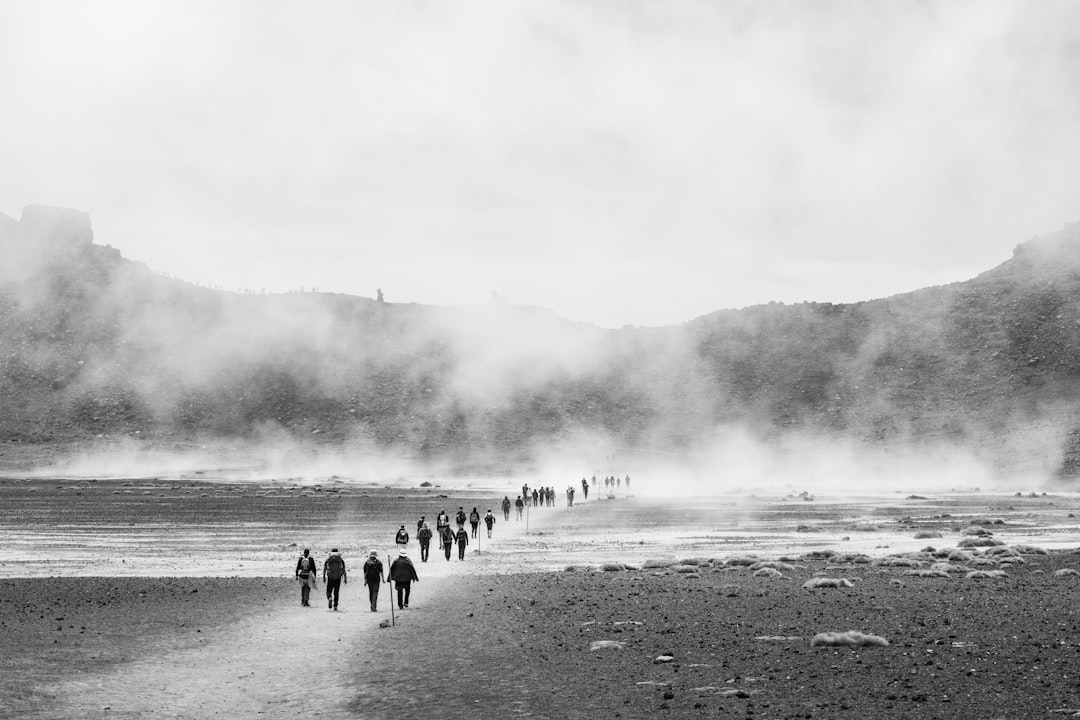
The world, as it emerged from the colossal grip of the Last Glacial Maximum, was a canvas dramatically reshaped by ice. For millennia, vast ice sheets had sculpted continents, pushing life to the margins and confining human populations to resilient pockets. But as the climate began its slow, inexorable thaw, a profound transformation began. This period, stretching from roughly 11,700 years ago to the dawn of settled agriculture, witnessed what historians and archaeologists often term “The Great Human Migration: After the Ice Age.” It was not a single, orchestrated movement, but a tapestry woven from countless individual journeys, driven by opportunity, necessity, and the enduring human spirit of exploration.
The retreat of the glaciers was not a uniform event. It was a gradual process, marked by oscillations of warming and cooling. However, the overall trend was undeniable: an unprecedented expansion of habitable territory. As ice sheets melted, vast tracts of land, previously buried or unlivable, were gradually revealed. The ensuing environmental shifts were monumental, creating new ecosystems and a cascade of opportunities for the human populations poised to take advantage of them.
The Unveiling of New Territories
The most immediate and profound impact of the glacial retreat was the physical opening of the landscape. The Scandinavian ice sheet, which had stretched across much of Northern Europe, began to recede, exposing fertile plains and coastlines. Similarly, the North American ice sheets, the Laurentide and Cordilleran, melted back, revealing the Canadian Shield and the northern Great Plains, once frozen tundras, now becoming more temperate and biologically productive. These newly accessible regions were not empty wildernesses; they were ecosystems brimming with life, now offering novel resources and spaces for human settlement.
Shifting Ecosystems and New Food Sources
The melting ice also triggered immense hydrological changes. Rivers swelled, carving new valleys and forming vast proglacial lakes. Coastlines, previously pushed far offshore by glacially depressed landmasses, began to rebound, revealing new seabeds and estuaries teeming with marine life. As the climate warmed, vegetation zones shifted. Forests expanded northwards, replacing open tundra. New plant species, previously held at bay by the cold, flourished. This created a more diverse and abundant food web. Large herbivores, like the mammoth and woolly rhinoceros, began to decline in some areas, but their place was increasingly taken by species more adapted to the new environments – reindeer, aurochs (wild cattle), red deer, and a plethora of smaller game. The abundance of fish in newly formed lakes and the revitalized oceans provided another rich source of sustenance, particularly for coastal communities.
The Dawn of Maritime and Riverine Cultures
The altered geography profoundly influenced human mobility and settlement patterns. For the first time, extensive coastlines and vast river systems became highways, connecting previously disparate regions. Coastal migration routes became more viable, allowing people to follow the rich marine resources along the edges of continents. The development of more sophisticated watercraft, likely evolving from simpler logboats and hide-covered frames, facilitated these journeys. River valleys, now flowing with more consistent water after the glacial melt, became natural corridors for both human and animal movement. These aquatic environments fostered the growth of distinct maritime and riverine cultures, whose lives were intimately connected to the rhythms of the seas, lakes, and rivers.
Human migration after the Ice Age marked a significant turning point in the development of civilizations, as groups began to spread across various continents in search of more hospitable environments. This movement not only facilitated the exchange of cultures and ideas but also led to the establishment of new societies. For a deeper understanding of how migration patterns have evolved over time and their impact on human history, you may find the article on autonomous space defense relevant, as it discusses the importance of adaptability and survival in changing environments. You can read more about it here: AIS Role in Autonomous Space Defense.
Following the Megafauna: The Hunter’s Pursuit
For millennia, some human groups had been intimately tied to the fate of the great Ice Age megafauna. The colossal mammoths, mastodons, and woolly rhinoceroses were not just sources of food; they provided hides for shelter and clothing, bones for tools and art, and fat for fuel. As the climate changed and these iconic species began to dwindle, particularly in the more southern parts of their range, human groups who relied heavily on them would have faced critical choices. Some may have adapted by diversifying their diets, while others, particularly those in more northerly or more resilient environments, may have followed the lingering herds.
The Exodus from the Tundra and Steppe
Regions that were once prime hunting grounds for mammoth herds, such as the open tundra and mammoth steppe ecosystems that sprawled across Eurasia, began to transform. As the climate warmed and forests advanced, these open landscapes became less hospitable for the grazers. This led to a gradual shift in megafauna distribution, with some species becoming rarer or confined to more specialized habitats, while others, like reindeer, thrived in the newly emerging boreal forests and tundras further north. For human hunter-gatherer societies highly adapted to hunting these large animals, this environmental shift would have necessitated either adaptation to new prey or migration.
Adaptation to New Prey and Hunting Techniques
The decline of the mammoth did not signal the end of large prey for hunters. As mentioned, species like reindeer, aurochs, and red deer became increasingly important. This required a shift in hunting strategies. While mammoths might have been hunted in large, coordinated group efforts, the pursuit of smaller, faster game or herd animals like reindeer might have favored different tactics, perhaps more reliance on individual stealth, projectile weapons like bows and arrows (which were likely becoming more common and refined), or specialized traps. The genetic and archaeological records can sometimes hint at these dietary shifts through analyses of bone collagen and tool assemblages.
The Persistence of Northern Hunter-Gatherers
In the far north, particularly in regions like Siberia and Scandinavia, populations may have continued to rely on Arctic megafauna for a longer period. The extremely harsh conditions in these areas may have slowed the warming process and the advance of forests, allowing some populations of mammoth and other adapted species to persist longer. These northern hunter-gatherer groups likely developed highly specialized cultures, intimately adapted to the extreme cold and the unique resources of their environment. Their movements would have been dictated by the migratory patterns of their prey, leading them across vast, still largely unpopulated northern expanses.
The Spread of New Technologies and Ideas: A Catalyst for Movement

The post-glacial period was not just about environmental change; it was also a dynamic era for human innovation. The challenges and opportunities presented by the thawing world spurred the development and diffusion of new technologies and ideas. These advancements not only facilitated movement but also shaped the ways in which people interacted with their new environments and with each other, often leading to further migrations and cultural exchanges.
The Rise of the Bow and Arrow
While projectile weapons existed in earlier periods, the post-glacial era likely saw the widespread adoption and refinement of the bow and arrow. This technology dramatically increased hunting efficiency, allowing for safer and more effective hunts at a distance. The bow and arrow enabled hunters to target a broader range of prey, from small game to larger animals, and to do so with greater accuracy. This technological leap would have made previously marginal hunting grounds more productive and allowed for more flexible foraging strategies, potentially driving migrations to exploit new hunting opportunities.
Advancements in Stone Tool Technology
Beyond projectile weaponry, there were ongoing innovations in stone tool technology. The development of more specialized tools for tasks like woodworking, hide processing, and bone carving would have enhanced the ability of humans to exploit a wider range of resources. Notched tools for scraping, finely flaked blades for cutting, and polished stone axes for working wood all contributed to a more sophisticated toolkit. The efficiency and versatility of these tools would have made settlement in new terrains more feasible and encouraged the exploration of diverse ecological niches.
The Emergence of Complex Social and Symbolic Behaviors
The post-glacial period also witnessed the subtle but significant emergence of more complex social behaviors and symbolic expressions. While cave art and adornments existed in the Paleolithic, the Mesolithic and early Neolithic periods saw a richer development of material culture that reflected increasing social complexity. This could include more elaborate burials, sophisticated adornments, and perhaps the beginnings of more formalized social structures. The need to develop and transmit these complex cultural traditions, as well as the resources to support them, might have spurred the movement of groups to more resource-rich locations or led to increased interaction and exchange with other communities.
The Opening of New Worlds: Reconnecting Continents

The most dramatic aspect of the Great Human Migration after the Ice Age was the re-establishment of connections between landmasses previously separated or rendered difficult to traverse. As the ice retreated and sea levels rose, new pathways opened, allowing for the dispersal of human populations across vast geographical distances.
The Bering Land Bridge and the Peopling of the Americas
One of the most profound migrations facilitated by the end of the Ice Age was the eventual re-peopling of the Americas. During glacial periods, the Bering Land Bridge, a vast landmass connecting Siberia and Alaska, was exposed due to lower sea levels. This allowed for the initial migration of humans into the Americas. However, as the glaciers began to recede, this land bridge was submerged. Yet, the retreat of the ice sheets in North America created new corridors and opportunities for the descendants of those early migrants. As the vast ice sheets of the Laurentide and Cordilleran glaciers melted, ice-free routes opened up, allowing for the spread of human populations throughout North and South America. This was a protracted process, with early inhabitants adapting to a vast array of diverse environments along the way.
The Colonization of Islands and Coastal Routes
The rising sea levels that submerged the Bering Land Bridge also created new island chains and reshaped coastlines. This provided opportunities for intrepid seafarers to explore and colonize islands previously inaccessible. The spread of humans across the Pacific, for example, began in earnest in the post-glacial period, with skilled navigators island-hopping their way across vast stretches of ocean. Similarly, maritime cultures flourished along the coasts of Europe, Asia, and Africa, using the newly accessible maritime routes for exploration, trade, and resource exploitation. These coastal migrations were often driven by the rich marine resources that became available as the oceans warmed and ecosystems revived.
The Inland Expansion of Human Presence
Beyond the coastlines and the Americas, the inland expansion of human presence was equally significant. As forests and grasslands expanded into previously glaciated territories, human hunter-gatherer groups fanned out across these new lands. This included the northward expansion into Scandinavia and Siberia, the movement across the vast plains of Eastern Europe, and the colonization of the newly fertile lands of Central Asia. These inland migrations were often dictated by the availability of game, plant resources, and freshwater sources, leading to the establishment of human populations in regions that had been uninhabitable for millennia.
Human migration after the Ice Age marked a significant turning point in our history, as populations began to spread across various continents in search of new resources and habitats. This movement not only shaped the demographic landscape but also led to the development of diverse cultures and societies. For a deeper understanding of how ancient civilizations adapted to their environments, you can explore this fascinating article on the Antikythera mechanism, which highlights the ingenuity of early human innovation. Check it out here.
Legacy of the Great Migration: Shaping Modern Humanity
| Time Period | Migration Route | Destination | Impact |
|---|---|---|---|
| 12,000-10,000 BCE | Bering Land Bridge | Americas | First human inhabitants in the Americas |
| 10,000-8,000 BCE | Land and coastal routes | Australia and Oceania | Settlement of Australia and Oceania |
| 8,000-6,000 BCE | Land and sea routes | Europe | Spread of farming and domestication of animals |
The Great Human Migration after the Ice Age was not merely a series of random wanderings. It was a fundamental process that shaped the genetic, cultural, and linguistic landscape of modern humanity. The movements and adaptations of our ancestors during this critical period laid the groundwork for the diverse societies that exist today.
Genetic Diversity and Adaptation
The vast migrations of the post-glacial period played a crucial role in shaping human genetic diversity. As populations spread into new environments, they encountered different selective pressures. Over time, this led to the evolution of geographically distinct genetic traits, such as adaptations to different diets, climates, and disease exposures. For instance, the development of lactose tolerance in populations that domesticated cattle is a prime example of such adaptation. The genetic traces of these ancient migrations are still detectable in human populations today, providing a roadmap of our ancestral journeys.
The Genesis of Diverse Cultures and Languages
The dispersal of human groups across the globe led to the parallel development of an astonishing array of cultures and languages. Isolated by geography, or interacting primarily with geographically limited groups, human societies developed unique traditions, social structures, belief systems, and communication methods. The diverse environments encountered also influenced these developments, with coastal peoples developing different technologies and social organizations than those living in forests or plains. The remarkable linguistic diversity we see in the world today is a direct descendant of these ancient migrations and subsequent cultural divergences.
The Foundation for Future Developments
The Great Human Migration after the Ice Age created the conditions for further, revolutionary changes in human history. The expansion into new territories provided the space and resources for the development of agriculture, which would dramatically alter human settlement patterns and social organization. The increased interactions between diverse groups fostered the exchange of ideas and technologies, leading to further innovation. In essence, the movements and adaptations of our ancestors during this transitional period were the essential prologue to the Neolithic Revolution and the subsequent unfolding of human civilization as we know it. The world that emerged from the ice was a world ripe for human expansion, and our ancestors answered that call with a dynamism and resilience that continues to define us.

Could Humanity Remember a World That No Longer Exists?
FAQs
1. What is human migration after the Ice Age?
Human migration after the Ice Age refers to the movement of early human populations from Africa to other parts of the world, including Europe, Asia, and the Americas, as the Earth’s climate warmed and ice sheets retreated.
2. When did human migration after the Ice Age occur?
Human migration after the Ice Age occurred approximately 12,000 to 15,000 years ago, as the last glacial period came to an end and the Earth’s climate began to warm.
3. What were the main factors that influenced human migration after the Ice Age?
The main factors that influenced human migration after the Ice Age include changes in climate and environment, the availability of resources such as food and water, and the development of new technologies and cultural adaptations.
4. What were the major migration routes taken by early humans after the Ice Age?
Early humans migrated from Africa to other parts of the world through various routes, including the Levant corridor into Europe, the coastal route along the Arabian Peninsula and into South Asia, and the Bering land bridge into the Americas.
5. What impact did human migration after the Ice Age have on the development of human societies?
Human migration after the Ice Age led to the spread of diverse human populations across different regions of the world, contributing to the development of new cultures, languages, and social structures. It also played a significant role in shaping the genetic diversity of modern human populations.