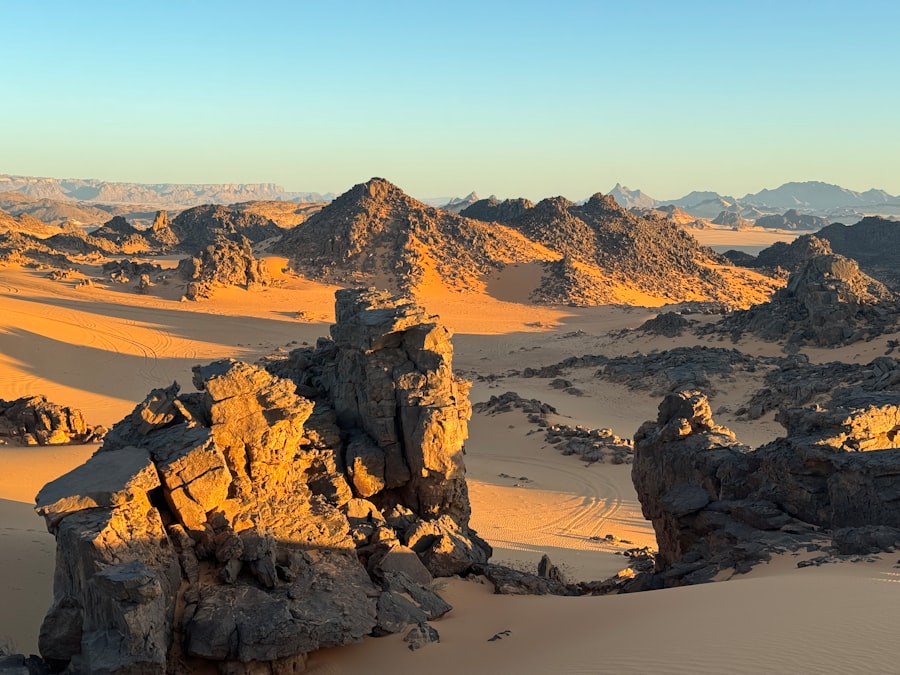
The Sahara Desert, a vast expanse of sand and rock, has long been perceived as a barren wasteland, an inhospitable frontier incapable of sustaining complex human societies. Yet, the whispers of a more vibrant past, of a Sahara teeming with life and civilization, have persisted. Recent groundbreaking archaeological discoveries are not merely confirming these whispers but amplifying them into a resounding chorus, revealing a picture of ancient Saharan life far richer and more sophisticated than previously imagined. This burgeoning body of evidence is fundamentally reshaping our understanding of human history, pushing back the temporal boundaries of advanced Saharan cultures and challenging long-held assumptions about the cradle of civilization.
The Greening of the Sahara: A Lost World Re-emergeing
For millennia, the Sahara was not the arid desert it is today. Scientific consensus, supported by an accumulating wealth of paleoclimatic data, points to a period known as the “Green Sahara” or the “African Humid Period,” which spanned roughly from 11,000 to 5,000 years ago. This era was punctuated by monsoon rains that transformed the landscape into a savanna dotted with lakes, rivers, and verdant grasslands. This dramatic environmental shift created ideal conditions for human settlement and the development of complex societies.
Paleoclimatic Indicators: Reading the Earth’s Memory
- Lake Sediments: Analysis of sediment cores from ancient lakebeds provides a detailed record of past rainfall patterns, vegetation, and human activity. Layers of organic matter and pollen reveal periods of lush vegetation and diverse fauna, indicating abundant water sources.
- Opal Phytoliths: These microscopic silica bodies, produced by plants, are preserved in sediments. Their presence and types offer insights into the vegetation that once thrived in the Sahara, confirming the existence of grasses, shrubs, and trees.
- Speleothems (Cave Formations): Stalagmites and stalactites from Saharan caves contain isotopic signatures that reflect past rainfall amounts. These “geological records” offer crucial data on the duration and intensity of humid periods.
- Dust Records: The composition of dust layers can indicate the stability or erosion of the land surface. Periods of reduced dust suggest a more vegetated and stable landscape during the Green Sahara.
Implications of a Wetter Sahara
The transformation of the Sahara from a desert to a savanna had profound implications for early human populations. It provided a stable environment with abundant resources, fostering the development of sedentary lifestyles and the growth of settlements. This was not a time of scarce survival but a flourishing period where human ingenuity could thrive and complex social structures could emerge. The perception of early Saharan peoples as nomadic hunter-gatherers is being rapidly revised as evidence of their enduring settlements and sophisticated resource management comes to light. This period represents a forgotten chapter in human history, a testament to the adaptive capacity of our ancestors in a dynamically changing world.
Recent discoveries in the ancient Sahara have shed light on the once-thriving civilizations that inhabited the region, revealing evidence of complex societies that flourished in what is now a vast desert. These findings highlight the importance of understanding how climate change and environmental shifts influenced human settlement and cultural development in the area. For more insights on the economic implications of historical civilizations, you can read a related article on nearshoring and its impact on modern economies at this link.
Archaeological Revelations: Beyond Nomadic Myths
For decades, archaeological work in the Sahara was hampered by the sheer scale of the desert and the challenges of excavation. However, advancements in remote sensing, including satellite imagery and aerial surveys, coupled with more accessible and targeted fieldwork, have begun to unearth astonishing evidence of settled communities and advanced cultural practices. These discoveries are dismantling the long-held stereotype of Saharan inhabitants as solely nomadic.
Evidence of Sedentary Lifestyles
- Permanent Settlements: Excavations have revealed the remains of permanent villages and towns, complete with well-constructed dwellings, storage facilities, and communal spaces. These are not temporary encampments but deliberate and enduring places of habitation. Sites like Nabta Playa in southern Egypt and the Tassili n’Ajjer plateau in Algeria have yielded extensive evidence of settlement patterns.
- Agricultural Practices: Contrary to the notion of a purely hunter-gatherer existence, evidence suggests that early Saharans engaged in sophisticated agricultural practices. Remains of domesticated plants, such as sorghum and millet, and tools associated with cultivation have been found, indicating a deep understanding of their environment and a capacity for food production.
- Pastoralism and Animal Husbandry: The domestication and herding of animals, particularly cattle, played a significant role in Saharan societies. Extensive finds of animal bones, cattle corrals, and depictions of herding activities in rock art point to organized animal husbandry. This provided a stable source of food, milk, and other resources.
Sophisticated Toolmaking and Craftsmanship
The material culture unearthed from Saharan sites speaks volumes about the ingenuity and skill of its ancient inhabitants. The tools and artifacts found are not rudimentary but demonstrate a high level of craftsmanship and technological understanding.
Stone Tools: Precision and Purpose
- Grinding Stones: The presence of numerous grinding stones indicates the processing of grains, a cornerstone of agricultural societies. Their size and variety suggest different uses, from processing wild grains to cultivated crops.
- Projectile Points: Finely crafted arrowheads and spear points, made from materials like flint and chert, showcase advanced lithic technology and an understanding of aerodynamics for hunting.
- Polished Stone Axes: The development of polished stone axes signifies mastery in stoneworking, enabling more efficient woodworking for construction, toolmaking, and other activities.
Pottery: Artistry and Utility
- Decorative Vessels: The Saharan “decorated ware” pottery, dating back thousands of years, is particularly noteworthy. These ceramics are not only functional but often adorned with intricate geometric designs, abstract patterns, and even stylized animal figures, indicating a sophisticated aesthetic sensibility and symbolic communication.
- Diverse Shapes and Sizes: The variety of pottery forms – from storage jars to cooking pots and bowls – reflects a deep understanding of the practical needs of domestic life and food preparation.
- Firing Techniques: Analysis of pottery shards can reveal advanced firing techniques, suggesting controlled kiln use for more durable and versatile ceramic production.
The Mystery of Saharan Rock Art: A Visual Chronicle
Perhaps the most visually striking evidence of ancient Saharan civilization comes from its extraordinary rock art. Across vast swathes of the Sahara, particularly in regions like the Tassili n’Ajjer and the Acacus Mountains, an astonishing gallery of rock paintings and engravings has been discovered, offering an unparalleled glimpse into the lives, beliefs, and environment of these ancient peoples.
Interpretations of Saharan Iconography
- Scenes of Daily Life: The rock art depicts a vibrant panorama of ancient Saharan life, including hunting scenes, herding activities, domestic chores, and social gatherings. These provide invaluable ethnographic data, illustrating how people interacted with their environment and each other.
- Flora and Fauna: A rich diversity of animals, both those that are now extinct in the region and those that still persist, are meticulously rendered. This offers insights into the prehistoric ecosystem and the relationship between humans and the natural world. Scenes depicting large mammals like giraffes, elephants, rhinos, and hippos confirm their presence during the Green Sahara period.
- Spiritual and Ritualistic Representations: Many panels feature abstract symbols, anthropomorphic figures with elaborate headdresses, and enigmatic scenes that are believed to represent spiritual beliefs, rituals, and possibly shamanistic practices. The “white people” figures, with their often elaborate attire, suggest a complex social hierarchy and ceremonial life.
Chronological Divisions and Artistic Evolution
The rock art is not monolithic but exhibits distinct stylistic periods, allowing archaeologists to trace the evolution of Saharan culture over millennia.
Pre-Pastoral Period (Neolithic Hunter-Gatherers)
- Focus on Wildlife: Early rock art often emphasizes the hunting of wild animals, reflecting a hunter-gatherer subsistence strategy. The depictions are often dynamic and detailed, showcasing the skill and observation of the artists.
- “Wild Fauna” Style: Characterized by lively depictions of large mammals and hunting scenes, this period highlights the abundance of wildlife during the early Green Sahara.
Pastoral Period (Neolithic Herders)
- Domestication and Herding: This period sees a significant shift in focus, with the increased representation of domesticated animals, particularly cattle. Herding scenes, figures leading cattle, and depictions of cattle wealth become prominent.
- Human-Animal Interaction: The art reflects a closer relationship between humans and their domesticated animals, suggesting a settled, pastoral lifestyle. Figures often appear alongside their herds.
Other Significant Periods
- The “Round Head” Period: Characterized by stylized human figures with rounded heads, often depicted in ritualistic or ceremonial contexts.
- The “Horse” and “Chariot” Periods (Later): While the focus of much of the recent evidence pertains to earlier periods, later Saharan rock art also shows the introduction of horses and chariots, indicative of further cultural shifts and interactions with external influences.
Advanced Social Structures and Complex Societies
The evidence of settled life, agriculture, skilled craftsmanship, and sophisticated art collectively points towards the existence of complex social structures and organized societies within the ancient Sahara.
Evidence of Social Hierarchy
- Variations in Dwellings: Differences in the size, construction, and location of dwellings within settlements suggest a degree of social stratification, with some individuals or families possessing more status or resources than others.
- Elaborate Burials: While less common than settlements, certain sites have yielded evidence of more elaborate burial practices, which can sometimes indicate social differentiation and the importance of lineage or status in death.
- Specialized Labor: The presence of craft production, from pottery to lithics, implies a degree of specialized labor within the community, allowing individuals to focus on specific skills rather than solely on subsistence. This specialization is a hallmark of complex societies.
Trade and Interaction Networks
- Exotic Materials: The presence of materials not locally sourced in certain Saharan archaeological sites suggests trade and interaction with distant communities. For example, obsidian or specific types of stone used in toolmaking might have originated hundreds or even thousands of kilometers away.
- Diffusion of Ideas and Technologies: The widespread distribution of similar pottery styles or lithic technologies across different Saharan regions suggests networks of communication and the diffusion of ideas and best practices, facilitating cultural exchange.
Early Forms of Political Organization?
While definitive evidence of states or kingdoms remains elusive, the organization required to sustain large settlements, manage agricultural resources, and potentially coordinate large-scale hunting or herding activities implies some form of organized governance or leadership within these societies. This could range from tribal councils to more formalized leadership roles.
Recent discoveries have shed light on the ancient civilizations that once thrived in the Sahara, revealing evidence of complex societies that adapted to the harsh desert environment. These findings suggest that the Sahara was not always the arid landscape we see today, but rather a vibrant region with rich cultural exchanges and agricultural practices. For a deeper understanding of how these ancient communities navigated their challenges, you can explore this insightful article on the topic. To learn more about the intricacies of ancient Sahara civilization, visit this link.
Re-evaluating Human Migration and Civilization’s Genesis
The most profound implication of these recent discoveries is their potential to rewrite our understanding of human migration patterns and the very origins of civilization. For too long, the narrative of early civilization has been heavily centered on Mesopotamia and the Nile Valley. The burgeoning evidence from the Sahara suggests a more complex and multi-centric development.
Challenging the Nile-Centric Model
- Independent Development: The findings suggest that complex societies in the Sahara may have developed independently, or at least in parallel, with those in the Nile Valley, demonstrating that advanced human organization and innovation were not confined to a single geographical cradle.
- Sahara as a “Lost Source”: It is increasingly plausible that the Sahara, during its Green Period, served as a vital center for human innovation and dispersal, potentially influencing the development of neighboring civilizations, including those in Egypt and further south. The Sahara could have been a crucial “lost source” of cultural and technological diffusion.
Impact on Theories of Human Expansion
- West African Connections: The Sahara’s Green Period likely facilitated significant human movements and interconnections between North Africa and other regions, including West Africa. This challenges linear models of migration and suggests more complex, interconnected networks of early human populations.
- Resilience and Adaptability: The discoveries underscore the remarkable adaptability and resilience of early humans, their ability to harness environmental opportunities and develop complex societies even in landscapes that later became inhospitable.
The ongoing exploration of the ancient Sahara is not just about uncovering artifacts; it is about piecing together a lost world, a vibrant epoch of human achievement that has lain hidden beneath the sands for millennia. The new evidence revealed is not a mere footnote to existing histories but a fundamental re-evaluation of our past, reminding us that the story of human civilization is far more diverse, dynamic, and geographically widespread than we ever dared to imagine. The desert, once a symbol of barrenness, is now emerging as a testament to human ingenuity, resilience, and the enduring capacity for civilization to blossom where conditions allow. The quest to uncover these ancient Saharan secrets is far from over, and with each new discovery, the tapestry of human history becomes richer and more complex.

The Ancient World Buried Beneath the Sahara
FAQs
What evidence supports the existence of an ancient civilization in the Sahara?
Archaeological evidence such as rock art, pottery, and tools have been found in the Sahara, indicating the presence of a sophisticated ancient civilization. Additionally, the discovery of ancient settlements and burial sites further supports the existence of a thriving society in the region.
When did this ancient Sahara civilization exist?
The ancient Sahara civilization is believed to have existed between 10,000 and 4,000 years ago, during a period when the Sahara was much wetter and more hospitable to human settlement.
What impact did the ancient Sahara civilization have on the region?
The ancient Sahara civilization is believed to have had a significant impact on the development of trade routes and cultural exchange in the region. It is also thought to have contributed to the spread of agricultural practices and the development of early forms of social organization.
What are some key characteristics of the ancient Sahara civilization?
The ancient Sahara civilization is characterized by its ability to adapt to the changing environmental conditions of the region, as well as its development of sophisticated tools and pottery. Additionally, the civilization is known for its distinctive rock art, which provides insight into its religious and cultural practices.
What are some ongoing research efforts to learn more about the ancient Sahara civilization?
Ongoing research efforts include the excavation of ancient settlements and burial sites, as well as the analysis of rock art and other archaeological findings. Additionally, scientists are using advanced technologies such as satellite imaging to uncover more evidence of the ancient Sahara civilization.