Unraveling African Monsoon History
The African monsoon, a colossal atmospheric phenomenon, is a symphony of winds and rains that shapes landscapes, sustains life, and dictates the rhythm of existence across vast swathes of the continent. Far more than just seasonal rainfall, it represents a dynamic interplay between ocean temperatures, atmospheric pressure gradients, and the Earth’s rotation, influencing everything from agricultural yields to human migration patterns. Understanding its historical evolution is not merely an academic pursuit; it is crucial for predicting future climate scenarios and safeguarding vulnerable populations. This intricate past, etched in proxies and climate archives, is slowly but surely being unraveled by scientists employing a diverse array of innovative techniques, offering glimpses into a landscape dramatically different from the one we inhabit today.
The African monsoon is primarily driven by the differential heating between the African continent and the surrounding oceans. During the Northern Hemisphere’s summer, the landmass heats up considerably faster than the oceans. This creates a region of low atmospheric pressure over Africa. Simultaneously, cooler, high-pressure systems develop over the South Atlantic and Indian Oceans. Air masses are then drawn from these oceanic high-pressure systems towards the continental low-pressure zone. As these moist air masses move inland, they rise, cool, and release their accumulated moisture as precipitation, resulting in the characteristic heavy rains of the African monsoon.
The Role of the Intertropical Convergence Zone (ITCZ)
A key player in the African monsoon’s dynamics is the Intertropical Convergence Zone (ITCZ). This is a belt of low pressure characterized by rising air and abundant rainfall, encircling the Earth near the equator. The ITCZ is not static; it migrates seasonally. During the Northern Hemisphere summer, the ITCZ shifts northward, bringing monsoon rains to regions like the Sahel and parts of West Africa. Conversely, its southward migration in the Northern Hemisphere winter facilitates the development of the austral summer monsoon in southern Africa. The precise latitudinal position and seasonal amplitude of the ITCZ are critical determinants of rainfall distribution and intensity across the continent.
Ocean-Atmosphere Coupling: The Sea Surface Temperature Connection
The ocean plays a pivotal role in modulating the strength and timing of the African monsoon. Variations in sea surface temperatures (SSTs) in key ocean basins, such as the Atlantic, Indian, and even the Pacific, have a profound influence. For instance, warmer SSTs in the tropical North Atlantic are often associated with a stronger West African monsoon. This is because warmer waters lead to increased evaporation, injecting more moisture into the atmosphere and strengthening the pressure gradients that drive the monsoon winds. Understanding these sea-atmosphere teleconnections is crucial for deciphering past monsoon variability.
Topography and Land Surface Feedbacks
While the major drivers are oceanic and atmospheric, Africa’s unique topography and land surface characteristics also play a significant role. Mountain ranges like the Ethiopian Highlands and the Atlas Mountains can influence regional rainfall patterns by forcing air masses to rise, leading to orographic precipitation. Furthermore, changes in vegetation cover, driven by climate or human activity, can create feedback loops. For example, increased vegetation can lead to greater evapotranspiration, potentially enhancing local rainfall, while desertification can have the opposite effect, contributing to drier conditions.
The study of African monsoon history is crucial for understanding the region’s climate patterns and their impact on agriculture and water resources. For a broader perspective on how climatic events can influence geopolitical tensions, you might find the article on the escalating Ukraine border conflict insightful. It discusses how environmental factors can exacerbate existing conflicts, highlighting the interconnectedness of climate and geopolitics. You can read more about it here: Escalating Ukraine Border Conflict: Tensions Rise.
Forging the Past: Tools of the Paleomonsoon Detective
Reconstructing the history of the African monsoon is a complex puzzle that requires piecing together evidence from a variety of sources, each offering a unique window into past climate conditions. These proxies, preserved in geological formations, biological remains, and icy realms, act as silent chroniclers of millennia of atmospheric change.
Sediment Cores: Layered Archives of Climate History
Sediment cores, extracted from lakebeds, ocean floors, and river deltas, are invaluable archives of past precipitation and environmental conditions. The composition of these sedimentary layers can reveal a wealth of information. For example, the presence of certain types of pollen can indicate shifts in vegetation, implying changes in rainfall. The abundance of dust particles can signal arid conditions, while the deposition of organic matter might suggest wetter periods. Isotopic analysis of the oxygen and carbon within the sediment grains and shells of ancient organisms provides detailed records of past temperature and hydrological conditions.
Lake Sediments: Timeless Records of Inland Climates
African lake sediments, particularly those from closed basins, are exceptionally valuable for reconstructing past monsoon variability. Features like varves – annual layers of sediment deposited in stable lake environments – offer a high-resolution temporal record. Variations in sediment color, particle size, and the presence of specific minerals can be directly linked to changes in rainfall, lake level, and erosion rates. For instance, periods of increased rainfall would lead to higher lake levels and the influx of finer sediments, while drier periods would result in lower lake levels and the deposition of coarser material.
Marine Sediments: Echoes from the Coastal Frontier
Ocean floor sediments provide a broader regional perspective, reflecting the cumulative impact of atmospheric processes over large areas. The analysis of foraminifera, microscopic marine organisms with shells that incorporate oxygen isotopes from the surrounding seawater, has been instrumental in reconstructing past SSTs and thus inferring monsoon strength. Changes in the types and abundance of plankton can also indicate shifts in oceanic productivity, which are often linked to upwelling events driven by monsoon winds.
Speleothems: Stalactites and Stalagmites as Rainfall Gauges
Speleothems, the mineral deposits that form in caves, such as stalactites and stalagmites, offer another powerful proxy for reconstructing past rainfall. The oxygen and carbon isotopes within the calcite of these formations are directly influenced by the isotopic composition of the rainwater that formed them and the soil above the cave. By analyzing these isotopes, scientists can reconstruct past precipitation volumes and even infer changes in the seasonality of rainfall. Dating these formations using radiometric techniques provides a precise timeline for these climatic shifts.
Isotopic Signatures: Deciphering Water’s Past
The oxygen isotopic composition ($\delta^{18}\text{O}$) of precipitation is sensitive to both temperature and the amount of rain that has fallen. Heavier isotopes tend to be preferentially removed during evaporation from the sea surface and condensation. Therefore, more depleted $\delta^{18}\text{O}$ values in speleothems often indicate greater rainfall, while enriched values can suggest drier conditions or higher temperatures when the rain formed. Similarly, carbon isotopes ($\delta^{13}\text{C}$) can provide insights into the vegetation type above the cave, which is itself influenced by rainfall.
Ice Cores: Frozen Clues from Higher Altitudes
While extensive ice core records are less common in Africa compared to polar regions, ice cores from high-altitude mountains like Mount Kilimanjaro can offer valuable, albeit more localized, insights. These ice layers trap atmospheric gases, dust, and volcanic ash, providing a chronological record of past conditions. Changes in dust content can indicate periods of aridity and increased wind erosion in surrounding regions, which are often linked to monsoon strength.
Epochs of Change: African Monsoons Through Deep Time
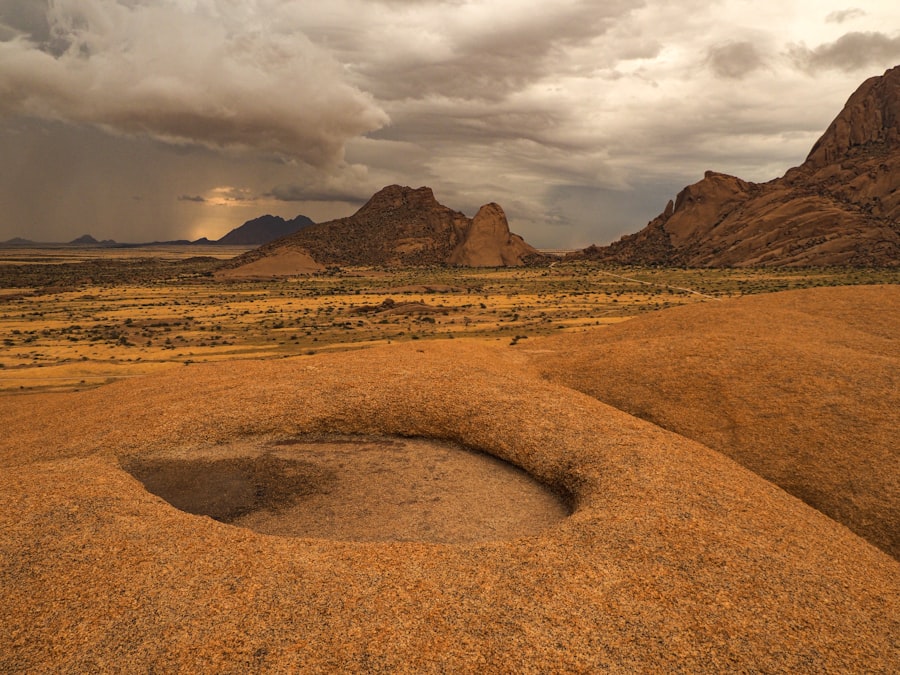
The African monsoon has not been a constant entity throughout Earth’s history. It has undergone dramatic transformations, waxing and waning in intensity and shifting its geographical reach in response to long-term geological and astronomical cycles, as well as more rapid climate perturbations.
The Early African Monsoon: Onset and Early Intensification
The establishment of a strong African monsoon is intimately linked with the emergence of significant continental landmasses and the development of robust atmospheric circulation patterns. Paleoclimate reconstructions suggest that a precursor to the modern monsoon began to develop during the early Cenozoic era, roughly 66 to 23 million years ago. However, it was likely during the Neogene period (23 to 2.6 million years ago) that the monsoon system began to more closely resemble its present-day configuration, driven by a combination of tectonic uplift and evolving oceanic circulation.
The Role of Greenhouse Worlds and Ice Ages
The Pleistocene epoch (2.6 million years ago to 11,700 years ago) witnessed the cyclical waxing and waning of global ice sheets, profoundly influencing the African monsoon. During glacial periods, when large amounts of water were locked up in ice, global sea levels dropped, and atmospheric circulation patterns shifted. This often led to a weaker monsoon and more arid conditions across parts of Africa. Conversely, during interglacial periods, as ice sheets melted and sea levels rose, the monsoon would generally strengthen.
The Holocene Monsoon: A Period of Relative Stability and Vulnerability
The Holocene epoch, the last 11,700 years, is the period of current geological stability during which human civilization has flourished. This era has seen the development of the modern, generally robust, African monsoon system. However, even within the Holocene, there have been significant fluctuations in monsoon intensity.
The “Green Sahara” and the African Humid Period
One of the most striking features of the early to mid-Holocene was the “Green Sahara.” During periods of intense African paleoclimatology, the Sahara Desert was not the arid wasteland it is today. Instead, satellite imagery and paleoecological evidence from lake sediments reveal a landscape dotted with lakes, supporting abundant vegetation, and traversed by rivers. This period, often referred to as the African Humid Period, was characterized by a significantly stronger and more northward-extended monsoon. This dramatic shift allowed for the flourishing of early human populations in regions that are now inhospitable.
Late Holocene Shifts: The Return of Aridity
Towards the latter part of the Holocene, particularly within the last few thousand years, evidence points towards a general decline in monsoon intensity and a re-establishment of more arid conditions across much of the Sahara and Sahel. The precise drivers of this shift are still debated, but likely involve a complex interplay of changes in Earth’s orbital parameters (Milankovitch cycles), variations in solar activity, and potentially feedbacks from land surface changes. This transition likely played a significant role in shaping human migration patterns and the rise and fall of ancient African civilizations.
Insights from Recent Past: The Human Fingerprint

While paleoclimate proxies extend back millennia, recent historical records, coupled with instrumental data, provide a more immediate and detailed understanding of monsoon variability and the growing influence of human activities.
Instrumental Records: Measuring the Modern Monsoon
The advent of systematic meteorological observations and satellite remote sensing in the 20th century has revolutionized our ability to monitor the modern African monsoon. These instrumental records provide a wealth of data on rainfall amounts, wind patterns, and temperature variations. Analyzing this data allows scientists to identify trends, understand interannual variability, and assess the impact of phenomena like El Niño-Southern Oscillation (ENSO) on monsoon behavior.
Vulnerability and Adaptation: Learning from History
The historical record of the African monsoon is replete with examples of how variations in rainfall have dramatically impacted human societies. Periods of drought have led to crop failures, famine, and mass migrations, while periods of excessive rainfall can cause devastating floods and landslides. Understanding these historical vulnerabilities is crucial for developing effective adaptation strategies in the face of future climate change. The resilience of African communities has been forged through centuries of adapting to the monsoon’s capricious nature.
The study of African monsoon history has revealed significant insights into the region’s climate patterns and their impact on human civilizations. Recent research highlights how ancient inscriptions can provide clues about past climatic conditions, shedding light on the intricate relationship between climate and societal development. For a deeper understanding of this fascinating topic, you can explore an article that discusses the implications of ancient climate records in detail. Check out the article on uncovering the secret inscription of ancient climate to learn more about how these findings contribute to our knowledge of historical weather patterns.
Unlocking the Future: Climate Change and the Monsoon’s Trajectory
| Year | Monsoon Intensity | Temperature Anomalies |
|---|---|---|
| 1000-1500 | Strong monsoon with high rainfall | Relatively cooler temperatures |
| 1500-1700 | Weak monsoon with low rainfall | Warmer temperatures |
| 1700-1900 | Variable monsoon intensity | Fluctuating temperature anomalies |
| 1900-present | Increasing monsoon intensity | Rising temperature anomalies |
The African monsoon, already a system prone to variability, is now facing unprecedented changes driven by anthropogenic climate change. Understanding its historical behavior provides a vital baseline against which to assess future projections and the potential consequences for the continent.
Modeling the Future Monsoon: Projections and Uncertainties
Climate models are essential tools for projecting how the African monsoon might evolve in the coming decades and centuries. These models incorporate our understanding of atmospheric physics and chemistry and are continually being refined as more data becomes available. While there is general agreement that warming temperatures will influence the monsoon, the precise magnitude and regional distribution of these changes remain subjects of ongoing research and discussion.
Increased Rainfall Intensity vs. Drought Risk
Some projections suggest that as the planet warms, the monsoon in certain regions might intensify, leading to more extreme rainfall events and increased flood risk. This is due to a warmer atmosphere being able to hold more moisture. However, other models and regional variations indicate that parts of the continent, particularly the semi-arid Sahel, might face increased drought risk due to shifts in atmospheric circulation patterns. The stark contrast in these potential outcomes highlights the complexity and the need for continued research.
The Impact on Ecosystems and Human Societies
Changes in the African monsoon will have profound implications for the continent’s ecosystems and its human populations. Altered rainfall patterns can lead to shifts in vegetation distribution, impacting biodiversity and the availability of natural resources. For agriculture-dependent economies, changes in monsoon timing and intensity can lead to food insecurity, economic instability, and further displacement of populations. Understanding the historical precedent of human adaptation to monsoon variability underscores the importance of proactive planning and sustainable development.
The journey to unravel the African monsoon’s history is an ongoing scientific endeavor. Each unearthed sediment grain, each analyzed speleothem, and each refined climate model brings us closer to understanding this vital climatic system. The past, etched in stone, ice, and the very composition of the Earth, holds invaluable lessons for navigating the challenges and embracing the opportunities of the future African monsoon.

The Ancient World Buried Beneath the Sahara
FAQs
What is the African monsoon?
The African monsoon is a seasonal wind pattern that brings heavy rainfall to the African continent during the summer months. It is a crucial source of water for agriculture and ecosystems in many parts of Africa.
How does the African monsoon impact the region’s climate?
The African monsoon plays a significant role in shaping the climate of the region, bringing much-needed rainfall to support agriculture and replenish water sources. It also influences temperature patterns and can lead to the development of tropical cyclones.
What is the history of the African monsoon?
The African monsoon has a long history, with evidence of its influence on the region’s climate dating back thousands of years. Studies of sediment cores, tree rings, and other natural records have provided insights into the variability of the monsoon over time.
How has the African monsoon changed over time?
Research suggests that the African monsoon has experienced periods of variability and change over the centuries, with shifts in intensity and rainfall patterns. These changes have had significant impacts on ecosystems, agriculture, and human societies in the region.
What are the implications of understanding African monsoon history?
Understanding the history of the African monsoon is crucial for predicting future climate trends and their potential impacts on the region. It can also inform strategies for managing water resources, agriculture, and natural ecosystems in the face of changing monsoon patterns.