
The Sahara Desert, a name synonymous with arid extremes and endless sand dunes, holds a secret of lush, vibrant past. No longer just a symbol of harsh desolation, this vast expanse of North Africa is increasingly revealing itself as a canvas for dramatic environmental shifts, most notably its transformation from a verdant landscape to the world’s largest hot desert. The story of the Green Sahara is one of profound cyclical change, driven by celestial mechanics and intricate Earth systems, a narrative that continues to captivate scientists and rewrite our understanding of climate. Uncovering the science of the Green Sahara unlocks a deeper appreciation for the Earth’s dynamic nature and the delicate balance that governs its habitability.
The most recent and well-documented period of Sahara greenness, often referred to as the Holocene Humid Period, paints a starkly different picture of this region. Scientific evidence, drawn from a multitude of disciplines, points to a time, roughly between 11,000 and 5,000 years ago, when the Sahara was an entirely different world. Instead of the barren tracts we see today, it was a savannas-rich environment, dotted with lakes, rivers, and abundant plant and animal life. This era stands as a powerful testament to the Earth’s capacity for dramatic climatic fluctuations on timescales far shorter than previously imagined.
Paleoclimate Proxies: Whispers from the Past
The reconstruction of this ancient green landscape relies heavily on the interpretation of paleoclimate proxies – natural archives that preserve information about past environmental conditions. These proxies act as silent witnesses, offering clues about temperature, rainfall, and vegetation from millennia ago. Scientists meticulously study these records, piecing together a picture of a bygone era that challenges our contemporary perceptions of the Sahara.
Lake Sediments: Unlocking Hydrological Cycles
One of the most compelling sources of information comes from the sediments of ancient lake beds. These layers of accumulated organic matter, minerals, and fossilized organisms act as a time capsule. The presence of certain types of pollen, for instance, indicates the prevalence of specific plant species that require more water than would be found in a desert environment. The abundance of freshwater diatoms, microscopic algae, further suggests the existence of substantial bodies of water. Furthermore, the chemical composition of sediment layers, such as the ratio of oxygen isotopes, can provide insights into past temperatures and evaporation rates. Analyzing these fine-grained records allows researchers to precisely date the periods of lake formation and disappearance, thus mapping the rise and fall of the Green Sahara.
Speleothems: Stalactites as Climate Recorders
Caves, often found in the mountainous regions bordering the Sahara, offer another invaluable archive: speleothems, like stalactites and stalagmites. As rainwater percolates through the rock, it dissolves minerals, which are then deposited layer by layer to form these cave formations. The growth rate of speleothems is influenced by the amount of rainfall, and the isotopic composition of the deposited calcium carbonate reflects the isotopic signature of the precipitation event. By analyzing these growth patterns and isotopic variations, scientists can reconstruct rainfall patterns and relative humidity over long periods, providing direct evidence of significantly wetter conditions during the Holocene.
Pollen Analysis: Vegetation and Biodiversity Clues
The study of fossilized pollen grains, known as palynology, is crucial for understanding past vegetation. Pollen, released by flowering plants, is remarkably resilient and can be preserved in sediments for millennia. Different plant species produce distinct pollen types. By identifying and quantifying these pollen types in ancient sediment cores, scientists can infer the types of vegetation that flourished in the Sahara during its green phase. The presence of pollen from trees, grasses, and aquatic plants strongly indicates a savanna or even woodland environment, far removed from the current treeless plains.
Archaeological Evidence: Human Footprints in a Hydrated Landscape
Beyond geological and botanical evidence, archaeological discoveries provide compelling corroboration for the Green Sahara narrative. Human settlements, tools, and artwork unearthed in the region point to a lifestyle sustained by a much more hospitable environment. The presence of ancient hearths, pottery fragments, and rock art depicting animals like giraffes, elephants, and antelopes – creatures ill-suited to arid desert life – offers tangible proof of a past brimming with biodiversity and human activity.
Rock Art: A Visual Chronicle of a Lost World
The rock art found scattered across the Sahara is perhaps the most evocative evidence of its green past. These ancient paintings and engravings, adorning rock shelters and outcrops, depict scenes of daily life, hunting, and abundant wildlife. The animals depicted are not those typically associated with modern deserts; instead, they are creatures of grasslands and savannas. Images of abundant herds of cattle, vibrant hunting scenes, and even depictions of hippopotamuses and crocodiles strongly suggest the presence of permanent water sources and thriving ecosystems. These artistic expressions serve as a direct visual chronicle of a world vastly different from the one we see today.
Ancient Settlements and Water Management Systems
The discovery of ruins of ancient villages, settlements, and even sophisticated water management systems further supports the idea of a habitable Sahara. Evidence of well-preserved settlements indicates that people were not merely passing through but living and thriving in these landscapes. The presence of remnants of irrigation channels, dams, and cisterns suggests that early human populations understood and actively managed water resources, a testament to the availability of water in the past. These findings provide a human dimension to the scientific data, illustrating how the environment shaped human civilization.
The fascinating transformation of the Sahara from a lush, green landscape to the arid desert we know today has intrigued scientists and historians alike. For those interested in exploring the science behind this dramatic climate shift, a related article delves into the ancient city fortifications that emerged during this period of change. You can read more about it in the article titled “Uncovering Ancient City Fortification Secrets” available at this link.
The Astronomical Driver: Milankovitch Cycles and Insolation Glitches
The dramatic shifts between arid and humid phases in the Sahara are not random occurrences. Scientists have pinpointed the primary driver of these climatic transformations to astronomical factors, specifically the subtle variations in Earth’s orbit, collectively known as Milankovitch cycles. These cycles influence the amount and distribution of solar radiation – insolation – that reaches Earth, acting as the Earth’s ultimate pacemaker for long-term climate change.
Orbital Eccentricity: The Elliptical Path
Earth’s orbit around the Sun is not a perfect circle but rather an ellipse. This eccentricity, the degree of ovalness, varies over long periods. When Earth’s orbit is more eccentric, the difference in solar radiation received at perihelion (closest to the Sun) and aphelion (farthest from the Sun) is greater. This heightened contrast in seasonal solar intensity can amplify or dampen climate responses, playing a crucial role in initiating and maintaining periods of significant climate change.
Axial Tilt (Obliquity): The Wobbly Pole
The tilt of Earth’s axis relative to its orbital plane, known as obliquity, also fluctuates. This tilt determines the severity of seasons; a greater tilt leads to more extreme seasonal differences (hotter summers and colder winters), while a lesser tilt results in milder seasons. During the Holocene Humid Period, Earth’s axial tilt was slightly greater than it is today, contributing to more intense summer insolation in the Northern Hemisphere, including the Sahara.
Precession: The Wobbling Top
The third Milankovitch cycle is axial precession, which describes the slow wobble of Earth’s axis like a spinning top. This wobble affects the timing of the seasons relative to Earth’s position in its orbit. When the Northern Hemisphere’s summer solstice occurs when Earth is closest to the Sun (perihelion), it leads to a more pronounced summer warming. This phenomenon, occurring in tandem with higher obliquity, amplified the summer insolation in the Sahara during the Holocene.
The Monsoon Mechanism: How Insolation Fuels the Greenery

The increased summer insolation in the Sahara, driven by Milankovitch cycles, did not directly transform the desert into a garden. Instead, it acted as a trigger for a complex atmospheric feedback loop, most notably the intensification of the African monsoon system. This enhanced monsoon brought life-giving rains to the region, transforming its arid landscape.
The Intertropical Convergence Zone (ITCZ): A Shifting Rainfall Belt
The Intertropical Convergence Zone (ITCZ) is a band of low pressure encircling the Earth near the equator, where the trade winds of the Northern and Southern Hemispheres converge. This convergence zone is characterized by rising air, leading to cloud formation and heavy rainfall. During the Holocene Humid Period, the increased insolation in the Northern Hemisphere, particularly its summers, caused the ITCZ to shift northward, extending its influence over the Sahara.
Monsoonal Forcing: Bringing the Rains Inland
As the ITCZ migrated further north, it brought with it the moisture-laden air masses associated with the West African monsoon. This intensified monsoonal flow pushed inland, penetrating areas of the Sahara that are now profoundly arid. This influx of moisture allowed for the establishment of precipitation events, sustaining the development of lakes, rivers, and the lush vegetation that characterized the Green Sahara.
Feedback Loops: Amplifying the Greenness
Once the monsoon began to establish itself, a positive feedback loop emerged, amplifying the greening process. The presence of more vegetation led to increased evapotranspiration, the process by which plants release water vapor into the atmosphere. This added moisture further fueled the monsoon, creating a self-reinforcing cycle of rain and vegetation growth. Denser vegetation also reduced soil reflectivity (albedo), causing the land to absorb more solar radiation, further intensifying local warming and encouraging more convection and rainfall.
The Decline and Desertification: A Dramatic Reversal
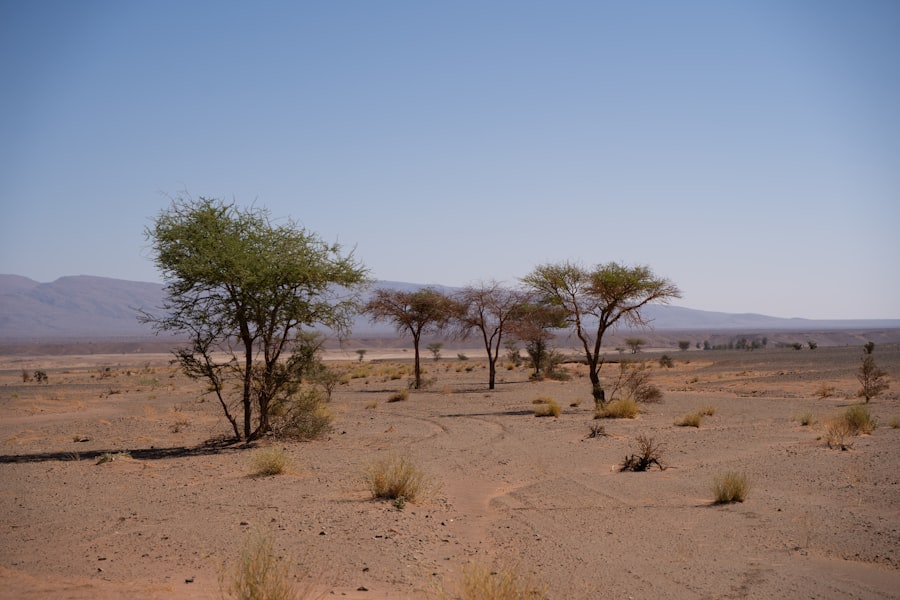
The Green Sahara era was not destined to last forever. Around 5,000 years ago, a relatively rapid transition led to the desiccation of the landscape, ushering in the arid conditions we recognize today. This reversal was also driven by shifts in Earth’s orbital parameters, leading to a decrease in summer insolation and a subsequent southward retreat of the ITCZ.
Orbital Shifts and Weakening Insolation
As Earth’s orbit continued its inexorable changes, the factors that had promoted Northern Hemisphere summer insolation began to diminish. The axial tilt decreased, and the precession cycle shifted, resulting in less intense solar radiation reaching the Sahara during its summers. This weakening insolation was the primary catalyst for the decline of the Green Sahara.
The Southward Retreat of the ITCZ
With reduced Northern Hemisphere summer insolation, the ITCZ began to migrate southward, back towards its equatorial position. As the ITCZ moved away from the Sahara, the monsoonal rains that had sustained its lushness retreated with it. This reduction in rainfall was the immediate cause of the desiccation of lakes, rivers, and vegetation.
Feedback Loops: Accelerating Aridity
Similar to how positive feedback loops amplified the greening, negative feedback loops now accelerated the desertification process. As vegetation withered and died, soil reflectivity increased, causing the land to absorb less solar radiation and reflect more. This reduced absorption of heat further cooled the land surface, suppressing convection and making it even harder for rainfall to form. The loss of evapotranspiration from dying plants further reduced atmospheric moisture. The once vibrant landscape, stripped of its life-sustaining rains, rapidly transformed back into the arid desert we know today.
The fascinating transformation of the Sahara from a lush, green landscape to the arid desert we see today has intrigued scientists for decades. Recent studies have shed light on the climatic shifts that contributed to this dramatic change, revealing the complex interplay between natural forces and human activity. For those interested in exploring the resilience of ecosystems in the face of such changes, a related article discusses the challenges faced by small island developing states, which often experience similar environmental pressures. You can read more about it in this insightful piece on resilience in small island developing states.
Implications for the Future and Climate Change
| Metrics | Data |
|---|---|
| Period of Green Sahara | 10,000 to 5,000 years ago |
| Climate change impact | Shift from wet to dry conditions |
| Vegetation | Grasslands, lakes, and rivers |
| Human migration | Movement of populations in response to environmental changes |
| Scientific studies | Analysis of sediment cores, fossil records, and climate models |
The scientific understanding of the Green Sahara holds profound implications for our understanding of Earth’s climate system and its potential future. It demonstrates that significant climatic shifts can occur on relatively short geological timescales, driven by predictable astronomical forces. This knowledge is particularly relevant in the context of anthropogenic climate change.
Lessons from Paleoclimate: The Earth’s Sensitivity
The dramatic transformations of the Sahara serve as a stark reminder of the Earth’s inherent sensitivity to changes in radiative forcing. While the drivers in the Holocene were natural, the current rapid warming is anthropogenically driven. The speed and scale of past climatic transitions suggest that our planet is capable of dramatic shifts, and that thresholds may exist beyond which recovery becomes exceedingly difficult. Understanding the mechanisms behind past greening and desertification can help us better predict the potential consequences of our current warming trajectory.
The Role of Feedback Mechanisms in Future Climate
The study of the Sahara’s greening and desertification highlights the critical role of feedback mechanisms in amplifying climatic changes. Positive feedbacks, like enhanced evapotranspiration and reduced albedo during the greening phase, and negative feedbacks in the desertification phase, demonstrate how initial changes can be amplified once initiated. Scientists are studying these and other feedback loops, such as ice-albedo feedback and cloud feedbacks, to refine climate models and better predict the magnitude of future warming and its associated impacts.
Predicting Future Desertification and Aridity
The Sahara’s past serves as a potential analogue for future aridification in other regions of the world, particularly those already prone to drought. As global temperatures rise, changes in atmospheric circulation patterns and precipitation regimes are anticipated. By studying the past, scientists can identify regions that may be particularly vulnerable to becoming drier and for longer periods, informing resource management and adaptation strategies. The research into the Green Sahara provides valuable insights into the complex interplay of astronomical, atmospheric, and hydrological processes that govern regional climate and can inform efforts to mitigate and adapt to future climate change. The story of the Green Sahara is not just about a lost landscape; it’s about the profound power of Earth’s climate system to transform and the vital need to understand these forces as we navigate our own era of climatic change.

The Ancient World Buried Beneath the Sahara
FAQs
What is the Green Sahara?
The Green Sahara refers to a period in the Earth’s history, approximately 5,000 to 11,000 years ago, when the Sahara Desert was a lush and fertile region with abundant vegetation and wildlife.
What caused the Green Sahara?
The Green Sahara was primarily caused by changes in the Earth’s orbit and tilt, which led to an increase in rainfall in the region. This, in turn, allowed vegetation to thrive and supported a diverse ecosystem.
What evidence supports the existence of the Green Sahara?
Evidence of the Green Sahara includes fossilized pollen and plant remains, as well as rock art and archaeological findings depicting a much greener and more hospitable environment than the present-day desert.
How does the Green Sahara relate to climate change?
Studying the Green Sahara provides valuable insights into the Earth’s climate system and how it has changed over time. Understanding the factors that led to the Green Sahara can help scientists predict and mitigate the impacts of future climate change.
What can we learn from the science behind the Green Sahara?
Studying the science behind the Green Sahara can help us understand the complex interactions between Earth’s atmosphere, oceans, and land, and how these interactions can lead to significant changes in climate and ecosystems. This knowledge can inform efforts to address current and future environmental challenges.