
Exploring Prehistoric Britain: A Fascinating Documentary
The prehistoric era, a vast and enigmatic period stretching back millennia, often evokes images of rugged landscapes, formidable creatures, and the rudimentary beginnings of human civilization. For many, understanding this distant past can feel like peering through a fog, obscured by the passage of time and the scarcity of tangible evidence. However, a recently released documentary, aptly titled “Echoes of the Ancestors: Prehistoric Britain,” offers a groundbreaking and immersive journey into this captivating epoch, meticulously reconstructing the lives, environments, and societies of Britain’s earliest inhabitants. This in-depth exploration, presented with stunning visual artistry and rigorously researched historical and archaeological insights, promises to captivate both seasoned history enthusiasts and curious newcomers alike.
The documentary doesn’t merely present facts; it crafts a narrative, weaving together archaeological discoveries, scientific analysis, and expert interpretation to paint a vivid picture of a Britain vastly different from the one we know today. From the thawing landscapes after the last Ice Age to the dawn of metalworking, “Echoes of the Ancestors” meticulously dissects crucial phases of prehistoric development, revealing the resilience, ingenuity, and complex social structures of our distant ancestors. The careful attention to detail, from the digital recreation of extinct megafauna to the painstakingly rendered reconstructions of ancient settlements, makes this documentary an essential watch for anyone seeking a deeper connection to Britain’s ancient heritage.
The opening segments of “Echoes of the Ancestors” tackle the monumental challenge of reconstructing Britain’s earliest human habitation. The film begins by setting the scene, depicting a Britain emerging from the grip of the last Ice Age, a stark and often unforgiving landscape slowly giving way to new life.
Resilience in a Frozen World
The documentary vividly illustrates the profound impact of the Last Glacial Maximum on the British Isles. Through breathtaking CGI, viewers are transported to a land dominated by ice sheets, permafrost, and a harsh, treeless tundra. The film highlights the geological processes that shaped the land, such as glacial erosion and the subsequent formation of unique landforms that are still visible today. Experts discuss the challenges faced by the very first hominins who began to tentatively explore these territories, likely following migrating herds of prey. These early humans, the focus of much scientific speculation, are presented as remarkably adaptable, capable of surviving in extreme conditions through their developing tool-making skills and their understanding of the surrounding environment.
The Paleolithic Pioneers
As the ice began its slow retreat, Britain’s landscape transformed, opening up new opportunities for settlement. “Echoes of the Ancestors” delves into the lives of the Paleolithic hunter-gatherers who made Britain their home. The film showcases the remarkable archaeological evidence unearthed at sites like Happisburgh in Norfolk, presenting reconstructions of their hunting strategies, their social organization, and their rudimentary shelters. Viewers witness the ingenuity behind their stone tools – hand axes, scrapers, and points – and learn how these implements were crucial for survival, from butchering large game to preparing hides. The documentary emphasizes that these were not primitive beings but skilled artisans and intelligent observers of their world.
The Mesolithic Transition: Adapting to a Changing Environment
With the end of the Pleistocene epoch and the rise of the Holocene, Britain’s climate ameliorated, leading to the establishment of vast forests and a richer biodiversity. This period, the Mesolithic, saw significant shifts in human lifestyles. The documentary meticulously details how Mesolithic hunter-gatherers adapted to these new environments. Their diets diversified, incorporating more fish, birds, and plant-based foods. The film highlights the development of new tools, such as microliths used in composite tools and projectile weapons like bows and arrows, which allowed for more efficient hunting of smaller, faster prey. The reconstructions of Mesolithic campsites, often located near rivers and coastlines, provide a fascinating glimpse into their mobile and seasonal patterns of life.
If you’re interested in the fascinating history of Prehistoric Britain, you might also find value in exploring how our ancestors prepared for various challenges, much like we do today. An insightful article titled “Preparing Your Home for National Emergencies: Essential Tips” delves into the importance of readiness and resilience, drawing parallels between past and present survival strategies. You can read it here: Preparing Your Home for National Emergencies: Essential Tips.
The Neolithic Revolution: Farming, Megaliths, and the Rise of Communities
The arrival of farming in Britain marked a paradigm shift, fundamentally altering human society and its relationship with the land. “Echoes of the Ancestors” dedicates a significant portion of its narrative to this transformative period, exploring its profound and lasting impact.
The Advent of Agriculture: A New Way of Life
The documentary meticulously traces the gradual introduction of agriculture into Britain, likely originating from continental Europe. Through expert interviews and visual reconstructions, viewers are shown the early stages of cultivation, involving crops like wheat and barley, and the domestication of animals such as sheep and cattle. The film emphasizes that this was not a sudden event but a slow process of adoption and adaptation. The shift to a settled lifestyle, dependent on food production, had far-reaching consequences, leading to the development of permanent villages, the accumulation of surpluses, and the emergence of more complex social hierarchies.
The Age of Monuments: Building for Eternity
One of the most striking legacies of the Neolithic period is the construction of monumental stone structures. “Echoes of the Ancestors” dedicates considerable screen time to these enigmatic sites, from the iconic standing stones of Avebury and Stonehenge to the chambered tombs found across the British Isles. The documentary explores various theories surrounding the purpose of these megaliths, acknowledging the ongoing debates among archaeologists. Were they astronomical observatories, places of ritual and ceremony, or territorial markers? The film utilizes advanced archaeological techniques, such as lidar scanning and geophysical surveys, to reveal hidden features and provide new insights into the construction methods and the immense human effort involved. The sheer scale and precision of these constructions are presented as a testament to the organizational capabilities and the deeply held beliefs of Neolithic communities.
Social Structures and Belief Systems
Beyond the monumental architecture, the documentary also explores the evolving social structures of Neolithic Britain. The move towards settled farming led to the establishment of more permanent communities, requiring new forms of social organization and governance. Experts discuss evidence for early forms of leadership, the division of labor, and the development of intricate kinship systems. The film also delves into the spiritual lives of these people, examining the symbolism found in their art, their burial practices, and the alignments of their sacred sites, suggesting a profound connection to the land, the cosmos, and the cycle of life and death.
The Bronze Age: Metalworking, Trade, and Expanding Horizons
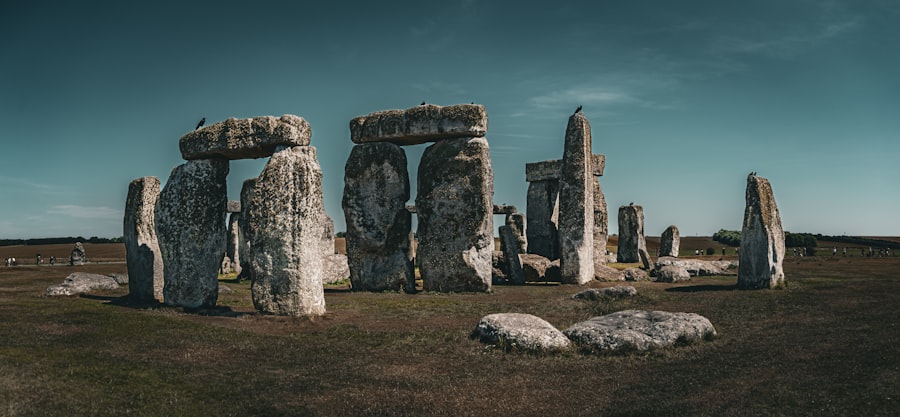
As Neolithic communities transitioned into the Bronze Age, Britain experienced further significant developments, marked by the mastery of metalworking, the establishment of extensive trade networks, and the emergence of distinct cultural identities. “Echoes of the Ancestors” navigates these complex changes with clarity and visual splendor.
The Dawn of Metallurgy: Shaping the Future
The introduction of bronze, an alloy of copper and tin, revolutionized toolmaking and warfare. The documentary vividly recreates the processes of bronze smelting and casting, showing how skilled artisans transformed raw materials into weapons, tools, and decorative objects. Viewers witness the intricate techniques used to create bronze swords, axes, and elaborate jewelry, demonstrating a sophisticated understanding of metallurgy. The film highlights how the control of bronze production and the acquisition of its constituent metals, particularly tin, which had to be sourced through long-distance trade, likely contributed to the rise of powerful individuals and chieftains.
Networks of Exchange: Connecting Through Trade
The Bronze Age in Britain was characterized by increasingly sophisticated trade networks. “Echoes of the Ancestors” meticulously maps these ancient routes, revealing the movement of goods and ideas across Britain and beyond. The documentary showcases evidence of imported materials, such as amber from the Baltic and gold from continental Europe, alongside evidence of locally sourced resources being traded. The film explores how these networks fostered cultural exchange and contributed to the development of more complex economies. The discovery of hoards of bronze artifacts, often buried in significant locations, is presented as evidence of the wealth and status of certain individuals and communities, as well as potentially serving as offerings or means of storing wealth.
Fortifications and Warfare: Defending Territories
The growing importance of resources and the establishment of more defined territories led to an increase in conflict and the development of defensive structures. The documentary showcases the construction of hillforts and other fortified settlements, providing visual reconstructions of these formidable defenses. Experts discuss the evidence for warfare, including the prevalence of specialized weaponry and the signs of violence found in skeletal remains. The film explores how these fortifications not only served a defensive purpose but also acted as centers of power and administration for emerging tribal societies.
The Iron Age: New Technologies, Celtic Cultures, and Roman Shadows

The transition to the Iron Age brought further innovations and cultural shifts to prehistoric Britain, characterized by the widespread adoption of iron technology, the flourishing of Celtic cultures, and the growing awareness of the Roman Empire’s proximity. “Echoes of the Ancestors” brings this dynamic period to life.
The Dominance of Iron: A Material Revolution
The widespread adoption of iron technology marked a significant advancement in toolmaking and weaponry. The documentary vividly illustrates the process of smelting iron ore and forging iron implements. Viewers witness the creation of stronger, more durable tools for farming, construction, and craft, as well as more effective weapons for warfare. The film explains how the abundance of iron ore in Britain made this transition more widespread and transformative than the earlier adoption of bronze. The availability of iron democratized the production of certain goods, potentially empowering a wider segment of society.
The Rise of Celtic Societies: Language, Art, and Social Structures
The Iron Age in Britain is often associated with the development of Celtic cultures. “Echoes of the Ancestors” delves into the linguistic, artistic, and social aspects of these societies. The documentary explores the evidence for the spread of Celtic languages and the distinct artistic styles that emerged, particularly in metalwork, pottery, and abstract designs. Expert commentary discusses the social structures of Iron Age Britain, including the role of chieftains, warriors, and druids, as well as the development of complex kinship systems and the importance of tribal identity. The film highlights the reconstructed lives within roundhouses, the characteristic dwellings of the period, providing a tangible sense of daily existence.
Encounters with Rome: The Approaching Empire
The final segments of the documentary focus on the growing awareness and eventual interactions with the Roman Empire. The film depicts the geographical proximity of Britannia to the Roman provinces and the increasing trade and cultural exchange that occurred in the decades leading up to the Roman invasion. Through animated maps and expert analysis, viewers understand the strategic importance of Britain to Roman ambitions. The documentary subtly hints at the inevitable confrontation, setting the stage for the dramatic changes that would soon sweep across the island, marking the end of its purely prehistoric era and the beginning of Roman rule.
The documentary on Prehistoric Britain offers a fascinating glimpse into the lives of early humans and their interactions with the environment. For those interested in exploring how ancient civilizations adapted to their surroundings, a related article can be found at Uncovering the Secret History of Antarctica, which delves into the mysteries of another ancient landscape and its significance in human history. Both pieces highlight the resilience and ingenuity of our ancestors as they navigated the challenges of their respective worlds.
Enduring Legacies: How Prehistoric Britain Shaped Our Present
| Episode | Time Period | Location | Main Theme |
|---|---|---|---|
| 1 | Paleolithic Era | England | Early human migration |
| 2 | Neolithic Era | Scotland | Building of Stonehenge |
| 3 | Bronze Age | Wales | Metalworking and trade |
The concluding sections of “Echoes of the Ancestors” underscore the profound and often overlooked influence of prehistoric Britain on the modern world. The documentary emphasizes that the foundations of much of what we recognize today were laid during these ancient times.
Landscape and Culture: A Deeply Ingrained Heritage
The film argues that the prehistoric period is not merely a collection of dusty artifacts but a living inheritance that continues to shape our landscapes, our place names, and even our national psyche. The documentary revisits some of the iconic prehistoric sites, highlighting their enduring presence and their continued power to inspire awe and contemplation. Experts discuss how the patterns of ancient settlements and land use have, in many cases, influenced the development of modern towns and cities. The film also touches upon the cultural roots embedded in our language and traditions, suggesting subtle echoes of our prehistoric past.
Technological and Societal Innovations: The Seeds of Progress
“Echoes of the Ancestors” powerfully demonstrates that prehistoric Britons were not passive inhabitants of their environment but active innovators and problem-solvers. The documentary concludes by reiterating the significance of their technological advancements, from the development of sophisticated stone tools to the mastery of metalworking. These innovations were not isolated incidents but crucial steps in the long arc of human progress. The film emphasizes the resilience, ingenuity, and adaptability of these early communities, qualities that have undoubtedly contributed to the enduring spirit of human civilization.
The Ongoing Quest for Understanding: A Continuous Discovery
The documentary doesn’t present its findings as definitive conclusions but as ongoing discoveries. It highlights the dynamic nature of archaeology and the continuous process of reinterpretation as new evidence emerges and scientific techniques advance. “Echoes of the Ancestors” inspires viewers to consider the vast unknowns that still lie within the prehistoric record, encouraging a sense of wonder and a desire for further exploration. The film leaves audiences with a profound appreciation for the deep history of Britain and the remarkable story of its earliest inhabitants, a story that continues to unfold with every new excavation and every insightful analysis. This documentary is a vital contribution to our understanding of Britain’s past and a compelling invitation to connect with the echoes of our ancient ancestors.

The Forgotten World Beneath the North Sea
FAQs
What is the Prehistoric Britain documentary about?
The Prehistoric Britain documentary explores the history and culture of Britain during prehistoric times, including the Stone Age, Bronze Age, and Iron Age. It delves into the lives of early inhabitants, their customs, rituals, and technological advancements.
Who created the Prehistoric Britain documentary?
The Prehistoric Britain documentary was created by a team of historians, archaeologists, and filmmakers who collaborated to bring to life the ancient history of Britain. The documentary is based on extensive research and archaeological findings.
What time period does the Prehistoric Britain documentary cover?
The Prehistoric Britain documentary covers a vast time period, including the Stone Age (from around 10,000 BC to 2,000 BC), the Bronze Age (from around 2,500 BC to 800 BC), and the Iron Age (from around 800 BC to the Roman conquest in 43 AD).
Where can I watch the Prehistoric Britain documentary?
The Prehistoric Britain documentary may be available for streaming on various platforms, such as online streaming services, educational websites, or through DVD purchase. Check with your local library or online streaming platforms for availability.
What can viewers expect to learn from the Prehistoric Britain documentary?
Viewers can expect to learn about the daily lives, social structures, religious beliefs, and technological advancements of prehistoric Britons. The documentary also sheds light on the impact of climate change, migration, and cultural exchange during this ancient period.