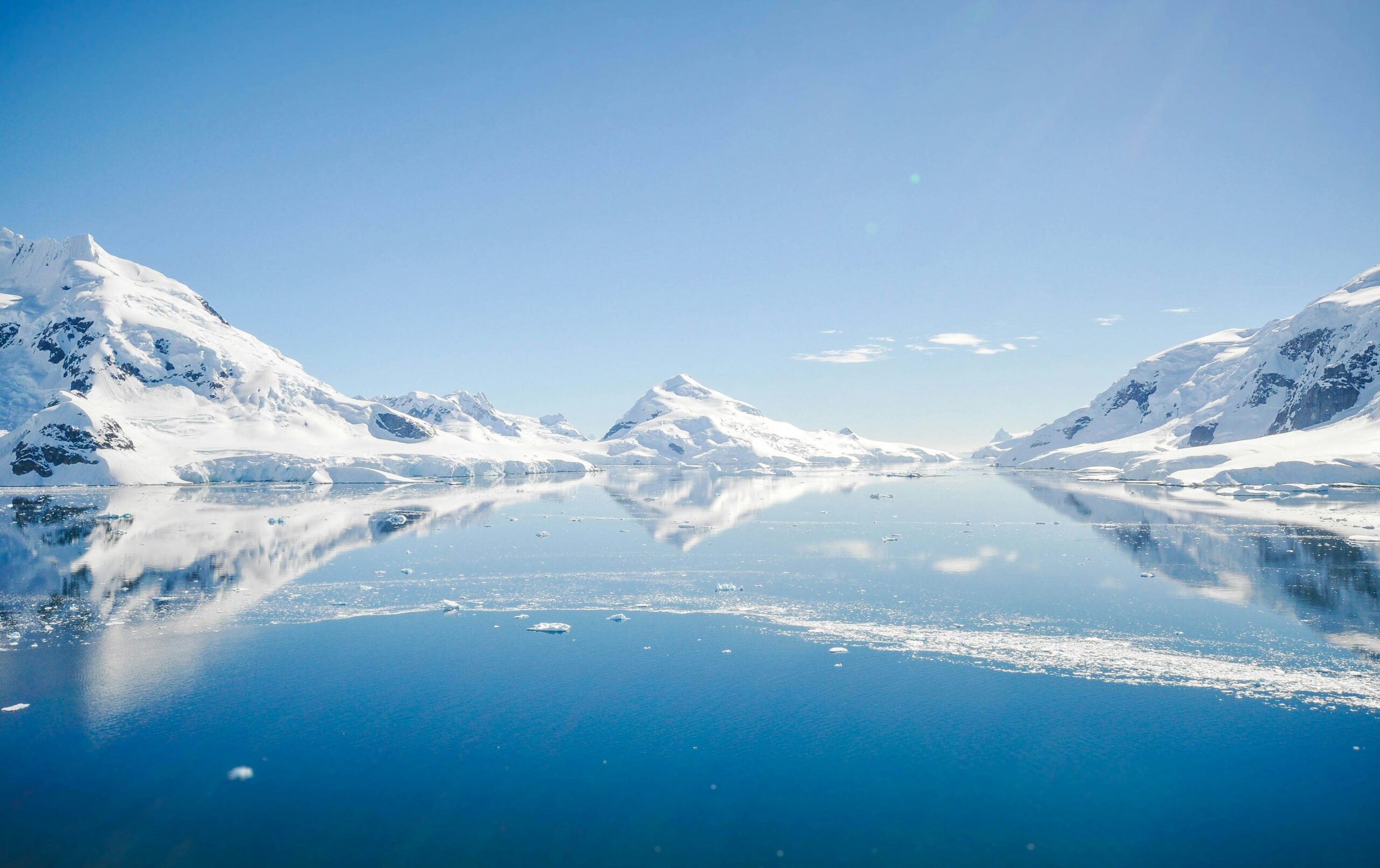
The Earth’s climate has always been a dynamic system, a grand tapestry woven with intricate threads of atmospheric composition, oceanic currents, and geological forces. Among its most dramatic and transformative chapters are the Ice Ages, periods characterized by vast ice sheets engulfing large portions of the planet. For centuries, scientists have been piecing together the puzzle of what triggers these frigid eras, a quest that has led them from the frozen expanses of Greenland and Antarctica to the deepest ocean sediments and the fiery hearts of volcanoes. Unraveling the Ice Age climate mystery is not merely an academic pursuit; understanding these ancient climatic shifts offers profound insights into the fragility of our current climate and the potential ramifications of our own impact on the planet.
The Earth has experienced numerous glacial periods throughout its history, separated by warmer interglacial epochs. These cycles are not random occurrences but appear to follow predictable, albeit complex, patterns. The most recent Ice Age, the Pleistocene Epoch, which began approximately 2.6 million years ago and ended around 11,700 years ago, is perhaps the most studied and significant for understanding modern climate dynamics. During its peak, massive ice sheets extended from the Arctic and Antarctic, covering vast swathes of North America, Europe, and Asia.
Milankovitch Cycles: The Earth’s Orbital Wobbles
One of the most significant breakthroughs in understanding Ice Age cycles came with the work of Serbian mathematician and geophysicist Milutin Milankovitch. In the early 20th century, he theorized that long-term variations in Earth’s orbit around the Sun were the primary drivers of these glacial-interglacial periods. He identified three key orbital parameters that influence the amount and distribution of solar radiation reaching Earth:
Eccentricity: The Shape of Earth’s Orbit
The Earth’s orbit around the Sun is not perfectly circular but slightly elliptical. The degree of this ellipticity, known as eccentricity, varies over long periods, roughly 100,000 and 400,000 years. When Earth’s orbit is more eccentric, the difference in solar radiation received at perihelion (closest to the Sun) and aphelion (farthest from the Sun) is greater. This variation, while generally small, can contribute to long-term climatic shifts by altering the total amount of solar energy received over a year. While eccentricity has a longer cycle, its influence is amplified by the other orbital parameters.
Obliquity: The Tilt of Earth’s Axis
Earth’s axis of rotation is currently tilted at approximately 23.5 degrees relative to its orbital plane. This tilt is responsible for the seasons. However, the angle of this tilt, known as obliquity, varies between about 22.1 and 24.5 degrees over a cycle of roughly 41,000 years. A greater tilt leads to more extreme seasonal variations, with hotter summers and colder winters in the hemispheres. Conversely, a smaller tilt results in milder seasons. During glacial periods, a lower obliquity might favor the accumulation of snow and ice, as summers would be cooler, preventing the complete melting of winter snow cover. This accumulation, over millennia, could lead to the formation of large ice sheets.
Precession: The Earth’s Axial Wobble
The Earth’s axis also undergoes a slow wobble, similar to the motion of a spinning top. This phenomenon, called axial precession, causes the direction in which Earth’s axis points in space to shift over a cycle of approximately 23,000 years. Crucially, precession influences when the Northern Hemisphere experiences summer and winter relative to Earth’s position in its elliptical orbit. When a hemisphere’s summer solstice coincides with Earth’s perihelion, that hemisphere receives more intense solar radiation during its summer. Conversely, when summer occurs at aphelion, summers are cooler. This, in conjunction with high obliquity, can lead to warmer summers and thus less snow and ice accumulation. During glacial periods, the opposite configuration, with cooler summers at aphelion, would be more favorable for glacial growth.
The In-Phase Dance and Feedback Loops
It is the synchronized interplay of these three Milankovitch cycles that is believed to orchestrate the grand Ice Age oscillations. While these orbital changes are the primary pacemaker, they are not powerful enough on their own to account for the dramatic temperature swings observed during glacial and interglacial periods. This is where the crucial role of feedback loops comes into play, amplifying the initial subtle changes triggered by orbital variations.
Feedback Loop 1: Albedo Effect – The Reflective Power of Ice
Perhaps the most significant feedback mechanism is the ice-albedo feedback. Ice and snow are highly reflective, meaning they bounce a large proportion of incoming solar radiation back into space. This reflectivity is known as albedo. As global temperatures begin to cool due to orbital forcing, snow and ice start to accumulate. This growing ice cover reflects more sunlight, leading to further cooling. Conversely, during interglacial periods, as temperatures rise, ice melts, exposing darker land and ocean surfaces that absorb more solar radiation, which in turn leads to further warming. This creates a powerful positive feedback, accelerating both cooling and warming trends.
Feedback Loop 2: Greenhouse Gases – The Atmospheric Blanket
Another critical feedback mechanism involves greenhouse gases, primarily carbon dioxide (CO2) and methane (CH4). Evidence from ice cores, which contain ancient air trapped in layers of frozen ice, reveals a striking correlation between past global temperatures and the concentration of these gases in the atmosphere. During glacial periods, CO2 levels were significantly lower, while during interglacial periods, they were higher.
The Ocean’s Role in CO2 Regulation
The oceans play a pivotal role in regulating atmospheric CO2. Cold ocean waters can absorb more CO2 from the atmosphere than warm waters. During glacial periods, as the oceans cool, they absorb more CO2, thus reducing the concentration of this greenhouse gas in the atmosphere. Lower CO2 levels lead to a weaker greenhouse effect, further amplifying the cooling initiated by orbital forcing. Conversely, during warming periods, the oceans release CO2, contributing to further warming.
Methane Release from Permafrost
Methane, a potent greenhouse gas, is also released from thawing permafrost and methane hydrates (ice-like structures containing methane trapped beneath the seabed). As the climate warms, these frozen reservoirs can release vast amounts of methane into the atmosphere, creating another powerful positive feedback loop that accelerates warming. During glacial periods, permafrost is more extensive, trapping methane and reducing its release.
The Ice Age climate mystery has intrigued scientists for decades, as researchers strive to understand the complex factors that contributed to the dramatic shifts in Earth’s climate during that period. A related article that delves into historical climate patterns and their implications is available at this link: Uncovering the Secrets of the Piri Reis Map. This article explores how ancient maps can provide insights into past climates and geographical knowledge, shedding light on the broader context of climate change throughout history.
The Role of Plate Tectonics and Volcanism
While Milankovitch cycles and feedback mechanisms provide a compelling framework for the timing of Ice Ages, longer-term geological processes also play a crucial role in setting the stage for glaciation. These include the slow, grand movements of Earth’s tectonic plates and the powerful forces of volcanism.
Continental Drift and the Formation of Ice Sheets
The arrangement of continents on Earth’s surface has a profound impact on climate. For glaciation to occur, large continental landmasses need to be positioned at high latitudes. This is because ice sheets require stable land surfaces to form and persist. If these landmasses are situated in tropical or temperate regions, they are less likely to accumulate significant ice cover, even with favorable orbital forcing. For instance, the formation of the Antarctic ice sheet, the largest on Earth, was facilitated by the continental drift that eventually positioned Antarctica over the South Pole. Similarly, the glaciation of the Northern Hemisphere during the Pleistocene was linked to the presence of large landmasses like North America and Eurasia at high latitudes.
Polar Placement: The Prime Real Estate for Ice
The position of continents relative to the poles is paramount. Landmasses at polar latitudes are more susceptible to persistent snow and ice accumulation. Over millions of years, tectonic plate movements can shift continents, moving them closer to or farther from the poles. This geological timescale of continental drift influences the long-term potential for glaciations.
Volcanic Activity: A Double-Edged Sword
Volcanic eruptions, while often perceived as destructive, also play a significant role in Earth’s climate system. Their influence on Ice Ages is complex and can be both cooling and warming.
Cooling Effects: Volcanic Aerosols
Large volcanic eruptions inject vast quantities of ash and sulfur dioxide (SO2) into the stratosphere. SO2 reacts with water vapor to form sulfuric acid aerosols. These tiny particles can remain suspended in the stratosphere for months to years, reflecting incoming solar radiation back into space. This phenomenon, known as volcanic cooling, can temporarily lower global temperatures, potentially contributing to the initiation or intensification of glacial conditions if they coincide with other factors promoting cooling. For example, the eruption of Mount Tambora in 1815, the largest in recorded history, led to the “Year Without a Summer” in 1816.
Warming Effects: Greenhouse Gases from Volcanoes
On longer geological timescales, volcanic activity is a source of greenhouse gases, particularly CO2, released from the Earth’s interior through volcanic outgassing. Over millions of years, this steady release of CO2 has contributed to the overall warming of the planet. However, during specific periods, the rate of CO2 release from volcanic activity might outpace its removal from the atmosphere, leading to warming trends. The balance between cooling from aerosols and warming from greenhouse gases is dynamic and depends on the frequency, magnitude, and type of volcanic eruptions. In the context of Ice Ages, the short-term cooling effects of large eruptions might have played a role in tipping the climate towards glaciation, while the long-term input of CO2 from volcanism has generally contributed to warmer periods between glaciations.
Reconstructing the Past: The Evidence and the Tools

Understanding the Ice Ages requires deciphering a silent history etched in the Earth’s chronicles. Scientists employ a remarkable array of techniques to reconstruct past climates, each providing a unique window into the conditions of millions of years ago.
The Ice Age climate mystery continues to intrigue scientists as they explore the factors that contributed to dramatic shifts in temperature and ecosystems. Recent studies suggest that understanding ancient structures may provide insights into these climatic changes. For instance, an article discussing the acoustic properties of Stonehenge reveals how such monumental sites could have played a role in human adaptation during the Ice Age. You can read more about this fascinating connection in the article on Stonehenge’s acoustic properties.
Ice Cores: Frozen Archives of Ancient Air
Perhaps the most direct and informative archives of past climate are ice cores drilled from the vast ice sheets of Greenland and Antarctica. These cylindrical samples of ice, some extending for over two miles, are laid down in annual layers, much like tree rings.
Trapped Air Bubbles: A Snapshot of the Atmosphere
Within these ice layers are tiny bubbles of ancient air, trapped as the snow compacted into ice. By analyzing the composition of this trapped air, scientists can determine the concentrations of greenhouse gases like CO2 and CH4 at the time the ice was formed. This provides an invaluable direct link between past atmospheric composition and temperature.
Isotopic Analysis: Temperature Proxies
The ratio of different isotopes of oxygen and hydrogen within the ice itself serves as a proxy for past temperatures. The heavier isotopes of oxygen and hydrogen require more energy to evaporate from the ocean. Therefore, during colder periods, more of the heavier isotopes remain in the ocean, and the precipitation that forms ice in polar regions will be depleted in these heavier isotopes. Conversely, during warmer periods, more of the heavier isotopes are incorporated into precipitation. By measuring these isotopic ratios in ice cores, scientists can reconstruct past temperature variations with remarkable precision.
Ocean Sediments: A Deep Time Record
The ocean floor holds another vast repository of climate information in the form of sediment cores. These cores, extracted from the seabed using specialized drills, contain layers of accumulated marine organisms, dust, and other debris from millennia.
Foraminifera Shells: Climate Indicators
Microscopic marine organisms called foraminifera are particularly valuable for paleoclimate research. These single-celled creatures build shells from calcium carbonate extracted from seawater. The chemical composition of these shells, particularly the isotopic ratios and the types of chemical elements incorporated, are sensitive to the temperature and chemistry of the surrounding seawater when they were formed.
Oxygen Isotopes in Foraminifera
Similar to ice cores, the oxygen isotopic composition of foraminifera shells provides a record of past ocean temperatures. Variations in the ratio of oxygen-18 to oxygen-16 in their shells reflect changes in glacial ice volume and ocean temperature. During glacial periods, more of the lighter oxygen-16 is locked up in ice sheets, leaving the ocean enriched in oxygen-18.
Sediment Composition: Evidence of Icebergs and Dust Storms
The physical composition of ocean sediments can also reveal past climate conditions. The presence of certain types of sediment, like ice-rafted debris (rocks and minerals transported by glaciers and icebergs), indicates the extent of past ice sheets. The amount of dust in sediment cores can provide information about aridity and wind patterns during past climate regimes.
Pollen Analysis: A Window into Ancient Flora
The study of fossilized pollen, preserved in sediments from lakes, bogs, and the ocean floor, offers insights into past vegetation and therefore past climate. Different plant species are adapted to specific climatic conditions.
Shifting Vegetation Zones
By identifying the types and abundance of pollen in sediment layers, scientists can reconstruct the past distribution of plant communities. A shift in the pollen record from temperate forest species to tundra or steppe vegetation, for example, would indicate a cooling climate. The presence of pollen from species typically found in warmer climes would suggest warmer conditions. This technique allows for the mapping of ancient vegetation zones, which are closely tied to temperature and precipitation patterns.
The Anthropocene and the Future of Ice

As humanity continues to emit greenhouse gases at an unprecedented rate, the specter of amplified climate change looms large. While the Ice Ages were driven by natural orbital cycles and geological forces, the current warming trend is unequivocally human-induced. Understanding the mechanisms that governed past Ice Ages offers critical lessons for navigating the challenges of the Anthropocene.
Lessons from the Past: Sensitivity and Feedbacks
The Ice Age record highlights the Earth’s climate system’s profound sensitivity to changes in radiative forcing, particularly from greenhouse gases. The powerful feedback loops that amplified initial orbital variations demonstrate how relatively small forcings can lead to significant climatic shifts. This underscores the potential for human-induced greenhouse gas emissions to trigger similarly amplified warming effects.
The Danger of Tipping Points
The existence of glacial-interglacial cycles, with their dramatic shifts between frigid and relatively warm conditions, suggests that the climate system can possess tipping points. Crossing these thresholds can lead to abrupt and irreversible changes. The rapid melting of ice sheets and ice shelves observed today, along with the potential thawing of permafrost, raises concerns about crossing similar tipping points in the current warming era.
The Future Climate: A Different Kind of “Ice Age”?
While a new Ice Age in the traditional sense is unlikely in the immediate future due to human-induced warming, the concept of major climatic shifts remains relevant. The melting of polar ice sheets contributes to sea-level rise, threatening coastal communities worldwide. Changes in ocean circulation, potentially driven by melting ice, could lead to regional climate disruptions. Furthermore, the long-term decrease in global temperatures that eventually ended the Pleistocene Ice Age was driven by geological factors, not just orbital cycles. Without ongoing human emissions, Earth could eventually head towards another glacial period, but not for tens of thousands of years. The immediate concern is not glaciation but the rapid warming we are currently experiencing.
The Urgency of Mitigation and Adaptation
The study of Ice Ages serves as a stark reminder of the power of climate change and the profound impact it can have on life on Earth. It emphasizes the urgent need for global efforts to mitigate greenhouse gas emissions and adapt to the inevitable changes that are already underway. By unraveling the mysteries of past climates, humanity gains a deeper appreciation for the delicate balance of our planet and the critical importance of responsible stewardship for the future. The echoes of ancient ice, preserved in cores and sediments, whisper a crucial message: the climate is a force to be reckoned with, and understanding its past is paramount to charting a sustainable future.

When the Ice Age Ended… Everything Changed
FAQs
What is the Ice Age climate mystery?
The Ice Age climate mystery refers to the question of what caused the Earth’s climate to fluctuate between glacial and interglacial periods during the Pleistocene epoch, which lasted from about 2.6 million to 11,700 years ago.
What are some theories about the cause of the Ice Age climate fluctuations?
There are several theories about the cause of the Ice Age climate fluctuations, including changes in Earth’s orbit and tilt (Milankovitch cycles), variations in solar radiation, volcanic activity, and changes in atmospheric carbon dioxide levels.
How do scientists study past climate changes during the Ice Age?
Scientists study past climate changes during the Ice Age by analyzing ice cores, sediment layers, and fossil records. They also use computer models to simulate past climate conditions and test various theories about the causes of the Ice Age climate fluctuations.
What impact did the Ice Age climate have on Earth’s ecosystems?
The Ice Age climate had a significant impact on Earth’s ecosystems, leading to the expansion and retreat of ice sheets, changes in sea levels, and shifts in plant and animal distributions. Many species adapted to the cold climate, while others went extinct.
How does the study of Ice Age climate fluctuations help us understand current and future climate change?
Studying Ice Age climate fluctuations helps us understand the complex interactions between Earth’s atmosphere, oceans, and land surfaces, and how they can lead to significant changes in climate over long periods of time. This knowledge can inform our understanding of current and future climate change and its potential impacts on the planet.