The Archimedes Claw, a remarkable invention attributed to the ancient Greek mathematician and engineer Archimedes, stands as a testament to the ingenuity of early military technology. This device, designed to defend the city of Syracuse from naval attacks, exemplifies the intersection of mathematics, engineering, and warfare. The Claw was not merely a weapon; it represented a strategic innovation that could alter the course of battles and protect cities from invasion.
Its historical significance lies not only in its effectiveness but also in its influence on subsequent developments in military engineering. As a defensive mechanism, the Archimedes Claw was intended to lift enemy ships out of the water and capsize them, thereby neutralizing threats before they could reach the shores. This innovative approach to naval defense showcased Archimedes’ understanding of leverage and buoyancy, principles that would resonate through centuries of engineering.
The Claw’s legacy continues to inspire modern military technologies, making it a fascinating subject for historians and engineers alike. Understanding the Archimedes Claw provides insight into the evolution of warfare and the relentless pursuit of technological advancement in the face of conflict.
Key Takeaways
- The Archimedes Claw was a revolutionary ship-killing technology designed to disable enemy ships by lifting them out of the water and causing them to capsize.
- Historical background reveals that ship-killing technologies have been used for centuries, with the Archimedes Claw being one of the most innovative and effective methods.
- The Archimedes Claw works by using a large crane with a claw-like mechanism to grab onto the hull of an enemy ship and lift it out of the water, destabilizing and ultimately sinking it.
- The design and construction of the Archimedes Claw required advanced engineering and metallurgy to create a strong and reliable mechanism capable of lifting heavy ships.
- The impact of the Archimedes Claw on naval warfare was significant, as it provided a new and effective means of disabling enemy ships, changing the dynamics of maritime conflicts.
Historical Background of Ship-Killing Technology
The history of ship-killing technology is rich and varied, tracing back to ancient civilizations that recognized the importance of naval power in warfare. From the earliest days of seafaring, societies developed various means to protect their waters and assert dominance over rivals. The introduction of ramming ships in ancient Greece marked a significant evolution in naval combat, where vessels were designed specifically to pierce the hulls of enemy ships.
This early form of ship-killing technology laid the groundwork for more sophisticated defenses, such as the Archimedes Claw. As maritime conflicts escalated, so did the need for innovative defensive mechanisms. The development of catapults and ballistae allowed for long-range attacks on enemy vessels, while fire ships—vessels set ablaze and sent into enemy fleets—introduced a new level of destruction.
The Archimedes Claw emerged during this period of experimentation and innovation, representing a shift towards more mechanical solutions to naval warfare. Its design reflected a deep understanding of physics and engineering principles, showcasing how ancient thinkers sought to harness natural forces for military advantage.
How the Archimedes Claw Works
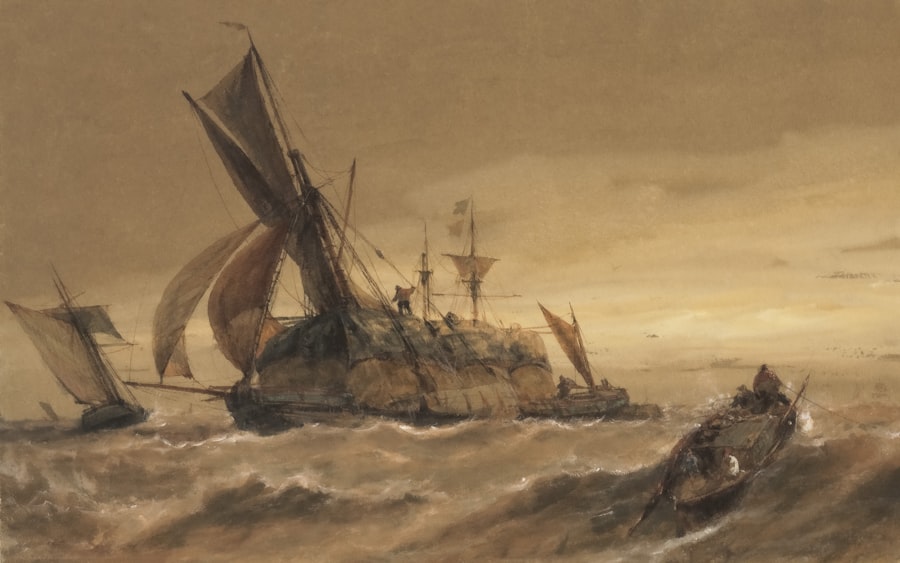
The operational mechanics of the Archimedes Claw are both fascinating and complex. At its core, the device utilized a system of levers and pulleys to exert force on enemy ships. Positioned on the walls of Syracuse, the Claw was designed to reach out over the water and grasp incoming vessels.
This ingenious application of mechanical principles allowed for a powerful defensive strategy that could be employed from a distance. The effectiveness of the Archimedes Claw lay in its ability to leverage gravitational forces and mechanical advantage.
By utilizing a series of pulleys, Archimedes was able to amplify the force exerted by defenders on the ship, making it possible to lift even larger vessels with relative ease. This design not only minimized risk to defenders but also maximized damage to attackers.
The Design and Construction of the Archimedes Claw
| Metrics | Data |
|---|---|
| Weight of Claw | 500 kg |
| Material | Steel |
| Length | 3 meters |
| Width | 1.5 meters |
| Maximum Load Capacity | 1000 kg |
The design and construction of the Archimedes Claw were as innovative as its operational principles. Historical accounts suggest that it was constructed using robust materials available at the time, such as wood and metal, which provided both strength and durability. The size and scale of the Claw were significant factors in its effectiveness; it needed to be large enough to reach out over the water while still being manageable for operators on land.
This balance between size and functionality was crucial for its success as a defensive weapon. Moreover, the construction process likely involved collaboration among skilled artisans and engineers who understood both military needs and mechanical design. The assembly would have required precise craftsmanship to ensure that all components worked harmoniously together.
The Claw’s design not only reflected Archimedes’ mathematical genius but also demonstrated an understanding of practical engineering challenges faced by ancient builders. This combination of theoretical knowledge and practical application was essential in creating a device that could withstand the rigors of battle while delivering devastating results.
The Impact of the Archimedes Claw on Naval Warfare
The introduction of the Archimedes Claw had a profound impact on naval warfare during its time. By providing a means to effectively counteract enemy ships, it shifted the balance of power in favor of those who possessed this technology. The Claw allowed defenders to engage attackers from a distance, reducing casualties among their ranks while simultaneously inflicting damage on invading forces.
This strategic advantage not only protected Syracuse but also served as a deterrent against future assaults. Furthermore, the psychological impact of such an innovative weapon cannot be understated. The mere presence of the Archimedes Claw would have instilled fear in enemy sailors, who faced an uncertain fate when approaching Syracuse’s shores.
This fear could lead to hesitance or even retreat before engaging in battle, thereby altering naval tactics and strategies across regions. The Claw’s effectiveness in defending against naval incursions marked a significant evolution in military thinking, emphasizing the importance of technological superiority in warfare.
The Use of the Archimedes Claw in Modern Times
While the Archimedes Claw itself may not be employed in contemporary warfare, its principles continue to influence modern naval defense systems. The underlying concepts of leverage, mechanical advantage, and strategic positioning remain relevant in today’s military technologies. Modern navies utilize advanced weaponry that incorporates similar mechanical principles, albeit with far more sophisticated materials and technologies.
In addition, contemporary military engineers often look back at historical innovations like the Archimedes Claw for inspiration when developing new defense mechanisms. The idea of using mechanical systems to counteract threats is still prevalent; for instance, modern missile defense systems employ similar concepts by utilizing advanced tracking and interception technologies to neutralize incoming threats before they reach their targets. Thus, while the specific design may have faded into history, its legacy endures through ongoing advancements in military technology.
Limitations and Challenges of the Archimedes Claw
Despite its innovative design and effectiveness, the Archimedes Claw was not without limitations and challenges. One significant drawback was its reliance on favorable conditions; rough seas or adverse weather could hinder its operation or render it ineffective altogether. Additionally, the mechanical nature of the device meant that it required skilled operators who understood its intricacies—any malfunction or miscalculation could lead to disastrous consequences for defenders.
Moreover, as naval technology evolved, so too did tactics employed by attackers. Ships became faster and more maneuverable, making them harder targets for stationary defenses like the Archimedes Claw. As enemy vessels adapted their strategies to counteract such defenses, it became increasingly challenging for static weapons to maintain their effectiveness on the battlefield.
These limitations ultimately contributed to the decline in use of such devices as naval warfare continued to evolve.
Comparing the Archimedes Claw to Other Ship-Killing Technologies
When comparing the Archimedes Claw to other ship-killing technologies throughout history, several key differences emerge. For instance, while ramming tactics relied on aggressive maneuvers by ships themselves, the Claw represented a more passive defensive approach that utilized stationary mechanics to neutralize threats from afar. This distinction highlights a fundamental shift in military strategy—moving from direct confrontation to leveraging technology for defense.
Additionally, other ship-killing technologies such as cannons and torpedoes introduced new dimensions to naval warfare that were not present during Archimedes’ time. These advancements allowed for long-range attacks that could devastate enemy fleets without requiring close engagement. In contrast, the Archimedes Claw necessitated proximity to enemy vessels, limiting its operational scope compared to later innovations that transformed naval combat dynamics.
The Ethical and Moral Implications of the Archimedes Claw
The development and use of weapons like the Archimedes Claw raise important ethical and moral questions regarding warfare and its consequences. On one hand, defenders viewed such innovations as necessary measures for protecting their cities and preserving their way of life against external threats. The desire for self-preservation often justifies technological advancements in military contexts; however, this justification can lead to an arms race where each side seeks increasingly destructive capabilities.
Conversely, one must consider the implications for those on the receiving end of such technologies. The use of devices like the Archimedes Claw resulted in significant loss of life and destruction for attacking forces—raising questions about proportionality in warfare and whether such measures are justified when defending against aggression. These ethical dilemmas continue to resonate today as nations grapple with similar issues surrounding modern weaponry and their impacts on civilian populations.
The Future of Ship-Killing Technology: Advancements and Innovations
As technology continues to advance at an unprecedented pace, ship-killing technologies are evolving rapidly as well. Innovations in artificial intelligence (AI), robotics, and materials science are shaping new approaches to naval warfare that build upon historical foundations like those established by the Archimedes Claw. Autonomous drones capable of engaging enemy vessels without human intervention represent one such advancement that could redefine naval combat dynamics.
Moreover, advancements in missile technology have led to precision-guided munitions that can strike targets with remarkable accuracy from great distances—rendering traditional defensive mechanisms obsolete in many scenarios. As nations invest heavily in research and development for next-generation naval capabilities, it is likely that future ship-killing technologies will continue pushing boundaries while grappling with ethical considerations surrounding their use.
The Legacy of the Archimedes Claw
The legacy of the Archimedes Claw endures as a symbol of human ingenuity in military engineering and strategic thinking. Its innovative design not only provided effective defense against naval threats but also laid foundational principles that continue to influence modern warfare technologies today. As societies reflect on historical advancements like this one, they gain valuable insights into how technological progress shapes conflict dynamics across time.
Ultimately, understanding devices like the Archimedes Claw allows contemporary thinkers—engineers, historians, ethicists—to engage with ongoing debates surrounding warfare’s evolution while considering both its potential benefits and moral implications. As nations navigate an increasingly complex global landscape marked by rapid technological change, lessons learned from past innovations will undoubtedly inform future developments in ship-killing technologies and their broader impact on society at large.
Archimedes’ claw, a remarkable invention from ancient times, is often discussed in the context of its potential to defend cities from naval attacks. For those interested in exploring more about historical innovations and their impacts, you can read a related article on the subject at Real Lore and Order. This site delves into various historical topics, providing insights that complement the fascinating story of Archimedes’ ingenious ship killer.
WATCH THIS! 15 Ancient Weapons That BROKE History (And Were Hidden)
FAQs
What is the Archimedes claw ship killer?
The Archimedes claw ship killer is a weapon designed by the ancient Greek mathematician and inventor, Archimedes. It was a large grappling hook attached to a long chain, which was used to grab and overturn enemy ships.
How did the Archimedes claw ship killer work?
The Archimedes claw ship killer was deployed from the walls of the city of Syracuse during the siege by the Roman fleet. When a Roman ship came within range, the claw would be dropped onto the deck of the ship and then lifted by a system of pulleys, causing the ship to capsize.
Was the Archimedes claw ship killer effective?
Historical accounts suggest that the Archimedes claw ship killer was highly effective during the siege of Syracuse. It is said to have sunk or disabled numerous Roman ships, causing significant damage to the invading fleet.
Is the Archimedes claw ship killer still used today?
The Archimedes claw ship killer is a historical weapon and is not used in modern naval warfare. However, the concept of using grappling hooks and chains to disable enemy ships has been adapted and evolved into modern naval tactics and technologies.