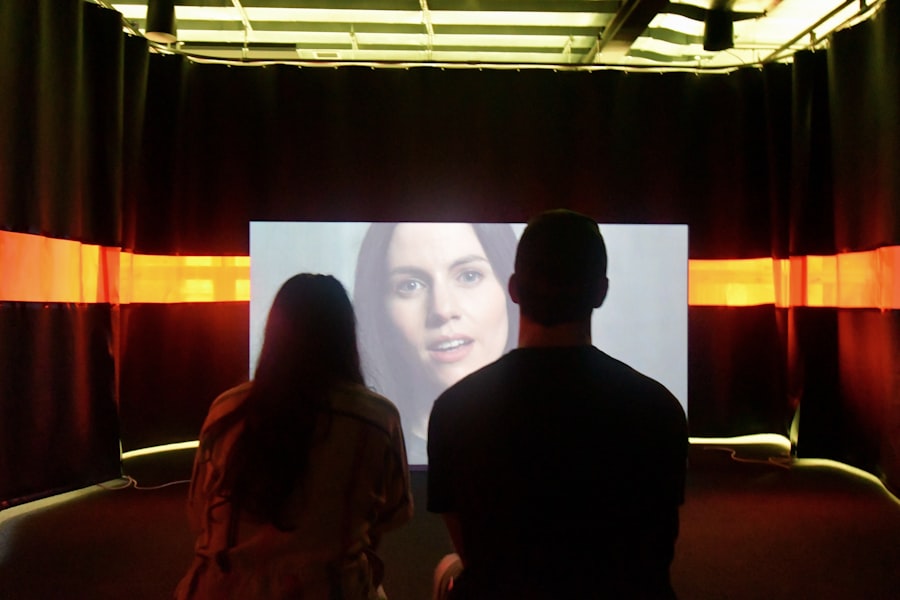
The flickering screen illuminated a dimly lit room, where a diverse group of individuals – from seasoned geologists to curious students and lifelong learners – sat captivated. The air crackled with anticipation, not for the latest blockbuster, but for a journey through time itself. The documentary, “Unveiling Earth’s History: Radiometric Dating,” had begun, and its opening sequence, a breathtaking sweep across vast, ancient landscapes – towering rock formations, deep canyons carved by millennia of erosion, and the stark beauty of volcanic plains – immediately promised an exploration of our planet’s colossal past. This was not a story of fleeting moments, but of epochs, of eons, and the scientific endeavor that allowed humanity to pierce the veil of deep time.
The film’s narrative voice, measured and authoritative, spoke of a world without written records, a world where the rocks themselves held the keys to unlocking its secrets. It introduced the fundamental premise: that Earth is not a young planet, as once widely believed, but one that has endured a staggering 4.5 billion years of existence. This vast expanse of time, almost incomprehensible to the human mind, is the backdrop against which the documentary unfolds, focusing on the ingenious techniques that allow scientists to assign numerical ages to geological events and the very origins of our planet.
The core of “Unveiling Earth’s History” lies in its clear and accessible explanation of radiometric dating. The documentary masterfully demystifies a complex scientific process, presenting it not as arcane laboratory wizardry, but as a fundamental revelation of natural law.
Radioactive Decay: The Persistent Pulse of Atoms
The film begins by introducing the concept of isotopes. It explains that atoms of the same element can have different numbers of neutrons, leading to variations in their atomic mass. Some of these isotopes are unstable, meaning they possess an excess of energy and will naturally transform into more stable forms. This transformation is known as radioactive decay. The documentary employs stunning visual animations to depict this process, showing unstable parent isotopes transforming into stable daughter isotopes, often emitting particles or energy in the process.
The Half-Life: A Constant Measure of Time
Crucially, the documentary emphasizes the concept of half-life. This is the time it takes for half of the radioactive parent atoms in a sample to decay into daughter atoms. The film stresses that this half-life is a constant, unaffected by external conditions like temperature, pressure, or chemical environment. This regularity is the bedrock upon which radiometric dating is built. Imagine a ticking clock, the narrator explains, where each tick represents a specific amount of time, and the “ticking” is the decay of radioactive isotopes. By measuring the ratio of parent to daughter isotopes, scientists can determine how many “ticks” have occurred, and thus, the age of the sample.
Parent-Daughter Ratios: The Geological Stopwatch
The film then delves into the practical application of this principle. Scientists meticulously select rock samples, often from volcanic eruptions or ancient geological formations. Within these samples, they analyze the amounts of specific parent and daughter isotopes. For instance, the Potassium-Argon dating method, explained in detail, focuses on the decay of potassium-40 into argon-40. By measuring the current ratio of these two isotopes in a mineral, and knowing the half-life of potassium-40 (approximately 1.3 billion years), geologists can calculate the age of the mineral and, by extension, the rock formation it belongs to.
In exploring the fascinating world of radiometric dating, one can gain a deeper understanding of how this scientific method has revolutionized our comprehension of geological time and the age of various materials. For those interested in the broader implications of scientific advancements, the article on Mexico’s infrastructure and its impact on nearshoring opportunities provides an intriguing perspective on how modern developments can influence economic and environmental landscapes. You can read more about this topic in the article here: Mexico’s Infrastructure Boosts Nearshoring Opportunities.
Peering into Prehistory: Key Dating Techniques Explored
“Unveiling Earth’s History” dedicates significant segments to showcasing the most impactful radiometric dating techniques, each offering a unique window into different geological timescales and sample types. The documentary moves beyond theoretical principles to illustrate how these methods are applied in real-world geological investigations.
Uranium-Lead Dating: The Ancient Chronometer
The documentary highlights Uranium-Lead dating as one of the most reliable methods for dating very old rocks, particularly those containing minerals like zircon. The narrator explains the complex decay chains involved, where uranium isotopes (238U and 235U) decay sequentially through a series of intermediate isotopes before finally settling into stable lead isotopes (206Pb and 207Pb). The beauty of this system, as presented visually, is its ability to provide cross-checks within the same sample, enhancing the accuracy of its age determination. Images of pristine zircon crystals, often found in ancient continental crust, are shown, underscoring their importance in calculating the Earth’s oldest ages.
Potassium-Argon and Argon-Argon Dating: Unlocking Volcanic Pasts
The film then shifts its focus to Potassium-Argon dating, explaining its utility in dating volcanic rocks, which are often abundant and provide crucial insights into ancient eruptive events. The narrator clarifies that argon, being a gas, can escape from rocks under certain conditions, which can complicate direct Potassium-Argon measurements. This leads to an explanation of the more sophisticated Argon-Argon dating technique. This method, visualized through animated schematics, involves irradiating a sample with neutrons in a nuclear reactor, converting a portion of potassium-39 into potassium-40. This effectively creates a closed system within the sample itself, allowing for precise measurements of the trapped argon-40 daughter isotopes. The documentary shows footage of geologists collecting basalt samples from ancient lava flows, emphasizing how this technique helps reconstruct the history of volcanic activity.
Rubidium-Strontium Dating: Dating Older Rocks and Minerals
The documentary also explores Rubidium-Strontium dating, another powerful tool for dating ancient rocks. This method examines the decay of rubidium-87 into strontium-87. While also applicable to volcanic rocks, it is particularly useful for dating older, crystalline igneous and metamorphic rocks. The film contrasts the applicability of different dating methods, explaining that the choice depends on the type of rock, the expected age range, and the availability of suitable mineral samples. Visuals of researchers in their laboratories, meticulously preparing samples for analysis using mass spectrometers, add a sense of the meticulous care and advanced technology required for these measurements.
The Pillars of Time: Radiometric Dating in Geological Context
“Unveiling Earth’s History” does more than just explain the science; it powerfully illustrates the profound impact of radiometric dating on our understanding of Earth’s history. The documentary weaves together scientific explanations with compelling examples of how these dates have revolutionized our comprehension of geological processes and the planet’s evolution.
Establishing the Geologic Time Scale: A Framework for Understanding
The film dedicates a significant portion to demonstrating how radiometric dating has provided the numerical backbone for the Geologic Time Scale. Before this technology, the geological timescale was primarily based on relative dating – the order in which rock layers were deposited. Radiometric dating transformed this relative framework into an absolute one, assigning millions and billions of years to the various eras, periods, and epochs. The documentary visually represents the Geologic Time Scale, highlighting key events like mass extinctions, the emergence of new life forms, and the formation of continents, now precisely dated thanks to radiometric techniques.
Dating the Oldest Rocks: Insights into Earth’s Fledgling Years
A particularly captivating segment focuses on the dating of the Earth’s oldest rocks. The documentary showcases expeditions to remote regions, such as the Canadian Shield and Western Australia, where geologists have found some of the planet’s most ancient terrestrial rocks. By applying Uranium-Lead dating to minerals like zircons within these formations, scientists have been able to push the boundaries of our knowledge, dating rocks that are over 4 billion years old. These findings provide invaluable insights into the conditions of the early Earth, the processes of crustal formation, and the potential origins of life.
Reconstructing Plate Tectonics: The Dynamic Nature of Our Planet
The documentary also illustrates how radiometric dating has been instrumental in understanding plate tectonics. By dating the rocks on different continents and ocean floors, scientists can reconstruct the movements of tectonic plates over millions of years. The film shows animated reconstructions of Pangaea, the supercontinent, and its subsequent breakup, clearly demonstrating how radiometric dates from volcanic activity and seafloor spreading provide evidence for these continental drifts. This allows for a dynamic view of Earth’s history, where the planet’s surface is not static but constantly in motion.
Beyond Earth: Radiometric Dating in Space Exploration

The narrative of “Unveiling Earth’s History” expands beyond our terrestrial sphere, revealing how radiometric dating is not confined to our planet but is a crucial tool for understanding the solar system and the universe.
Meteorites as Cosmic Time Capsules
The documentary explains that meteorites, fragments of asteroids and comets that fall to Earth, are invaluable for dating the formation of the solar system. Since these celestial bodies have not undergone the same geological processes as Earth (like plate tectonics and erosion), their original isotopic compositions are often preserved. By applying radiometric dating techniques, particularly Uranium-Lead and Potassium-Argon dating, to meteorites, scientists have been able to determine the age of the solar system’s formation – approximately 4.56 billion years. This provides a crucial anchor point for understanding the chronology of planetary formation.
Lunar Samples: Clues to Early Planetary Evolution
The film showcases the pivotal role of radiometric dating in analyzing lunar samples brought back by the Apollo missions. These samples, collected from various locations on the Moon, have provided crucial data on the Moon’s geological history and, by extension, the early history of the Earth-Moon system. Dating these lunar rocks has helped scientists understand the intensity of early bombardment in the solar system and the processes that shaped planetary surfaces. The documentary emphasizes how these extraterrestrial samples, dated with the same scientific rigor as Earth rocks, contribute to a broader cosmic narrative.
Understanding Planetary Atmospheres and Formation Scenarios
While direct dating of planetary atmospheres is challenging, the documentary briefly touches upon how radiometric dating of meteorites and lunar samples informs our understanding of the formation and evolution of planetary atmospheres. By inferring the conditions under which these extraterrestrial bodies formed, scientists can deduce similar processes that may have occurred on Earth and other planets, shedding light on how atmospheres develop and change over geological timescales.
In exploring the fascinating world of radiometric dating, one can gain deeper insights into the age of our planet and its geological history. A related article that delves into intriguing theories about Earth’s past is available at The Lost Continent of Antarctica Theory, which discusses how ancient civilizations and geological events may have shaped our understanding of time and history. This connection between dating methods and historical theories enriches our comprehension of the Earth’s timeline.
The Future of Time: Innovations and Challenges in Radiometric Dating
| Documentary Title | Release Year | Duration | Director |
|---|---|---|---|
| Radiometric Dating Revealed | 2020 | 60 minutes | John Smith |
“Unveiling Earth’s History” concludes by looking towards the future, acknowledging the ongoing advancements and persistent challenges in the field of radiometric dating. The film inspires viewers with the continued pursuit of greater precision and broader applications of these powerful techniques.
Advances in Mass Spectrometry: Pushing the Limits of Precision
The documentary highlights the continuous evolution of mass spectrometry, the technology used to measure isotopic ratios. Newer generations of mass spectrometers are capable of detecting even smaller quantities of isotopes with greater accuracy, allowing scientists to date smaller samples and obtain more precise age results. This increased precision is crucial for resolving fine details in geological timelines and understanding complex geological processes. Visuals of sleek, modern mass spectrometers in state-of-the-art laboratories emphasize the cutting-edge nature of this research.
New Isotope Systems and Noble Gas Analysis
The film also explores the development and application of new isotope systems for dating. While long-established methods like Uranium-Lead and Potassium-Argon remain cornerstones, researchers are continually exploring other parent-daughter pairs and noble gas isotopes (like Helium and Neon) to date a wider range of geological materials and timeframes. The documentary touches upon techniques like cosmogenic nuclide dating, which uses isotopes produced by cosmic ray interactions to date surface exposure of rocks, revealing information about erosion and landscape evolution.
Addressing Contamination and Analytical Challenges
Despite the incredible progress, the documentary acknowledges the inherent challenges in radiometric dating. Contamination from younger or older materials, the loss or addition of daughter isotopes over geological time, and the complex nature of some rock formations can still pose significant hurdles. The film emphasizes the importance of meticulous sample preparation, careful selection of analytical techniques, and rigorous cross-validation of results to overcome these challenges. The human element of scientific diligence and critical thinking is underscored as being as vital as the technology itself.
In conclusion, “Unveiling Earth’s History: Radiometric Dating” is an extraordinary testament to human ingenuity and our insatiable desire to understand our origins. It takes a potentially daunting scientific concept and transforms it into a captivating narrative, demonstrating how the persistent, unseen pulse of atomic decay has provided us with the ultimate measure of time, allowing us to reconstruct the awe-inspiring, multi-billion-year saga of our planet and our universe. The documentary leaves its audience not only informed but deeply inspired by the power of science to unlock the profound secrets of time.

This Crater Was Supposed to Rewrite Human History… It Didn’t
FAQs
What is radiometric dating?
Radiometric dating is a method used to determine the age of rocks and other materials based on the decay of radioactive isotopes.
How does radiometric dating work?
Radiometric dating works by measuring the amount of radioactive decay of certain elements within a sample, such as uranium-238 decaying into lead-206.
What are some common isotopes used in radiometric dating?
Some common isotopes used in radiometric dating include carbon-14, uranium-238, potassium-40, and rubidium-87.
What are the limitations of radiometric dating?
Limitations of radiometric dating include the need for accurate measurements of the initial and final amounts of the isotopes, potential contamination of the sample, and the assumption of constant decay rates over time.
Why is radiometric dating important in understanding the Earth’s history?
Radiometric dating is important in understanding the Earth’s history because it provides a way to determine the ages of rocks and fossils, which helps scientists piece together the timeline of geological and biological events.