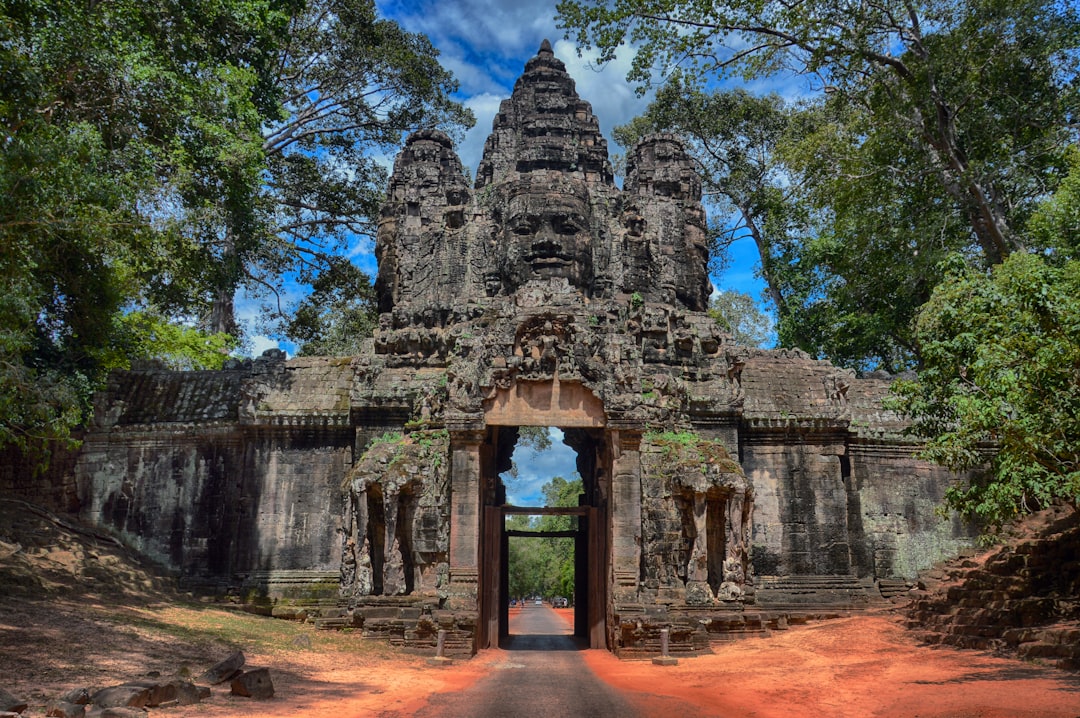
Angkor Wat, a name that evokes images of towering spires, intricate carvings, and a rich tapestry of history, stands as a testament to the ambition and artistry of the Khmer Empire. Yet, beneath the awe-inspiring grandeur of this iconic temple complex lies a hidden history, a narrative woven with the threads of faith, innovation, political upheaval, and eventual abandonment. To truly appreciate Angkor Wat is to venture beyond its surface beauty and delve into the motivations, secrets, and eventual mysteries that surround its creation and subsequent rediscovery.
The conception of Angkor Wat is inextricably linked to the reign of its founder, King Suryavarman II, a powerful monarch of the Khmer Empire who ruled in the early 12th century. His ambition was not merely to build a royal palace or a functional temple, but a monumental representation of the cosmos, a sacred mountain that would serve as his state temple and, ultimately, his mausoleum. The choice of location was strategic, positioned in the heart of the empire’s capital, Yasodharapura, and strategically aligned to the west, a direction traditionally associated with the setting sun and the realm of the dead.
A Cosmological Blueprint in Stone
Angkor Wat’s design is a masterful translation of Hindu cosmology into architectural form. At its core lies the Mount Meru, the mythical abode of the gods in Hindu and Buddhist traditions. This is represented by the central quincunx of towers, each representing a peak of Mount Meru. The entire temple complex, with its enclosures and moats, symbolizes the cosmic ocean that surrounds the mountain and the outer ramparts of the universe. The builders meticulously incorporated astronomical alignments, with the temple’s east-west orientation and the precise placement of its features reflecting a deep understanding of celestial movements.
The Deification of a King and the Hindu Pantheon
Initially, Angkor Wat was dedicated to the Hindu god Vishnu, a significant departure from the practice of dedicating temples to Shiva, which was more prevalent during that period. This choice reflects Suryavarman II’s personal devotion and his desire to align himself with Vishnu, a god associated with preservation and cosmic order. The temple’s bas-reliefs, discussed in more detail later, are replete with depictions of Hindu deities, celestial nymphs (apsaras), and mythological battles, all serving to imbue the temple with divine significance and reinforce the king’s connection to the celestial realm. The temple was intended to be a microcosm of the universe, with the king as its earthly embodiment and protector.
Engineering Marvels of the 12th Century
The sheer scale and precision of Angkor Wat are staggering, especially considering the technological limitations of the 12th century. The construction involved quarrying and transporting massive sandstone blocks, some weighing several tons, from Mount Kulen, located over 50 kilometers away. The intricate system of canals and reservoirs that facilitated the transportation of these blocks remains a subject of admiration and study. Furthermore, the precise leveling of the site and the sophisticated drainage systems employed underscore a remarkable understanding of engineering and hydraulic principles. The use of interlocking stone elements, without the aid of mortar for much of the construction, is another testament to the builders’ ingenuity.
The hidden history of Angkor Wat, a magnificent temple complex in Cambodia, reveals the intricate cultural and architectural influences that shaped its construction and significance over the centuries. For those interested in exploring how historical narratives evolve and influence modern perspectives, a related article on the evolution of trade agreements can provide valuable insights. You can read more about this topic in the article titled “The Evolution of NAFTA and USMCA” available at this link.
The Artistic Narrative: Bas-Reliefs of Myth and Majesty
The walls of Angkor Wat are not merely ornamental; they are elaborate canvases that tell stories of epic proportions. The extensive bas-reliefs adorning the galleries offer a captivating glimpse into the religious beliefs, historical events, and cultural practices of the Khmer Empire. These intricate carvings are a vital resource for understanding the era, providing visual narratives that complement textual sources, which are often fragmentary.
The Battles of Kurukshetra: The Mahabharata in Stone
One of the most prominent and longest bas-reliefs depicts the epic Battle of Kurukshetra from the Mahabharata. This sprawling narrative unfolds across the eastern gallery, showcasing the armies of the Pandavas and the Kauravas in dynamic and visceral combat. The level of detail is extraordinary, capturing the ferocity of the war, the expressions of the warriors, and even the suffering of elephants and horses. This depiction not only serves as a religious narrative but also as a testament to the military prowess and valor that the Khmer rulers admired and sought to emulate.
Vishnu’s Ascendancy and the Churning of the Ocean of Milk
Another significant bas-relief, located on the southern gallery, illustrates the Hindu myth of the Churning of the Ocean of Milk. This important story depicts gods and demons working together to extract the elixir of immortality from the cosmic ocean, with Vishnu playing a pivotal role as the cosmic turtle upon which Mount Mandara rests. The vibrant depiction of the divine beings, the intertwined serpents used as a rope, and the emergence of various treasures from the ocean highlights the creative and generative forces of the universe, as understood by the Khmer.
The Celestial Harem: Apsaras and the Divine Court
Scattered throughout Angkor Wat are thousands of exquisitely carved apsaras, celestial nymphs who are depicted in graceful poses and adorned with elaborate jewelry and hairstyles. These ethereal beings are not mere decorative elements; they are believed to be divine dancers who entertain the gods. Their presence adds an element of beauty, dynamism, and divine fellowship to the temple, emphasizing its sacred nature and its connection to the heavenly realms. The individual artistry and variety in the depiction of each apsara suggest a profound appreciation for feminine beauty and grace.
Historical Echoes and Royal Annals
Beyond the purely mythological, some bas-reliefs are thought to depict historical events and the achievements of Suryavarman II’s reign. While definitive interpretations can be challenging, these sections offer tantalizing glimpses into the political landscape, military campaigns, and courtly life of the 12th-century Khmer Empire. The inclusion of contemporary court figures and scenes of daily life alongside divine narratives underscores the integration of royal power and religious authority in Khmer society.
From Hindu Sanctuary to Buddhist Monastery: A Shifting Faith
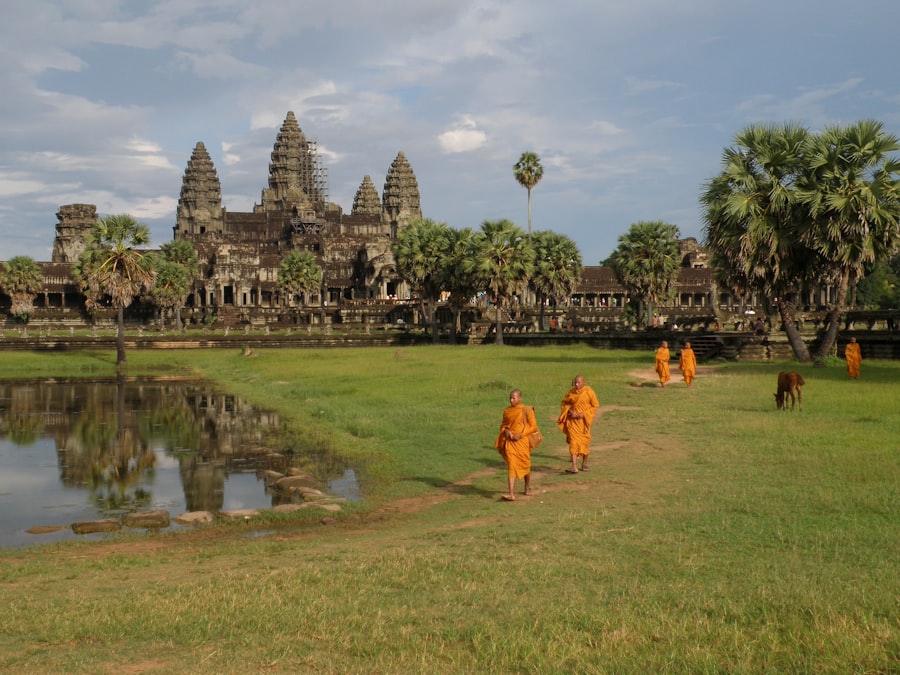
The history of Angkor Wat is not a static one; it is marked by significant transformations in its religious function. Although conceived as a Hindu temple, it eventually transitioned to become a prominent center of Mahayana Buddhism. This shift reflects the evolving religious landscape of the Khmer Empire and the adaptability of its sacred spaces.
The Embrace of Buddhism: Jayavarman VII’s Influence
While Suryavarman II initiated Angkor Wat as a Vishnu temple, later Khmer rulers, most notably Jayavarman VII in the late 12th and early 13th centuries, embraced Mahayana Buddhism and significantly patronized Buddhist art and architecture. Although Jayavarman VII is more famously associated with Angkor Thom and the Bayon temple, his influence gradually permeated other existing structures, including Angkor Wat. This period saw the introduction of Buddhist iconography and symbols within the temple complex.
Syncretism and Coexistence
The transition was not necessarily a complete erasure of the Hindu past but rather a form of syncretism, where Buddhist deities and practices were incorporated alongside existing Hindu elements. Evidence of this can be seen in later additions and modifications to the temple, often featuring Buddhist statues and inscriptions. The resilience of Angkor Wat lay in its ability to adapt to the prevailing religious currents, ensuring its continued relevance and use by successive generations of rulers.
The Ambiguous Legacy of Buddhist Patronage
While Jayavarman VII’s patronage of Buddhism was extensive, his legacy at Angkor Wat is more about the ongoing use and adaptation of the temple rather than a radical reconstruction. Buddhist monks continued to inhabit and worship at Angkor Wat for centuries, even as the Khmer Empire faced its eventual decline. This sustained religious activity cemented its status as a sacred site, regardless of the dominant religious affiliation.
The Great Abandonment: Mysteries of Decline and Decay
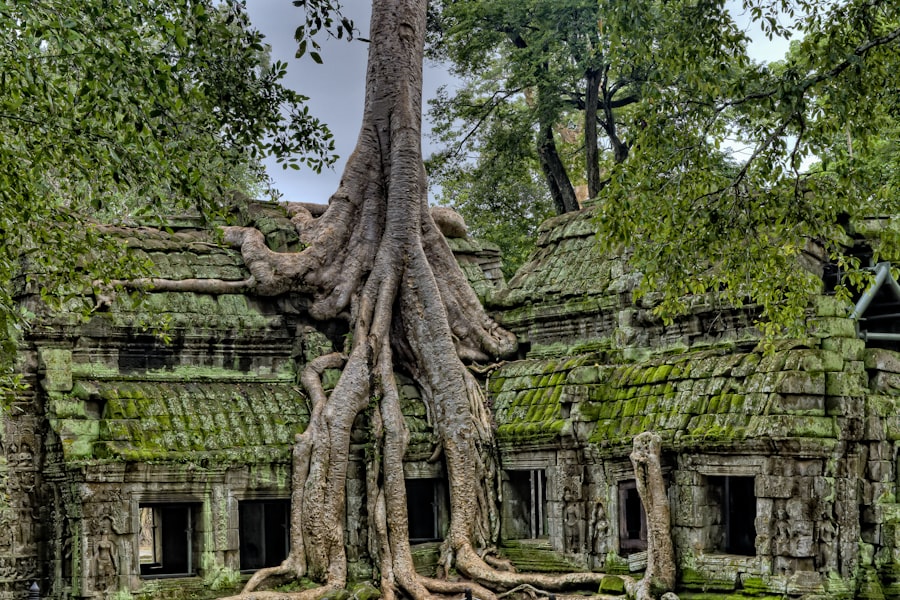
By the 15th century, the once-thriving capital of Yasodharapura, and with it Angkor Wat, began to fall into decline and was eventually largely abandoned. The reasons for this dramatic shift are multifaceted and remain a subject of scholarly debate, adding a layer of mystery to the site’s history.
Environmental Catastrophe and Resource Depletion
One prominent theory suggests that a combination of environmental factors played a significant role. Overexploitation of resources, deforestation, and potential shifts in hydrological systems that governed the vast water management infrastructure of Angkor could have led to ecological instability. The immense strain of supporting a large population and maintaining a monumental temple complex may have ultimately proven unsustainable, leading to resource depletion.
The Shifting Tides of Power and Warfare
The Khmer Empire faced increasing external threats, particularly from the Siamese kingdom to the west. A series of invasions and conflicts, culminating in the sacking of Angkor in the mid-15th century, likely led to the relocation of the capital to a more defensible location, such as Phnom Penh. The loss of political and economic centrality would have inevitably led to the decline of Angkor Wat as a primary religious and administrative center.
The Unraveling of the Water Management System
The sophisticated hydraulic system that sustained Angkor, including its vast reservoirs (barays) and intricate canal networks, was crucial for agriculture and the maintenance of the city. Scholars hypothesize that a failure or decay of this meticulously engineered system could have led to widespread drought or flooding, making the region uninhabitable and contributing to the abandonment of the capital. The complex interplay of natural forces and human engineering played a critical role in the rise and fall of the empire.
The Paradox of Rediscovery
Despite its abandonment by the Khmer court, Angkor Wat was never truly “lost.” Local villagers continued to worship at the site, and accounts of its existence circulated among early European explorers. However, it was the French naturalist Henri Mouhot’s widely published accounts and illustrations in the mid-19th century that truly brought Angkor Wat to the attention of the Western world, sparking a renewed fascination and initiating efforts towards its preservation and study. This “rediscovery” was more of an unveiling to a global audience than a true uncovering of something completely unknown.
The hidden history of Angkor Wat is a fascinating topic that reveals the intricate architectural and cultural significance of this ancient temple complex. For those interested in exploring how historical treasures can sometimes reflect broader themes of value and security, a related article discusses the role of physical silver as a safe haven from government influences. You can read more about this intriguing connection in the article on physical silver.
Unveiling the Hidden Details: Beyond the Grand Facade
| Aspect | Details |
|---|---|
| Construction Period | 9th to 15th centuries |
| Original Name | Varmanapura |
| Architectural Style | Khmer |
| UNESCO World Heritage Site | Yes |
| Significance | One of the largest religious monuments in the world |
| Hidden History | Rediscovered by French naturalist Henri Mouhot in 1860s |
The true depths of Angkor Wat’s history are revealed not just in its grand architecture but also in the meticulous examination of its less-heralded details. These hidden elements offer intimate glimpses into the daily lives, religious practices, and artistic sensibilities of its creators and inhabitants.
The Architects and Artisans: The Unsung Builders
The names of the architects and artisans who designed and constructed Angkor Wat are largely lost to history. However, the sheer brilliance of their work speaks volumes about their skill and dedication. Excavations and detailed studies of construction techniques continue to reveal the sophisticated methods employed, from the precise cutting and fitting of stone to the ingenious use of ramps and levers for lifting massive blocks. Understanding their techniques offers profound respect for their ingenuity.
The Labor Force: A Glimpse into Social Hierarchy
The construction of Angkor Wat would have required an enormous labor force. While the exact scale and composition of this workforce are not fully documented, it is understood to have comprised an array of individuals, from skilled artisans and stone masons to conscripted laborers from across the empire. The temple’s inscriptions and reliefs sometimes offer subtle hints about the organization of labor and the social hierarchy that underpinned such monumental projects, revealing the vast human effort involved.
The Smaller Temples and Enclosures: A Microcosm of Belief
Beyond the main temple, the numerous smaller temples, libraries, and enclosures within the Angkor Wat complex each hold their own stories. These structures, often dedicated to specific deities or used for particular ritualistic purposes, provide additional layers of insight into the multifaceted religious life of the Khmer people. Their intricate carvings, though smaller in scale, are no less significant in their artistic merit and historical value.
Epigraphy and Inscriptions: Whispers from the Past
The study of the numerous inscriptions found throughout Angkor Wat and the surrounding Angkorian sites offers invaluable textual evidence. These epigraphs, often written in Sanskrit and Old Khmer, provide insights into royal decrees, religious endowments, administrative records, and even personal dedications. Deciphering these ancient scripts is akin to unlocking direct whispers from the past, illuminating aspects of history that stone carvings alone cannot convey.
The Environmental Legacy: The Water Temple’s Ingenuity
The integrated water management system surrounding Angkor Wat, often referred to as a “water temple,” is a crucial but often overlooked aspect of its history. The vast barays and intricate network of canals were not only for construction but also for irrigation, flood control, and the spiritual cleansing associated with water. Understanding the engineering and ecological principles behind this system reveals the profound understanding of their environment that the Khmer possessed and how it shaped their civilization.
In conclusion, Angkor Wat is far more than just a magnificent temple; it is a living testament to a sophisticated civilization that excelled in architecture, art, religion, and engineering. Uncovering its hidden history involves peeling back the layers of time, deciphering the narratives etched in stone, and pondering the mysteries of its rise and fall. Each carved apsara, each cosmological alignment, and each debated theory contributes to a richer, deeper understanding of this extraordinary wonder of the world, ensuring that its significance continues to resonate through the ages.

The Machine That Kept Angkor Alive
FAQs
What is the hidden history of Angkor Wat?
Angkor Wat, the largest religious monument in the world, has a hidden history that includes its construction, purpose, and the civilization that built it.
Who built Angkor Wat?
Angkor Wat was built by the Khmer King Suryavarman II in the early 12th century as a Hindu temple dedicated to the god Vishnu. It later transformed into a Buddhist temple.
What is the significance of Angkor Wat?
Angkor Wat is significant for its architectural and artistic achievements, as well as its religious and cultural importance. It is a symbol of Cambodia and appears on the country’s national flag.
What is the hidden symbolism in Angkor Wat’s design?
The design of Angkor Wat is filled with hidden symbolism, including astronomical alignments, religious iconography, and references to Hindu and Buddhist cosmology.
What caused the decline of Angkor Wat?
The decline of Angkor Wat and the Khmer Empire is attributed to a combination of factors, including environmental degradation, political instability, and the rise of neighboring powers.