
The Khmer Empire, a civilization that once dominated Southeast Asia, left behind a legacy of awe-inspiring architecture and sophisticated engineering. Among its most remarkable achievements are the barays, colossal reservoirs that served a multitude of purposes, underpinning the empire’s prosperity and spiritual life. These monumental water management systems, often vast enough to be mistaken for natural lakes, are enduring testaments to the ingenuity and ambition of the Khmer people, reflecting not only their mastery of hydraulics but also their deeply held cosmological beliefs. The sheer scale and complexity of their construction continue to puzzle and inspire scholars and visitors alike, inviting a deeper understanding of a civilization that achieved such “Glory and Grandeur: The Barays of the Khmer Empire.”
The existence of the Khmer Empire, particularly its ability to sustain a large population and support monumental temple building, was inextricably linked to its mastery of water. The barays were central to this system, transforming the parched Cambodian plains into fertile agricultural heartlands.
The Monsoon Dependency
The seasonal monsoon rains were the primary source of water for the Khmer civilization. However, the monsoon period was short and intense, necessitating effective storage and distribution systems to sustain the population and their crops throughout the dry season. The barays, by capturing and holding vast quantities of water, acted as crucial buffers against this seasonal variability.
Seasonal Rainfall Patterns
Cambodia experiences a distinct wet and dry season. The wet season, typically from May to October, brings heavy rainfall concentrated in a few months. The dry season, from November to April, sees significantly reduced precipitation. This sharp contrast placed immense pressure on agricultural systems, requiring a robust solution for water storage.
The Need for Irrigation
Without adequate irrigation, agriculture would be severely limited, capable of supporting only a fraction of the population. The barays, along with their associated canal networks, provided the means to irrigate rice paddies, the staple crop of the Khmer people, ensuring consistent yields and food security.
Agricultural Productivity and Rice Cultivation
The primary purpose of the barays was to support the extensive rice cultivation that formed the backbone of the Khmer economy. The availability of water allowed for multiple rice harvests per year, leading to surplus production that fueled trade and supported the vast labor forces required for construction projects.
The Importance of Rice
Rice was more than just a food source; it was the economic and social engine of the Khmer Empire. Its cultivation demanded constant attention to water levels, making the barays indispensable for its success.
Multiple Harvests and Food Security
The ability to irrigate consistently meant that the Khmer could achieve multiple rice harvests annually, a remarkable feat in a monsoon-dependent climate. This redundancy in food production provided a significant buffer against crop failure and ensured a stable food supply for the growing empire.
Engineering Intricacies and Canal Networks
The barays were not isolated structures but integral components of a complex and sophisticated hydraulic network. Elaborate canal systems connected the barays to each other, to temples, and to agricultural lands, facilitating efficient water distribution.
The Design and Construction of Barays
The construction of these massive reservoirs was a monumental undertaking. Khmer engineers meticulously planned their dimensions, depth, and the location of their outlets, often considering the natural topography of the land.
The Role of Canals and Ditches
A vast network of canals and ditches radiated from the barays, channeling water to the fields. These were not mere ditches but often substantial construction projects in themselves, demonstrating a profound understanding of hydraulics and fluid dynamics.
Water Level Control and Distribution Systems
The Khmer developed ingenious methods for controlling water flow, ensuring that water was delivered where and when it was needed. Sluice gates and other mechanisms allowed for the precise management of vast quantities of water.
The barays of the Khmer Empire, which are large water reservoirs, played a crucial role in the agricultural and urban development of ancient Cambodia. These impressive structures not only provided irrigation for rice cultivation but also reflected the advanced engineering skills of the Khmer civilization. For those interested in exploring more about ancient mysteries and historical cartography, a related article can be found at Uncovering Ancient Mysteries: Piri Reis Map and Charles Hapgood, which delves into the intriguing connections between ancient maps and the civilizations that created them.
Cosmological Significance and Temple-Reservoirs
The Khmer, deeply spiritual people, imbue their constructions with profound religious and cosmological meanings. The barays, particularly those associated with major temples, were not merely utilitarian but also served as powerful symbols within their worldview.
The Oceans of the World
In Khmer cosmology, the world was often depicted as being surrounded by vast oceans. The barays, with their immense water bodies, mirrored these celestial oceans, linking the earthly realm to the divine.
Mount Meru and the Cosmic Ocean
The concept of Mount Meru, the mythical abode of the gods, was central to Khmer cosmology. The barays, often positioned to either side of temple-mountains, represented the cosmic oceans that enveloped this sacred peak, creating a microcosm of the universe.
Symbolism of Water and Creation
Water was intrinsically linked to creation and life in Khmer belief systems. The barays, as vast reservoirs, symbolized the primordial waters from which the world emerged and the continuous cycle of life and renewal.
Ritual Purification and Spiritual Purity
Water held significant ritual importance in Khmer religious practices. The barays provided a source for a variety of purification rituals, both for the populace and for the sacred spaces of the temples.
Bathing Rituals and Offerings
The waters of the barays were utilized for ritual bathing, cleansing both the physical body and the spirit. Offerings of flowers, incense, and other sacred items were also made into these sacred waters.
The Purity of the Divine Waters
The barays were seen as extensions of the divine, their waters imbued with spiritual power. Their maintenance and the reverence they commanded underscored the importance of spiritual purity in Khmer society.
The East and West Barays of Angkor Wat
Among the most famous examples are the barays associated with Angkor Wat, demonstrating the scale and symbolic integration of these water features with the empire’s most iconic religious sites.
The Baray Tonle Sap
While not a constructed baray in the same sense as those within temple complexes, the vast Tonle Sap Lake, connected by waterways to the Angkor region, played a crucial role in the Khmer hydraulic system, acting as a massive natural reservoir.
The East Baray: An Ocean of the East
The East Baray, a colossal rectangular reservoir east of Angkor Thom, is a prime example of the grandeur and ambition of Khmer engineering. Its sheer size suggests a deep symbolic and practical significance.
The West Baray: The Ocean of the West
The West Baray, to the west of Angkor Thom, is another immense reservoir, its calm surface today belies the engineering prowess required to create it. Its positioning likely held specific symbolic meaning within the Angkorian landscape.
Engineering Prowess and Construction Techniques

The construction of the barays represent a feat of engineering that is still remarkable today. Without the aid of modern machinery, the Khmer people moved and shaped enormous quantities of earth and stone.
Labor and Organization
The sheer scale of the barays implies an extraordinarily well-organized society capable of mobilizing and managing an immense labor force. Religious devotion, tribute, and a structured social hierarchy likely contributed to this organized workforce.
Mobilization of the Populace
The construction and maintenance of the barays would have required the consistent involvement of a significant portion of the population, particularly during periods of peak agricultural activity.
The Role of the Monarchy and Priesthood
The king, as the divine ruler, and the priesthood, as intermediaries with the gods, would have been instrumental in commanding the labor and resources necessary for these monumental projects.
Earthworks and Hydraulics
The primary construction involved massive earthmoving, carefully shaped to create reservoirs with controlled outlets. The understanding of water flow and pressure was crucial for their design and function.
Excavation and Embankment
The construction involved excavating vast pits and using the displaced earth to build high embankments around the reservoirs, creating impermeable barriers to hold the water.
Diversion of Natural Water Sources
The Khmer likely utilized existing rivers and streams, diverting their waters into the barays through carefully constructed canals and channels.
Materials and Durability
While primarily earthworks, many barays incorporated stone elements for lining canals, building sluice gates, and perhaps even creating retaining walls. The longevity of these structures speaks to the durability of their construction.
Stone Masonry and Facing
Where necessary for structural integrity or aesthetic purposes, stone masonry was employed. The precise fitting of stones, even without mortar, is a hallmark of Khmer construction.
The Longevity of the Structures
The fact that many barays still exist, in varying states of repair, after centuries of neglect and environmental change, is a testament to the enduring quality of their design and construction.
The Decline and Legacy of the Barays
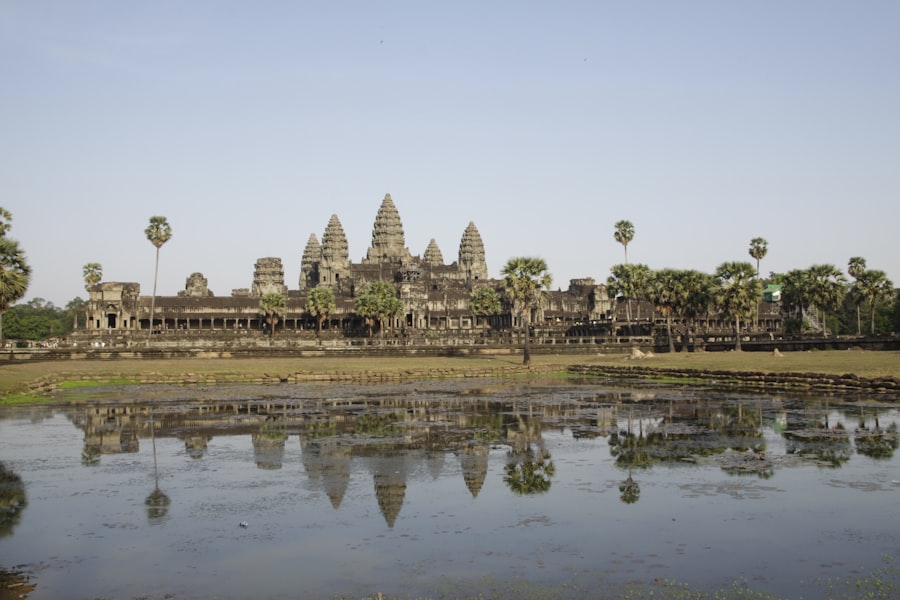
The fall of the Khmer Empire, coupled with shifts in geopolitical power and environmental changes, led to the gradual decline and eventual abandonment of many of the barays. However, their legacy continues to shape Cambodia.
Shifts in Power and Administration
As the Khmer Empire waned and was eventually conquered by neighboring kingdoms, the centralized administration responsible for the maintenance of the barays collapsed. Localized efforts would have been insufficient for such massive undertakings.
External Invasions and Disruption
Periods of conflict and invasion would have severely disrupted agricultural practices and the upkeep of infrastructure, including the barays.
Changing Trade Routes and Economic Focus
Shifts in regional trade patterns and the economic focus of succeeding kingdoms may have diminished the strategic importance of these large-scale water management systems.
Environmental Factors and Natural Disasters
Over centuries, natural processes such as sedimentation, siltation, and seismic activity could have rendered some barays unusable or significantly altered their capacities.
Sedimentation and Silting
The constant influx of sediment from rivers and rainfall would have gradually filled the barays, reducing their depth and storage capacity over time.
Seismic Activity and Erosion
The region is prone to seismic activity, which could have damaged embankments. Natural erosion would also have played a role in the degradation of the structures.
The Enduring Influence on Modern Cambodia
Despite their decline, the barays remain an integral part of the Cambodian landscape and identity. They offer invaluable insights into the past and continue to influence contemporary water management strategies.
Archaeological Significance and Tourism
The barays are vital archaeological sites, providing a wealth of information for historians and archaeologists. They also draw considerable tourism, contributing to the Cambodian economy.
Modern Water Management and Inspiration
Insights gained from studying the ancient barays can inform modern irrigation and water management techniques in Cambodia, offering a sustainable approach to water resource utilization.
The barays of the Khmer Empire, which served as significant water management systems, played a crucial role in the agricultural success and urban planning of the civilization. Recent studies have shed light on the impact of ancient droughts on these intricate waterworks, revealing how climate fluctuations influenced the sustainability of the Khmer Empire. For a deeper understanding of this relationship, you can read more in the article about the archaeological evidence of these ancient droughts found here.
A Living Legacy: The Barays Today
| Barays of the Khmer Empire | Location | Size (acres) | Purpose |
|---|---|---|---|
| East Baray | Angkor, Cambodia | 1,800 | Water reservoir for irrigation and religious ceremonies |
| West Baray | Angkor, Cambodia | 3,800 | Water reservoir for irrigation and religious ceremonies |
| Neak Pean | Angkor, Cambodia | N/A | Artificial island with a Buddhist temple, used for healing rituals |
Today, many of the barays stand as silent witnesses to a bygone era of imperial might and engineering genius. While some are still partially filled with water, others are dry basins, their earthen walls a stark reminder of their former glory.
The State of Preservation
The condition of the barays varies greatly. Some, like the West Baray of Angkor, have been partially restored and continue to hold water, while others are largely overgrown and featureless.
Partially Restored Barays
Efforts have been made in certain areas to clear silt and repair embankments, allowing some barays to once again serve as reservoirs for local communities or as historical exhibits.
Dry Basins and Overgrown Structures
Many barays have succumbed to the forces of nature, with vegetation reclaiming their once-clear reservoirs. These dry basins, however, still offer a sense of their immense original scale.
The Role in Contemporary Cambodian Life
While not functioning at their imperial capacity, some barays still play a role in local water management, particularly in the surrounding agricultural communities.
Localized Irrigation and Water Supply
In some instances, nearby communities continue to utilize the water from partially functioning barays for their irrigation needs, albeit on a much smaller scale than in the past.
Historical and Cultural Landmarks
The barays are now recognized as crucial historical and cultural landmarks, attracting scholars and tourists who marvel at their engineering and the civilization that created them.
The Enduring Symbol of Khmer Ingenuity
More than just water storage, the barays represent a profound connection between human ingenuity, the natural world, and the spiritual beliefs of the Khmer people. They are enduring symbols of the empire’s “Glory and Grandeur.”
A Testament to Human Endeavor
The sheer scale and sophistication of the barays serve as a powerful testament to the capabilities of the Khmer civilization, showcasing their advanced understanding of engineering, hydraulics, and large-scale project management.
A Bridge Between Past and Future
By studying and preserving these ancient water systems, Cambodia can not only honor its rich past but also draw valuable lessons for sustainable development and water resource management in the future. The barays, therefore, remain a living legacy, a constant reminder of the “Glory and Grandeur” of the Khmer Empire.

The Machine That Kept Angkor Alive
FAQs
What are barays in the context of the Khmer Empire?
Barays were large artificial reservoirs or water tanks built by the Khmer Empire to store water for agricultural purposes and to control the region’s water supply.
How were barays constructed by the Khmer Empire?
Barays were constructed by digging large, rectangular or square-shaped depressions in the ground and then lining them with earthen embankments to create a reservoir. They were often connected to canals and other water management systems.
What was the purpose of the barays in the Khmer Empire?
The barays served as a crucial part of the Khmer Empire’s sophisticated water management system, providing water for irrigation, agriculture, and maintaining a stable water supply for the empire’s population.
What is the significance of the barays in the history of the Khmer Empire?
The construction and maintenance of the barays demonstrate the advanced engineering and agricultural knowledge of the Khmer Empire. They also played a key role in the empire’s economic prosperity and ability to support a large population.
Are the barays of the Khmer Empire still in use today?
Some of the barays built by the Khmer Empire are still in use today for irrigation and agriculture in Cambodia. However, many have fallen into disrepair or have been repurposed for other uses over the centuries.