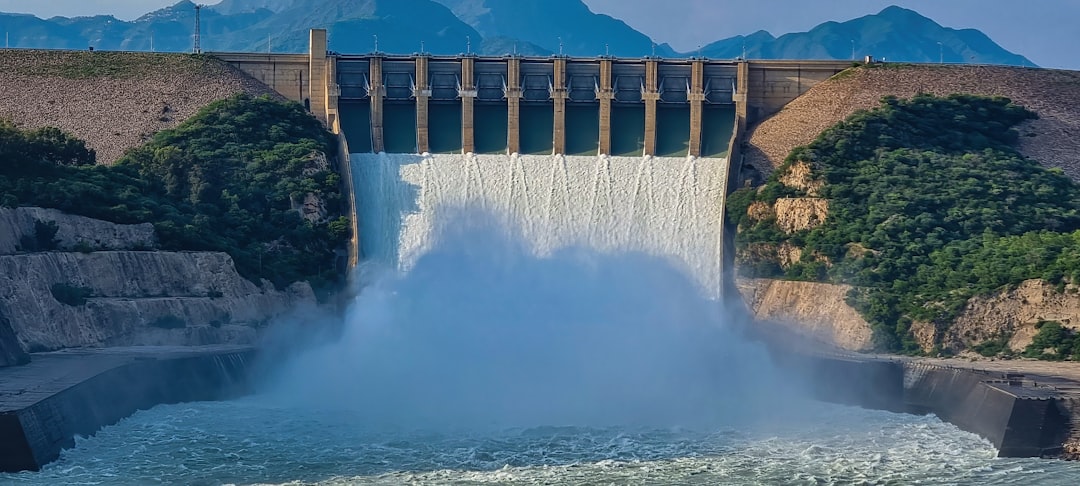
The evolution of hydraulic engineering is a testament to humanity’s enduring ingenuity and its intricate relationship with water. From the earliest civilizations that grappled with providing potable water to burgeoning populations and irrigating fertile lands, the principles of channeling, storing, and controlling water have been central to societal development. This journey, spanning millennia, showcases a remarkable progression from rudimentary but effective ancient marvels to the sophisticated, multi-faceted infrastructure that defines modern civilization. The story of hydraulic engineering is, in essence, the story of human progress itself, intricately woven with the vital resource that underpins all life.
The earliest stirrings of hydraulic engineering can be traced back to the very cradles of civilization. As human settlements grew and transitioned from nomadic existence to agriculture, the need to manage water became paramount. This necessity spurred innovation, leading to the development of systems that, while simple by today’s standards, were revolutionary for their time.
Early Irrigation and Water Supply
In Mesopotamia, the land between the Tigris and Euphrates rivers, early farmers developed sophisticated irrigation systems to harness the power of these mighty rivers. Mudbrick canals, painstakingly dug by hand, diverted water to fields, transforming arid lands into breadbaskets. These were not mere ditches but carefully planned channels, demonstrating an understanding of gravity and the flow of water. Similarly, in ancient Egypt, the yearly flooding of the Nile was not just a natural phenomenon but a predictable element that was expertly managed. The Egyptians constructed basins and dikes to capture and distribute Nile floodwaters, ensuring the fertility of their land. This allowed for a stable agricultural base, which in turn supported a growing population and the development of a complex society.
The Roman Legacy: Aqueducts and Public Health
Perhaps the most iconic early hydraulic engineering achievements are the Roman aqueducts. These monumental structures stand as enduring symbols of Roman power and their commitment to public well-being. The Romans understood the critical importance of a reliable water supply for their growing cities, not just for drinking but also for public baths, fountains, and sanitation.
The Science of the Aqueduct
The construction of Roman aqueducts was a marvel of surveying and engineering. Using simple surveying tools like the chorobates (a level) and groma (a sighting instrument), Roman engineers could accurately determine gradients over long distances. This ensured that water flowed consistently and gently, preventing erosion and sediment buildup. The aqueducts were not always elevated; in many cases, they were underground channels or tunnels where the terrain allowed. However, it was their iconic arched structures, often spanning valleys and rivers, that captured the imagination and allowed for the efficient transport of water over challenging landscapes.
Water Distribution and Sanitation
Beyond the aqueducts themselves, the Romans developed a sophisticated system for distributing water within their cities. Water was channeled into public fountains, accessible to all citizens, and also supplied to private homes of the wealthy and to public buildings like baths and latrines. This emphasis on public health through readily available clean water was unprecedented. The Roman bathhouses, a central aspect of their social life, were made possible by these extensive hydraulic networks, demonstrating a profound understanding of the link between water and hygiene. Furthermore, the Romans also pioneered sewer systems, the Cloaca Maxima being a prime example, which carried waste away from the city, further enhancing public sanitation.
Other Ancient Innovations
While Roman aqueducts often steal the spotlight, other ancient civilizations also made significant contributions. In ancient Greece, for instance, the Minoans and Mycenaeans developed elaborate drainage and water supply systems. The city of Knossos, on Crete, featured a complex network of terracotta pipes for water supply and drainage, showcasing an early understanding of plumbing. Further east, the Indus Valley Civilization, particularly at Mohenjo-Daro and Harappa, boasted advanced water management systems, including elaborate wells, cisterns, and sophisticated drainage and sewage systems that predated many Roman advancements. These cities had designated areas for bathing and sanitation, suggesting a strong emphasis on public hygiene.
The history of hydraulic engineering is a fascinating journey that showcases humanity’s ingenuity in managing water resources. One notable aspect of this history is the construction of ancient aqueducts, which played a crucial role in supplying water to cities and agricultural lands. For a deeper understanding of the engineering feats of the past, you can explore the article on the Seven Wonders of the Ancient World, which highlights remarkable structures that often relied on advanced hydraulic techniques. To read more, visit this article.
Medieval Adaptations and the Slowing of Progress
Following the decline of the Roman Empire, many of the sophisticated hydraulic systems fell into disrepair. The focus shifted from grand infrastructure projects to more localized and often less ambitious water management solutions. However, this period was not entirely devoid of innovation, and knowledge was preserved and adapted by various cultures.
Watermills and Mechanical Power
The Middle Ages saw a significant revival and expansion of the use of water for mechanical power. Watermills, both for grinding grain (gristmills) and for powering bellows in blacksmith forges and fulling cloth, became ubiquitous across Europe. These mills harnessed the kinetic energy of flowing water, demonstrating a practical application of hydraulic principles for industrial purposes.
The Development of Overshot and Undershot Wheels
Different types of waterwheels were developed and refined to suit varying water conditions. The undershot wheel, where paddles are pushed by the current, was an early design. Later, the overshot wheel, where water is channeled to the top of the wheel, became more efficient, utilizing the potential energy of falling water. This refinement in mechanical advantage allowed for greater power generation from smaller water sources.
Fortifications and Water Defenses
Water played a crucial role in medieval fortifications. Castles and city walls were often strategically located near rivers or moats, using water as a natural defense. The design of these defenses involved understanding water levels, flow, and the impact of hydraulics on siege warfare.
Moats and Siege Engineering
The construction and maintenance of moats were complex hydraulic undertakings. Engineers had to ensure a consistent water supply to the moat, often through canals or by damming nearby streams, and also manage drainage to prevent stagnation and disease. Siege engines, such as trebuchets and catapults, also relied on principles of mechanics and physics, which are closely related to hydraulic forces. The trajectory of projectiles, for instance, is governed by gravity and initial velocity, concepts that would later be further explored in the study of fluid dynamics.
Water Management in Islamic Civilization
During the medieval period, Islamic civilization made significant strides in hydraulic engineering. Building upon the knowledge of ancient civilizations, Islamic engineers developed sophisticated irrigation systems and water management technologies.
Irrigation and Agriculture in the Islamic World
In regions like Andalusia, the Islamic world, engineers developed highly efficient irrigation techniques. They introduced the noria, a water-lifting device, and sophisticated systems of canals, dams, and reservoirs that greatly enhanced agricultural productivity. Techniques such as terracing and the management of water resources in arid environments were also refined and widely implemented. The qanat system, an ancient Persian invention involving underground water channels, was also maintained and expanded in many parts of the Islamic world, effectively transporting water over long distances without significant evaporation.
The Renaissance and the Dawn of Hydrodynamics

The Renaissance marked a period of renewed intellectual curiosity and scientific inquiry. As scholars and engineers revisited classical texts and conducted new observations, the study of fluid mechanics began to take shape, laying the groundwork for more theoretical and advanced hydraulic engineering.
Leonardo da Vinci and the Study of Water
Leonardo da Vinci, the quintessential Renaissance polymath, was deeply fascinated by water. His notebooks are filled with detailed observations and sketches of water in motion, turbulence, and its interactions with objects. He studied river flow, wave formation, and the principles of hydraulics, anticipating many concepts that would be formally developed centuries later.
Experimental Observations and Theoretical Insights
Da Vinci’s approach was empirical. He meticulously observed how water behaved in different scenarios, from the flow in rivers to the splash of a droplet. His drawings of vortices and eddy currents demonstrate an intuitive understanding of fluid dynamics, even without formal mathematical frameworks. His work, though often unpublished during his lifetime, provided a foundation of empirical knowledge.
Early Hydraulics and Pressure
The understanding of water pressure began to develop during this era. Scientists like Blaise Pascal in the 17th century formulated Pascal’s Law, which states that pressure applied to an enclosed fluid is transmitted undiminished to every portion of the fluid and the walls of the containing vessel. This was a crucial step towards a quantitative understanding of how water behaves under constraint.
Pascal’s Law and its Implications
Pascal’s Law had significant implications for the design of hydraulic systems. It explained why a hydraulic press could multiply force, a principle that would underpin future hydraulic machinery. This theoretical breakthrough moved hydraulic engineering beyond empirical observation towards a more predictable and controllable science.
Water Supply Systems in Growing Cities
As European cities continued to grow, the demand for water increased, leading to the construction of improved water supply systems. While not always reaching the scale of Roman aqueducts, these systems often involved networks of pipes, reservoirs, and pumping mechanisms.
Bell Tower Pumps and Early Pumping Technologies
In cities like London, ingenious devices like bell tower pumps were developed. These were often powered by wind or water, lifting water to elevated cisterns from which it could be distributed via gravity. These early mechanical solutions were vital for meeting the growing needs of urban populations.
The Industrial Revolution and the Rise of Modern Hydraulic Engineering

The Industrial Revolution served as a crucible for hydraulic engineering, transforming it into a discipline characterized by its reliance on scientific principles, advanced materials, and large-scale projects. The insatiable demand for power and resources fueled an explosion of innovation.
The Power of Water: Water Turbines and Hydropower
The development of efficient water turbines revolutionized the use of water as a power source. The invention of the Francis turbine and later the Pelton turbine allowed for the conversion of water’s potential energy into mechanical energy with much greater efficiency than traditional waterwheels.
From Waterwheels to Turbines
The transition from waterwheels to turbines was a significant leap. Turbines are more compact, operate at higher speeds, and can be adapted to a wider range of water heads (the difference in elevation between the water source and the turbine). This efficiency was critical for powering the machinery of the burgeoning industrial factories.
The Genesis of Hydropower
This advancement quickly led to the development of hydropower as a major source of electricity. The earliest hydroelectric power plants were established in the late 19th century, harnessing the power of rivers to generate electricity for industrial and domestic use. This marked a monumental shift in energy production, relying on a renewable and sustainable resource.
Civil Engineering Marvels: Dams and Canals
The Industrial Revolution also witnessed the construction of unprecedented civil engineering projects, many of which were deeply entwined with hydraulic principles. The construction of massive dams to store water and control rivers, and the creation of vast canal systems for transportation and irrigation, became hallmarks of this era.
Large-Scale Dam Construction
Dams evolved from simple earthen structures to complex concrete giants. Engineers developed techniques for building arch dams, gravity dams, and embankment dams, capable of impounding enormous volumes of water for power generation, flood control, and water supply. The Hoover Dam in the United States, completed in 1936, stands as a prime example of the engineering prowess of this period.
Inland Waterways and Transportation
Canals played a vital role in the transport of goods and raw materials during the Industrial Revolution. The construction of canals like the Suez Canal and the Panama Canal required immense hydraulic engineering expertise to overcome geographical challenges and manage water levels. These waterways facilitated global trade and economic development, demonstrating the power of engineered water systems to connect distant regions.
Sanitary Engineering and Public Health
The growth of industrial cities brought with it severe sanitation challenges. The need to manage wastewater and provide clean drinking water led to the development of sophisticated sanitary engineering systems.
Sewer Systems and Wastewater Treatment
The development of comprehensive sewer systems, along with early forms of wastewater treatment, dramatically improved public health and reduced the spread of waterborne diseases like cholera and typhoid. This was a direct consequence of applying hydraulic principles to solve pressing urban problems.
The history of hydraulic engineering is a fascinating journey that showcases humanity’s ingenuity in managing water resources. From ancient aqueducts to modern dams, the evolution of this field has played a crucial role in shaping civilizations. For a deeper understanding of how ancient technologies were utilized during times of scarcity, you can explore a related article that delves into these innovations. This insightful piece highlights the remarkable ways in which societies adapted their engineering practices to meet the challenges of their environments. You can read more about it in the article Unlocking Ancient Technology in Times of Scarcity.
The Modern Era: Sophistication, Sustainability, and Global Impact
| Year | Event |
|---|---|
| circa 4000 BCE | The earliest known use of irrigation in ancient Mesopotamia |
| circa 2600 BCE | Construction of the Great Bath in the ancient Indus Valley Civilization |
| 7th century BCE | Development of qanats, underground channels for water supply, in Persia |
| 5th century BCE | Construction of the first aqueducts in ancient Greece |
| 1st century CE | Roman engineers develop advanced aqueduct systems, such as the Pont du Gard in France |
| 8th century | Introduction of watermills in Europe |
| 19th century | Industrial Revolution leads to advancements in hydraulic engineering, including the development of hydraulic turbines |
Today, hydraulic engineering is a highly specialized and indispensable field. It encompasses a vast array of technologies and methodologies, driven by the need to manage water in an increasingly complex and environmentally conscious world.
Advanced Water Resources Management
Modern water resources management is a complex undertaking that balances competing demands for water: domestic supply, agriculture, industry, and environmental needs. Sophisticated hydrological models, Geographic Information Systems (GIS), and remote sensing technologies are used to monitor, predict, and manage water availability.
Integrated Water Management and Sustainability
The focus has shifted towards integrated water management, which considers the entire water cycle and seeks sustainable solutions. This includes strategies for water conservation, rainwater harvesting, watershed protection, and the development of drought and flood resilient infrastructure.
Coastal Engineering and Offshore Structures
With a significant portion of the world’s population living in coastal areas, coastal engineering has become increasingly important. This field involves designing and constructing structures to protect coastlines from erosion, manage storm surges, and develop offshore infrastructure.
Breakwaters, Seawalls, and Offshore Platforms
The design of breakwaters and seawalls requires a deep understanding of wave mechanics and sediment transport. Offshore platforms for oil and gas exploration, as well as wind energy generation, also rely heavily on advanced hydraulic and structural engineering principles to withstand the forces of the ocean.
Renewable Energy and Innovations in Hydropower
Hydropower remains a significant source of renewable energy, and modern hydraulic engineering continues to innovate in this sector. This includes the development of smaller, more efficient turbines, pumped-storage hydropower systems for grid stability, and the exploration of tidal and wave energy technologies.
Tidal and Wave Energy Technologies
While still in their nascent stages, tidal and wave energy systems represent exciting frontiers in harnessing the power of ocean currents and waves, requiring specialized hydraulic and structural engineering knowledge. These technologies offer the potential to diversify renewable energy portfolios and reduce reliance on fossil fuels.
Smart Water Systems and the Future of Hydraulic Engineering
The integration of digital technologies is transforming hydraulic engineering. The development of “smart water systems” utilizes sensors, data analytics, and artificial intelligence to monitor water quality, detect leaks, optimize distribution, and predict demand.
The Internet of Things (IoT) in Water Management
The Internet of Things (IoT) is enabling real-time monitoring of vast water networks, allowing for more efficient and responsive management of resources. This promises to further enhance the reliability, sustainability, and safety of water infrastructure across the globe. The ongoing evolution of hydraulic engineering will undoubtedly continue to shape human civilization, ensuring the vital resource of water is managed effectively for generations to come.

The Machine That Kept Angkor Alive
FAQs
What is hydraulic engineering?
Hydraulic engineering is a branch of civil engineering that focuses on the flow and conveyance of fluids, primarily water. It involves the design, construction, and maintenance of hydraulic structures such as dams, channels, and pipelines.
What are some historical examples of hydraulic engineering?
Some historical examples of hydraulic engineering include the construction of aqueducts in ancient Rome, the development of water wheels and irrigation systems in ancient civilizations such as the Mesopotamians and Egyptians, and the building of canals and dikes in medieval Europe.
How has hydraulic engineering evolved over time?
Hydraulic engineering has evolved from simple irrigation systems and water transportation methods to sophisticated hydraulic structures and technologies. Advancements in materials, construction techniques, and computer modeling have greatly improved the efficiency and effectiveness of hydraulic engineering projects.
What are some key contributions to hydraulic engineering throughout history?
Key contributions to hydraulic engineering throughout history include the development of the Archimedes’ screw for lifting water, the invention of the water wheel for mechanical power, the construction of large-scale dams for water storage and flood control, and the implementation of modern hydraulic modeling and simulation techniques.
How has hydraulic engineering impacted society and the environment?
Hydraulic engineering has had a significant impact on society by providing essential water resources for agriculture, industry, and domestic use, as well as mitigating the effects of floods and droughts. However, it has also raised environmental concerns related to habitat disruption, water quality, and the alteration of natural water systems.