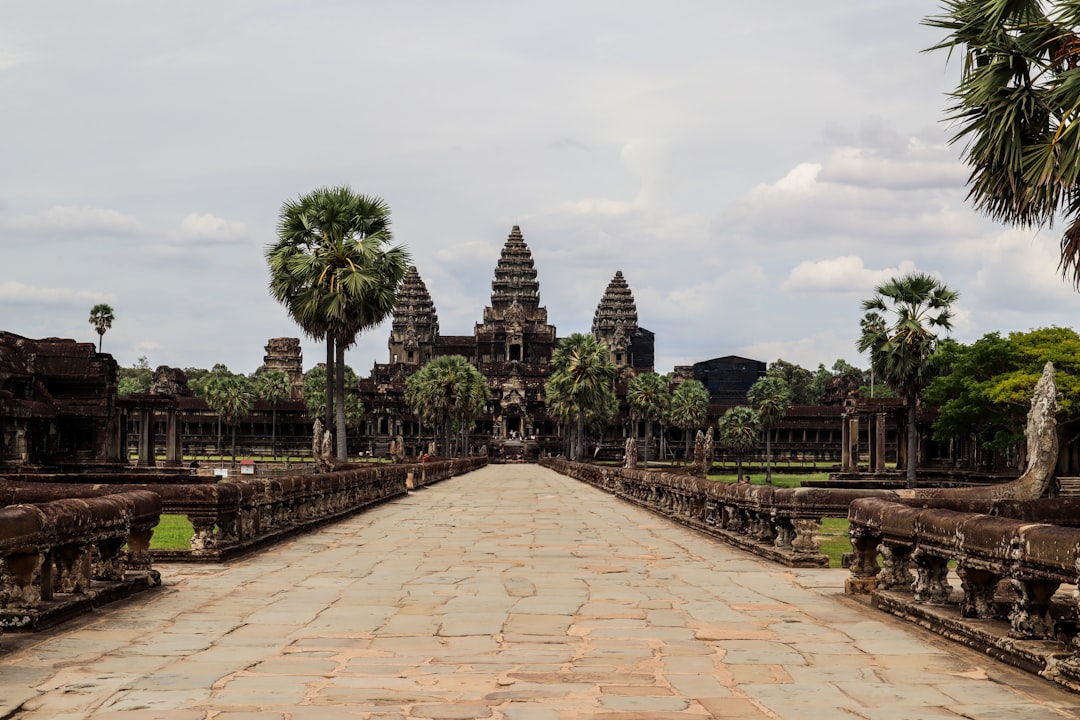
The ancient city of Angkor, shrouded in the dense Cambodian jungle for centuries, represents one of humanity’s most awe-inspiring achievements. For much of its history, this sprawling metropolis, once the heart of the powerful Khmer Empire, lay largely forgotten, swallowed by a verdant embrace that hid its grandeur from the outside world. The story of its rediscovery is as compelling as the temples themselves, a testament to human curiosity, perseverance, and the enduring allure of lost civilizations. Uncovering this hidden city was not a singular event but a gradual process, a slow peeling back of layers of jungle overgrowth and historical obscurity to reveal a civilization that once commanded respect and power across Southeast Asia.
The Khmer Empire, whose zenith coincided with the construction of Angkor, was a civilization of unparalleled sophistication for its time. Emerging from the shadow of Indian influence, they forged a unique cultural identity, blending indigenous beliefs with Hindu and Buddhist traditions to create a vibrant spiritual and political landscape. The empire’s founders, driven by ambition and a profound understanding of engineering and resource management, envisioned a capital city that would not only serve as a center of administration and religion but also as a symbolic representation of their cosmic order.
The Ambition of the Kings
The kings of Angkor were not mere rulers; they were divinely appointed figures who sought to solidify their power and legacy through monumental architecture and elaborate religious complexes. Their ambition was boundless, manifesting in the construction of vast reservoirs, intricate canal systems, and, most importantly, the magnificent temples that would define Angkor for posterity. These kings commissioned projects on a scale that is difficult to comprehend even today, requiring immense labor forces, sophisticated planning, and an intimate knowledge of hydrology and architecture.
Jayavarman II: The Founder of Angkor
The establishment of Angkor is often attributed to King Jayavarman II, who in the early 9th century declared his independence from Java and established a unified Khmer kingdom. He is credited with initiating the devaraja cult, the concept of the god-king, which intertwined divine authority with royal power. This cult would profoundly influence the subsequent development of Angkor as a spiritual and political capital. Jayavarman II’s reign set the stage for the empire’s golden age, laying the groundwork for the monumental constructions that would follow.
Suryavarman II and the Iconic Angkor Wat
The most recognizable and arguably the grandest of Angkor’s temples, Angkor Wat, was built by King Suryavarman II in the early 12th century. Originally dedicated to the Hindu god Vishnu, it later transformed into a Buddhist temple. Its sheer scale, intricate bas-reliefs, and harmonious design are testaments to the artistic and engineering prowess of the Khmer people. Suryavarman II’s vision was not just to build a temple but to create a microcosm of the Hindu universe, a sacred mountain in stone that would symbolize his divine connection and eternal reign.
The Engineering Marvels of the Khmer
The Khmers were masters of hydraulic engineering, a skill that was crucial to the sustenance of their vast population and the flourishing of their agricultural economy. The intricate network of canals, moats, and reservoirs (barays) they constructed allowed them to control water resources, enabling them to grow multiple rice harvests per year and support a population estimated to be in the millions at Angkor’s peak. These water management systems were not only functional but also held deep symbolic meaning, representing the cosmic ocean and the life-giving forces of nature.
The Barays: Lakes of Life
The massive barays of Angkor, such as the East Baray and the West Baray, are colossal artificial reservoirs that could hold millions of cubic meters of water. These engineering marvels were the lifeblood of the agricultural system, providing water during the dry season and preventing devastating floods during the monsoon. Their construction required an incredible amount of labor and coordination, showcasing the organizational capabilities of the Khmer Empire. The sheer volume of earth moved and the precision with which these structures were engineered are astonishing achievements that continue to impress engineers and archaeologists today.
The hidden city of Angkor, known for its stunning temples and advanced engineering, has long fascinated historians and archaeologists. One intriguing aspect of ancient civilizations is their innovative use of technology, as explored in a related article discussing the harnessing of ancient solar furnace technology. This article delves into how ancient cultures, possibly including those in the Angkor region, utilized solar energy for various purposes. To learn more about this fascinating topic, you can read the article here: Harnessing Ancient Solar Furnace Tech.
The Jungle’s Embrace: A City Lost to Time
Following the decline of the Khmer Empire in the 15th century, largely due to internal strife, Siamese invasions, and shifting trade routes, Angkor was gradually abandoned. The jungle, with its relentless growth, began to reclaim the magnificent stone structures, slowly but surely engulfing them. The mighty walls and towering spires were slowly softened by moss, vines, and the encroaching roots of ancient trees, transforming the bustling metropolis into a symphony of green.
Early European Encounters
While Angkor was largely forgotten by the outside world, there were sporadic mentions and encounters throughout the centuries. Local populations continued to revere some of the temples, incorporating them into their spiritual practices. However, it was not until the mid-19th century that a more systematic exploration and documentation of Angkor began, sparking renewed interest in this lost civilization.
Henri Mouhot’s Pivotal Journey
The French naturalist and explorer Henri Mouhot is often credited with bringing Angkor to the attention of the Western world in the 1860s. While his initial explorations were driven by a scientific interest in flora and fauna, he was profoundly struck by the grandeur of the Angkor temples, which he described in vivid detail in his published journals. Mouhot’s account, accompanied by illustrations, ignited the imagination of Europe and America, prompting a wave of archaeological interest and expeditions. His published works, though sometimes romanticized, provided the first widely disseminated, detailed descriptions of these ancient wonders.
The Slow Unveiling
Mouhot’s initial report was just the beginning. Over the following decades, a dedicated cadre of explorers, archaeologists, and restorers embarked on the arduous task of clearing the jungle, studying the ruins, and piecing together the history of Angkor. This was a painstaking process, involving the removal of tons of vegetation, careful excavation, and the establishment of rudimentary infrastructure in a remote and challenging environment.
The Work of the École française d’Extrême-Orient (EFEO)
The École française d’Extrême-Orient (EFEO) played a crucial role in the systematic study and preservation of Angkor. Established in 1900, the EFEO dispatched teams of scholars and archaeologists who undertook methodical excavations, architectural surveys, and the creation of detailed architectural drawings. Their long-term commitment allowed for a deeper understanding of the temples’ construction, iconography, and chronological development. The EFEO’s work laid the foundation for much of the modern understanding of Angkor.
The Architectural Grandeur of Angkor
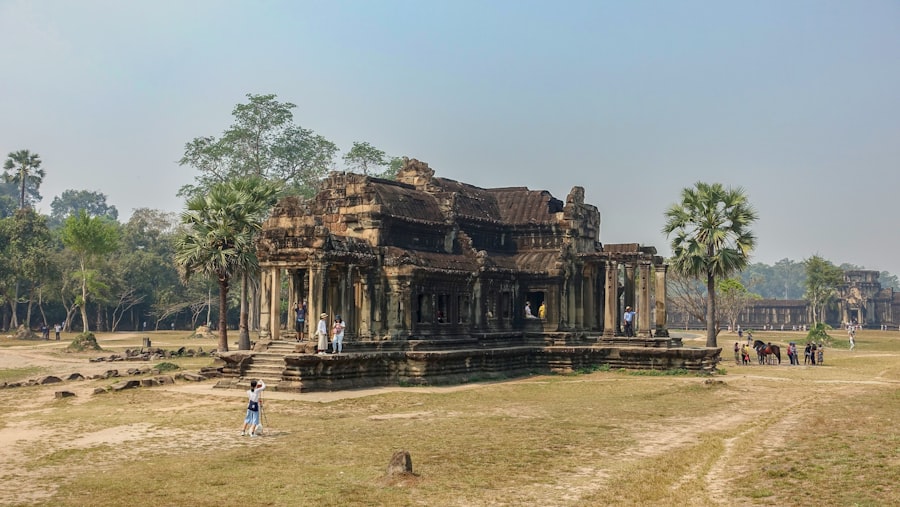
The temples of Angkor are not merely collections of stone; they are meticulously planned and exquisitely constructed masterpieces of architecture, reflecting a sophisticated understanding of geometry, symbolism, and aesthetics. Each temple tells a story, not only through its carvings but also through its layout, its orientation, and its relationship to the surrounding landscape.
The Symphony of Stone
The construction of these massive structures was an extraordinary feat, involving the quarrying, transportation, and precise placement of millions of sandstone blocks. The Khmer builders utilized a technique of dry-stone construction, fitting the blocks together with remarkable accuracy without the use of mortar in many areas. This meticulous craftsmanship allowed the temples to endure for centuries, even in the face of geological shifts and the relentless embrace of nature.
The Temple-Mountain Concept
A recurring architectural motif in Angkor is the “temple-mountain.” Many of the largest temples, such as Angkor Wat and Bayon, are designed to represent Mount Meru, the mythical center of the universe in Hindu and Buddhist cosmology. These structures typically feature a series of ascending terraces, culminating in a central tower or group of towers, symbolizing the cosmic mountain and the divine realm. This symbolic representation was central to the religious and political ideology of the Khmer Empire.
The Bas-Reliefs: A Living Chronicle
Perhaps the most breathtaking aspect of Angkor’s architecture is the intricate network of bas-reliefs that adorn the walls of its temples. These sculpted panels depict a rich tapestry of Hindu mythology, epic tales, historical battles, and scenes of daily life. They serve as a visual encyclopedia of Khmer culture, religion, and society, providing invaluable insights into their beliefs, values, and artistic achievements.
The Churning of the Ocean of Milk
One of the most famous bas-reliefs, found at Angkor Wat, depicts the Churning of the Ocean of Milk, a pivotal event in Hindu mythology where gods and demons collaborate to extract the elixir of immortality. This elaborate carving, stretching for hundreds of feet, showcases the dynamic energy and narrative skill of the Khmer artists, capturing the immense effort and cosmic significance of the mythical event. It’s a powerful allegory for the struggle between good and evil and the pursuit of eternal life.
Warfare and Daily Life at Angkor
Beyond mythological scenes, the bas-reliefs also offer glimpses into the human drama of the Khmer Empire. Depictions of grand naval battles, parades of soldiers, and scenes of courtly life provide historians with concrete evidence of their military might, their administrative structures, and their social customs. Scenes of farmers tending their fields, craftsmen at work, and women engaged in domestic activities reveal the vibrant tapestry of everyday existence in this ancient metropolis, offering a stark contrast to the divine narratives.
The Spiritual Heart of Angkor

Religion was deeply interwoven with the fabric of life in the Khmer Empire, and the temples of Angkor were not merely architectural marvels but active centers of worship, pilgrimage, and royal ceremony. The syncretic nature of Khmer religion, which blended Hindu and Mahayana Buddhist traditions, is evident in the iconography and design of the various temples.
A Pantheon of Deities
The Khmer pantheon was a complex and evolving one. Initially, Hinduism, with its emphasis on deities like Vishnu, Shiva, and Brahma, held sway. However, over time, Mahayana Buddhism, with its concepts of bodhisattvas and compassion, gained prominence. Many temples were dedicated to specific deities, while others represented the syncretic blend of both traditions. The statues and iconography within the temples reflect this spiritual evolution.
The Evolving Faith of the Empire
The shift from Hinduism to Buddhism was not a sudden rupture but a gradual transformation, often influenced by royal patronage and popular sentiment. While Angkor Wat was initially dedicated to Vishnu, later inscriptions and the presence of Buddhist imagery indicate a growing Buddhist influence. Similarly, the Bayon temple, with its enigmatic smiling faces, is often interpreted as representing the bodhisattva Avalokiteshvara, embodying compassion and omnipresence. This fluidity in religious practice underscores the adaptive nature of Khmer spirituality.
The Presence of the Sacred
Angkor was more than just a capital city; it was a sacred space, a terrestrial manifestation of the divine realm. The massive scale of the temples, their alignment with celestial bodies, and the intricate symbolism embedded within their architecture all served to evoke a sense of the sacred and the eternal. The temples were not just places of prayer but also centers of economic and political power, with vast resources dedicated to their upkeep and the support of their religious communities.
The Role of Monasteries and Rituals
Within the vast complexes of Angkor, numerous monasteries and religious institutions thrived, housing monks and priests who performed daily rituals and provided spiritual guidance. These institutions played a vital role in the social and economic life of the city, acting as centers of learning, custodians of knowledge, and providers of social services. The elaborate ceremonies performed within the temples were not just acts of devotion but also performances of power, reinforcing the divine right of the kings and the cosmic order they represented.
The hidden city of Angkor, known for its stunning temples and intricate architecture, continues to captivate historians and travelers alike. Recent discoveries have shed light on the vastness of this ancient civilization, revealing its complex urban planning and advanced irrigation systems. For those interested in exploring more about remarkable archaeological findings, a fascinating article discusses various shocking discoveries around the world, including insights into Angkor’s significance. You can read more about it in this related article.
The Enduring Legacy of Angkor
| Metrics | Data |
|---|---|
| Location | Siem Reap, Cambodia |
| Area | 400 square kilometers |
| Population | Unknown (abandoned city) |
| Historical Significance | Capital of the Khmer Empire |
| UNESCO World Heritage Site | Yes |
Though the Khmer Empire eventually faded, its magnificent legacy endures in the stone ruins of Angkor, captivating the imaginations of millions of visitors and scholars worldwide. The rediscovery and ongoing study of Angkor have not only illuminated a lost chapter of human history but also provided invaluable lessons in engineering, urban planning, and the capacity for human artistic expression.
A Global Heritage Site
Recognized as a UNESCO World Heritage Site in 1992, Angkor stands as a testament to universal human achievement. Its preservation and ongoing study are critical for understanding the complexities of past civilizations and for drawing inspiration for the future. The challenges of preserving these ancient structures from the ravages of time, climate change, and human activity are significant, but the commitment to safeguarding this precious heritage remains strong.
The Challenges of Preservation
The sheer scale and fragility of the Angkorian structures present immense preservation challenges. The encroaching jungle, erosion, the effects of weathering, and the impact of mass tourism all pose threats to the integrity of the site. International collaboration and advanced conservation techniques are essential to ensure that Angkor’s wonders are passed down to future generations. This includes meticulous structural repairs, stabilization efforts, and careful management of visitor access.
A Source of National Pride and Inspiration
For Cambodia, Angkor is more than just an archaeological site; it is the heart of its national identity and a profound source of pride. The resilience of the Cambodian people, who have endured decades of conflict, is mirrored in the enduring strength of these ancient stones. The symbolism of Angkor continues to inspire artistic expression, cultural revival, and a deep connection to a glorious past. The resurgence of Cambodian art and culture often draws inspiration from the motifs and grandeur of the Angkorian era.
The Future of Angkor
The “hidden city” of Angkor is no longer truly hidden, but its secrets continue to be unveiled. Ongoing archaeological research, the application of new technologies, and the continued dedication of scholars and conservationists promise to reveal even more about this extraordinary civilization. Angkor remains a living testament to human ingenuity, spiritual depth, and the profound power of art and architecture to transcend time and capture the essence of a lost world. The continuous effort to understand and protect this magnificent site ensures that its story, even after centuries of obscurity, will continue to resonate for ages to come.

The Machine That Kept Angkor Alive
FAQs
What is the hidden city of Angkor?
The hidden city of Angkor refers to the ancient city of Angkor, located in present-day Cambodia. It was the capital of the Khmer Empire from the 9th to the 15th century and is known for its impressive architecture, including the famous Angkor Wat temple complex.
How was the hidden city of Angkor rediscovered?
The hidden city of Angkor was rediscovered by French explorer Henri Mouhot in 1860. His writings and illustrations of the ancient ruins brought international attention to the site, leading to further exploration and restoration efforts.
What are the main attractions in the hidden city of Angkor?
The main attractions in the hidden city of Angkor include the Angkor Wat temple complex, the Bayon temple with its iconic stone faces, the Ta Prohm temple with tree roots growing through the ruins, and the Terrace of the Elephants, among others.
What is the significance of the hidden city of Angkor?
The hidden city of Angkor is significant for its historical and cultural importance. It was the center of the Khmer Empire and is a UNESCO World Heritage site. The architecture and art of Angkor reflect the empire’s power and influence in the region.
How can visitors explore the hidden city of Angkor?
Visitors can explore the hidden city of Angkor by purchasing a pass at the main entrance and hiring a guide or joining a tour. The site is vast, so it’s recommended to plan for multiple days to fully explore the temples and ruins.