
Angkor Wat, a sprawling temple complex nestled in the heart of Cambodia, stands as an enduring testament to the ingenuity and ambition of the Khmer Empire. More than just a magnificent architectural feat, it represents a profound intersection of spiritual belief, astronomical observation, and advanced engineering, seamlessly woven into a breathtaking testament to human endeavor. To fully grasp the scientific wonders of Angkor Wat is to peel back layers of history, revealing a civilization that possessed a remarkable understanding of the cosmos and the principles that govern the physical world.
The builders of Angkor Wat were not merely artisans; they were keen astronomers who understood the cyclical nature of the cosmos and its profound influence on earthly affairs. The entire design of the temple is deeply rooted in celestial alignments, a deliberate act that imbues the sacred space with cosmic significance. This intricate planning suggests a worldview where the earthly realm was seen as a microcosm of the divine, and the temple itself served as a bridge between the two.
Solstice Synchronicity: The Sun’s Majestic Passage
Perhaps the most striking astronomical feature of Angkor Wat is its precise alignment with the solstices. On both the spring and autumn equinoxes, as well as the summer solstice, the rising sun positions itself directly over the central tower of the temple. This is not a coincidence but a carefully calculated phenomenon. The architects meticulously positioned the temple’s western orientation to capture this specific solar event. The sheer scale of this undertaking, involving precise measurements and an understanding of the Earth’s axial tilt, is awe-inspiring. Imagine the immense effort and sophisticated knowledge required to ensure that on these significant days, light would perfectly illuminate the heart of the temple. This alignment was not just for aesthetic appeal; it likely held deep religious and symbolic meaning, marking important periods in the agricultural calendar and spiritual festivals.
Lunar Rhythms and Ritual Significance
While solar alignments are prominently studied, the influence of lunar cycles on Angkor Wat’s design is also significant, though perhaps less immediately apparent. Many of the temple’s secondary structures and courtyard dimensions exhibit relationships that can be correlated with lunar phases and periods. The temples were often consecrated during specific lunar phases, and the timing of rituals and festivals was dictated by the moon’s journey across the night sky. This suggests a sophisticated understanding of lunar mechanics and its integration into religious practice. The ebb and flow of astronomical phenomena were not observed in isolation but were intricately woven into the fabric of daily life and spiritual devotion, reflecting a belief system deeply intertwined with the natural world.
Constellation Correlation: Mapping the Heavens
Scholars have also explored potential correlations between specific temple features and constellations. While definitive proof can be elusive, several theories suggest that certain architectural elements might correspond to prominent star patterns visible in the night sky from this latitude. The placement of towers, courtyards, and even the outlines of bas-reliefs have been analyzed for potential celestial mappings. This concept, if proven, would further solidify Angkor Wat’s role as not just a place of worship but a cosmic map, a terrestrial representation of the divine order as observed in the heavens. The dedication to mapping the stars speaks to a profound intellectual curiosity and a desire to understand humanity’s place within the vastness of the universe.
The science behind Angkor Wat, a marvel of ancient engineering and architecture, has intrigued researchers for decades. The intricate design and construction techniques used in this monumental temple complex reflect advanced knowledge of hydraulics and astronomy. For those interested in exploring the technological prowess of ancient civilizations, a related article titled “The Lost Technology: Evidence of Ancient Purge” delves into similar themes of ancient ingenuity and the mysteries surrounding historical advancements. You can read more about it [here](https://www.realloreandorder.com/the-lost-technology-evidence-of-ancient-purge/).
The Engineering Marvels: Water Management and Structural Ingenuity
Beyond its celestial connections, Angkor Wat showcases an extraordinary mastery of engineering, particularly in its sophisticated water management systems and the sheer structural integrity of its construction. The builders understood the vital importance of water for agriculture, sanitation, and ritual purity, and they devised ingenious solutions to harness and control this essential resource.
The Grand Barays: Reservoirs of Life
The most prominent example of this engineering prowess is the presence of two massive reservoirs, or barays: the West Baray and the East Baray. These artificial lakes, covering vast expanses of land, were designed to collect and store monsoon rainfall. The scale of these barays is staggering, with the West Baray alone measuring approximately 8 kilometers long and 2.1 kilometers wide. This was not merely a collection of water; it was a carefully planned hydrological system. The barays served multiple crucial functions: they provided a consistent water supply for irrigation, supporting the agricultural backbone of the empire, and they also served as decorative moats surrounding the temple complex, enhancing its grandeur and defensive capabilities. The ability to construct and maintain such colossal hydrological structures in a tropical climate, prone to both droughts and floods, speaks volumes about the Khmer engineers’ understanding of hydraulics and earthworks.
The Angkor Canal System: Arteries of the Empire
Complementing the barays was an extensive network of canals that crisscrossed the landscape. These canals acted as arteries, distributing water from the barays to fields and settlements. More than just irrigation channels, they also facilitated transportation across the vast empire, connecting religious sites, administrative centers, and agricultural regions. This sophisticated network ensured water security and fostered economic prosperity. The precise gradient and flow of these canals, coupled with their integration into the natural topography, demonstrate a deep understanding of civil engineering principles. The impact of this water management system extends beyond practicality; it underscores the symbiotic relationship between the Khmer people, their environment, and their ability to harness nature for their sustained development.
Foundation and Drainage: Building to Endure
The construction of Angkor Wat itself, a monumental stone edifice, presents a remarkable feat of engineering in its own right. The temple’s foundation is built upon a complex system of laterite blocks and a robust substructure designed to withstand the test of time and the tropical climate. The precise method of quarrying, transporting, and precisely fitting these massive sandstone blocks, some weighing many tons, is still a subject of debate and admiration. Furthermore, the temple incorporates an intelligent drainage system, with channels and culverts designed to manage rainwater runoff and prevent structural damage. This foresight in anticipating and mitigating environmental challenges is a testament to the long-term vision of the builders. The sheer scale and meticulous craftsmanship involved in constructing a building of this magnitude, without the aid of modern machinery, highlight an unparalleled level of skill and dedication.
The Art and Science of Symbology: Unraveling the Bas-Reliefs
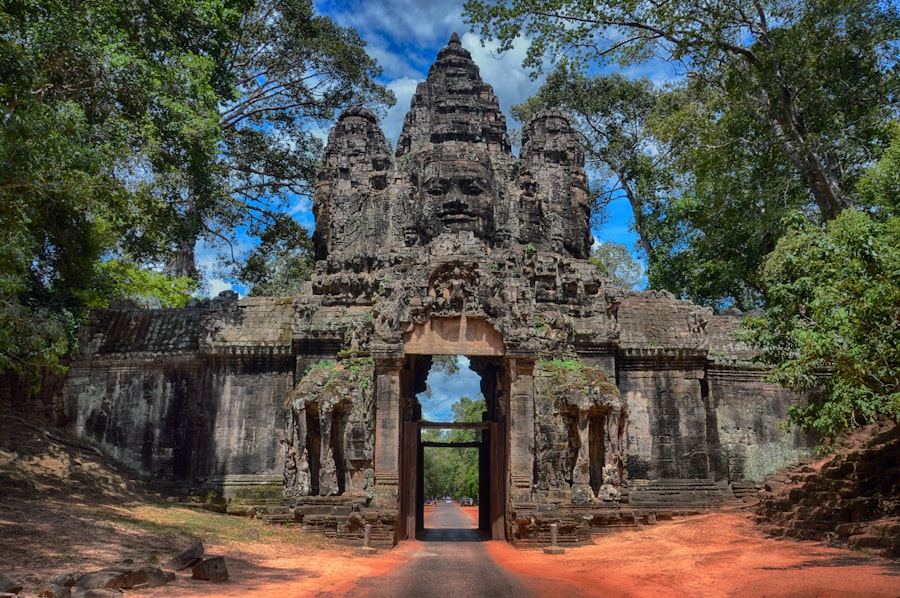
The sandstone walls of Angkor Wat are not mere decorative facades; they are intricate narratives etched in stone, offering a profound glimpse into the spiritual beliefs, historical events, and cultural values of the Khmer Empire. The bas-reliefs are a unique fusion of art and science, employing symbolic language to convey complex ideas and cosmic principles.
Mythological Narratives: Cosmic Battles and Divine Deeds
The extensive bas-reliefs adorning the galleries of Angkor Wat depict scenes from Hindu epics, most notably the Churning of the Sea of Milk, a central creation myth. This sprawling narrative visually communicates profound theological concepts about cosmic order, the struggle between good and evil, and the creation of the universe. The meticulous detail in the depiction of gods, demons, and celestial beings, alongside the precise arrangement of figures, suggests a sophisticated understanding of composition and storytelling through visual medium. Each gesture, expression, and element within these reliefs carries meaning, contributing to a grand tapestry of divine action and cosmic balance. The scientific aspect lies in the meticulous translation of abstract spiritual concepts into tangible, visually coherent forms, making them accessible and impactful to a wider populace.
Historical Chronicles: Echoes of Empire in Stone
Beyond mythological scenes, the bas-reliefs also serve as historical chronicles, depicting scenes from daily life, military campaigns, and royal processions of the Khmer Empire. These detailed portrayals offer invaluable insights into the attire, weaponry, social structures, and even the dietary habits of the period. For historians and archaeologists, these reliefs are primary source documents, providing a visual archive of a lost civilization. The precision with which these scenes are rendered, capturing the nuances of the time, suggests a remarkable ability to observe and record the world with a degree of scientific accuracy. The scientific contribution here is in the preservation of historical data through artistic representation.
Mathematical Proportions and Cosmic Geometry
The arrangement and scale of figures within the bas-reliefs are not arbitrary. Scholars have identified recurring mathematical proportions and geometric patterns that permeate the artwork. These ratios often align with those found in nature and are believed to represent cosmic harmony and divine order. The consistent application of these principles suggests a deep understanding of mathematics and its application beyond mere calculation, extending to aesthetic and spiritual dimensions. The scientific principle at play here is the use of mathematical constants and geometric forms to represent universal truths and the interconnectedness of all things.
The Quest for Durability: Materials and Construction Techniques

The remarkable state of preservation of Angkor Wat, despite its age and exposure to the elements, is a testament to the advanced understanding of materials science and construction techniques employed by its builders. The longevity of this ancient structure offers valuable lessons that continue to be studied by modern engineers and conservators.
Sandstone Quarrying and Transportation: Herculean Feats
The primary building material for Angkor Wat is sandstone, quarried from Mount Kulen, located some 50 kilometers away. The sheer effort involved in extracting, shaping, and transporting these massive stone blocks, some weighing as much as 15 tons, is difficult to comprehend without modern technology. Theories suggest the use of a combination of human labor, simple tools, and potentially leverage systems, rafts, and even oxen. The precision with which the blocks were carved and fitted, often without mortar, speaks to an advanced understanding of stone masonry and structural integrity. The scientific challenge here was to overcome the limitations of available technology through sheer ingenuity and organized labor.
Laterite Foundation and Binding Agents: A Solid Base
Beneath the sandstone structures lies a foundation of compacted laterite, a reddish-brown soil rich in iron oxides. This material, when exposed to air, hardens considerably, providing a stable and durable base for the monumental temple. Furthermore, evidence suggests the use of natural binding agents, such as plant resins and possibly a form of lime mortar, to secure the sandstone blocks. The careful selection of these materials, understanding their properties and how they would interact over time, contributes to the enduring strength of the temple. This demonstrates an empirical, albeit perhaps non-explicit, understanding of material properties akin to early materials science.
Resistance to Erosion: Facing the Tropics
The tropical climate of Cambodia, with its heavy monsoon rains and high humidity, presents significant challenges to stone structures. The builders of Angkor Wat, however, incorporated design elements that helped mitigate erosion. The slightly sloped surfaces of the temple, the effective drainage system, and the careful selection of erosion-resistant sandstone all contributed to its remarkable longevity. The meticulous detailing of architectural elements, such as the intricate carvings, has also managed to survive for centuries, a testament to the quality of the stone and the skill of the artisans in carving with a degree of detail that has endured. This speaks to an understanding of environmental factors and their impact on construction materials.
The intricate design and engineering of Angkor Wat have fascinated researchers and historians alike, shedding light on the advanced skills of ancient civilizations. A related article explores the remarkable engineering talent found in other historical contexts, such as Mexico, where skilled artisans created impressive structures that have stood the test of time. For a deeper understanding of how these ancient societies utilized their engineering prowess, you can read more in this insightful piece on Mexico’s skilled engineering talent.
The Legacy of Khmer Ingenuity: Lessons for the Future
| Aspect | Details |
|---|---|
| Construction Materials | Sandstone blocks were used for the outer walls and moat, while laterite was used for the inner structures. |
| Hydraulic System | The temple complex had an advanced hydraulic system with canals, reservoirs, and basins to manage water supply and drainage. |
| Astronomical Alignment | The layout of Angkor Wat is aligned with astronomical phenomena, such as the sunrise on the spring equinox. |
| Architectural Symmetry | The temple’s design exhibits precise geometric and architectural symmetry, reflecting advanced mathematical and engineering knowledge. |
| Religious Symbolism | The layout and carvings of Angkor Wat are rich in religious symbolism, reflecting the Hindu cosmology and mythology. |
The scientific wonders of Angkor Wat extend far beyond its physical presence. They embody a profound legacy of human ingenuity, a testament to a civilization that possessed a deep respect for the natural world and a remarkable capacity for complex problem-solving. The knowledge embedded within this ancient complex continues to inspire and inform contemporary scientific and engineering endeavors.
Architectural Philosophy: Harmony with Nature
The Khmer architects did not simply build structures; they sought to create a harmonious relationship between the built environment and the natural world. Their understanding of water management, celestial alignments, and the properties of local materials underscores a philosophy of working with nature, rather than against it. This approach, emphasizing sustainability and integration, is increasingly relevant in today’s world, facing environmental challenges. The scientific principle here is ecological integration and sustainable design.
Historical Documentation and Archaeological Significance
Angkor Wat serves as an unparalleled historical archive, offering valuable data for archaeologists, historians, and anthropologists. The meticulous study of its construction, materials, and iconography continues to yield new insights into the Khmer Empire and ancient Southeast Asian civilizations. The scientific pursuit of knowledge from such artifacts is crucial for understanding human history and cultural evolution.
Inspiration for Modern Innovation
The awe-inspiring scale, precision, and endurance of Angkor Wat continue to inspire architects, engineers, and scientists worldwide. The solutions devised by the Khmer people to overcome significant challenges provide case studies for modern problem-solving. From sustainable building practices to ancient astronomical observations, the lessons learned from Angkor Wat offer a rich tapestry of knowledge that can inform and enrich our future endeavors. The scientific value lies in its demonstration of problem-solving capabilities and its potential to inspire new solutions.

The Machine That Kept Angkor Alive
FAQs
What is Angkor Wat?
Angkor Wat is a temple complex in Cambodia and is the largest religious monument in the world. It was built in the early 12th century by the Khmer King Suryavarman II.
What is the significance of Angkor Wat?
Angkor Wat is significant for its architectural and artistic achievements, as well as its religious and cultural importance. It is a symbol of Cambodia and is a UNESCO World Heritage site.
What scientific techniques were used to build Angkor Wat?
The construction of Angkor Wat involved advanced engineering and architectural techniques, including the use of a sophisticated water management system, precise stone carving, and complex layout planning.
How did the builders of Angkor Wat achieve such precise construction?
The builders of Angkor Wat achieved precise construction through the use of advanced surveying and measurement techniques, as well as the use of sandstone blocks and a complex system of interlocking joints.
What is the current state of preservation and restoration efforts at Angkor Wat?
Efforts to preserve and restore Angkor Wat are ongoing, with the Cambodian government and international organizations working to protect the site from environmental and human threats, such as erosion, tourism, and looting.