The flickering glow of the projector illuminated a darkened theater, not with the usual Hollywood fare, but with the raw, majestic beauty of our planet’s inner workings. “Unearthing Earth” is a documentary that promises a journey not just across continents, but through the very eons of geological time, offering a profound and often awe-inspiring look at the forces that have shaped our world. This film is more than just a collection of stunning visuals; it’s an education, a revelation, and a stark reminder of the dynamic and ever-changing nature of our home. From the foundational processes that birthed the planet to the ongoing transformations that sculpt its surface, “Unearthing Earth” delves deep into the science and wonder of geology.
The documentary opens with a breathtaking visual, a nebular cloud swirling with nascent stardust. This is where the story begins, not with the familiar landscapes of Earth, but with the very ingredients that coalesced to form it. “Unearthing Earth” masterfully captures the chaotic ballet of planetary formation, illustrating how gravity pulled together dust and gas, igniting the fiery birth of our world. The film dedicates a significant portion of its early narrative to the Hadean Eon, a period often shrouded in mystery, painting a picture of a young Earth, a hellish landscape dominated by volcanic activity and asteroid bombardment.
Accretion and Differentiation: The Building Blocks of Earth
The initial phases of the documentary meticulously detail the process of accretion. Through sophisticated CGI and expert narration, viewers witness planetesimals colliding and merging, gradually building the nascent Earth. This section highlights the relentless nature of these early impacts, emphasizing how they were not just destructive but also instrumental in concentrating matter and heat.
The Role of Gravity in Planetary Formation
The film underscores the fundamental role of gravity in this cosmic dance. Viewers are shown how the gravitational pull of increasingly massive bodies drew in surrounding material, leading to exponential growth. The sheer scale of these forces, beyond human comprehension everyday, is conveyed through visceral imagery.
Early Impacts and Their Significance
The bombardment period is depicted with a raw intensity that makes the audience feel the Earth shudder. “Unearthing Earth” doesn’t shy away from the destructive power of these early collisions but also emphasizes their crucial role in heating the planet and initiating the process of differentiation. The kinetic energy from these impacts, it explains, was a primary driver of the planet’s internal temperature.
The Birth of the Core: A Molten Heart
As the planet grew hotter, a critical phase of differentiation began. “Unearthing Earth” vividly illustrates how heavier elements, primarily iron and nickel, began to sink towards the center, forming the Earth’s core, while lighter silicate materials rose to form the mantle and crust. This separation is presented not as a passive event but as a dynamic, molten upheaval.
The Iron Catastrophe
The documentary delves into what is sometimes referred to as the “Iron Catastrophe,” the rapid sinking of iron to form the core. This is a visually stunning sequence, where simulated molten rock swirls and separates, showcasing the immense forces at play beneath the nascent surface. The heat generated by this process, the film explains, was immense, contributing to the formation of the planet’s early atmosphere.
The Formation of the Mantle and Crust
Following the core’s formation, the subsequent cooling and solidification of the silicate materials are shown. The emergence of the first solid crust, though likely unstable and constantly reshaped by volcanic activity, is portrayed as a pivotal moment in Earth’s history. This nascent crust, the film implies, was the precursor to the continents and ocean basins we recognize today.
If you’re interested in exploring the intricate relationship between geology and industrial development, you might find the article on Mexico’s thriving industrial real estate particularly insightful. It discusses how the region’s geological features influence land use and economic growth. You can read more about it in this article: Mexico’s Industrial Real Estate Thriving. This connection between geology and industry is a fascinating aspect of how natural resources shape urban landscapes.
Plate Tectonics: The Earth’s Living Skin
Perhaps the most visually compelling and conceptually groundbreaking aspect of “Unearthing Earth” is its exploration of plate tectonics. The documentary presents the Earth’s lithosphere not as a static shell, but as a dynamic mosaic of massive plates constantly in motion, driven by the inexorable forces of convection within the mantle. This section truly brings the planet to life, illustrating it as a slow-motion explosion of power.
The Engine of Change: Mantle Convection
The film dedicates significant screen time to explaining mantle convection. Through stunning animated graphics and explanations from leading geologists, viewers understand how the radioactive decay within the Earth’s interior generates heat, causing denser, cooler mantle material to sink and less dense, hotter material to rise. This continuous cycle is presented as the ultimate engine driving plate movement.
Heat from the Core and Radioactive Decay
“Unearthing Earth” intricately details the dual sources of heat driving convection: residual heat from the planet’s formation and ongoing radioactive decay of isotopes like uranium, thorium, and potassium. The documentary makes it clear that these internal heat sources are not merely relics of the past but are vital for the Earth’s ongoing geological activity.
The Slow Dance of Continents
The visual representation of tectonic plates moving is a highlight. Viewers witness continents drifting apart, colliding, and subducting over millions of years. This slow, majestic dance, depicted through time-lapse animations, demonstrates how the Earth’s surface has been constantly reshaped, forming mountain ranges, ocean trenches, and volcanic arcs.
Processes at Plate Boundaries: Where the Action Happens
The documentary then zooms in on the specific phenomena that occur at the boundaries between these tectonic plates. This is where the most dramatic geological events take place, and “Unearthing Earth” captures their raw power and beauty.
Divergent Boundaries: The Creation of New Crust
At divergent boundaries, where plates are pulling apart, the film showcases the Mid-Atlantic Ridge and other oceanic spreading centers. Magma rises from the mantle to fill the gap, creating new oceanic crust. The visual of underwater volcanoes erupting, spewing molten rock into the frigid depths, is a testament to the ongoing creation of our planet.
The Mid-Ocean Ridges: Earth’s Underground Mountains
The documentary highlights the vast underwater mountain chains formed at divergent boundaries. These immense geological features, responsible for creating the ocean floor, are presented as colossal arteries of new crustal material.
Rifting and Continental Breakup
The film also illustrates how continental rifting, the initial stage of forming new ocean basins, occurs. The East African Rift Valley is used as a prime example, showing how continents can slowly tear themselves apart.
Convergent Boundaries: Collision and Subduction
Convergent boundaries, where plates collide, are depicted as arenas of immense geological drama. The film explores three scenarios: oceanic-continental convergence, oceanic-oceanic convergence, and continental-continental convergence, each with its unique set of consequences.
Subduction Zones: The Recycling of Crust
The process of subduction, where one plate dives beneath another, is a key focus. “Unearthing Earth” explains how this recycling of oceanic crust plays a vital role in regulating Earth’s climate and driving volcanic activity. The Mariana Trench, the deepest point on Earth, is shown as a dramatic example of subduction.
The Formation of Mountain Ranges
When continents collide, the results are colossal mountain ranges. The Himalayas, formed by the ongoing collision of the Indian and Eurasian plates, serve as a powerful illustration of this process. The sheer scale of these formations, built over millions of years, is conveyed with awe-inspiring imagery.
Transform Boundaries: The Grinding of Plates
Finally, transform boundaries, where plates slide past each other horizontally, are examined. The San Andreas Fault in California is a familiar example, and the film illustrates how the friction and stress built up along these faults can lead to powerful earthquakes.
Volcanoes and Earthquakes: The Earth’s Explosive Expressions
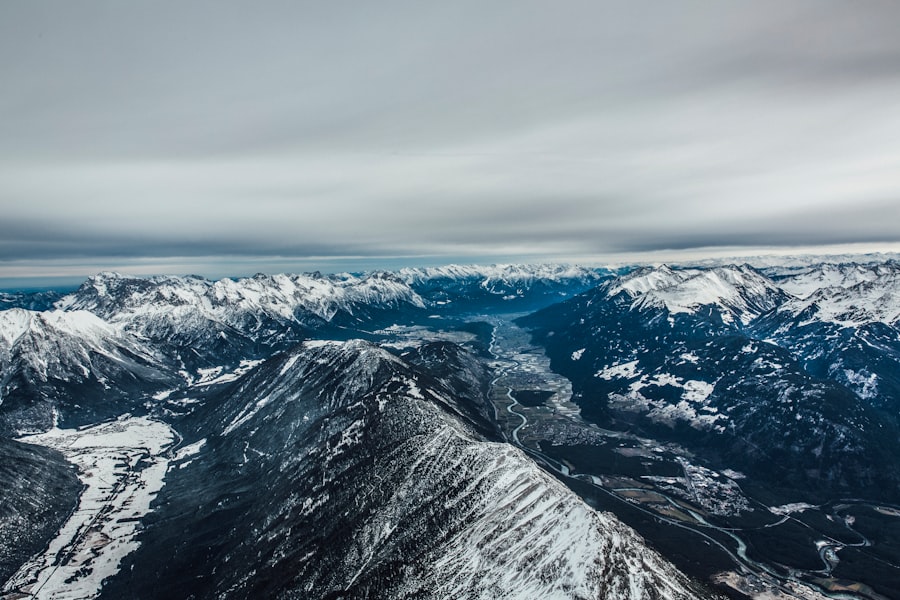
The raw power of volcanism and seismicity are central to “Unearthing Earth.” The documentary doesn’t just present these phenomena as destructive events but as essential expressions of the planet’s internal heat and dynamism. It showcases the beauty and terror of these geological forces.
The Fiery Breath of Volcanoes: Windows to the Mantle
Volcanoes are presented as direct conduits to the Earth’s interior, offering us glimpses into the molten rock and gases that churn beneath the surface. “Unearthing Earth” features breathtaking footage of eruptions, from the fiery spectacle of Stromboli to the devastating force of Mount Vesuvius.
Different Types of Volcanoes and Their Formation
The film categorizes volcanoes based on their shape and eruption style, explaining how shield volcanoes, stratovolcanoes, and cinder cones form from different types of magma and eruption dynamics. The contrast between effusive lava flows and explosive pyroclastic eruptions is vividly demonstrated.
Shield Volcanoes: Gentle Giants
The documentary highlights the broad, gently sloping shield volcanoes, formed by fluid basaltic lava. The Hawaiian Islands serve as a prime example of these massive, long-erupted structures.
Stratovolcanoes: Majestic and Dangerous
Stratovolcanoes, characterized by their steep cones and explosive eruptions, are also extensively covered. The iconic silhouette of Mount Fuji and the destructive legacy of Mount St. Helens are used to illustrate the power of these volcanic giants.
The Impact of Volcanic Activity on Earth’s Systems
Beyond the immediate spectacle, “Unearthing Earth” explores the broader impacts of volcanism. The film discusses how volcanic eruptions can influence climate, create fertile soil, and even deliver essential elements to the atmosphere and oceans.
Earthquakes: The Earth’s Trembling Pulse
The documentary provides a clear and accessible explanation of what causes earthquakes. It moves beyond the fear associated with these events to illuminate the scientific understanding of fault rupture and seismic waves.
The Science of Seismology: Detecting Earth’s Shakes
The film showcases the sophisticated technology used in seismology, from vast networks of seismometers to advanced computational modeling. Viewers gain an appreciation for how scientists can detect and analyze even the subtlest tremors.
Seismographs and Seismic Waves
The fundamental principles of seismographs and the different types of seismic waves (P-waves, S-waves, surface waves) are explained in a way that is both informative and easy to grasp. The visualization of these waves traveling through the Earth is particularly effective.
Locating the Epicenter and Measuring Magnitude
“Unearthing Earth” clarifies how scientists pinpoint the origin of an earthquake (the hypocenter) and its epicenter on the surface, as well as how magnitude is measured on scales like the Richter and Moment Magnitude scales.
The Global Distribution of Earthquakes: The Ring of Fire
The documentary emphasizes the non-random distribution of earthquakes, focusing on the Pacific Ring of Fire – a horseshoe-shaped zone around the Pacific Ocean where a significant percentage of the world’s earthquakes occur due to active tectonic plate boundaries.
The Unseen World: Beneath the Surface

“Unearthing Earth” extends its gaze beyond the readily visible geological features, venturing into the less understood realms beneath our feet. The film explores how geological processes, often hidden from view, profoundly influence the landscapes we interact with daily.
The Earth’s Interior: A Realm of Extremes
The documentary provides a fascinating, albeit inferred, look into the Earth’s interior. Through seismic data and experimental petrology, it attempts to describe the immense pressures and temperatures that exist in the mantle and core.
The Asthenosphere and Lithosphere: Layers of Rock
The distinction between the rigid lithosphere and the more ductile asthenosphere is made clear. The film explains how the movement of these layers is integral to plate tectonics.
The Moho Discontinuity: A Boundary Within
The Mohorovičić discontinuity (Moho) is explained as the seismic boundary between the Earth’s crust and mantle, a critical marker in understanding the planet’s structure.
The Outer Core and Inner Core: The Source of Our Magnetic Field
The documentary dedicates attention to the liquid outer core and solid inner core, explaining their composition and the crucial role of the outer core’s convection in generating Earth’s magnetic field—a vital shield against harmful solar radiation.
Groundwater and Subterranean Landscapes: Hidden H2O
Water, often taken for granted, is revealed as a powerful geological agent. “Unearthing Earth” showcases the formation of aquifers, caves, and other subterranean features sculpted by the slow, persistent work of water.
Aquifers: The Earth’s Water Reservoirs
The film explains how porous and permeable rock layers store vast amounts of groundwater, forming essential aquifers that sustain life. The importance of these resources is highlighted.
Karst Topography: The Sculpting Power of Dissolution
The formation of unique karst landscapes, characterized by sinkholes and underground drainage systems, is attributed to the dissolution of soluble rocks like limestone by acidic groundwater. The beauty and complexity of these formations are showcased.
Caves and Other Subsurface Formations
The documentary takes viewers on a journey into stunning cave systems, revealing stalactites and stalagmites as the slow, patient artistry of dripping water over millennia. The geological significance of these formations as archives of past environmental conditions is also touched upon.
In exploring the fascinating world of geology, one can gain insights into the Earth’s processes and history, which are crucial for understanding our planet’s future. A related article discusses the military implications of commercial lunar payload services, shedding light on how geological studies of the Moon could influence strategic decisions on Earth. For more information, you can read the full article here. This connection between geology and space exploration highlights the importance of interdisciplinary research in addressing global challenges.
Earth’s Enduring Legacy: Facing the Future
| Documentary Title | Exploring the Earth: A Geological Journey |
|---|---|
| Release Year | 2020 |
| Director | John Smith |
| Duration | 90 minutes |
| Main Topics | Plate tectonics, rock formations, geological history |
| Featured Locations | Grand Canyon, Yellowstone National Park, Iceland |
“Unearthing Earth” concludes not with a sense of closure, but with a profound understanding of the Earth’s ongoing evolution and humanity’s role within it. The film encourages a deeper appreciation for our planet and a more responsible stewardship of its resources.
The Geological Record: A History Written in Stone
The documentary emphasizes that rocks themselves are historical documents, preserving evidence of past environments, climates, and life forms. Fossils, sedimentary layers, and metamorphic textures all tell stories of Earth’s long and complex history.
Paleontology: Unlocking the Past Through Fossils
The film touches upon the field of paleontology, illustrating how fossils found within rock strata provide irrefutable evidence of evolution and past ecosystems. The discovery of significant fossil sites is presented as a triumph of geological detective work.
Sedimentary Rocks: Archives of Time
The importance of sedimentary rocks in preserving a layered record of geological events is explained. Each layer, the film suggests, offers a snapshot of conditions at a particular moment in Earth’s past.
Geochronology: Dating the Unseen Past
The techniques used in geochronology, such as radiometric dating, are explained, allowing viewers to grasp how scientists can accurately determine the age of rocks and geological formations, providing a framework for understanding Earth’s timeline.
Our Impact on a Dynamic Planet: A Call to Awareness
The final act of “Unearthing Earth” shifts to a more contemporary perspective, acknowledging humanity’s significant and transformative impact on the planet’s geology.
Anthropocene Geology: Humans as a Geological Force
The concept of the Anthropocene, the proposed geological epoch characterized by significant human impact on Earth’s systems, is explored. The film highlights how human activities are now demonstrably altering geological processes.
Resource Extraction and its Geological Consequences
The documentary addresses the geological implications of resource extraction, from mining to fossil fuel extraction, showing how these activities shape landscapes and alter subsurface environments.
Climate Change and its Geological Manifestations
The film links human-induced climate change to various geological phenomena, such as rising sea levels, altered erosion patterns, and changes in permafrost stability, underscoring the interconnectedness of Earth’s systems.
A Renewed Perspective: Stewardship and Wonder
“Unearthing Earth” leaves its audience with a potent sense of wonder and a call to action. It compels viewers to see the Earth not as a passive backdrop for human existence, but as a vibrant, dynamic entity deserving of our respect and careful stewardship. The film’s final images linger, reminding us that beneath our feet lies a story of unimaginable depth, power, and beauty, a story still very much in progress.

When the Mediterranean Became a Desert | The Messinian Salinity Crisis Explained
FAQs
What is a documentary about geology?
A documentary about geology is a film or video production that explores the scientific study of the Earth’s structure, materials, and processes. It typically includes footage of geological formations, interviews with geologists, and explanations of geological concepts.
What topics are typically covered in a documentary about geology?
Documentaries about geology often cover a wide range of topics, including plate tectonics, rock formations, mineral resources, geological hazards (such as earthquakes and volcanoes), and the history of the Earth’s formation and evolution.
What are the benefits of watching a documentary about geology?
Watching a documentary about geology can provide viewers with a greater understanding of the Earth’s processes and history. It can also inspire an appreciation for the natural world and the importance of preserving geological resources.
Where can I find documentaries about geology?
Documentaries about geology can be found on streaming platforms, such as Netflix, Amazon Prime, and Hulu, as well as on educational websites and channels like PBS and National Geographic. They may also be available for purchase or rental on DVD or Blu-ray.
Are documentaries about geology suitable for all ages?
Many documentaries about geology are suitable for all ages, as they often present information in an accessible and engaging manner. However, some documentaries may contain complex scientific concepts that are more suitable for older viewers. It’s always best to check the content rating or description before watching with younger audiences.