
Obsidian, a volcanic glass forged in the fiery heart of the earth, has captivated human imagination and facilitated centuries of trade and cultural exchange. Its sharp edges, lustrous sheen, and vibrant colors made it a prized commodity for toolmaking, weaponry, ornaments, and ritual objects across ancient civilizations. Tracing the pathways of obsidian from its geological origins to its distant destinations reveals a complex network of trade routes that shaped economies, fostered innovation, and connected diverse peoples for millennia. This exploration delves into the fascinating world of ancient obsidian trade, uncovering its significance, the methods of its acquisition and transport, and the lasting impact it had on the societies that depended upon it.
For early humans, the discovery of obsidian represented a significant technological leap. Its unique properties offered a distinct advantage over other available materials. This section examines the inherent qualities of obsidian that made it so highly sought after throughout the ancient world.
Unmatched Sharpness and Workability
###
Obsidian’s glassy structure, characterized by its amorphous atomic arrangement, results in a conchoidal fracture. When struck with a harder stone, it breaks in a predictable, curved manner, producing incredibly thin, sharp edges. These edges could rival or even surpass the finest steel blades, making obsidian an ideal material for cutting, scraping, and perforating. This exceptional sharpness was crucial for tasks ranging from butchering animals and preparing hides to woodworking and intricate crafting. The ability to knap obsidian into precise forms, creating sophisticated projectile points, knives, scrapers, and awls, was a testament to ancient artisans’ skill and the material’s inherent workability.
Aesthetic Appeal and Symbolic Significance
###
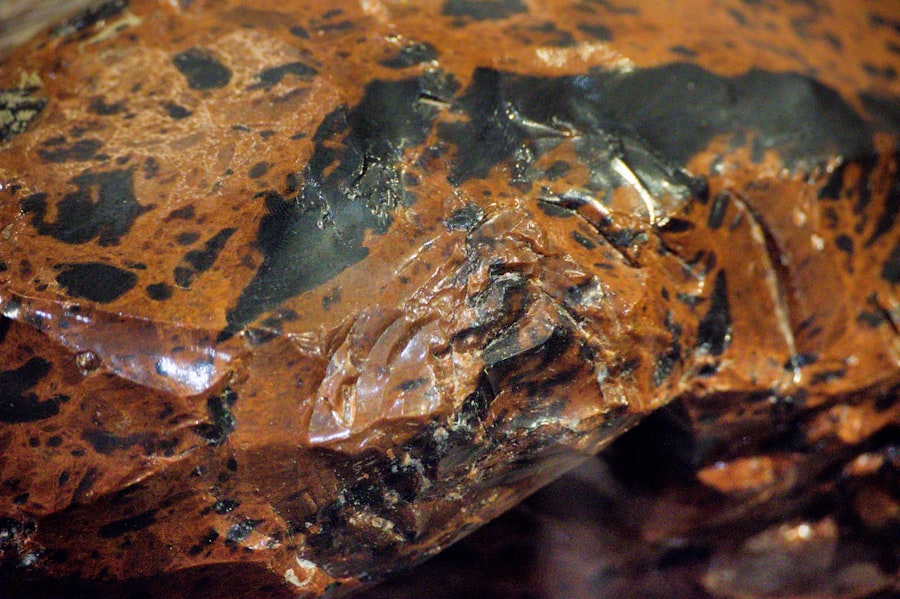
Beyond its practical utility, obsidian also possessed a remarkable aesthetic appeal. Its glassy luster, ranging from deep black to shades of brown, green, red, and even rainbow hues, made it attractive for decorative purposes. Polished obsidian objects were used to create mirrors, adornments, and intricate carvings that held both personal and societal significance. Furthermore, the rarity and exotic nature of many obsidian sources imbued it with symbolic meaning. It was often associated with deities, the underworld, or magical properties, appearing in religious rituals, funerary practices, and as amulets believed to ward off evil or bestow good fortune. This dual appeal – functional and symbolic – ensured obsidian’s enduring desirability.
Material Properties for Specific Applications
###
Different types of obsidian, varying in their mineral composition and formation conditions, offered distinct properties suited for particular applications. For instance, some obsidian varieties were known for their strength and durability, making them preferred for projectile points that needed to withstand significant impact. Others were prized for their fine grain and uniform texture, ideal for creating delicate carvings and ornaments. The ability of ancient peoples to identify, select, and source these specific types of obsidian for their intended uses speaks to a deep understanding of the material and its geological provenance.
The ancient trade of obsidian, a volcanic glass prized for its sharp edges and beauty, played a significant role in various cultures, particularly in the context of tools and trade networks. For a deeper understanding of how ancient civilizations navigated and mapped their world, including the trade routes that may have facilitated the exchange of materials like obsidian, you can explore the article on Ottoman cartography. This article provides insights into the geographical knowledge of the time and its implications for trade. You can read more about it here: Piri Reis and Ottoman Cartography: Mapping the World.
Mapping the Sources: The Geological Origins of Prized Obsidian
The journey of obsidian trade began at its source – the active or recently active volcanic regions where molten lava cooled rapidly. Identifying these geological hotspots is fundamental to understanding the patterns of ancient trade. This section explores some of the most significant obsidian sources and their geological context.
Anatolian Treasures: Çatalhöyük and the Obsidian of Eastern Turkey
###
The obsidian found in eastern Anatolia, particularly from sources like those near Bingöl, Nemrut Dağ, and Kulo, played a pivotal role in the Neolithic and Chalcolithic periods of the Near East. This region boasts some of the earliest evidence of obsidian exploitation and long-distance trade. Archaeological sites like Çatalhöyük, a large Neolithic settlement in southern Turkey, demonstrate an extensive reliance on obsidian tools, with material often sourced hundreds of kilometers away. The presence of this obsidian at such early dates indicates sophisticated social organization and established trade networks even before the advent of widespread agriculture. The quality and abundance of Anatolian obsidian made it a cornerstone of economic and technological development in the region for millennia.
Aegean Islands and the Mediterranean Network
###
Several Aegean islands, notably Melos (Milos) and the Cyclades, were crucial sources of obsidian in the prehistoric Mediterranean. Melos, in particular, was a major producer, supplying obsidian to mainland Greece, Crete, and beyond. The volcanic nature of these islands provided readily accessible obsidian deposits that were exploited from the Paleolithic period onwards. The trade in Melian obsidian was instrumental in the development of early Aegean civilizations, facilitating the production of sophisticated tools and contributing to the growth of maritime trade networks. The distribution of Melian obsidian provides a tangible record of interactions between island and mainland communities.
Italian Peninsula and the Tyrrhenian Sea Trade
###
In the western Mediterranean, the islands of Sardinia and the Lipari Islands (Stromboli, Vulcano, and Palmarola) were prominent sources of obsidian. These islands, with their active volcanic geology, yielded obsidian that was traded extensively throughout Italy, Sicily, and North Africa. The abundance and quality of obsidian from these sources contributed to the development of early cultures in these regions. The widespread dispersal of obsidian from these sources offers direct evidence of early maritime capabilities and the exchange of goods across significant distances, predating many later historical developments.
Mesoamerican Volcanic Landscapes: The Sources of the Americas
###
In the Americas, the volcanic arc stretching along the western part of the continent provided numerous obsidian sources. In Mesoamerica, key obsidian deposits were located in regions such as Puebla (e.g., Teotihuacan, Oyameles, Tecali), Hidalgo (e.g., Pachuca), and Jalisco. These sources were vital to the development of complex societies in the region, including the Maya, Aztec, and Teotihuacano civilizations. The control and exploitation of these obsidian quarries were often linked to political power and economic prosperity, influencing the rise and fall of empires.
The Arteries of Exchange: Methods of Obsidian Transport
Once quarried, obsidian had to be transported from its source to distant markets. This process involved various methods, reflecting the technological capabilities, geographical challenges, and social structures of the peoples involved. This section examines the diverse means by which obsidian traversed ancient landscapes.
Overland Journeys: Footpaths, Pack Animals, and Human Carriers
###
For journeys across land, obsidian was transported along established networks of footpaths and, as domestication advanced, by pack animals such as donkeys and llamas in the Americas. Human carriers played a vital role, especially in the early stages before widespread animal domestication. Travelers would carry nodules of obsidian, either in their raw form or as pre-shaped tools, for trade or personal use. The arduous nature of these overland routes often meant that obsidian was a high-value commodity, traded in smaller quantities or at select trading posts. The wear patterns on ancient paths and the discovery of obsidian tools far from their sources provide evidence of these long-distance treks.
Maritime Routes: Ships, Rafts, and Coastal Navigation
###
The development of seafaring technologies revolutionized obsidian trade, allowing for the transport of larger quantities of material over greater distances. Coastal navigation, using a variety of vessels from simple rafts to more sophisticated sailing ships, was crucial for the trade of obsidian originating from islands and coastal regions. The Mediterranean and the Aegean Seas were prime examples of this, with Melian obsidian being transported by sea to mainland Greece and other island communities. Similarly, in the Americas, coastal waters and major river systems served as conduits for obsidian transport, connecting inland quarries to coastal settlements and facilitating trade along extensive shorelines.
The Role of Intermediaries and Trading Centers
###
Obsidian trade was rarely a direct producer-to-consumer transaction. Instead, it often involved a complex web of intermediaries and strategically located trading centers. Merchants, caravaneers, and mariners would acquire obsidian at its source or at localized exchange points, transporting it to regional hubs where it would be traded with other intermediaries or directly with consumers. These trading centers, often thriving settlements or fortified outposts, served as crucial nodes in the obsidian supply chain, facilitating the exchange of not only obsidian but also other goods and ideas. The archaeological evidence from these centers, including the presence of obsidian from multiple sources and the remains of tools and raw materials, attests to their importance.
Beyond the Stone: The Socioeconomic and Cultural Impact of Obsidian Trade
The movement of obsidian was not merely a matter of material exchange; it had profound and far-reaching socioeconomic and cultural implications for the societies involved. This section explores the broader impact of obsidian trade on ancient life.
Economic Specialization and Wealth Accumulation
###
The demand for obsidian spurred economic specialization. Certain communities became adept at quarrying, knapping, and trading obsidian, developing unique skills and accumulating wealth through their expertise. The control over access to valuable obsidian sources could also translate into significant political and economic power for ruling elites. As obsidian became a currency of sorts, its trade facilitated the accumulation of wealth and the development of more complex economic systems. The presence of obsidian in prestigious burials or as offerings in temples further underscores its economic and social value.
Technological Diffusion and Innovation
###
The widespread distribution of obsidian facilitated the diffusion of both the material itself and the technologies associated with its use. As obsidian tools and weapons moved across regions, their design and effectiveness influenced local toolmaking traditions. Artisans learned new techniques for knapping, shaping, and finishing obsidian, leading to innovation and the development of more sophisticated tools and weaponry. This exchange of technological knowledge was a crucial driver of progress in ancient societies, enhancing their ability to hunt, farm, build, and defend themselves.
Cultural Exchange and Intergroup Relations
###
The obsidian trade acted as a powerful catalyst for cultural exchange and the formation of intergroup relations. As traders traveled along established routes, they carried not only obsidian but also stories, ideas, customs, and belief systems. These interactions fostered understanding, alliances, and sometimes conflict between different communities. The shared use of obsidian, even from distant sources, could create a sense of connection and cultural familiarity. Examining the distribution of specific obsidian types allows archaeologists to track ancient migration patterns, trade partnerships, and the extent of cultural diffusion across vast geographical areas.
The ancient trade of obsidian has long fascinated archaeologists, revealing insights into the complex social networks of early civilizations. Recent studies have uncovered new evidence about how this volcanic glass was not only valued for its utility in tool-making but also played a significant role in trade routes across vast distances. For those interested in exploring more about these intriguing discoveries, you can read an insightful article that delves into various ancient mysteries and the latest findings in the field. Check it out here.
The Legacy of Obsidian: Echoes in the Archaeological Record
| Region | Primary Source | Destination | Trade Route |
|---|---|---|---|
| Anatolia | Cappadocia | Mesopotamia | Karamagara |
| Mesoamerica | Central Mexico | Maya region | Long-distance maritime trade |
| East Mediterranean | Central Anatolia | Cyprus | Maritime trade |
The enduring presence of obsidian in the archaeological record provides invaluable insights into the lives of ancient peoples. Tracing its origin and dispersal allows for a deeper understanding of their social structures, economic systems, technological achievements, and cultural connections. This section reflects on the lasting legacy of obsidian trade.
Archaeological Evidence: Provenance Studies and Artifact Analysis
###
Modern scientific techniques, such as X-ray fluorescence (XRF) and instrumental neutron activation analysis (INAA), have revolutionized our ability to trace the provenance of obsidian artifacts. By analyzing the unique chemical composition of obsidian from different geological sources, archaeologists can identify the origin of artifacts found at distant sites. These provenance studies are crucial for reconstructing ancient trade networks, identifying trading partners, and understanding the spatial extent of obsidian distribution. The detailed analysis of obsidian tools, including their morphology, wear patterns, and manufacturing debris, further illuminates the skill and practices of ancient knappers and the functional use of these objects.
Reconstructing Ancient Networks and Societies
###
By mapping the distribution of obsidian, archaeologists can reconstruct complex ancient trade networks that spanned continents and oceans. These networks reveal the intricate connections that bound together seemingly disparate communities and highlight the importance of long-distance exchange in shaping human history. The study of obsidian trade is not merely about the exchange of a material; it is about understanding the human agency, social organization, and economic drivers that underpinned these extensive interactions. It sheds light on how societies developed, adapted, and interacted, offering a tangible link to the past.
The Enduring Allure of the Black Mirror
###
Even after the advent of metals and their widespread use, obsidian continued to hold a special place in certain cultures, particularly for its aesthetic and ritualistic qualities. Its legacy as a material prized for its sharpness, beauty, and symbolic power continues to resonate. The exploration of ancient obsidian trade routes is an ongoing endeavor, continually revealing new layers of complexity and understanding about the ingenuity and interconnectedness of our ancient ancestors. The “black mirror” of obsidian reflects not only the ancient world but also the enduring human drive for innovation, connection, and the pursuit of valuable resources.

How Volcanic Glass Solved a 10,000-Year-Old Mystery
FAQs
What is obsidian?
Obsidian is a naturally occurring volcanic glass formed as an extrusive igneous rock. It is usually black in color, but can also be found in various shades of brown, gray, and green.
Where was obsidian commonly found in ancient times?
Obsidian was commonly found in areas with volcanic activity, such as the Mediterranean region, the Near East, and Mesoamerica. It was also found in parts of the United States, including the Pacific Northwest and the Southwest.
How was obsidian used in ancient times?
Obsidian was used by ancient civilizations for making tools, weapons, and decorative items. Its sharp edges made it ideal for cutting and piercing, and it was highly valued for its ability to hold a sharp edge.
How was obsidian traded in ancient times?
Obsidian was traded over long distances through established trade routes and networks. It was often exchanged for other valuable goods, such as metals, shells, and food items.
What impact did ancient obsidian trade have on civilizations?
Ancient obsidian trade played a significant role in shaping the social, economic, and cultural dynamics of civilizations. It facilitated the exchange of goods, ideas, and technologies, and contributed to the development of complex societies and trade networks.