Archaeology, often perceived as a romantic pursuit of ancient treasures or the dramatic unearthing of mummies, is, at its core, a rigorous science. It is the systematic, analytical, and evidence-based study of humanity’s past, not through written histories alone (which are often biased or incomplete), but through the tangible remnants left behind: the broken pottery shards, the discarded tools, the architectural foundations, the skeletal remains, and the microscopic traces of past environments. This discipline employs a sophisticated array of scientific techniques and theoretical frameworks to reconstruct the lives, societies, belief systems, and behaviors of people who lived long before written records. Uncovering the science of archaeology is to delve into the meticulous methodologies, the cutting-edge technologies, and the complex interpretations that transform humble dirt into invaluable historical narratives.
The very act of digging in archaeology is not a haphazard affair. It is a highly controlled process guided by scientific principles and a deep understanding of the archaeological record. The spatial and temporal relationships between artifacts and features are paramount, and the concept of stratigraphy is the bedrock upon which this understanding is built.
Understanding Stratigraphy: A Layered History
Stratigraphy, borrowed from geology, is the study of the layers of soil and rock, called strata, that accumulate over time. In an archaeological context, these strata represent successive periods of human occupation, deposition, or natural deposition. The fundamental principle is the Law of Superposition, which states that in an undisturbed sequence of strata, the oldest layers are at the bottom, and the youngest are at the top. Archaeologists painstakingly excavate these layers in reverse order of their deposition, treating each stratum as a discrete unit of time and cultural activity.
The Excavation Process: More Than Just Digging
Excavation is a destructive process, and as such, it must be conducted with the utmost precision and documentation. Before a trowel even touches the ground, extensive survey work is undertaken, often employing remote sensing techniques to identify potential sites and features. Once a site is selected for excavation, a grid system is established to meticulously record the precise location (both horizontal and vertical) of every artifact, ecofact, and feature uncovered. This spatial data is crucial for understanding the organization of past settlements, the function of different areas, and the relationships between objects found together.
Documentation: The Archaeologist’s Pen and Paper (and Digital Tools)
Every brushstroke, every shovel of soil, every artifact recovered is meticulously documented. Field notes, drawings, photographs, and increasingly, 3D scans, all contribute to a comprehensive record of the excavation. This documentary evidence allows archaeologists to reconstruct the context of discovery, analyze spatial patterns, and interpret the findings long after the dig has concluded. The goal is to preserve as much information as possible, effectively creating a virtual replica of the site that can be studied indefinitely.
Recovering Artifacts and Ecofacts: The Tangible Footprints of the Past
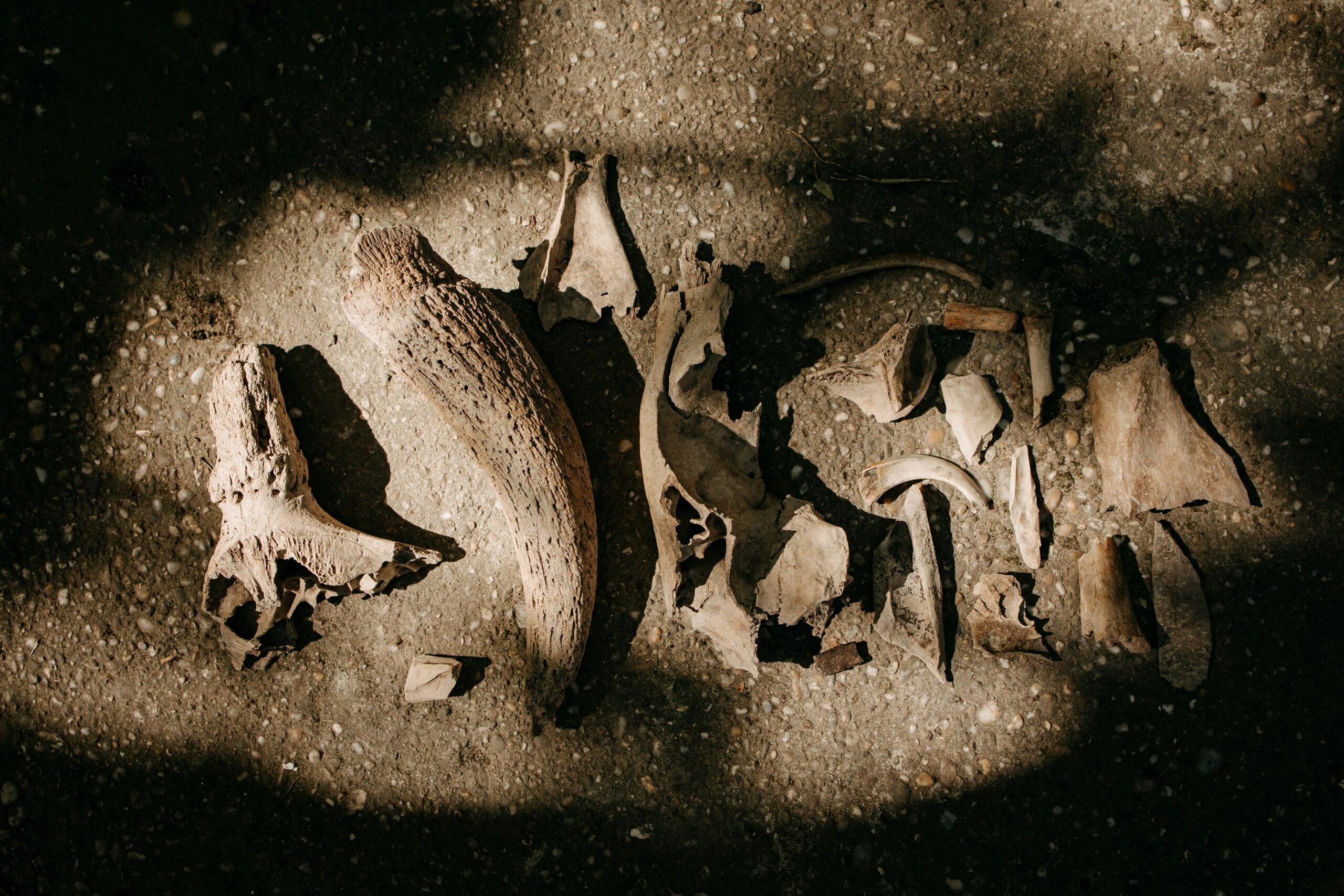
The artifacts – human-made objects such as tools, pottery, jewelry, and weapons – are the most visible remains of past cultures. However, equally important are the ecofacts: natural objects that provide information about the past environment and human subsistence strategies. These include animal bones, plant remains (seeds, pollen, charcoal), and soil samples.
Artifact Analysis: Unlocking Their Secrets
The analysis of artifacts goes far beyond simple identification and cataloging. Archaeologists examine the material composition of artifacts to determine their origin and manufacturing techniques. The wear patterns on tools can reveal their function, while the decorative motifs on pottery can offer insights into artistic traditions and cultural affiliations. Typology, the classification of artifacts into types based on shared characteristics, helps archaeologists to establish chronological sequences and understand cultural change over time.
Ecofact Analysis: Reconstructing Past Lifeways
The study of ecofacts is vital for understanding how past populations interacted with their environment. Analysis of animal bones can reveal dietary habits, hunting strategies, and domestication practices. The identification of plant remains can shed light on agricultural techniques, the use of wild resources, and environmental conditions. These seemingly mundane objects provide invaluable data for reconstructing the daily lives, subsistence patterns, and resource management strategies of ancient peoples.
The science behind archaeology is a fascinating field that intertwines various disciplines to uncover the past. For those interested in exploring how archaeological practices intersect with contemporary geopolitical issues, a related article titled “Navigating Contested Territories: A Complex Geopolitical Landscape” provides valuable insights. You can read it here: Navigating Contested Territories. This article delves into the challenges faced by archaeologists working in areas with contested histories, highlighting the importance of understanding the political context in which archaeological work is conducted.
Scientific Methods in Archaeological Dating: Anchoring the Past in Time
One of the most fundamental challenges in archaeology is determining the age of sites and artifacts. Without a chronological framework, it is impossible to understand the sequence of events, trace cultural developments, or compare different societies. Fortunately, archaeology employs a range of scientific dating methods to achieve this.
Radiocarbon Dating: The Gold Standard for Organic Materials
Radiocarbon dating, also known as Carbon-14 dating, is a widely used technique for dating organic materials. This method relies on the radioactive decay of Carbon-14, an isotope of carbon that is naturally present in the atmosphere and absorbed by living organisms. When an organism dies, it ceases to absorb Carbon-14, and the isotope begins to decay at a known rate, with a half-life of approximately 5,730 years. By measuring the amount of Carbon-14 remaining in a sample, archaeologists can calculate how long ago the organism died.
Limitations and Applications of Radiocarbon Dating
While incredibly powerful, radiocarbon dating has its limitations. It is only applicable to organic materials (wood, charcoal, bone, textiles) and is most effective for samples dating between 50,000 and 75,000 years old. Variations in atmospheric Carbon-14 levels over time can also introduce inaccuracies, necessitating calibration curves to correct the dates. Despite these limitations, radiocarbon dating has revolutionized our understanding of prehistory, providing absolute dates for many key events and developments.
Dendrochronology: The Tree-Ring Clock
Dendrochronology, or tree-ring dating, is another precise method for dating wooden artifacts and structures. Trees produce annual growth rings, with each ring representing one year. Wider rings typically indicate favorable growing conditions with ample rainfall, while narrower rings suggest drier years. By matching the patterns of tree rings from an archaeological sample with a continuously dated master chronology for a specific region, archaeologists can determine the exact year a tree was felled.
The Importance of Master Chronologies
The success of dendrochronology hinges on the availability of long and well-dated master chronologies, which are built by cross-dating overlapping ring sequences from living trees, dead trees, and archaeological wood. This meticulous process allows for the creation of chronologies that can extend back thousands of years in some regions, providing highly accurate dating for archaeological sites that contain well-preserved wood.
Potassium-Argon and Other Isotopic Dating Methods
For dating much older geological materials and associated archaeological finds, techniques like potassium-argon (K-Ar) dating are employed. This method is used to date volcanic rocks and minerals that contain radioactive potassium-40, which decays into argon-40 at a known rate. K-Ar dating is particularly useful for dating early hominin sites in East Africa, where volcanic ash layers are common. Other isotopic dating methods, such as thermoluminescence and optically stimulated luminescence (OSL), are used to date sediments and fired ceramics, providing important chronological markers for sites lacking organic materials.
The Power of Scientific Analysis: Revealing Hidden Histories

Beyond dating, a panoply of scientific techniques allows archaeologists to glean information from artifacts and samples that would otherwise remain invisible. These methods reconstruct past environments, diets, technologies, and even human health.
Paleobotany and Paleozoology: Echoes of Ancient Ecosystems
The study of fossilized plant remains (paleobotany) and animal remains (paleozoology) provides crucial insights into past environments and human interactions with them. Analyzing pollen grains preserved in sediments can reveal past vegetation patterns and climatic conditions. The identification of seeds and fruits can inform us about ancient diets and agricultural practices. Similarly, the analysis of animal bones can indicate hunting strategies, the presence of domesticated animals, and the types of environments exploited by past populations.
Macroscopic and Microscopic Examination of Remains
Botanical and zoological analyses can occur at both macroscopic and microscopic levels. Macroscopic examination involves identifying larger plant parts like seeds and nuts or individual bones. Microscopic examination, however, delves into details such as phytoliths (silica structures from plants) or microfauna (small invertebrates), offering even finer-grained information about past environments and diet.
Isotope Analysis: Tracing Movement and Diet
Stable isotope analysis, particularly of carbon, nitrogen, oxygen, and strontium, is a powerful tool for reconstructing past diets and human migration patterns. By analyzing the ratio of different isotopes in skeletal remains or teeth, archaeologists can infer the types of food consumed (e.g., a diet rich in marine resources versus terrestrial plants) and the geographic origins of individuals. Strontium isotope ratios, for example, vary geographically in bedrock, and therefore, can act as a “geochemical fingerprint,” indicating where a person spent their formative years.
Reconstructing Past Diets and Mobility
The isotopic signatures in human bones and teeth are directly influenced by the food and water consumed during an individual’s lifetime. This allows researchers to reconstruct long-term dietary patterns. Furthermore, because bone and teeth incorporate elements from the local environment, their isotopic composition can reveal the geographic areas an individual inhabited, offering insights into migration, trade networks, and social mobility in past societies.
Material Science and Artifact Analysis: Unraveling Manufacturing and Trade
Modern material science techniques provide powerful tools for analyzing the composition and origin of artifacts. Petrographic analysis of ceramics, for instance, involves examining thin sections of pottery under a microscope to identify the types of clay and temper used, which can often be traced back to specific geological sources. X-ray fluorescence (XRF) and mass spectrometry can determine the elemental composition of metals, revealing their ore sources and manufacturing techniques.
Provenance Studies: Mapping Ancient Trade Routes
By understanding the raw materials used to create artifacts, archaeologists can undertake provenance studies, which aim to determine the origin of materials and the routes through which they were traded. This information is invaluable for reconstructing ancient economic systems, understanding the extent of trade networks, and identifying cultural exchange between different groups.
Reconstructing the Past: Combining Science with Theory

While scientific methods provide the raw data, interpreting that data and transforming it into meaningful narratives about the past requires theoretical frameworks and an understanding of human behavior. Archaeology is not merely a collection of scientific techniques; it is a discipline that grapples with complex questions about how and why past societies functioned as they did.
Archaeological Theory: Frameworks for Interpretation
Numerous theoretical approaches have shaped archaeological interpretation. Processual archaeology, for example, emphasizes objectivity, scientific rigor, and the search for universal laws governing human behavior. Post-processual archaeology, on the other hand, acknowledges the subjective nature of interpretation and focuses on understanding cultural diversity, agency, and the meanings embedded in material culture.
Understanding Human Agency and Social Representation
Modern archaeological theory often moves beyond purely functional explanations to consider the role of individual agency, symbolic representation, and power dynamics in shaping the material record. This allows for a more nuanced understanding of why people made certain choices, how they expressed their identities, and how social structures were maintained or challenged.
Bioarchaeology: Unveiling Human Lives Through Skeletal Remains
Bioarchaeology, the study of human skeletal remains, is a crucial subfield that bridges the gap between science and the understanding of individual lives. Skeletal analysis can reveal a wealth of information about an individual’s age at death, sex, health status, diet, activity patterns, and even cause of death.
Assessing Health, Diet, and Disease in Past Populations
By examining skeletal elements for signs of disease, trauma, nutritional deficiencies, and changes related to physical activity, bioarchaeologists can reconstruct the health profiles of past populations. This data provides insights into the impact of environmental conditions, subsistence strategies, and social organization on human well-being.
Forensic Archaeology: Applying Archaeological Methods to Modern Problems
The scientific principles and precise methodologies honed through historical archaeology are increasingly being applied to contemporary issues through forensic archaeology. Forensic archaeologists work alongside law enforcement to locate and excavate clandestine graves, identify human remains, and assist in criminal investigations by applying the same meticulous techniques used to uncover ancient secrets to solve modern mysteries. This demonstrates the enduring relevance and scientific applicability of archaeological methods.
The fascinating intersection of science and archaeology is explored in various articles that delve into the methodologies used to uncover ancient civilizations. For instance, a recent piece discusses the implications of commercial lunar payload services, which may seem unrelated at first glance, but actually highlights the technological advancements that can also benefit archaeological research on Earth. You can read more about this intriguing connection in the article on military implications found here. Understanding how modern technology influences archaeological practices can provide deeper insights into our past.
The Future of Archaeology: Technology and Interdisciplinary Collaboration
| Science behind Archaeology | Metrics |
|---|---|
| Carbon Dating | Age determination of organic materials |
| Stratigraphy | Study of rock layers and the sequence of events they reflect |
| Remote Sensing | Use of aerial photography and satellite imagery to identify archaeological sites |
| Geophysical Survey | Mapping of subsurface features using ground-penetrating radar and magnetometry |
| Artifact Analysis | Examination of objects to understand past human behavior and culture |
The future of archaeology is inextricably linked to advancements in technology and an increasing emphasis on interdisciplinary collaboration. As new tools and techniques emerge, the potential to uncover even more nuanced and detailed understandings of the human past expands exponentially.
Remote Sensing and Non-Invasive Techniques: Seeing Without Disturbing
Technologies like LiDAR (Light Detection and Ranging) and sophisticated geophysical survey methods (magnetometry, ground-penetrating radar) allow archaeologists to map and identify subsurface features and archaeological sites without the need for extensive excavation. This is not only more efficient but also helps to preserve sites for future study.
Digital Archaeology and Big Data
The explosion of digital data in archaeology, from 3D models of artifacts and sites to large-scale survey datasets, is giving rise to “digital archaeology.” This field focuses on developing new methods for managing, analyzing, and visualizing this vast amount of information, often employing big data analytics and computational modeling.
DNA Analysis and Ancient Genomics: Unlocking Genetic Histories
The extraction and analysis of ancient DNA (aDNA) have revolutionized our understanding of human migration, population genetics, and evolutionary history. By sequencing the genomes of ancient individuals, archaeologists can trace ancestral lineages, understand population movements, and even identify the genetic basis for certain traits or diseases.
Reconstructing Human Ancestry and Population Dynamics
Ancient genomics allows for the reconstruction of complex population dynamics, revealing patterns of admixture, divergence, and migration over vast timescales. This provides empirical evidence to corroborate or challenge existing hypotheses about human history and our place in the biological world.
Interdisciplinary Collaboration: A Holistic Approach to the Past
Archaeology rarely exists in a vacuum. Modern archaeological research thrives on collaboration with specialists from a wide range of disciplines, including anthropology, biology, geology, chemistry, physics, linguistics, and computer science. This interdisciplinary approach allows for a more holistic and comprehensive understanding of the past, where scientific data is integrated with theoretical insights to address complex research questions. The science of archaeology, therefore, is not a singular entity but a dynamic and evolving field, constantly pushing the boundaries of our knowledge about ourselves and our journey through time.

How Volcanic Glass Solved a 10,000-Year-Old Mystery
FAQs
What is the science behind archaeology?
Archaeology is the scientific study of human history and prehistory through the excavation and analysis of material culture. It involves the study of artifacts, architecture, biofacts, and cultural landscapes to understand and interpret the past.
How does archaeology use scientific methods?
Archaeology uses a variety of scientific methods such as radiocarbon dating, stratigraphy, remote sensing, and DNA analysis to analyze and interpret archaeological findings. These methods help archaeologists determine the age, origin, and cultural significance of artifacts and sites.
What role does science play in understanding ancient civilizations?
Science plays a crucial role in understanding ancient civilizations by providing the tools and techniques to analyze and interpret archaeological evidence. Through scientific methods, archaeologists can reconstruct ancient environments, study human evolution, and understand the technological advancements of past societies.
How does archaeology contribute to our understanding of human evolution?
Archaeology contributes to our understanding of human evolution by uncovering and analyzing ancient artifacts, fossils, and cultural remains. By studying these findings, archaeologists can trace the development of human societies, behaviors, and technologies over time.
What are some examples of scientific breakthroughs in archaeology?
Some examples of scientific breakthroughs in archaeology include the discovery of the Rosetta Stone, the use of DNA analysis to study ancient human migrations, the development of ground-penetrating radar for site mapping, and the use of isotopic analysis to study ancient diets and trade networks. These breakthroughs have significantly advanced our understanding of the past.