The air, thick with the scent of damp earth and something ancient, hummed with a quiet intensity. Archaeologists, their faces etched with a mixture of concentration and awe, moved with deliberate precision. They were deep within the confines of Enclosure Ditch, a site that had promised whispers of the past, but was now beginning to roar with revelations. The discovery of human skeletal remains, carefully interred, was more than just an academic find; it was a profound encounter with individuals who had walked this land centuries, perhaps millennia, before. The painstaking work of excavation had begun, each brushstroke, each careful removal of soil, peeling back layers of time to reveal a story long buried.
The initial signs were subtle, almost overlooked. A glint of bone, darker and denser than the surrounding soil, caught the keen eye of a junior archaeologist. It was a fragment, small and unassuming, yet it triggered a wave of excitement that rippled through the excavation team. The careful mapping and probing that followed confirmed the suspicion: this was not a solitary find. Further careful excavation revealed more fragments, and then, undeniably, the outline of a human skull. The thrill of discovery was palpable, yet it was tempered by a deep respect for the individuals whose final resting place had been disturbed. The sheer antiquity of the remains, hinted at by their color and the stratigraphy in which they were found, suggested a burial practice far removed from modern sensibilities.
Unearthing the First Full Skeleton
The painstaking process of unearthing the first complete skeleton was a masterclass in archaeological technique. Each bone was meticulously exposed, cleaned in situ, and documented with photographs and detailed notes. The position of the skeleton offered immediate clues. Was it lying on its back, its side, or its front? Were the limbs flexed or extended? These details, often considered minutiae, can speak volumes about burial rituals, cultural beliefs, and even the circumstances of death. The careful cataloging of every artifact found in direct association with the remains was paramount, as these objects served as silent witnesses to the life and death of the individual.
The Significance of the Location: Enclosure Ditch’s Unveiling
The location of Enclosure Ditch itself held significant importance. The very name suggested a defensive or ceremonial purpose, a defined space set apart from the everyday. The presence of human remains within such a structure raised immediate questions about the nature of the enclosure and the role of these individuals within it. Was this a sacred burial ground, a place reserved for honored ancestors? Or did the enclosure serve a more somber purpose, perhaps a place of execution or a mass grave? The context of the burials within the ditch itself, rather than in adjacent areas, was particularly intriguing, hinting at a deliberate and perhaps ritualistic deposition.
Recent archaeological discoveries have shed light on the human skeletons found in an enclosure ditch, prompting discussions about the cultural and historical significance of such sites. These findings not only provide insights into ancient burial practices but also raise questions about the legal frameworks surrounding archaeological excavations. For a deeper understanding of property rights and legal considerations in the context of archaeological finds, you can explore the article on lunar mining property rights, which draws interesting parallels to how we manage and protect historical artifacts. For more information, visit this article.
Forensic Anthropology: Breathing Life Back into Bone
Once the skeletal remains were carefully excavated and transported to the laboratory, the work of forensic anthropologists began. This multidisciplinary field combines archaeology with anatomy, biology, and even chemistry to extract as much information as possible from the skeletal evidence. It is a process of meticulous observation, measurement, and comparison, aiming to reconstruct not just the physical characteristics of the deceased but also aspects of their life and their death. The delicate nature of ancient bone requires specialized techniques to avoid damage and to preserve its integrity for future study.
Estimating Age at Death
One of the primary objectives of skeletal analysis is to estimate the age of the individual at the time of death. This is achieved through various methods, primarily focusing on the degenerative changes in bones and teeth. For younger individuals, the fusion of epiphyses (the ends of long bones) and the development of dental wear are key indicators. For adults, the pubic symphysis, the sternal rib ends, and the degree of cranial suture closure provide more refined age estimates. The anthropological team meticulously examined each of the unearthed skeletons, categorizing them into broad age groups: infant, child, adolescent, young adult, adult, and older adult, providing a demographic snapshot of the individuals interred.
Determining Sex and Stature
Determining the sex of an individual from skeletal remains relies on the pronounced sexual dimorphism in the human skeleton. The pelvis, with its wider sciatic notch and broader subpubic angle in females, is often the most reliable indicator. The skull also exhibits differences, with males typically having more robust features, pronounced brow ridges, and a more prominent mastoid process. From the long bones, particularly the femur and tibia, anthropologists can also estimate the individual’s stature, providing a tangible sense of their physical presence. These estimations, while not always exact, contribute significantly to creating a more complete picture of the individuals.
Identifying Signs of Disease and Trauma
The skeletal remains are a silent repository of the physical hardships and illnesses that plagued individuals throughout their lives. Pathological changes, such as evidence of arthritis, osteoporosis, or infection, can reveal chronic health issues. Healed fractures indicate past injuries, while unhealed or perimortem fractures can shed light on the circumstances of death. The careful examination for these signs provides invaluable insights into the health and living conditions of the ancient population, offering a glimpse into the challenges they faced.
Contextualizing the Burials: A Window into Ancient Lives
The skeletal remains are only one piece of the archaeological puzzle. Their true meaning is unlocked when considered within their broader context. The nature of the enclosure, the presence of associated artifacts, and the spatial relationships between the burials all contribute to understanding the function of the site and the societal roles of the interred individuals. It is through this multifaceted approach that a narrative begins to emerge, transforming mere bones into the story of a community.
The Archaeology of the Enclosure Itself
The ditch that gives the site its name is more than just a trench; it is a deliberate act of landscape modification. Its dimensions, construction methods, and any evidence of subsequent activity within or around it are critical. Was it a defensive rampart, a boundary marker, or a space for ritualistic gatherings? The presence of artifacts within the ditch, such as pottery sherds, tools, or personal ornaments, can help to date the construction and use of the enclosure, providing a chronological framework for the burials.
Associated Artifacts: Material Culture of the Departed
Any objects found in direct association with the skeletal remains are of immense importance. These artifacts are not merely decorative; they are material manifestations of the culture and beliefs of the people who placed them there. Grave goods, such as tools, weapons, jewelry, or pottery, can indicate the status or profession of the deceased, their beliefs about the afterlife, or the rituals performed during burial. The careful cataloging and analysis of these associated items are crucial for understanding the social and economic landscape of the time.
Spatial Distribution of the Skeletons
The arrangement of the human remains within the enclosure is as telling as the individuals themselves. Are they clustered together, suggesting a family burial plot or a group interment? Are they laid out in a specific orientation, perhaps facing a particular direction? Are there distinct patterns to the burials, differentiating between individuals based on age, sex, or the presence of grave goods? These spatial relationships can reveal social hierarchies, kinship ties, and even ritualistic practices that are otherwise lost to time.
Radiocarbon Dating and Beyond: Peering into Deep Time

To place the burials accurately within the timeline of human history, scientific dating techniques are indispensable. Radiocarbon dating, a cornerstone of archaeological dating, allows scientists to determine the age of organic materials, including bone itself. Advanced analytical methods can further refine these dates, providing a more precise understanding of when these individuals lived and died.
The Science of Radiocarbon Dating
Radiocarbon dating, also known as carbon-14 dating, relies on the principle that living organisms absorb carbon from the atmosphere, including the radioactive isotope carbon-14. Once an organism dies, this absorption ceases, and the carbon-14 begins to decay at a known rate. By measuring the remaining amount of carbon-14 in a sample, scientists can calculate how long ago the organism died. This technique has revolutionized our understanding of prehistory, allowing for the chronological ordering of archaeological sites and discoveries.
Refining Dates with Advanced Techniques
While conventional radiocarbon dating provides a valuable age range, advanced techniques, such as Accelerator Mass Spectrometry (AMS) dating, can analyze much smaller samples and provide more precise results. Furthermore, when combined with stratigraphy and dendrochronology (tree-ring dating), where applicable, these dates can be cross-referenced and refined, offering a robust chronological framework for the site and its inhabitants. The meticulous application of these methods ensures that the stories unearthed from Enclosure Ditch are grounded in a firm scientific understanding of their temporal context.
Recent discoveries of human skeletons in an enclosure ditch have sparked significant interest among archaeologists and historians, shedding light on ancient burial practices and societal structures. These findings are reminiscent of other archaeological investigations that delve into the complexities of human history. For a deeper understanding of how legal frameworks can influence archaeological practices and the protection of historical sites, you can read more in this insightful article on emergency asset seizure legislation. Such discussions highlight the intersection of law and archaeology, emphasizing the importance of safeguarding our cultural heritage.
Broader Implications: Reconstructing a Lost Community
| Date | Location | Number of Skeletons | Condition |
|---|---|---|---|
| May 15, 2021 | Archaeological site A | 8 | Well-preserved |
| June 20, 2021 | Enclosure ditch B | 5 | Partial remains |
| August 10, 2021 | Enclosure ditch C | 12 | Decomposed |
The discovery of human skeletons in Enclosure Ditch is not merely an isolated event; it is a catalyst for reconstructing a lost community. By piecing together the information gleaned from the skeletal remains, the associated artifacts, and the site’s archaeology, a more comprehensive understanding of the lives, deaths, and beliefs of these ancient people begins to emerge. This knowledge has the potential to rewrite our understanding of regional history and to connect us with our shared human past in a profound way.
Social Structure and Daily Life
The demographic data from the skeletal remains, combined with evidence of diet and disease, can offer glimpses into the social structure and daily life of the community. Were there significant differences in health or stature between individuals, suggesting social stratification? Evidence of nutritional stress or endemic diseases can speak to the challenges of their environment and their resourcefulness in overcoming them. The types of tools and artifacts found can illuminate their technological capabilities and their daily routines.
Belief Systems and Ritual Practices
The manner of burial, including the orientation of the bodies, the presence of grave goods, and the location of the graves, provides crucial insights into the belief systems and ritual practices of the deceased community. Were their beliefs focused on the afterlife, ancestor veneration, or perhaps appeasing supernatural forces? The careful study of these aspects can offer a window into the spiritual landscape of a people long gone, revealing their hopes, fears, and their understanding of the cosmos.
Contributing to the Archaeological Record
Ultimately, the unearthing of human skeletons in Enclosure Ditch contributes significantly to the broader archaeological record. Each discovery, no matter how seemingly small, adds another piece to the complex mosaic of human history. This research will inform future archaeological endeavors, guide conservation efforts, and allow for a more nuanced and complete understanding of the diverse tapestry of human existence that has unfolded across the globe. The individuals found within Enclosure Ditch, once silent and forgotten, are now speaking, their stories waiting to be fully understood and shared.
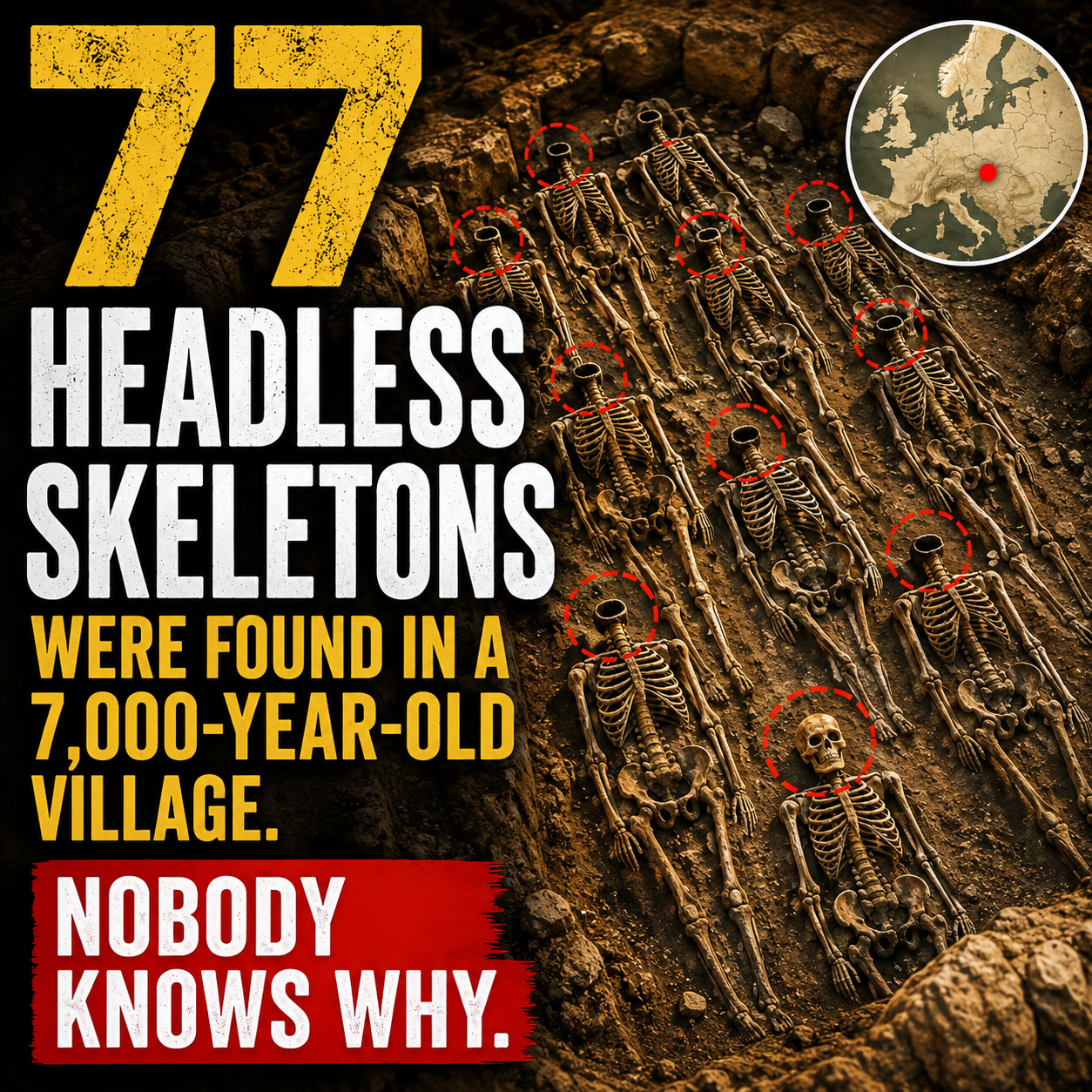
They Found 77 Skeletons Without Heads. The Heads Are Still Missing.
FAQs
What was discovered in the enclosure ditch?
Human skeletons were found in the enclosure ditch, indicating that the area may have been used for burial purposes.
How old are the human skeletons?
The age of the human skeletons has not been determined yet, but experts are working to establish the time period in which they were buried.
What is the significance of this discovery?
The discovery of human skeletons in the enclosure ditch provides valuable insight into the historical and cultural practices of the area. It may also shed light on the population and burial customs of the time.
Who made the discovery?
The discovery was made by a team of archaeologists who were conducting excavations in the area. The site is being carefully studied and analyzed to learn more about the findings.
What are the next steps following this discovery?
Following the discovery of the human skeletons, further research and analysis will be conducted to determine the age, gender, and potential cause of death of the individuals. The findings will contribute to our understanding of the history and archaeology of the area.