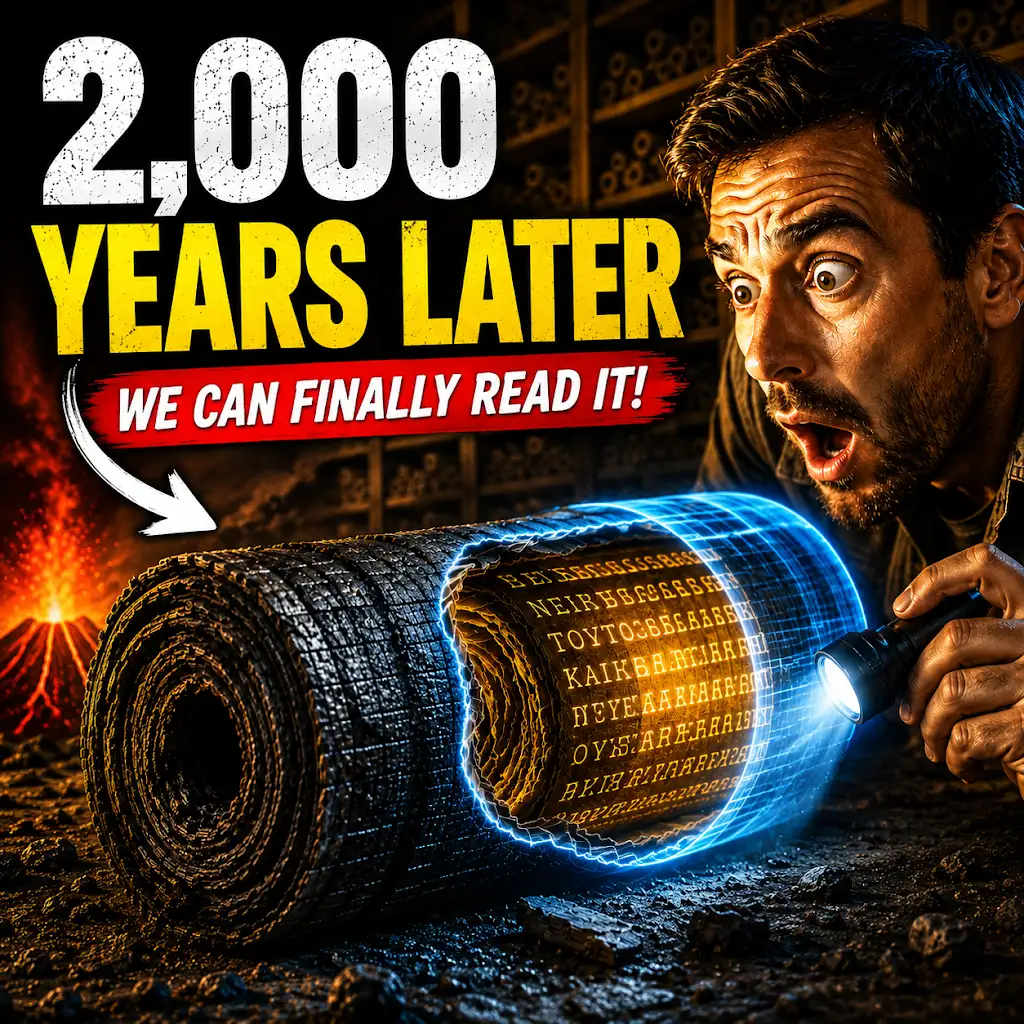
The whispers of antiquity, trapped within their carbonized shells, have long beckoned scholars and adventurers alike. Among the most enigmatic of these time capsules are the unopenable ancient books of Herculaneum, a testament to a catastrophic moment frozen in time. These papyrus scrolls, unearthed from the volcanic embrace of Mount Vesuvius, present a unique and formidable challenge: their extreme fragility, fused by the inferno and subsequent pressure, makes direct unrolling a virtual impossibility without their complete disintegration. Yet, within their blackened cores lies the potential to unlock forgotten knowledge, to hear the voices of philosophers, poets, and historians who walked the earth two millennia ago.
The very existence of these unopenable books is intrinsically linked to the devastating eruption of Mount Vesuvius in 79 CE. This cataclysm, immortalized by Pliny the Younger’s vivid accounts, unleashed a torrent of volcanic ash, pumice, and pyroclastic flows that buried the thriving Roman cities of Pompeii and Herculaneum. While Pompeii was overwhelmed by a rain of ash and pumice, Herculaneum, situated closer to the volcano, met a more violent end. It was engulfed by superheated pyroclastic surges – fast-moving currents of hot gas and volcanic matter – that flash-froze the city, preserving organic materials in an unprecedented manner.
A City Frozen in Time
The pyroclastic surges that obliterated Herculaneum did so with astonishing speed and intensity. Temperatures are estimated to have reached hundreds of degrees Celsius, instantly carbonizing everything in their path. This intense heat, paradoxically, acted as a preservative for organic materials like wood, furniture, textiles, and, crucially, papyrus. The process of carbonization, while destructive in its physical effects, prevented the complete decay that would have otherwise erased these delicate artifacts. Instead, the papyri were essentially cooked, their organic components transformed into a brittle, charcoal-like substance.
The Villa of the Papyri: A Repository of Wisdom
The most significant cache of these unopenable scrolls was discovered in the ruins of a grand villa on the outskirts of Herculaneum, now known as the Villa of the Papyri. This opulent estate, believed to have belonged to the family of Lucius Calpurnius Piso Caesoninus, father-in-law of Julius Caesar, housed an extensive library. Thousands of papyrus scrolls, many still neatly arranged on wooden shelving, were found within its walls. The sheer volume of this discovery alone made it a treasure trove, but the condition of the scrolls presented an immediate and profound obstacle.
The Fragility of Carbonization: A Delicate Balance
The defining characteristic of the Herculaneum papyri is their extreme fragility. The intense heat and pressure of the eruption have transformed the papyrus fibers into a brittle, carbonized material. This process, while preserving the ink and the form of the scroll, makes them incredibly susceptible to breakage. The slightest attempt at unrolling can cause the scroll to crumble into dust, rendering its contents inaccessible. This has led to a decades-long quest for methods that can reveal the text without destroying the artifact.
The Physical Properties of Carbonized Papyrus
Carbonized papyrus exhibits entirely different physical properties compared to its unburnt ancestor. The cellulose fibers that make up the papyrus have undergone a significant chemical transformation. They become rigid, devoid of their natural elasticity, and highly prone to fracturing. The ink, often carbon-based itself (lamp black mixed with a binder), has also become fused with the papyrus material. This fusion, while locking the ink in place, also makes it difficult to separate from the substrate. The layers of the scroll, compressed by the volcanic ash and heat, have often fused together, creating a solid block of carbon.
The Risk of Destruction: A Constant Threat
For generations, archaeologists and papyrologists have grappled with the dilemma of whether to attempt unrolling. The potential reward of recovering lost ancient texts is immense, but the risk of irreparable damage is equally significant. Early attempts, often employing traditional methods of unrolling, met with limited success and considerable destruction. This has necessitated a shift towards non-invasive and highly specialized techniques, driven by a deep respect for the preservation of these irreplaceable artifacts.
Pioneering the Art of Unrolling: Early Attempts and Their Limitations
The initial discoveries of the Herculaneum papyri in the 18th century ignited a fervent desire to access their hidden knowledge. However, the tools and understanding of material science available at the time were rudimentary, leading to methods that were often more destructive than beneficial. These early endeavors, while born of enthusiasm, serve as a cautionary tale in the long pursuit of deciphering these ancient texts.
The Bourbon Era and the Dawn of Excavation
The first systematic excavations of Herculaneum began under the patronage of Charles of Bourbon, King of Naples, in the 1730s. Prince Emanuele Maurice de Lorraine, prince of Elboeuf, initiated the early digging, followed by the Royal Bourbon excavators. It was during these early excavations that the first papyri were discovered. The methods employed were, by modern standards, crude. Digging was often carried out with pickaxes and shovels, and the scrolls were often brought to the surface with little regard for their extreme fragility.
The “Accademia Ercolanese” and the Birth of Papyrus Study
To address the challenges posed by the papyri, the “Accademia Ercolanese” (Herculaneum Academy) was established in 1755. This institution brought together scholars, artists, and technicians with the aim of studying and preserving the discoveries. A dedicated workshop was set up for the attempted unrolling of the papyri. One of the most prominent figures involved was Padre Antonio Piaggio, who developed a system of cutting the scrolls into thin slices using a specially designed mechanism.
Piaggio’s Cutting Method: A Controversial Innovation
Piaggio’s method involved carefully slicing the carbonized scrolls lengthwise into thin layers using a micrometer-controlled saw. This was a significant departure from attempts to unroll the entire scroll. The aim was to expose the ink layer while minimizing the physical stress on the papyrus. Each slice was then painstakingly separated, and the text transcribed by scribes. While this method did yield some readable texts, it was still a destructive process, as the original scroll was divided and altered. Furthermore, the scribes had to interpret faint traces of ink, and errors were inevitable.
The Challenges of Ink and Papyrus Adhesion
A fundamental problem faced by early unrollers was the intimate fusion of the ink with the carbonized papyrus. The intense heat had essentially baked the ink into the fibers, making it difficult to distinguish the ink from the papyrus material itself. This meant that even if a layer could be separated, the ink might remain on the wrong side of the separation, or the papyrus could flake away with the ink. The slightest disturbance could lead to the loss of both papyrus and text.
Modern Approaches: The Era of Non-Invasive Technology
The limitations of destructive unrolling methods spurred the development of sophisticated, non-invasive technologies. The 21st century has witnessed a revolution in how scholars approach the unopenable Herculaneum scrolls, utilizing advanced imaging and computational techniques to peer through the carbonized layers without ever physically touching them.
X-ray and Infrared Imaging: Peering Through the Darkness
One of the earliest non-invasive techniques explored was X-ray imaging. The concept was to use the differential absorption of X-rays by the ink and the papyrus to reveal the text. However, the carbon-based inks of ancient times have very similar X-ray absorption properties to the carbonized papyrus itself, making traditional X-ray imaging largely ineffective.
The Breakthrough of Infrared Imaging
A significant breakthrough came with the application of infrared (IR) imaging. Certain wavelengths of infrared light can penetrate the carbonized papyrus and be absorbed differently by the ink, revealing contrasts that are invisible to the naked eye. This technique, particularly using specific wavelengths in the near-infrared spectrum, has shown considerable promise in highlighting the ink layers.
Synchrotron Radiation: Unveiling the Hidden Text
More recently, the cutting-edge technology of synchrotron radiation has been employed. Synchrotron light sources produce extremely intense and tunable beams of X-rays. By utilizing specific X-ray energies, researchers can exploit subtle differences in the chemical composition and electron density between the ink and the papyrus, leading to significantly higher contrast and the potential to read finer details.
Phase Contrast Imaging with Synchrotron Radiation
A particularly effective application has been phase contrast imaging using synchrotron X-rays. This technique is sensitive to small variations in the refractive index of materials. The ink, with its different chemical makeup, subtly alters the phase of the X-rays passing through it, creating a contrast that can be digitally enhanced to reveal the text. This has been instrumental in visualizing the faint ink traces on some of the most challenging scrolls.
Computed Tomography (CT) Scanning: Creating Virtual Scrolls
Computed Tomography (CT) scanning, similar to medical CT scans, can create cross-sectional images of the scrolls. By taking hundreds or thousands of X-ray images from different angles, a 3D model of the scroll can be reconstructed. This allows researchers to virtually slice through the scroll and examine its internal structure layer by layer.
The Challenge of Layer Separation in CT Scans
While CT scanning provides incredibly detailed internal views, the challenge remains in digitally separating the fused layers of the papyrus. The extreme compression can make it difficult to define distinct boundaries between layers in the digital reconstruction. However, advancements in image processing algorithms are continuously improving the ability to isolate individual layers and potential text.
Computational Analysis and Artificial Intelligence: Decoding the Whispers
Even with advanced imaging techniques, the extracted data often consists of faint, distorted, and incomplete lines of text. This is where the power of computational analysis and artificial intelligence (AI) comes into play, providing the tools to decipher these fragmented whispers from the past.
Image Processing Algorithms: Enhancing Contrast and Clarity
Sophisticated image processing algorithms are essential for enhancing the contrast, reducing noise, and sharpening the faint traces of ink revealed by imaging techniques. These algorithms can digitally manipulate the images to make the text more discernible, compensating for variations in ink density and the texture of the carbonized papyrus.
Denoising and Edge Detection
Techniques like denoising help to remove random speckles and artifacts from the images, while edge detection algorithms can highlight the boundaries of letters and words, even when they are faint and broken. This initial processing is crucial for preparing the data for more advanced analysis.
Machine Learning for Text Recognition: Training the Digital Scribe
The development of machine learning (ML) models, particularly deep learning algorithms, has revolutionized the process of text recognition. These models can be trained on existing datasets of ancient scripts and partial texts to identify patterns and reconstruct missing or illegible characters.
Identifying and Segmenting Letters
ML algorithms can be trained to identify and segment individual letters within the processed images. By learning the shapes and variations of ancient Greek or Latin characters, these models can recognize letters even when they are distorted, incomplete, or partially obscured.
Reconstructing Fragmented Words and Sentences
Perhaps the most impactful application of AI is in reconstructing fragmented words and sentences. By understanding the grammar, vocabulary, and common phrases of ancient languages, AI can predict likely completions of incomplete words and suggest plausible arrangements of fragmented words into coherent sentences. This requires extensive training on ancient linguistic data.
Digital Reconstruction and Virtual Unrolling
The ultimate goal of these computational efforts is to create digital reconstructions of the unrolled scrolls. This allows for a virtual “unrolling” where the text can be read and studied without any physical intervention. The ability to virtually manipulate and enhance the text provides a level of accessibility that was previously unimaginable.
Collaborative Platforms for Decipherment
The complexity of deciphering these texts has also led to the development of collaborative platforms where researchers from around the world can contribute their expertise. By sharing data and insights, these platforms accelerate the pace of discovery and foster a global effort to unlock the secrets of Herculaneum.
The Promise of Lost Knowledge: What the Scrolls Might Reveal
The unopenable ancient books of Herculaneum represent an unparalleled opportunity to access a lost library, a direct portal to the intellectual and cultural life of the Roman world. The potential discoveries span a wide range of subjects, promising to fill gaps in our understanding of ancient philosophy, literature, history, and science.
Philosophical and Literary Treasures
The Villa of the Papyri is believed to have housed a significant collection of philosophical works. Many of the scrolls that have been partially deciphered belong to the Epicurean school of philosophy, including works by Philodemus of Gadara, an Epicurean philosopher and poet who lived in the 1st century BCE. These texts offer invaluable insights into the teachings and debates of this influential philosophical movement.
Rediscovering Lost Works of Epicureanism
The decipherment of these scrolls has already brought to light previously unknown or fragmentary works by key Epicurean figures. This allows scholars to build a more complete picture of Epicurean thought, including their views on ethics, physics, and epistemology. The nuances and complexities of their arguments are being revealed with unprecedented clarity.
Historical and Scientific Insights
Beyond philosophy, the scrolls may also contain historical accounts, literary criticisms, and even scientific treatises. The Roman world was a hub of intellectual activity, and the library at Herculaneum likely reflected this diversity.
Uncovering Roman Daily Life and Beliefs
The personal nature of a private library can offer a unique window into the interests and preoccupations of its owner and their circle. The texts could shed light on the social customs, religious beliefs, and political events of the time, as viewed by individuals of considerable learning and influence.
Potential for Scientific and Medical Knowledge
While less common, the possibility of scientific or medical texts cannot be discounted. The Romans were adept engineers and physicians, and the preservation of such works would be of immense historical and practical value.
The Unwritten Chapters of History
The most exciting prospect is the possibility of discovering entirely unknown authors and works, adding new chapters to the known canon of classical literature. The sheer volume of scrolls still waiting to be deciphered suggests that many voices from antiquity remain unheard, their stories and ideas trapped within their carbonized confines. The ongoing efforts to unlock these secrets represent a profound commitment to understanding our past and the intellectual heritage that has shaped the modern world. The unopenable books of Herculaneum, once a symbol of insurmountable challenge, are slowly but surely beginning to yield their precious cargo, promising to enrich our knowledge and deepen our appreciation of the ancient world.