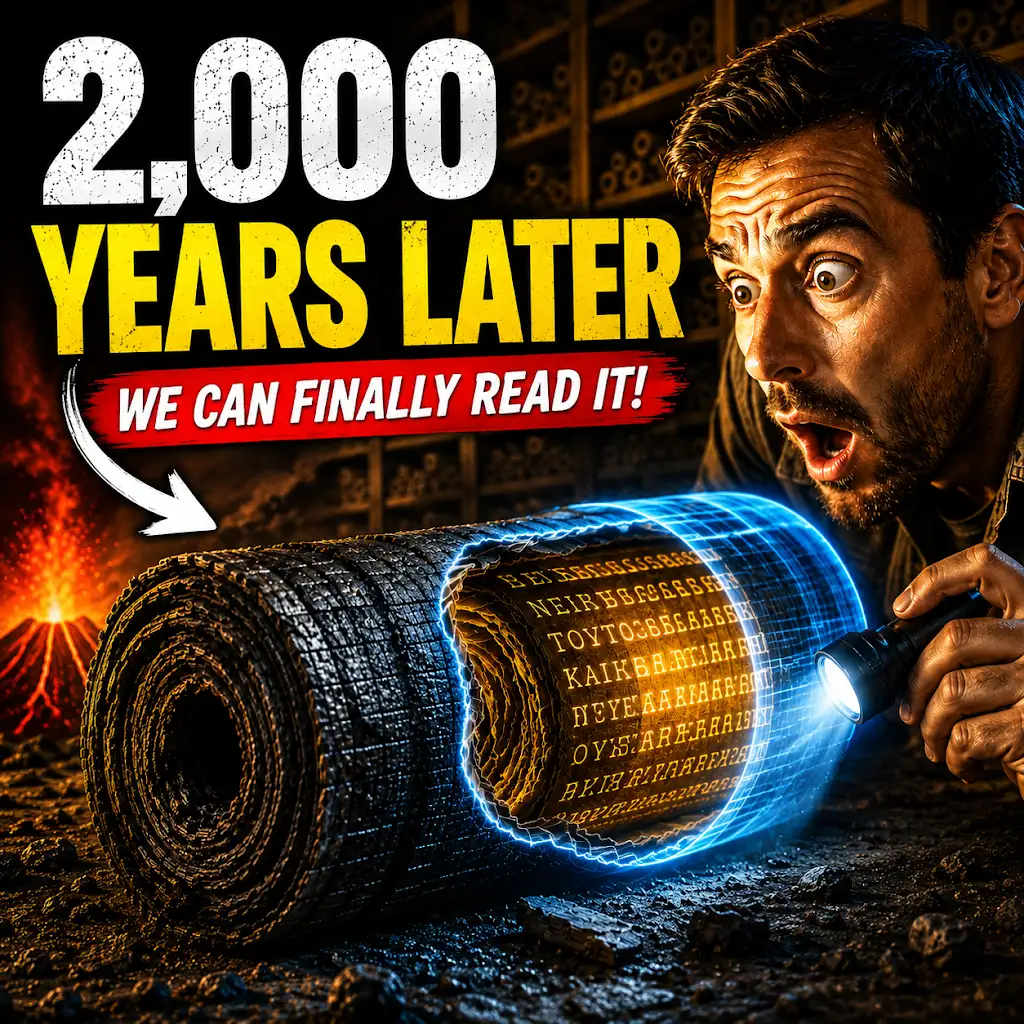
Brent Seales and the Herculaneum Papyri: A Deciphering Odyssey
The ancient Roman city of Herculaneum, like its more famous neighbor Pompeii, was tragically entombed by the eruption of Mount Vesuvius in 79 AD. While Pompeii offers a vivid snapshot of daily life frozen in time, Herculaneum presents a different kind of archaeological treasure: a vast collection of papyri, charred and brittle, that hold the potential for unlocking lost knowledge from the ancient world. For centuries, these “Villains of Herculaneum,” as they became known due to their recalcitrant nature, resisted all attempts at decipherment. However, a groundbreaking approach, spearheaded by Dr. Brent Seales and his team, is finally beginning to peel back the layers of ash and time, promising to revolutionize our understanding of classical antiquity.
The discovery of the Herculaneum papyri began in the mid-18th century, a period of burgeoning interest in classical archaeology. Excavations at the Villa of the Papyri, a lavish seaside villa believed to have belonged to the father-in-law of Julius Caesar, yielded an astonishing find: hundreds, and eventually thousands, of tightly rolled papyrus scrolls. These scrolls, however, were not in pristine condition. The intense heat of Vesuvius had carbonized them, fusing the delicate papyrus layers into a solid, brittle mass.
The “Villains of Herculaneum”
The sheer difficulty in handling these carbonized scrolls earned them the moniker “Villains of Herculaneum.” Traditional methods of unrolling papyri, which involve careful dampening and gentle separation, proved disastrous. The slightest touch or humidity could cause the fragile material to disintegrate into dust. For generations, scholars and conservators grappled with this seemingly insurmountable challenge, leading to immense frustration and a sense of lost opportunity. Many scrolls remained unread, their contents locked away by the volcanic fury.
Early Attempts and Their Limitations
Initial attempts to unroll the papyri were often destructive. Some early excavators resorted to brute force, inadvertently destroying valuable portions of text. Later, more sophisticated, albeit still limited, methods were developed. These involved painstakingly trying to separate layers using fine needles, sometimes under magnification. While some success was achieved, the process was agonizingly slow, yielding only fragments of text and often damaging the scrolls further. The sheer volume of papyri, coupled with the inherent fragility, meant that only a minuscule fraction could ever be expected to be deciphered through these conventional techniques.
The Advent of Digital Decipherment: Brent Seales’ Vision
The 21st century brought a paradigm shift in how the Herculaneum papyri were approached. Dr. Brent Seales, a computer scientist and advocate for digital archaeology, recognized the limitations of physical intervention and envisioned a new path forward: one that leveraged the power of advanced imaging and computational analysis. His vision was to “read” the papyri without ever physically touching them, thereby preserving their integrity while unlocking their secrets.
The Genesis of the Vision
Seales’ journey into the world of ancient texts was driven by a fascination with the lost knowledge they represented. He saw the Herculaneum papyri as a particularly compelling challenge – a treasure trove of information that had been rendered inaccessible for centuries. His background in computer science, particularly in areas like image processing and pattern recognition, provided him with the tools and the mindset to conceive of a non-invasive solution. The idea was not to physically unroll, but to digitally “unroll” and then “read” the scrolls.
Embracing Non-Invasive Technologies
The core of Seales’ approach lies in the application of advanced, non-destructive imaging technologies. Instead of relying on physical manipulation, he and his team turned to techniques that could penetrate the carbonized layers and reveal the subtle differences in the papyrus’s structure and the ink it contained. This marked a radical departure from centuries of traditional papyrology.
The Role of Computational Analysis
However, advanced imaging alone was not enough. The data generated by these imaging techniques was immense and complex. This is where computational analysis, Seales’ area of expertise, became crucial. Algorithms were developed to process the scanned images, identify patterns of text, and eventually reconstruct the lost words and sentences. This fusion of cutting-edge imaging and sophisticated software became the engine driving the decipherment effort.
X-Ray Microtomography: Seeing Through the Carbon
A pivotal technology in Seales’ arsenal is X-ray microtomography (micro-CT). This non-invasive imaging technique allows researchers to create incredibly detailed, three-dimensional reconstructions of the papyri. By passing X-rays through the scrolls at various angles and analyzing how the radiation is absorbed, micro-CT can reveal internal structures that are invisible to the naked eye.
How Micro-CT Works
Micro-CT scans essentially create a series of two-dimensional slices of the object being imaged. These slices are then computationally reassembled to form a high-resolution 3D model. For the Herculaneum papyri, this means being able to visualize the layers of the carbonized scroll, the voids between them, and, crucially, the subtle variations in density that can indicate the presence of ink. The difference in how the carbonized papyrus and the carbonized ink absorb X-rays is key to this process.
Revealing the Hidden Ink
The real breakthrough with micro-CT lies in its ability to differentiate between the carbonized papyrus material and the carbonized ink. Even though both are carbon-based, the original composition of the ink, likely containing metallic elements, causes it to absorb X-rays slightly differently than the papyrus. This subtle difference, when amplified by the resolution of micro-CT, becomes detectable, allowing researchers to see the faint outlines of letters beneath the surface.
From 3D Model to Text
Once the 3D model of a scroll is generated, the real work of decipherment begins. The software can then be used to virtually “unroll” the scroll, flattening its cylindrical form into a readable surface. This virtual unrolling process is crucial for making the text accessible for further analysis.
Machine Learning and AI: The Breakthrough in Reading
The sheer volume of data generated by micro-CT scans and the complexity of deciphering faint, carbonized text necessitated the development of advanced computational tools. Machine learning and artificial intelligence (AI) have proven to be transformative in this endeavor, enabling Seales and his team to move from simply visualizing the papyri to actually reading them.
Training the Algorithms
The initial challenge was to train the AI algorithms to recognize the distinctive shapes of ancient Greek letters, even when they are faint, incomplete, or distorted by the carbonization process. This involved feeding the AI with examples of known ancient Greek texts and then showing it the micro-CT scans of papyri, allowing it to learn to identify patterns and correspondences. The more data the AI was exposed to, the better it became at recognizing letters and words.
Identifying Palimpsests and Textual Features
Machine learning algorithms are adept at identifying subtle textual features that might be missed by the human eye. This includes recognizing the faint traces of ink that form letters, distinguishing between different scripts, and even identifying “palimpsests” – instances where text has been written over erased text. The AI can also learn to recognize the characteristic features of ancient Greek handwriting, aiding in attribution and dating.
Reconstructing Damaged Text
One of the most significant contributions of AI is its ability to reconstruct damaged or incomplete text. By analyzing the context of surrounding letters and words, and by drawing on its vast knowledge of ancient Greek grammar and vocabulary, the AI can intelligently infer missing characters and complete words. This has allowed for the recovery of significant portions of text that would otherwise have been lost forever.
The “Volume of the Dead Sea Scrolls” Analogy
The successful application of these techniques is often likened to the challenges faced in deciphering the Dead Sea Scrolls. Both involve handling fragile, ancient texts where direct physical intervention is difficult or impossible. The digital, computational approach developed for the Herculaneum papyri offers a powerful model for future discoveries of similar materials.
Unlocking Lost Knowledge: The Potential Impact
The decipherment of the Herculaneum papyri holds immense potential for revolutionizing our understanding of the ancient world. The scrolls contain works that are currently unknown to us, offering new insights into philosophy, literature, history, and science from the Greco-Roman period.
Rediscovering Lost Literature
Perhaps the most exciting prospect is the rediscovery of lost literary works. Imagine encountering previously unknown plays by Sophocles or Euripides, epic poems that have vanished from history, or philosophical treatises that could reshape our understanding of ancient thought. The Herculaneum papyri represent a unique opportunity to fill in the gaps in our literary canon.
Philosophical and Scientific Treatises
Beyond literature, the scrolls are expected to contain a wealth of philosophical and scientific texts. The Villa of the Papyri was likely home to intellectuals, and the library it housed would have reflected their interests. We might find entirely new schools of thought, or rediscover forgotten scientific theories and discoveries that were lost to time. This could offer a more nuanced understanding of ancient scientific progress and its trajectory.
Historical Accounts and Everyday Life
The papyri could also provide invaluable historical accounts, offering fresh perspectives on events, rulers, and societal structures of the ancient world. Moreover, they may offer glimpses into the everyday lives of the inhabitants of Herculaneum, providing details about their customs, beliefs, and social interactions that are not preserved in more formal historical records. These “ordinary” texts, often overlooked, can paint a richer tapestry of ancient society.
The Epicurean Connection
A significant portion of the papyri discovered so far are associated with the philosopher Philodemus, an Epicurean philosopher who lived in the 1st century BC. This suggests that the library was particularly rich in Epicurean texts, potentially offering a deeper and more comprehensive understanding of this influential philosophical school. The decipherment of these texts could significantly alter current scholarship on Epicureanism.
A New Chapter for Classical Studies
Ultimately, Brent Seales’ work with the Herculaneum papyri marks a new chapter for classical studies. It demonstrates the power of interdisciplinary collaboration, merging traditional archaeological and philological expertise with cutting-edge digital technologies. This approach not only preserves fragile heritage but also unlocks it in ways previously unimaginable, promising a torrent of new discoveries that will enrich our understanding of the human past for generations to come. The implications extend beyond the specific texts themselves, offering a blueprint for how we can approach and preserve other forms of vulnerable historical documentation in the future.