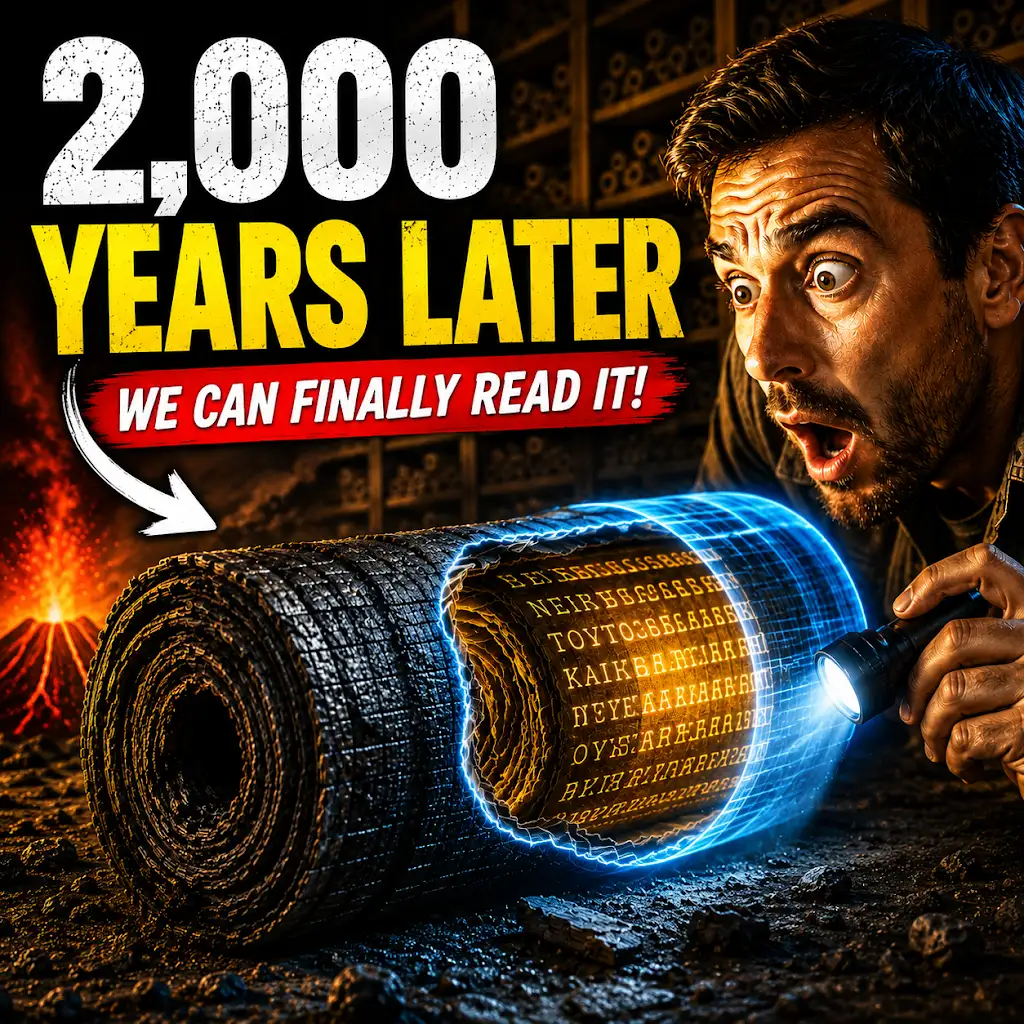
The delicate fragments of ancient papyrus scrolls, brittle with the weight of centuries, have long presented a formidable challenge to scholars and archaeologists. For millennia, these precious documents, often carbonized and fused by time, heat, or burial, have remained largely inaccessible, their secrets locked away within layers of damaged material. However, a revolutionary transformation is underway, driven by advancements in technology that are enabling the “virtual unwrapping” of these ancient texts, offering unprecedented access to the lost voices and knowledge of the past. This article delves into the intricacies of this groundbreaking field, exploring the methodologies, challenges, and the profound implications of bringing these fragile remnants of history back to life, not through physical manipulation, but through the power of digital reconstruction.
The Nature of Ancient Papyri
Papyrus, derived from the pith of the papyrus plant, was the primary writing material in ancient Egypt and other parts of the Mediterranean world for thousands of years. Its flexibility, durability (when preserved correctly), and relative abundance made it an ideal medium for everything from religious texts and administrative records to literature and personal correspondence. These scrolls, meticulously inscribed with ink, often contained a wealth of information that has been crucial to our understanding of ancient civilizations. The survival of papyri is, however, a precarious affair.
The Perils of Preservation
The passage of time and the vagaries of burial environments have taken a heavy toll on these ancient documents. Fires, floods, damp conditions, and even the simple act of being rolled and unrolled repeatedly can cause papyrus to degrade. A particularly destructive phenomenon is carbonization, where organic materials are transformed into a charcoal-like state. When papyrus scrolls carbonize, the layers often fuse together, making physical unwrapping an impossible and destructive undertaking. In such cases, the risk of further damage or complete disintegration during any attempt at manual separation is exceptionally high. This has left countless scrolls, including potentially invaluable historical documents, locked in an unreadable state.
Historical Attempts and Their Limitations
Throughout history, scholars and collectors have grappled with the challenge of accessing information within damaged scrolls. Early attempts at physical unwrapping, while sometimes successful, were often crude and destructive. The invention of specialized tools and techniques, such as the careful use of solvents or humidity control, offered some improvements. However, these methods were still inherently risky, requiring a deep understanding of the papyrus’s condition and a willingness to accept a certain level of damage. Even with the most skilled hands, the risk of tearing, flaking, or losing precious text remained a constant concern. The inherent fragility of the material meant that many scrolls were simply left unexamined, their contents forever hidden.
The Dawn of Virtual Unwrapping
The Need for Non-Invasive Techniques
The limitations of physical unwrapping naturally spurred the search for non-invasive methods. The goal was to unlock the information within these fragile artifacts without causing any further harm. This ambition laid the groundwork for the development of advanced imaging and computational techniques that could penetrate the layers of damaged material and reconstruct the text digitally. The idea was to treat the papyrus not as a physical object to be manipulated, but as a complex dataset to be analyzed and deciphered.
Early Pioneering Efforts
The concept of using technology to overcome the limitations of physical unwrapping began to take shape with the advent of digital imaging. Early efforts involved high-resolution photography and X-ray imaging, which could reveal some details beneath the surface. While these initial steps were promising, they were often limited by the resolution of the imaging technology and the computational power available to process the resulting data. The complexity of fused papyrus layers meant that these early methods could only offer partial insights. Nevertheless, they provided crucial proof-of-concept and inspired further research and development.
The Convergence of Disciplines
The field of virtual unwrapping is a testament to interdisciplinary collaboration. It draws upon expertise from a wide range of fields, including Egyptology, Classics, computer science, imaging science, physics, and engineering. Archaeologists and historians provide the context and expertise on the nature of the scrolls, while scientists and engineers develop and refine the imaging and computational tools. This synergy is essential for tackling the multifaceted challenges presented by these ancient artifacts. Without the deep knowledge of papyrology and the scientific rigor of the imaging and computational fields, the success of virtual unwrapping would be impossible.
Technological Arsenal for Unwrapping
Advanced Imaging Modalities
The core of virtual unwrapping lies in employing sophisticated imaging techniques that can penetrate the opaque layers of damaged papyrus.
X-ray Imaging and Microtomography
X-ray imaging, particularly in its more advanced forms like microtomography (micro-CT), is a cornerstone of virtual unwrapping. Micro-CT uses a series of X-ray projections taken from different angles to create a three-dimensional (3D) reconstruction of the object. This allows researchers to visualize the internal structure of the papyrus, including the individual layers and the ink embedded within them. The difference in density between the papyrus fibers and the ink pigments allows the X-rays to differentiate between the materials.
Principles of X-ray Attenuation
The effectiveness of X-ray imaging relies on the principle of X-ray attenuation. Different materials absorb X-rays to varying degrees. The ink, often containing metallic compounds like iron or carbon, typically has a higher density than the papyrus fibers, leading to greater X-ray attenuation. This differential attenuation creates contrast in the X-ray images, allowing researchers to distinguish between the ink and the papyrus material itself.
3D Reconstruction and Layer Separation
Micro-CT scanning generates a large dataset of 2D projections that are then computationally reconstructed into a 3D volume. This 3D model allows researchers to virtually slice through the papyrus at any angle, revealing the layered structure of the scroll. The software can then process these slices to isolate the inked layers from the blank papyrus material, effectively creating a digital representation of the unrolled scroll.
Synchrotron Radiation Imaging
For scrolls that are particularly dense or where subtle ink traces are present, synchrotron radiation-based imaging techniques offer enhanced sensitivity and resolution. Synchrotron light sources produce highly collimated, intense, and tunable X-rays, which can be used for various imaging modalities.
Phase-Contrast Imaging
Phase-contrast imaging, a technique that utilizes the phase shift of X-rays as they pass through an object, is particularly effective at revealing fine details and subtle variations in density. This can be crucial for detecting faint ink lines that might be missed by conventional X-ray methods.
X-ray Fluorescence (XRF) and Absorption Spectroscopy
These techniques can identify the elemental composition of the ink. By mapping the distribution of specific elements, researchers can not only confirm the presence of writing but also gain insights into the writing materials and techniques used by ancient scribes. This can be invaluable for dating and contextualizing the scroll.
Optical Coherence Tomography (OCT)
While primarily used for biological tissues, OCT is also being explored for its potential in papyrus imaging. OCT uses light waves to capture microscopic images of subsurface structures. Its non-ionizing nature and high resolution make it a promising complementary technique for visualizing the surface layers and fine details of papyrus fibers.
Computational Reconstruction and Analysis
Once the imaging data is acquired, the real work of virtual unwrapping begins in the digital realm.
Image Processing and Segmentation
The raw imaging data is often noisy and requires extensive processing. Advanced algorithms are used to enhance contrast, reduce noise, and remove artifacts. Segmentation techniques then isolate the inked regions from the surrounding papyrus material. This is a complex process, as the ink lines can be very thin and intertwined with the papyrus fibers.
Machine Learning and Artificial Intelligence
Machine learning (ML) and artificial intelligence (AI) are increasingly being employed to automate and improve segmentation. AI models can be trained on vast datasets of papyrus images to recognize patterns associated with ink and differentiate them from papyrus texture, even in cases of significant degradation.
Color and Reflectance Analysis
In some cases, optical imaging techniques can also be used to analyze the reflectance properties of the ink. Different inks may have slightly different spectral signatures, and analyzing these can help in distinguishing between text and background, especially when dealing with faded ink.
3D Modeling and Virtual Unrolling
The segmented data is then used to create a 3D model of the papyrus. This model can be virtually manipulated to simulate the unwrapping process. Researchers can digitally “unroll” the scroll, separating the fused layers and presenting them in a flat, readable format.
Algorithms for Layer Separation
Sophisticated algorithms are developed to determine the most likely separation planes between fused layers. These algorithms often take into account the curvature of the papyrus and the distribution of ink to guide the virtual unwrapping process, mimicking how a physical scroll would have been unrolled.
Rendering and Visualization Tools
Specialized visualization tools are used to render the unrolled text in a clear and legible manner. This often involves adjusting contrast, brightness, and potentially applying filters to enhance the visibility of faded ink. The goal is to present the reconstructed text in a way that is easily interpretable by scholars.
The Challenges of Virtual Unwrapping
Dealing with Severe Degradation
The effectiveness of virtual unwrapping is heavily dependent on the condition of the original papyrus.
Carbonization and Fusion
The most challenging scenarios involve heavily carbonized scrolls, where layers are fused into a solid mass. In such cases, distinguishing individual layers and ink traces can be extremely difficult. The density variations might be minimal, and the ink could be deeply embedded within the carbonized material.
Limitations of X-ray Contrast
When carbonization is severe, the contrast between ink and papyrus can be significantly reduced, making it harder for X-ray imaging to differentiate them effectively. This requires the use of more advanced techniques or very sophisticated image processing to extract any usable information.
Missing Fragments and Incomplete Inscriptions
Many scrolls are not just fused but also fragmented, with significant portions missing. This leads to incomplete inscriptions and gaps in the text, making reconstruction and interpretation a formidable task.
Reconstruction of Missing Text
While virtual unwrapping can reveal what is present, it cannot magically create missing information. However, by revealing legible fragments, it enables scholars to use linguistic and historical knowledge to infer or reconstruct the missing parts of the text.
Artifacts and Noise in Imaging Data
The imaging process itself can introduce artifacts and noise into the data, which can complicate the analysis. These can arise from the imaging equipment, the interaction of the X-rays with the sample, or the environment in which the imaging takes place.
Calibration and Noise Reduction Techniques
Rigorous calibration of imaging equipment and the application of advanced noise reduction algorithms are crucial to minimize these issues. Researchers must carefully distinguish between genuine textual information and imaging artifacts.
Computational Demands and Data Management
The process of virtual unwrapping is computationally intensive and generates massive datasets.
Processing Power and Storage
Generating and processing 3D volumetric data from micro-CT or synchrotron scans requires significant computational power. Storing and managing these large datasets, which can run into terabytes, also presents a substantial logistical challenge.
Cloud Computing and High-Performance Clusters
The use of cloud computing resources and high-performance computing clusters is becoming increasingly important to handle the computational demands of virtual unwrapping. These resources allow for faster processing and more complex analyses.
Algorithm Development and Optimization
Developing and optimizing the algorithms for image processing, segmentation, and 3D reconstruction is an ongoing area of research. The complexity of papyrus structures and degradation patterns requires continuous refinement of these algorithms.
Interoperability and Standardization
Ensuring interoperability between different software packages and establishing standardized data formats are important for collaborative research and long-term data preservation.
Illuminating the Past: Case Studies and Discoveries
The Herculaneum Papyri: A Triumph of Virtual Unwrapping
One of the most celebrated successes of virtual unwrapping has been the decipherment of the Herculaneum papyri.
The Villa of the Papyri and the Eruption of Vesuvius
Buried by the eruption of Mount Vesuvius in 79 AD, the Villa of the Papyri in Herculaneum contained a library of papyrus scrolls that were severely carbonized. These scrolls, some weighing as much as a kilogram, were too fragile to physically unroll.
The Challenge of Twisted Scrolls
The Herculaneum papyri are notoriously difficult to unroll, often appearing as solid, blackened cylinders. Their tightly rolled and fused nature made physical intervention a near impossibility without destroying any potential content.
The Role of Microtomography and Computational Algorithms
Researchers have employed microtomography and advanced computational algorithms to virtually unroll these scrolls, revealing previously unreadable philosophical and literary works. This has opened up a treasure trove of ancient Greek and Roman thought.
Revealing Lost Philosophical Texts
The successful virtual unwrapping of several Herculaneum scrolls has led to the recovery of lost works by prominent philosophers like Epicurus and Philodemus, providing invaluable new insights into ancient philosophical schools and debates.
Beyond Herculaneum: Other Notable Discoveries
The techniques developed for the Herculaneum papyri are now being applied to a wide range of other ancient texts.
Ancient Egyptian Papyri in Digital Archives
Numerous ancient Egyptian papyri, often fragmented or brittle, are being scanned and subjected to virtual unwrapping techniques. This includes religious texts, administrative documents, and literary works.
The Book of the Dead and Administrative Records
Virtual unwrapping is helping to make legible previously inaccessible portions of texts like the Book of the Dead, as well as thousands of administrative records that shed light on the daily lives and governance of ancient Egypt.
Scrolls from Other Civilizations
The application of these technologies is not limited to the Greco-Roman and Egyptian worlds. Researchers are also using virtual unwrapping on papyri and other similar fragile manuscripts from other ancient civilizations, expanding the reach of this technology.
Unlocking Texts from the Judean Desert
Papyri found in the Judean Desert, some of which are also in precarious condition, are being analyzed using these non-invasive methods, potentially revealing new insights into religious and historical texts from the Second Temple period.
The Future of Virtual Unwrapping and Digital Heritage
Expanding the Technological Toolkit
The field of virtual unwrapping is continuously evolving, with ongoing advancements in imaging and computational techniques.
Development of New Imaging Modalities
Researchers are exploring new imaging modalities, such as terahertz imaging or advanced spectroscopic techniques, that could offer complementary or superior capabilities for papyrus analysis.
Enhancing Resolution and Penetration
The focus is on developing techniques that can achieve higher resolutions, greater penetration depths, and improved contrast for a wider range of papyrus conditions.
AI-Driven Interpretation and Restoration
The role of AI is expected to grow significantly, not just in segmentation but also in interpreting the reconstructed text, identifying linguistic patterns, and even assisting in the restoration of damaged or incomplete inscriptions.
Natural Language Processing (NLP) for Ancient Texts
Advances in Natural Language Processing (NLP) are being adapted to analyze and understand ancient languages, aiding in the interpretation of the virtually unwrapped texts and the identification of contextual information.
Democratizing Access to Ancient Knowledge
Virtual unwrapping has the potential to make ancient texts more accessible to a wider audience.
Open Access Digital Archives
The creation of open-access digital archives of virtually unwrapped papyri will allow scholars, students, and the general public to explore these ancient documents directly.
Digital Libraries and Research Platforms
The development of user-friendly digital libraries and research platforms will facilitate the exploration and study of these newly accessible historical resources, fostering a new era of engagement with the past.
Preserving Digital Heritage for Future Generations
The digital replicas created through virtual unwrapping serve as invaluable backups of fragile artifacts.
Long-Term Preservation of Cultural Heritage
In the event of further degradation or loss of the physical scrolls, the digital surrogates will ensure that this crucial cultural heritage is preserved for future generations to study and appreciate. The digital realm offers a more permanent and accessible form of preservation than the inherently fragile physical medium of papyrus.
Ethical Considerations and Collaborative Efforts
As this field advances, ethical considerations and collaborative efforts become increasingly important.
Ownership and Repatriation of Digital Data
Discussions around the ownership and repatriation of digital data derived from cultural artifacts are becoming more prominent, requiring careful consideration and international cooperation.
Ensuring Fair and Equitable Access
The goal is to ensure that the benefits of virtual unwrapping are shared equitably and that the digital heritage derived from these artifacts is accessible to all.
Global Collaboration and Knowledge Sharing
Fostering global collaboration among institutions and researchers is essential for sharing expertise, resources, and best practices in virtual unwrapping, accelerating progress and ensuring the broadest possible impact of this revolutionary technology. This collaborative spirit is vital for tackling the complex challenges and maximizing the benefits of this field.
The virtual unwrapping of ancient papyrus scrolls represents a profound leap forward in our ability to connect with the past. It is a testament to human ingenuity, combining cutting-edge technology with a deep reverence for history. As these digital windows into ancient worlds continue to open, they promise to reshape our understanding of human civilization, offering new perspectives and unlocking the wisdom of those who came before us, in ways that were once only imaginable. The echoes of ancient voices, once lost to the ravages of time, are now being heard once more, thanks to the power of the digital age.