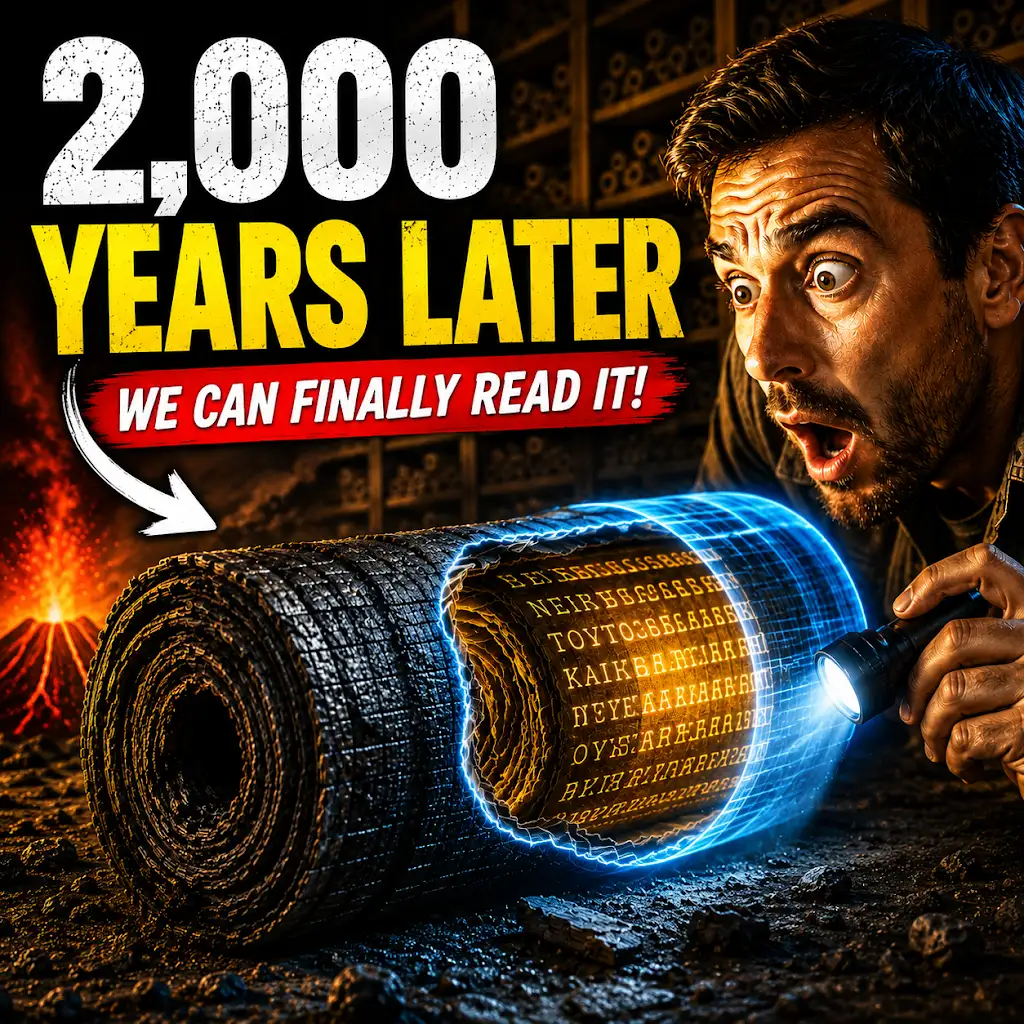
The whispers of ancient knowledge, once silenced by ash and time, are beginning to speak once more. For centuries, the buried city of Herculaneum, frozen in a moment of cataclysmic eruption by Mount Vesuvius in 79 AD, held its secrets tightly. While its more famous neighbor, Pompeii, offered vivid glimpses into daily life, Herculaneum’s fate was more complete annihilation, its inhabitants and their prized possessions entombed under a thick blanket of pyroclastic flow. Yet, within this destructive embrace lay the seeds of an extraordinary rediscovery: lost books, remarkably preserved, offering a tantalizing window into the intellectual and literary landscape of the Roman world. The ongoing efforts to unroll and decipher these fragile scrolls represent one of the most significant archaeological and philological triumphs of our age, promising to rewrite or enrich our understanding of classical antiquity.
The eruption of Mount Vesuvius was a tragedy of unimaginable scale, plunging the Bay of Naples into darkness and devastation. While Pompeii was buried under a layer of pumice and ash, Herculaneum suffered a different, and arguably more thorough, fate. A superheated surge of gas and volcanic debris, traveling at immense speeds, instantly incinerated much of the organic material in its path. However, this very heat, paradoxically, had a preservative effect on papyrus scrolls. Instead of turning them to dust, the extreme temperatures carbonized them, turning them into brittle, charcoal-like cylinders. This process, while devastating, solidified the papyrus, preventing it from decaying further and allowing it to survive for nearly two millennia in a remarkably intact, albeit fragile, state.
The Nature of the Destruction
The pyroclastic flow that engulfed Herculaneum was a deadly force. It consisted of a turbulent cloud of superheated gas, ash, and rock fragments that descended the volcano’s slopes at hundreds of kilometers per hour. The temperature within this flow could have reached several hundred degrees Celsius. Organic materials, such as wood, textiles, and papyrus, would have been exposed to immense heat and pressure.
The Immediate Aftermath
While the initial shockwave and heat would have been lethal, the subsequent burial provided a protective layer. This layer, composed of finely comminuted ash and solidified volcanic mud (lahar), acted as a seal, preventing further decomposition from the elements, moisture, and biological agents.
The Fortuitous Carbonization
The carbonization of the papyrus scrolls is a double-edged sword. On one hand, it’s the sole reason for their survival. The intense heat transformed the cellulose fibers of the papyrus into a carbon-based material, akin to charcoal. This made the scrolls incredibly brittle but also stable. On the other hand, this carbonization made them exceedingly difficult to handle and read, as the inked text itself was also carbonized and often fused to the surrounding papyrus fibers.
The Fragility of the Scrolls
The carbonized scrolls are incredibly delicate. They resemble burnt toast in their fragility, and any attempt to unroll them using conventional methods would almost certainly result in their disintegration. This inherent fragility has presented a monumental challenge to archaeologists and scholars for centuries.
Early Discoveries and the Dawn of Decipherment
The rediscovery of Herculaneum in the 18th century, through accidental tunneling, sparked immense interest and a rush to unearth its treasures. Among the most exciting finds were large numbers of papyrus scrolls, discovered primarily within the remains of the Villa dei Papiri, a sprawling and opulent seaside villa believed to have belonged to the family of Julius Caesar, possibly even to Julius Caesar himself. These scrolls, blackened and fused, posed an immediate and perplexing problem: how to access the knowledge they contained without destroying them. Early attempts at unrolling were often crude and destructive, leading to the loss of significant portions of many scrolls.
The Villa dei Papiri: A Library Frozen in Time
The Villa dei Papiri is a treasure trove of exceptional preservation. Its vast collection of scrolls suggests it was more than just a wealthy residence; it was likely a significant center of learning and literary patronage. The sheer number of scrolls found here, estimated to be in the hundreds, points to a dedicated library within the villa.
The Scale of the Collection
Excavations at the Villa dei Papiri have yielded over 1,800 papyrus scrolls. These are not neatly bound books as we understand them today but rather scrolls, which require careful unrolling to reveal their contents.
Early Unrolling Techniques: A Brute Force Approach
The earliest methods of unrolling the carbonized scrolls were often more destructive than they were revelatory. Driven by a desire to see the texts, excavators employed techniques that involved brute force, attempts to physically separate the layers of carbonized papyrus.
The Unfortunate Consequences
Many scrolls were damaged or completely destroyed during these early attempts. The carbonized material would flake off, taking the ink with it, or the entire scroll would crumble into dust. This led to a significant loss of potentially invaluable information.
The Renaissance of Papyrus Studies: Technological Advancements
The challenges presented by the Herculaneum scrolls spurred generations of scholars and scientists to develop innovative techniques. The 20th century, in particular, saw significant advancements, moving away from destructive methods towards more sophisticated approaches that prioritized preservation. The advent of non-invasive imaging technologies and advanced computational analysis has revolutionized the field, offering hope for deciphering scrolls that were once considered irrecoverable.
Imaging Technologies: Seeing Beyond the Surface
Modern imaging techniques have been crucial in revealing the text hidden within the carbonized layers. X-rays, infrared imaging, and synchrotron X-ray microtomography (SR-μCT) have allowed researchers to detect the subtle differences in density between the papyrus and the ink.
X-ray Imaging: A First Step
Early advancements involved using X-rays to create a contrast between the carbonized ink and the carbonized papyrus. While this provided some visibility, the resolution was often insufficient for detailed reading.
Infrared Spectroscopy: Detecting Chemical Signatures
Infrared spectroscopy can identify the chemical composition of materials. This technique can help differentiate between the papyrus material and the ink, which often contains metallic compounds.
Synchrotron X-ray Microtomography (SR-μCT): The Cutting Edge
SR-μCT, utilizing the intense and highly focused X-rays from a synchrotron, offers unparalleled resolution. This technique allows for the creation of three-dimensional models of the scrolls, enabling researchers to virtually “slice” through the layers and reconstruct the text with remarkable clarity.
Computational Analysis: Reconstructing the Unreadable
Even with advanced imaging, the fragmented and distorted nature of the text often requires sophisticated computational analysis to reconstruct it. Algorithms are employed to recognize patterns, decipher ligatures (joined letters), and fill in missing sections based on linguistic probabilities and knowledge of ancient Greek and Latin.
Digital Restoration: Piecing Together the Fragments
Software is used to digitally unroll and flatten the scanned images of the scrolls. This process involves intricate manipulation to correct for distortions caused by the original carbonization and folding.
Machine Learning and Artificial Intelligence: Identifying Textual Patterns
AI and machine learning algorithms are being trained on known Greek and Latin texts to identify letter forms, word patterns, and grammatical structures within the damaged scrolls. This helps in deciphering obscured or partially erased text.
The “Scroll-Salami” Method: A Controversial but Effective Approach
One of the more visually striking and debated methods involves cutting the scrolls into very thin, almost wafer-like slices, referred to as “scroll-salami.” This allows for a more precise examination of each layer using advanced imaging techniques, though it is inherently a destructive process and requires utmost precision and justification.
The Lost Texts Revealed: A Glimpse into the Ancient Mind
The fruits of these laborious efforts are beginning to emerge, revealing texts that were previously unknown or only hinted at in ancient sources. The recovered books offer insights into a wide range of subjects, from philosophy and poetry to science and everyday life. The sheer diversity of the content underscores the intellectual richness of the Roman world and the importance of the Villa dei Papiri as a repository of knowledge.
Philosophical Masterpieces: Unveiling New Arguments and Authors
A significant portion of the recovered scrolls are philosophical in nature, offering new works or previously unknown sections of works by prominent thinkers. The focus is often on Epicurean philosophy, suggesting a strong presence of its adherents at the Villa dei Papiri.
The Works of Philodemus: A Key Figure
Philodemus of Gadara, an Epicurean philosopher, poet, and scholar, is a central figure among the recovered texts. Numerous scrolls are dedicated to his writings, providing invaluable insights into his thought and the broader Epicurean school.
New Treatises and Dialogues: Expanding the Epicurean Canon
Scholars have identified new treatises by Philodemus on topics such as ethics, rhetoric, music, and the gods. These works offer fresh perspectives on Epicurean doctrines and their application to various aspects of life.
A Deeper Understanding of Epicureanism
The recovered texts allow for a more nuanced understanding of Epicureanism, moving beyond the popular misconception of it being solely about pleasure. They reveal a sophisticated ethical system focused on achieving tranquility and freedom from fear and pain.
Literary Treasures: Rediscovering Lost Voices
Beyond philosophy, the scrolls have yielded literary works, including poetry and dramatic texts, that were thought to be lost forever. These discoveries are vital for reconstructing the literary history of the period.
Ancient Poetry: Echoes of Lost Verses
Among the literary finds are poems that offer new examples of ancient Greek and Latin verse. These can shed light on poetic styles, themes, and the broader literary culture of the time.
Thematic Exploration in Ancient Poetry
The recovered poetry often delves into themes of love, nature, mortality, and the gods, providing a rich tapestry of ancient emotional and intellectual concerns.
Impact on the Study of Classical Literature
The recovery of these literary works fills significant gaps in our understanding of classical literature, allowing for comparative studies and a more complete appreciation of the ancient poetic landscape.
Scientific and Historical Insights: Expanding the Boundaries of Knowledge
The scrolls are not limited to the humanities; they also contain valuable information on scientific and historical matters, offering new data and perspectives on the ancient world.
Ancient Sciences: Uncovering Forgotten Discoveries
Some scrolls may contain information on ancient scientific practices, medical knowledge, or astronomical observations. These could reveal forgotten discoveries or provide evidence of scientific inquiry in the Roman era.
Historical Records and Biographies: Illuminating the Past
Potential historical texts could offer new accounts of events, rulers, or social customs of the time. Biographies or memoirs might provide intimate portraits of individuals living in this era.
The Interconnectedness of Knowledge
The diverse content of the scrolls highlights the interconnectedness of knowledge in the ancient world, where philosophy, literature, science, and history were often intertwined.
The Future of Herculaneum’s Library: Ongoing Challenges and Future Prospects
The work of recovering and deciphering the Herculaneum scrolls is far from over. While significant progress has been made, thousands of fragments remain to be unrolled, and many partially deciphered texts still await complete reconstruction. The sheer scale of the task, coupled with the inherent fragility of the material and the need for cutting-edge technology, means that this endeavor will likely continue for decades to come. The ongoing research promises not only to reveal more lost texts but also to refine the techniques used, making future discoveries even more efficient.
The Unending Task: What Lies Ahead
The majority of the scrolls discovered in the Villa dei Papiri are still in their unrolled and unread state. The process of carefully segmenting, imaging, and deciphering each one is a painstaking and time-consuming endeavor.
The Backlog of Scrolls: A Library Waiting to Speak
Estimates suggest that hundreds, if not thousands, of individual scrolls and fragments still need to be processed. Each represents a potential trove of lost knowledge.
The Ongoing Need for Funding and Expertise
This complex and technologically demanding research requires sustained funding and the collaboration of a multidisciplinary team of archaeologists, philologists, computer scientists, physicists, and conservators.
The Gradual Unveiling of Knowledge
The process is one of gradual unveiling. As new techniques are developed and applied, more texts will be made accessible, offering a continuous stream of new discoveries.
Technological Evolution: Pushing the Boundaries of Science
The future of Herculaneum’s library hinges on the continued evolution of technology. Researchers are constantly seeking more effective and less invasive ways to extract information from the carbonized scrolls.
Towards Non-Invasive and Faster Methods
The goal is to develop methods that are as non-invasive as possible, minimizing any further damage to the fragile material, while also increasing the speed at which scrolls can be processed.
Innovations in Imaging and AI
Future innovations are likely to involve even more advanced imaging techniques, potentially utilizing novel forms of radiation or sensing technology, alongside more sophisticated AI algorithms for text reconstruction and language processing.
The Potential for Unexpected Discoveries
As technology advances, the potential for discovering texts of entirely unexpected genres or subject matter increases. This could lead to paradigm shifts in our understanding of the ancient world.
The Global Impact: Rewriting History and Enriching Our Present
The recovered books from Herculaneum are not merely academic curiosities; they are vital components in understanding the foundations of Western civilization. Their decipherment enriches our understanding of philosophy, literature, science, and history, offering profound insights into the minds of those who shaped our world. The ongoing discoveries serve as a powerful reminder of the enduring legacy of the past and the critical importance of preserving and studying its remnants.
A Deeper Understanding of Classical Antiquity
The recovered texts provide a more complete and nuanced picture of classical antiquity, challenging existing assumptions and revealing previously unknown intellectual currents.
The Legacy of Knowledge
These books represent a lost intellectual heritage, the recovery of which enriches our present by offering direct access to the thoughts and ideas of a pivotal era.
The Human Story: Connecting with Our Ancestors
Ultimately, the recovered books offer a deeply human connection to our ancestors, revealing their intellectual pursuits, their struggles, and their aspirations, reminding us of the shared threads that bind us across millennia. The lost books of Herculaneum, once silent witnesses to tragedy, are now speaking, their voices echoing through time, promising to illuminate the path of human knowledge for generations to come.