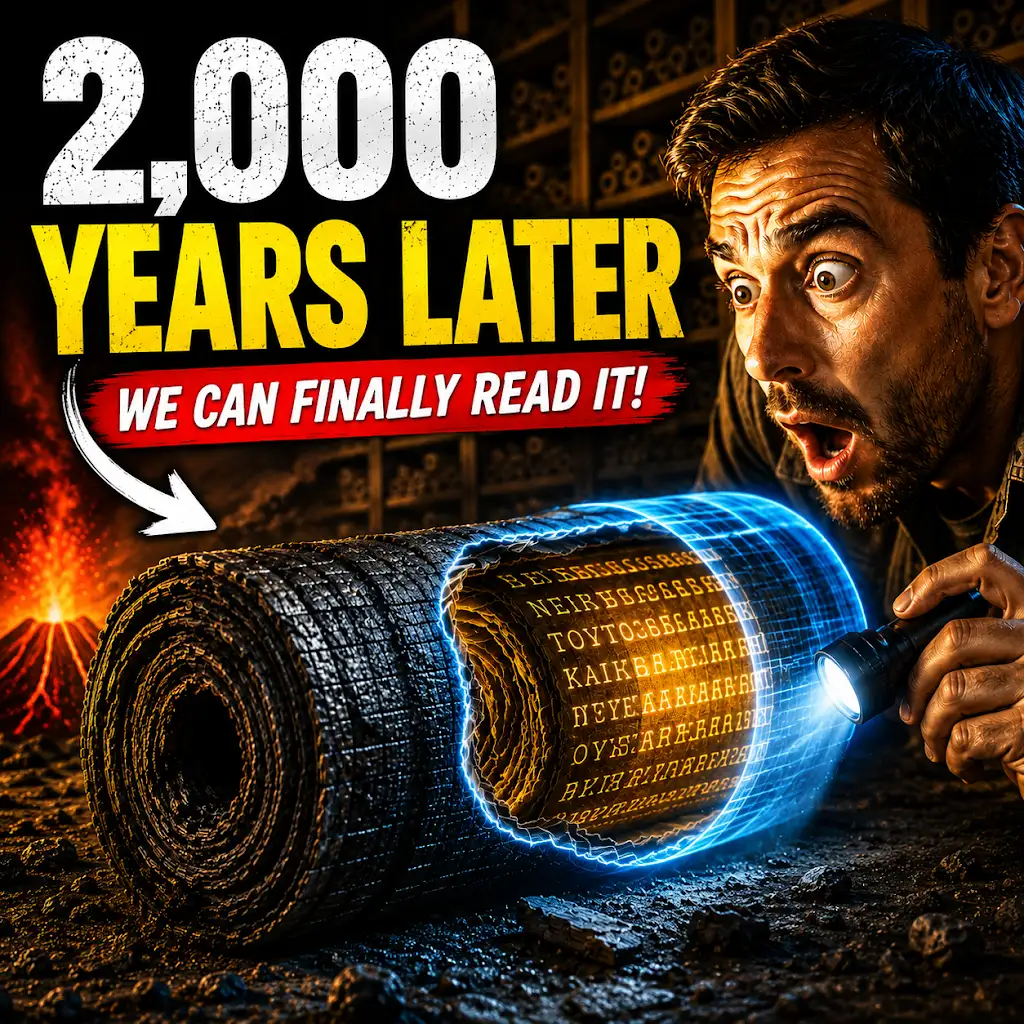
The whisper of Mount Vesuvius, a slumbering giant, has long been intertwined with the echoes of a lost civilization. For centuries, its imposing silhouette has stood as a silent sentinel over the ruins of Pompeii and Herculaneum, cities tragically preserved in time by its catastrophic eruption in 79 AD. Yet, it is not just the grand structures or the everyday objects that offer glimpses into this ancient world. Beneath layers of volcanic ash and hardened lapilli, a more delicate and fragile treasure has begun to reveal itself: papyrus scrolls. These charred remnants, once believed to be irredeemable, are now at the heart of a monumental endeavor known as the Vesuvius Challenge, a global quest to decipher the secrets they hold.
The story of the Vesuvius Challenge is inextricably linked to the discovery of the Villa of the Papyri, an opulent estate on the outskirts of Herculaneum. Unlike Pompeii, which was buried under a thick blanket of ash and pumice, Herculaneum was inundated by a superheated pyroclastic flow that, while destructive, also had the peculiar effect of carbonizing organic materials, including papyrus, rather than reducing them to dust. This process, while sealing the scrolls in a brittle, charcoal-like state, paradoxically preserved them from complete disintegration.
The Accidental Discovery and the Early Attempts at Decipherment
The Villa of the Papyri was first discovered in the 18th century by a farmer digging a well. His accidental excavation led to the uncovering of a vast library, containing hundreds of scrolls. Early attempts to unroll these fragile documents were, by modern standards, crude and often destructive. Methods involved drying, wetting, and even attempting to physically separate the tightly rolled layers, leading to significant damage and loss of text. Despite these challenges, some progress was made, yielding fragments that hinted at philosophical and literary works, most notably those of the Epicurean philosopher Philodemus.
The Technological Leap: From Physical Unrolling to Virtual Revelation
For centuries, the physical unrolling of the Herculaneum papyri remained the primary, albeit often futile, method of decipherment. The sheer fragility of the carbonized material made it an almost insurmountable obstacle. However, the advent of advanced imaging technologies in the late 20th and early 21st centuries began to revolutionize the approach. Researchers realized that if they could “see” through the layers of carbonized papyrus without physically touching it, the potential for recovery would be immense. This realization marked the dawn of a new era in papyrology and laid the groundwork for the Vesuvius Challenge.
The Vesuvius Challenge: A Global Collaborative Effort
The Vesuvius Challenge, initiated in the 21st century, represents a paradigm shift in the study of ancient texts. It is not merely an academic pursuit but a grand, collaborative undertaking that has brought together experts from diverse fields – computer science, imaging, philology, and archaeology – with the shared goal of unlocking the knowledge trapped within these volcanic-bound scrolls. The challenge is as much about technological innovation as it is about linguistic and historical scholarship.
The Genesis of the Challenge: The Need for a New Approach
The limitations of traditional methods became increasingly apparent as more scrolls were discovered and as existing ones continued to deteriorate. The sheer volume of unread material, coupled with the inherent fragility, created an urgent need for a radical new approach. The concept of the Vesuvius Challenge emerged from the recognition that no single institution or individual possessed the necessary expertise or resources to tackle this monumental task alone. It became clear that a distributed, collaborative model, leveraging cutting-edge technology, was the only viable path forward.
The Pillars of the Challenge: Technology, Collaboration, and Open Science
The Vesuvius Challenge is built upon three fundamental pillars: advanced technology, global collaboration, and open science principles. The technological aspect focuses on developing and refining non-invasive imaging techniques. Collaboration ensures that the best minds and institutions worldwide are brought together to contribute their unique skills. Open science principles mean that the data, methodologies, and findings are shared widely, fostering rapid progress and allowing for peer review and independent verification. This holistic approach has been crucial in overcoming the complex hurdles presented by the Herculaneum papyri.
Imaging the Invisible: Technological Innovations in Papyrus Decipherment
The heart of the Vesuvius Challenge lies in its ingenious application of advanced imaging technologies. These methods are designed to “see” the ink imprinted on the papyrus without physically disturbing its delicate structure. The process is akin to peering through multiple layers of very thin, dark paper to find faint writing. This has been the single most significant breakthrough in the quest to read the burnt scrolls.
X-ray Microtomography: Peeling Back the Layers of Time
One of the most impactful technologies employed is X-ray microtomography (micro-CT). This technique uses a series of X-ray images taken from different angles to create a three-dimensional reconstruction of the object. In the case of the Herculaneum papyri, the subtle differences in density between the carbonized papyrus material and the iron gall ink used by the ancient scribes allow the software to differentiate between them. This effectively creates a virtual “unrolling” of the scroll, layer by layer, allowing researchers to visualize the text.
The Micro-CT Process: From Scan to Surface Reconstruction
The micro-CT process begins with the careful scanning of a scroll. The high-resolution scans generate a vast amount of data, which is then processed by sophisticated software. Algorithms are employed to segment the papyrus layers from the ink. This allows for the creation of virtual surfaces that can be “unrolled” and flattened, much like a physical scroll, but without any risk of damage. The resulting 3D models are then further analyzed to extract the textual information.
Challenges and Refinements: Optimizing for Subtlety
While micro-CT has been revolutionary, it is not without its challenges. The subtle differences in density between the ink and the papyrus can be difficult to detect, especially in heavily degraded sections. Ongoing research focuses on optimizing scanning parameters, developing more advanced image processing algorithms, and even exploring the use of different X-ray energies to enhance contrast and improve the clarity of the reconstructed text.
Phase-Contrast Imaging: Enhancing Visibility Through Subtle Refraction
Another crucial imaging technique is phase-contrast imaging. Unlike standard X-ray imaging that relies on differences in absorption, phase-contrast imaging exploits the subtle changes in the phase of the X-ray beam as it passes through different materials. This allows for the detection of much finer details and structures that might be invisible to traditional methods. For the Herculaneum papyri, this means being able to discern even the faintest traces of ink that have not been fully absorbed or have been partially degraded.
The Power of Refraction: Revealing Faint Ink Strokes
The carbonized ink on the papyrus has a slightly different refractive index than the papyrus itself. Phase-contrast imaging is highly sensitive to these variations, effectively amplifying the signal from the ink. This allows for the visualization of text that would otherwise be lost to the naked eye or even to standard micro-CT scans. It has been instrumental in recovering previously unreadable sections of the scrolls.
Computational Reconstruction: Turning Phase Shifts into Readable Text
The raw data from phase-contrast imaging is complex and requires sophisticated computational reconstruction techniques to translate the phase shifts into a visually interpretable image of the text. Researchers are continuously developing and refining these algorithms to improve the accuracy and resolution of the reconstructed text, making it more accessible for philological analysis.
Other Promising Technologies: Infrared Spectroscopy and Raman Microscopy
Beyond X-ray based methods, other technologies are also being explored. Infrared spectroscopy, for example, can analyze the chemical composition of materials and potentially identify the presence of ink components. Raman microscopy offers high spatial resolution and can provide detailed information about the molecular structure of the ink and papyrus. While these techniques may not yet be as widely implemented as micro-CT and phase-contrast imaging for the primary decipherment, they hold promise for complementary analysis and for understanding the composition of the scrolls and their degradation processes.
The Virtual Library: Deciphering and Reconstructing Ancient Texts
Once the imaging has been completed and the virtual layers have been virtually unrolled, the arduous task of deciphering the actual text begins. This is where the expertise of ancient language scholars, particularly those specializing in Greek and Latin, comes to the forefront. The Vesuvius Challenge has also fostered the development of new digital tools to aid in this process.
The Digital Unrolling: From 3D Models to Flat Text
The initial output from the imaging process are 3D models or flattened representations of the papyrus layers. The next step is to digitally “unroll” these layers into a format that resembles a readable page. This is a complex process, as the scrolls are often wrinkled, torn, or distorted. Sophisticated software algorithms are used to correct for these distortions and create a more uniform surface upon which the text can be read.
Algorithmic Corrections: Straightening the Wrinkles and Warps
Ancient scrolls are rarely perfectly flat. The carbonization process can introduce significant warping and crumpling. Algorithms are employed to identify these distortions and apply inverse transformations to flatten the virtual surfaces. This creates a more stable and readable plane for the text, allowing scholars to better interpret the characters.
Annotation and Transcription: The Human Element in Digital Recovery
Even with advanced technology, the final transcription and interpretation of the text still requires human expertise. Scholars meticulously examine the digitally unrolled text, identifying letters, words, and phrases. They use their knowledge of ancient languages, grammar, and historical context to reconstruct missing words and fill in gaps. This collaborative effort between machine and human intelligence is crucial for the successful recovery of the ancient content.
Philological Reconstruction: Reconstructing Lost Words and Meanings
The text recovered from the Herculaneum papyri is often incomplete. Letters might be missing, words might be truncated, and entire passages can be lost. This is where the skill of philologists – scholars who specialize in the study of language in historical sources – becomes indispensable. They use their deep understanding of ancient Greek and Latin literature, as well as the context of the recovered fragments, to reconstruct the missing parts of the text.
The Art of Inference: Piecing Together Fragmented Sentences
Philologists employ a range of inferential techniques. They look for recurring patterns, grammatical structures, and contextual clues to predict missing words or letters. They also draw upon their knowledge of known ancient texts that might be similar in subject matter or style. This process is akin to solving a complex linguistic puzzle.
Historical and Philosophical Context: Understanding the “Why” Behind the Words
Beyond linguistic reconstruction, understanding the historical and philosophical context in which these texts were written is paramount. The Herculaneum papyri are thought to contain works from the Epicurean school of philosophy. Therefore, understanding the tenets of Epicureanism, the biographies of known philosophers like Philodemus, and the intellectual landscape of the time is essential for accurately interpreting the recovered content.
Beyond Philodemus: The Promise of New Discoveries
The majority of the scrolls recovered from the Villa of the Papyri are believed to be works by Philodemus. However, the Vesuvius Challenge harbors the exciting prospect of uncovering entirely unknown texts and authors, expanding our understanding of ancient literature, philosophy, and history in ways we can only begin to imagine.
Uncovering Unknown Authors and Lost Literary Traditions
While Philodemus is a significant figure, the vastness of the library suggests the potential for other philosophers, poets, and historians. The Vesuvius Challenge could unveil works by authors whose names are currently lost to history, providing entirely new perspectives on ancient thought and culture. It could also shed light on lost literary traditions and genres that have vanished from our current understanding.
The Ephemeral Nature of Ancient Literature: What Else Might Be Hidden?
So much of ancient literature has been lost to the ravages of time, conflict, and neglect. The Herculaneum papyri, preserved by a catastrophic event, represent a unique window into what might have been a much richer and more diverse literary landscape. The potential for discovering entirely new philosophical schools, forgotten epic poems, or lost historical accounts is a driving force behind the Vesuvius Challenge.
Expanding the Canon of Ancient Knowledge: A Broader Perspective on the Greco-Roman World
The recovery of new texts has the potential to significantly expand the canon of ancient knowledge. It could challenge existing interpretations of ancient history and philosophy, introduce new concepts, and force a re-evaluation of our understanding of the Greco-Roman world. Every deciphered line, every recovered word, is a piece added to the intricate mosaic of our past.
The Impact on Historical Narratives: Rewriting Chapters of the Past
The discovery of new historical accounts or philosophical treatises could fundamentally alter our understanding of certain historical events or intellectual movements. It could provide firsthand accounts of events previously only known through secondary sources, or introduce entirely new perspectives that reshape our historical narratives.
The Future of the Vesuvius Challenge and the Legacy of Burnt Scrolls
The Vesuvius Challenge is an ongoing endeavor, with new technological advancements and collaborative efforts constantly pushing the boundaries of what is possible. The legacy of these burnt scrolls, once thought to be beyond recovery, is transforming from symbols of destruction into beacons of knowledge, offering an unprecedented glimpse into a lost world.
Sustaining the Momentum: Funding, Collaboration, and Technological Advancement
The continued success of the Vesuvius Challenge relies on sustained funding, continued international collaboration, and ongoing innovation in imaging and computational technologies. As more sophisticated tools become available, the potential to recover even more degraded and difficult-to-read sections of the papyri will increase.
The Role of Public Engagement and Education
Public engagement plays a vital role in supporting the Vesuvius Challenge. Raising awareness about the importance of these discoveries and the incredible scientific and humanistic effort involved helps to garner support and inspire future generations of researchers and scholars. Educational initiatives can introduce the public to the wonders of ancient texts and the thrill of historical discovery.
The Ethical Considerations: Preservation, Access, and Interpretation
As the Vesuvius Challenge progresses, ethical considerations surrounding the preservation, access, and interpretation of these fragile artifacts become increasingly important. Ensuring that the scrolls are handled with the utmost care, that the recovered data is made accessible to the global research community, and that interpretations are arrived at through rigorous scholarly debate are all crucial aspects of responsible stewardship.
Preserving the Physical Artifacts: Balancing Access and Conservation
While digital methods allow for virtual exploration, the physical papyri remain invaluable historical artifacts. Balancing the need for access for research with the imperative of long-term preservation is a delicate act. Strict environmental controls and specialized conservation techniques are essential to prevent further deterioration of these irreplaceable objects.
Democratizing Ancient Knowledge: Open Access and Global Scholarship
The Vesuvius Challenge is a testament to the power of open science. By making data and methodologies publicly available, it fosters a truly global research community. This democratization of ancient knowledge ensures that the insights gained from these burnt scrolls are not confined to a select few but are available to scholars and the public worldwide, enriching our collective understanding of the past.
The Vesuvius Challenge is more than just an academic exercise; it is a testament to human ingenuity, perseverance, and the enduring power of knowledge. The burnt scrolls of Herculaneum, once silent witnesses to a catastrophic event, are now speaking, thanks to the relentless pursuit of discovery and the remarkable fusion of ancient wisdom and modern technology. Each deciphered word is a victory against time and destruction, a whisper from the past that continues to illuminate our present.