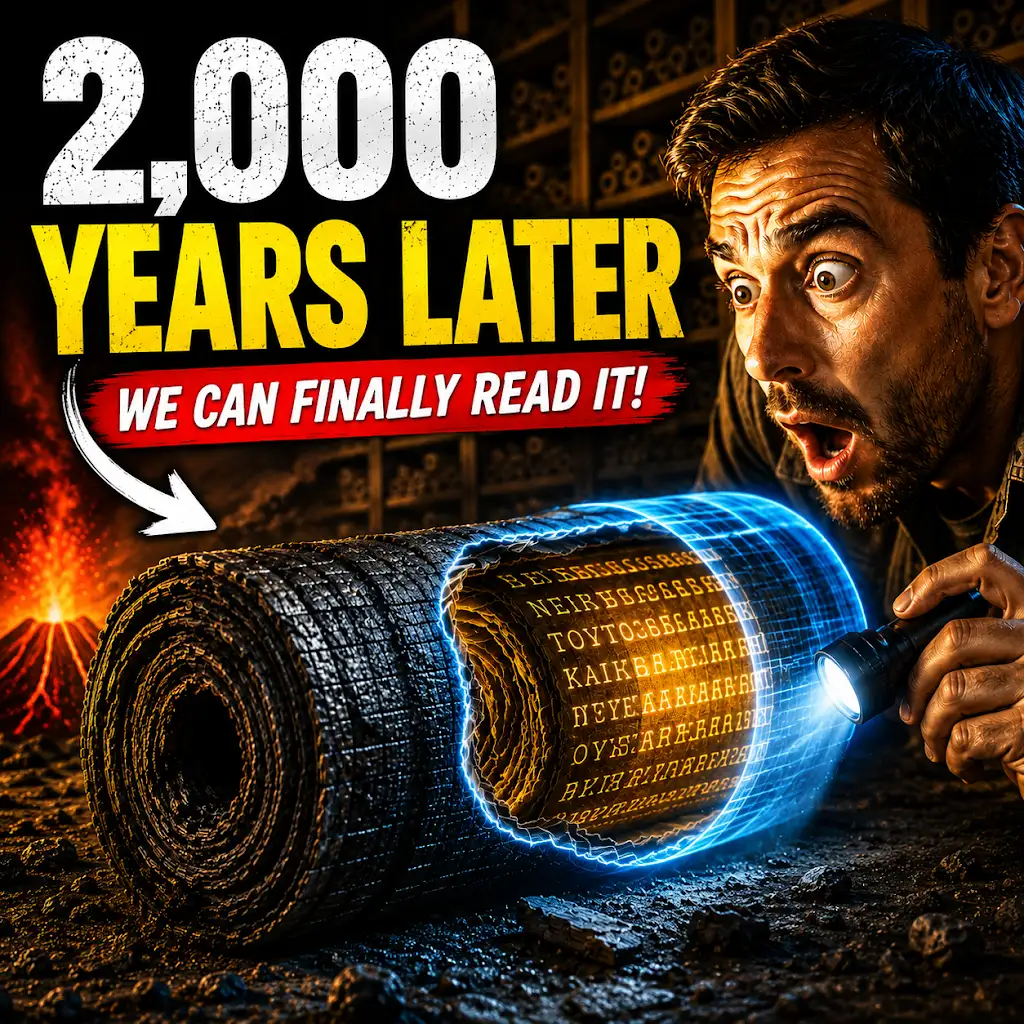
The whispers of history, often locked away in fragile, carbonized papyrus, are beginning to find their voice, thanks to the revolutionary application of X-ray scanning technology. For centuries, the Dead Sea Scrolls, a collection of ancient Jewish manuscripts discovered in the mid-20th century, have offered tantalizing glimpses into the religious and social landscape of ancient Judea. However, a significant portion of these scrolls, particularly those that have succumbed to extreme heat and age, are too fragile to unroll, their secrets held captive within a hardened, unyielding shell. This is where the power of X-ray scanning emerges, promising to unlock a treasure trove of lost knowledge without physically disturbing these irreplaceable artifacts.
The allure of ancient texts is undeniable, but the practicalities of their preservation and study are often fraught with peril. The Dead Sea Scrolls, in particular, present a unique set of challenges, stemming from their material composition and the circumstances of their discovery.
The Fragility of Papyrus and Parchment
Most of the Dead Sea Scrolls are written on parchment (animal skin) or papyrus (a reed-based material). Over millennia, these organic materials have undergone significant degradation. Exposure to light, fluctuating temperatures, and humidity have all contributed to their embrittlement. The primary concern for researchers is the inherent fragility of these ancient documents. Any attempt to physically unroll a highly carbonized scroll risks its complete disintegration. This has left vast sections of potentially vital historical and religious texts inaccessible.
The Impact of the Palmyra Fire
A particularly poignant example of this challenge lies with scrolls recovered from a cave near Palmyra, Syria, which are believed to date back to the Roman period. These texts suffered a catastrophic event: a fire that likely occurred during the Roman occupation. The intense heat from this fire, combined with subsequent burial and environmental exposure, has transformed the original ink and papyrus into a brittle, fused mass. Unrolling these documents is an impossibility, akin to attempting to separate layers of charcoal. The very act of touching them would likely result in their destruction.
The Mystery of Lost Texts
The carbonization process not only renders scrolls unreadable but also conceals the potential for further discoveries. It is entirely plausible that within these blackened husks lie complete texts, forgotten prayers, historical accounts, or even entirely unknown religious or philosophical treatises. The inability to access these internal layers represents a significant gap in our understanding of ancient Roman and Jewish life. The X-ray scanning technology offers a potential bridge over this chasm of lost information.
The Promise of X-ray Imaging
X-ray technology, widely recognized for its diagnostic capabilities in medicine, has found a sophisticated new application in the realm of archaeology and paleography. Its ability to penetrate solid matter and reveal internal structures makes it an ideal tool for examining objects that are too delicate or opaque to be studied through conventional methods.
How X-rays Work on Ancient Texts
X-rays are a form of electromagnetic radiation that can pass through materials to varying degrees depending on their density and atomic composition. When X-rays strike an object, some of the radiation is absorbed, and some is transmitted. The transmitted X-rays can then be captured on a detector, creating an image. In the context of ancient scrolls, the ink used by ancient scribes often contains different elements than the papyrus or parchment itself. For example, iron gall ink, commonly used in antiquity, contains iron compounds. These iron atoms, being denser than the surrounding cellulose fibers of the papyrus, will absorb more X-rays than the papyrus.
Differentiating Ink from Substrate
The key advantage of X-ray scanning lies in its ability to differentiate between the ink and the material upon which it is written. Even when the papyrus is completely carbonized and appears uniformly black to the naked eye, the subtle differences in density between the ink and the charred papyrus can be detected by X-rays. This allows for the isolation and visualization of the text, even when it is physically impossible to see it directly.
Non-Destructive Analysis
Perhaps the most crucial aspect of X-ray scanning is its non-destructive nature. Unlike traditional methods of unrolling and handling, which carry a high risk of damage, X-ray imaging allows for the examination of artifacts without any physical contact. This is paramount for the preservation of extremely fragile and historically significant objects like the Dead Sea Scrolls and the Roman scrolls from Palmyra. Researchers can obtain detailed information about the text without ever risking its physical integrity.
Advancements in X-ray Technology for Scroll Analysis
The application of X-ray technology to ancient scrolls is not a new concept, but recent advancements have significantly enhanced its capabilities, enabling researchers to extract ever more detailed and precise information.
Microfocus X-ray Computed Tomography (MicroCT)
One of the most groundbreaking advancements is the use of microfocus X-ray computed tomography (MicroCT). This technique uses a very fine X-ray beam to scan the object from multiple angles. A computer then reconstructs these 2D projections into a 3D digital model. This allows for the visualization of the internal structure of the scroll with remarkable detail, revealing not only the text but also the layers of papyrus and any potential damage or irregularities.
Synchrotron X-ray Imaging
Another powerful technique employed is synchrotron X-ray imaging. Synchrotrons are large, powerful particle accelerators that generate extremely bright and tunable X-ray beams. This intensity and tunability allow for even finer resolution imaging and the detection of subtle differences in elemental composition. Synchrotron X-ray fluorescence (XRF) mapping, for instance, can precisely identify the distribution of elements like iron within the ink, providing a clear contrast against the background material.
Multispectral X-ray Imaging
Researchers are also exploring multispectral X-ray imaging, which involves using X-rays at different energy levels. This can further enhance the contrast between different materials and reveal details that might be missed with a single X-ray energy. By analyzing how the scroll interacts with X-rays across a spectrum of energies, scientists can create more sophisticated and informative images.
Sophisticated Image Processing and Reconstruction
Beyond the hardware, significant progress has been made in the software used for image processing and reconstruction. Advanced algorithms are now capable of filtering out noise, enhancing contrast, and even digitally “unrolling” sections of the scroll based on the 3D data obtained. This sophisticated digital manipulation is crucial for making the faint ink traces clearly visible and decipherable.
Deciphering the Invisible: Case Studies and Discoveries
The application of X-ray scanning to ancient scrolls has already yielded remarkable results, offering a tangible glimpse into the potential for future discoveries. While the full potential for the Roman scrolls from Palmyra is still being explored, the success with other fragile ancient texts provides a strong precedent.
The Herculaneum Papyri: A Precedent for Success
A compelling example of X-ray technology’s success can be found in the study of the Herculaneum Papyri. These papyri, carbonized by the eruption of Mount Vesuvius in 79 AD, are even more severely damaged than many of the Dead Sea Scrolls. For centuries, attempts to unroll them were largely unsuccessful, leading to their destruction. However, the application of X-ray computed tomography has allowed researchers to virtually unroll sections of these papyri, revealing previously unreadable philosophical texts, including works by Epicurus. This success serves as a powerful indicator of what can be achieved with the Roman scrolls from Palmyra.
Unlocking the Secrets of the Dead Sea Scrolls
While not the primary focus of this discussion, it is important to note that X-ray scanning has also been instrumental in studying some of the more fragile Dead Sea Scrolls. Techniques have been employed to visualize text on damaged fragments that would otherwise be lost. This ongoing work demonstrates the versatility and effectiveness of X-ray technology in the field of textual preservation and analysis.
The Potential for the Palmyra Scrolls
The Roman scrolls discovered near Palmyra present a particularly exciting frontier. Their carbonized state, a consequence of a violent historical event, has preserved them in a unique way, albeit rendering them unreadable by traditional means. X-ray scanning offers the most promising pathway to understanding these texts. Researchers anticipate being able to differentiate the ink from the carbonized papyrus, potentially revealing a wealth of information about the Roman presence in the region, local governance, religious practices, and the daily lives of the inhabitants during that era. The possibility of discovering entirely new historical narratives is immense.
The Future of Ancient Textual Research
The integration of advanced X-ray scanning technologies into the study of ancient scrolls represents a paradigm shift in how we approach historical and textual research. It opens up new avenues for discovery and allows for the preservation of knowledge that would otherwise be lost to time.
Bridging the Gap Between Preservation and Access
The primary benefit of X-ray scanning is its ability to bridge the gap between the critical need for artifact preservation and the scholar’s desire for access to information. It offers a way to “read” without touching, ensuring that these fragile remnants of the past can be studied for generations to come. This balance is crucial for the long-term viability of historical research.
Collaborative Efforts and Technological Integration
The successful application of these technologies often relies on collaborative efforts between archaeologists, conservators, physicists, and computer scientists. The development of specialized imaging equipment, advanced algorithms for data processing, and innovative methods for interpreting the resulting images are all part of this multidisciplinary endeavor. Continued investment in research and development in this area will undoubtedly lead to further breakthroughs.
A New Era of Historical Understanding
As X-ray scanning technology continues to evolve and become more accessible, we can anticipate a significant acceleration in our understanding of ancient civilizations. The silent voices of the past, trapped within carbonized scrolls and fragile fragments, are finally being given a chance to speak, offering invaluable insights into the human story. The Roman scrolls from Palmyra, once considered an impenetrable enigma, now stand as a testament to the power of human ingenuity in unlocking the secrets of history. The silent libraries of carbonized papyrus are beginning to reveal their stories, ushering in a new era of historical understanding.