The frigid, desolate expanse of Greenland’s ice sheet, a canvas of frozen wonder and scientific enigma, is poised to become the frontier for a groundbreaking technological endeavor. At the heart of this ambitious project lies the concept of a portable nuclear reactor, a compact and powerful energy source designed to unlock the secrets hidden deep within the ancient ice. This innovative solution promises to revolutionize polar research, offering a sustainable and reliable power alternative in one of the planet’s most remote and challenging environments.
The Limitations of Existing Power Solutions
For decades, scientific expeditions to Greenland have grappled with the fundamental challenge of energy provision. Traditional methods, relying on diesel generators, are plagued by a litany of drawbacks. The sheer volume of fuel required for extended research missions is a logistical nightmare, demanding regular and perilous supply drops. The environmental impact of burning fossil fuels in such a pristine ecosystem is a growing concern, with the risk of spills and emissions contaminating the fragile Arctic environment. Furthermore, the noise and vibrations from these generators can interfere with sensitive scientific instruments and wildlife observations. The operational limitations are stark: limited power output restricts the scope of research, and the constant need for refueling can dictate the duration and location of expeditions.
The Unique Demands of Greenlandic Research
Greenland’s ice sheet is not merely a static block of ice; it is a dynamic repository of Earth’s climatic history and a crucial component of global climate regulation. Scientists are eager to probe its depths, seeking to understand past atmospheric conditions, glacial dynamics, and the potential impacts of rising global temperatures. This research necessitates the operation of sophisticated equipment, including deep ice core drills that require significant electrical power, advanced sensor arrays for atmospheric and glaciological monitoring, and the life support systems for researchers living in isolated camps for months on end. The extreme cold and potential for prolonged periods of darkness further amplify the need for a robust and consistent power supply that can operate autonomously and reliably, far from any existing grid infrastructure.
The Promise of Enhanced Scientific Discovery
The introduction of a portable nuclear reactor would fundamentally alter the landscape of Greenlandic research. It would enable scientists to deploy more powerful and energy-intensive equipment, leading to deeper ice core analysis, more detailed subsurface imaging, and the real-time processing of vast datasets. This increased power capacity would allow for longer research durations, extending the periods of observation and data collection, thereby enhancing the statistical significance and comprehensiveness of scientific findings. Moreover, the ability to operate independently of fuel resupply opens up possibilities for establishing semi-permanent research stations in previously inaccessible regions, facilitating long-term monitoring and a more holistic understanding of glacial processes and their global implications.
Recent discussions surrounding the potential deployment of portable nuclear reactors, particularly in challenging environments like beneath the Greenland ice, have raised important questions about energy sustainability and safety. An insightful article that delves into the broader implications of energy security in extreme conditions can be found here: Defending the Lunar Base: Consequences of an Attack. This piece explores the strategic considerations of energy sources in remote locations, drawing parallels to the challenges faced in both lunar and terrestrial settings.
Introducing the Portable Nuclear Reactor: A Technological Leap
Conceptual Design and Key Features
The portable nuclear reactor, as envisioned for Greenland, is a marvel of miniaturization and advanced engineering. Unlike the massive power plants of conventional nuclear energy, these reactors are designed to be compact, modular, and easily transportable. They are typically based on Small Modular Reactor (SMR) technology, featuring integrated safety systems and passive cooling mechanisms that minimize the need for external intervention. Key features include a robust containment structure designed to withstand extreme environmental conditions, an efficient energy conversion system that maximizes power output from a small fuel core, and advanced control systems that ensure safe and stable operation. The focus is on inherent safety, with designs that naturally shut down in the event of an anomaly, rendering them exceptionally resilient.
Fuel and Core Design
The heart of the portable reactor is its specialized fuel core. These cores are designed for high energy density and long operational lifespans, often utilizing enriched uranium or other advanced fissile materials. The design prioritizes neutron economy and efficient heat generation, ensuring maximum energy extraction. Safety features are integrated directly into the core design, such as neutron-absorbing materials that can be activated to halt the fission process instantaneously. The fuel is typically encased in robust cladding, designed to withstand the high temperatures and pressures of operation, and to prevent the release of radioactive materials even in extreme scenarios.
Safety Systems and Redundancy
Safety is paramount in any nuclear technology, and for a portable reactor operating in such an isolated and sensitive environment, it is an absolute imperative. The designs incorporate multiple layers of redundancy, ensuring that even if one safety system fails, others are in place to maintain control. Passive safety features, which rely on natural physical laws like gravity and convection rather than active mechanical systems, are heavily emphasized. These include passive cooling systems that can dissipate heat even without external power or human intervention. Active safety systems, while still present, are designed to be fail-safe and are supplemented by sophisticated monitoring and control mechanisms that provide real-time feedback on reactor performance.
Transportability and Deployment
The “portable” aspect of these reactors is crucial. They are designed to be manufactured off-site and then transported to their destination in modular components, often by heavy-lift aircraft or specialized ships. Once on-site, these modules can be assembled and connected with relative ease, minimizing the disruption to the surrounding environment. The deployment process is meticulously planned, often involving pre-prepared foundations or specialized mounting systems designed to be minimally invasive to the ice sheet. The goal is to achieve rapid deployment and, equally importantly, safe and efficient decommissioning when the research mission concludes.
Powering Groundbreaking Scientific Initiatives
Deep Ice Core Drilling Operations
The most immediate and impactful application of a portable nuclear reactor in Greenland lies in its ability to power deep ice core drilling operations. Extracting ice cores that can extend kilometers into the ice sheet is an energy-intensive process. The drills require substantial electrical power to operate the drilling head, pump drilling fluids, and extract the ice samples. Current methods are often limited by the available power, dictating the depth and speed of drilling. A portable nuclear reactor would provide the consistent and ample energy needed to drill deeper and more efficiently, unlocking ice archives that have preserved atmospheric conditions from hundreds of thousands, even millions, of years ago.
Understanding Past Climates
The ice cores extracted through these advanced drilling techniques are invaluable archives of Earth’s past climate. Trapped within the ice are tiny air bubbles that preserve samples of the atmosphere from the time the ice formed. By analyzing the composition of these bubbles, scientists can reconstruct historical concentrations of greenhouse gases, volcanic activity, and other atmospheric phenomena. This historical data is crucial for understanding natural climate variability, identifying the drivers of past warming and cooling periods, and developing more accurate climate models for predicting future changes. A portable nuclear reactor provides the sustained power needed to retrieve longer and more pristine ice cores, thereby extending the depth of this climate record.
Studying Glacial Dynamics and Sea Level Rise
The physical properties of the ice itself, from its layered structure to its isotopic composition, provide critical information about how glaciers have flowed and responded to past climate shifts. Deep ice cores can reveal the history of ice sheet movement, calving events, and the presence of subglacial water. This data is vital for understanding the processes that contribute to sea level rise. A reliable power source like a portable reactor would enable more extensive and detailed studies of glacial dynamics, allowing scientists to better predict how Greenland’s ice sheet will behave in a warming world, a critical concern for coastal populations globally.
Establishing Remote Research Stations
Beyond ice core drilling, portable nuclear reactors are envisioned to power the establishment of advanced, semi-permanent research stations in remote locations across the Greenland ice sheet. These stations would serve as hubs for a wide range of scientific activities, from atmospheric monitoring to glaciological surveying and biological research.
Uninterrupted Scientific Monitoring
Establishing a consistent and reliable power supply is essential for long-term, uninterrupted scientific monitoring. Remote weather stations, seismic sensors, and atmospheric composition analyzers require continuous power to transmit data. A portable nuclear reactor would eliminate the logistical burdens and environmental risks associated with frequent fuel resupply missions, allowing for sustained data collection and a more comprehensive understanding of the Arctic environment. This uninterrupted monitoring is crucial for tracking changes in real-time and for early detection of critical environmental shifts.
Supporting Field Expeditions and Logistics
These remote research stations, powered by portable reactors, would also provide essential support for a multitude of field expeditions. They could offer accommodation, power for communication equipment, and facilities for sample analysis. This infrastructure would enable researchers to spend longer periods in the field, exploring more diverse areas and conducting more complex experiments, all while being assured of a stable and abundant energy source. The ability to establish these advanced outposts would significantly expand the scientific footprint in Greenland and enhance the capacity for collaborative research.
Advancements in Subsurface Exploration
The potential of portable nuclear reactors extends to powering advanced subsurface exploration technologies. The ability to generate substantial power locally opens doors to a new generation of geophysical surveying and remote sensing tools.
Geophysical Surveys and Mapping
Techniques such as ground-penetrating radar (GPR) and seismic surveys can reveal the underlying bedrock topography, identify subglacial lakes, and detect variations in ice density. These methods, when powered by a portable nuclear reactor, can be deployed more widely and with greater resolution. This enhanced capability allows for the creation of highly detailed maps of the subglacial landscape, offering insights into the flow dynamics of the ice sheet and its interaction with the Earth’s crust.
Studying Subglacial Environments
Beneath the vast ice sheet lie enigmatic subglacial environments, including lakes and rivers, that may harbor unique ecosystems. Exploring these environments is technically challenging due to the immense pressure of the ice and the lack of ambient light. A portable nuclear reactor could power specialized submersible robots and sensor packages designed for these extreme conditions, enabling unprecedented exploration and scientific sampling of these hidden worlds. This research holds the potential to uncover new forms of life and to understand the biogeochemical processes occurring beneath the ice.
Addressing Safety and Environmental Considerations
Rigorous Safety Protocols and Engineering Standards
The deployment of any nuclear technology necessitates an unwavering commitment to safety. For portable reactors in Greenland, this translates into the adoption of the most stringent safety protocols and the highest engineering standards. Reactor designs are subjected to extensive independent review and rigorous testing to ensure their ability to withstand extreme conditions, including seismic activity, potential impact events, and temperature fluctuations. The emphasis is on inherent safety, meaning the reactor is designed to be fundamentally safe, with passive systems that prevent accidents rather than relying on active interventions.
Defense-in-Depth Strategy
A core principle in nuclear safety is the “defense-in-depth” strategy. This approach involves multiple, independent layers of protection to prevent accidents and mitigate their consequences. For a portable reactor, this would include robust containment structures, redundant safety control systems, and emergency shutdown mechanisms. Each layer is designed to compensate for potential failures in preceding layers, ensuring a very high level of safety.
Emergency Preparedness and Response
Despite the inherent safety of the designs, comprehensive emergency preparedness and response plans are crucial. These plans outline procedures for any potential incident, including evacuation protocols, containment strategies, and long-term environmental monitoring. These plans are developed in consultation with relevant national and international authorities and are regularly reviewed and updated.
Environmental Impact Assessment and Mitigation
The pristine nature of Greenland’s environment demands careful consideration of any potential ecological impact. Portable nuclear reactors are designed to have minimal environmental footprints.
Waste Management and Decommissioning
The operational lifespan of these reactors is carefully managed, and provisions for safe waste management and decommissioning are integral to the project from its inception. Spent fuel is handled with extreme care and typically returned to the manufacturing facility for reprocessing or secure disposal. Upon the conclusion of the research mission, the reactor and its associated infrastructure are meticulously decommissioned, with the site restored to its original, undisturbed state. The goal is to leave no lasting environmental trace.
Radiation Monitoring and Containment
Continuous radiation monitoring is a non-negotiable aspect of operating these reactors. Sophisticated sensor networks are deployed to detect any potential leakage, and real-time data is transmitted to monitoring centers. The reactor’s containment structures are designed to prevent any release of radioactive materials into the atmosphere or surrounding environment. The emphasis is on maintaining zero radiation exposure to both the environment and personnel.
Recent discussions about the potential of portable nuclear reactors have sparked interest, particularly in the context of their deployment beneath the Greenland ice. This innovative approach could provide a sustainable energy source while minimizing environmental impact. For those intrigued by historical maps and their mysteries, a fascinating article explores the Piri Reis map and its implications for our understanding of ancient navigation and geography. You can read more about it in this insightful piece that delves into the secrets of the past.
The Future of Polar Research: A New Era of Discovery
| Metrics | Data |
|---|---|
| Location | Beneath Greenland ice |
| Type | Portable nuclear reactor |
| Purpose | Power generation |
| Power Output | Classified |
| Environmental Impact | Under evaluation |
International Collaboration and Knowledge Sharing
The ambitious undertaking of powering Greenlandic research with portable nuclear reactors is likely to foster unprecedented levels of international collaboration. Sharing the technological expertise, operational experience, and scientific findings will be crucial for the success and responsible implementation of this initiative. Joint research programs and data sharing agreements will accelerate the pace of discovery and ensure that the benefits of this advanced technology are realized globally.
Ethical Considerations and Public Engagement
As with any advanced technology with potential societal implications, ethical considerations and public engagement are vital. Open dialogue and transparent communication with indigenous communities, policymakers, and the broader public are essential. Educating stakeholders about the technology, its benefits, and the rigorous safety measures in place will build trust and ensure responsible deployment.
Paving the Way for Other Remote Applications
The success of portable nuclear reactors in Greenland could pave the way for their application in other remote and challenging environments. From powering research stations in Antarctica to supporting off-grid communities or facilitating resource exploration in polar regions, the potential applications are vast. This technology represents a paradigm shift in our ability to harness clean and reliable energy in places previously deemed inaccessible or too costly to power. The insights gained from Greenland will undoubtedly inform future deployments and contribute to a more sustainable global energy future. The era of unlocking the secrets of our planet, even in its most extreme frontiers, is dawning, powered by innovation and a commitment to scientific advancement.
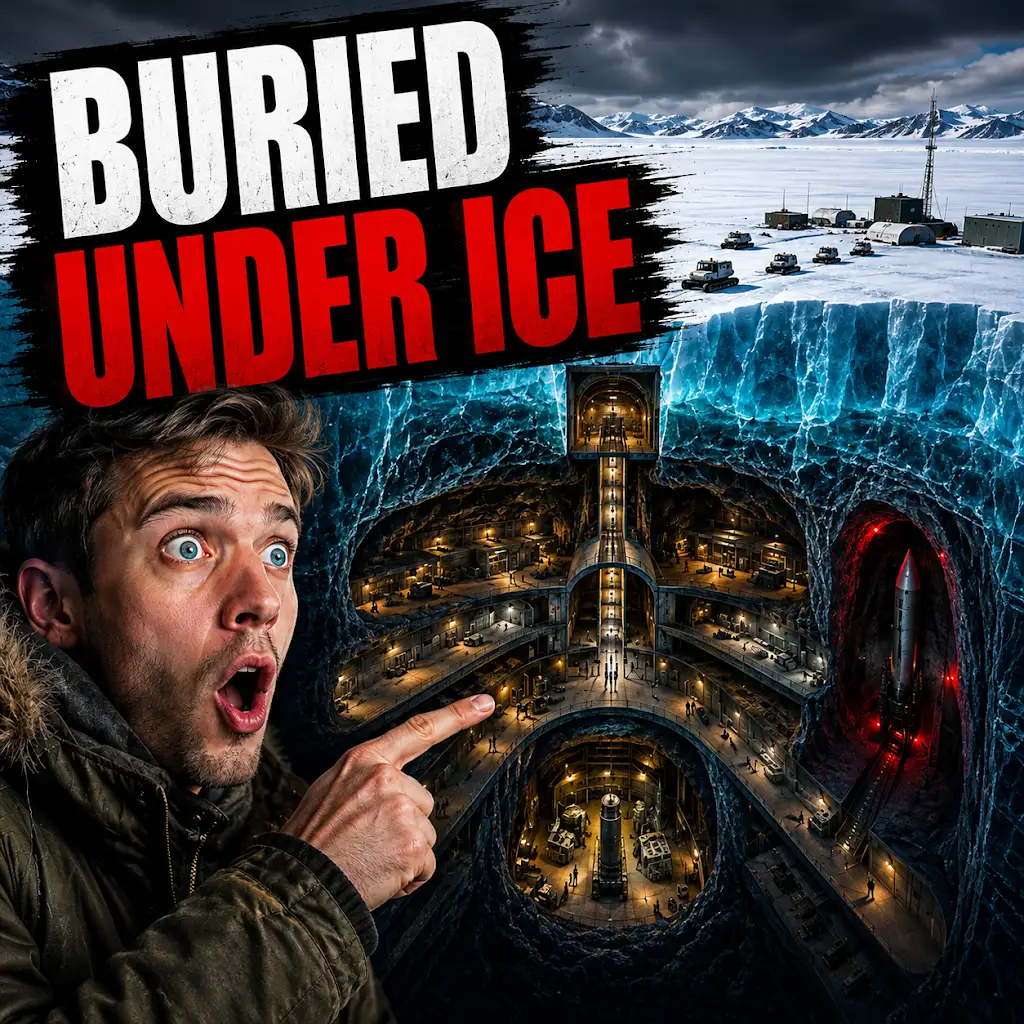
The U.S. Built a Nuclear City Under Greenland. The Ice Won.
FAQs
What is a portable nuclear reactor?
A portable nuclear reactor is a compact and self-contained nuclear power system that can be transported and installed in remote or isolated locations to provide a reliable source of electricity.
Why was a portable nuclear reactor placed beneath the Greenland ice?
The portable nuclear reactor was placed beneath the Greenland ice to power a Cold War-era radar station known as Camp Century, which was built by the US military in the 1950s as part of a secret project to test the feasibility of deploying nuclear missiles from the Arctic.
What are the potential risks and concerns associated with a portable nuclear reactor beneath the Greenland ice?
The placement of a portable nuclear reactor beneath the Greenland ice raises concerns about potential environmental contamination in the event of a meltdown or leakage, as well as the long-term impact on the surrounding ecosystem and local communities.
What are the benefits of using a portable nuclear reactor in remote locations?
Portable nuclear reactors offer a reliable and sustainable source of power for remote locations where traditional energy sources may be limited or unavailable. They can also reduce the reliance on fossil fuels and provide a more environmentally friendly alternative.
What are the current plans for the portable nuclear reactor beneath the Greenland ice?
There are currently no plans to remove the portable nuclear reactor from beneath the Greenland ice. However, ongoing research and monitoring are being conducted to assess the potential risks and implications of its presence in the region.