
Beneath the vast, seemingly immutable ice sheet of Greenland, a secret history lies buried, a testament to human ambition, Cold War anxieties, and the ingenuity born from a frozen frontier. Camp Century, a forgotten city carved into the ice, whispers tales of a clandestine military project that aimed not just to house soldiers, but to wage war from beneath the very surface of the Arctic. This is the story of a place that was both a marvel of engineering and a ghost of a bygone era, a testament to what humanity can build, and to the ephemeral nature of even the most ambitious endeavors.
The genesis of Camp Century, officially designated as U.S. Army Strategic Air Command Project Iceworm, was rooted deeply in the geopolitical tensions of the Cold War. The Soviet Union’s advancements in intercontinental ballistic missile (ICBM) technology presented a formidable challenge to the United States’ strategic defense. Traditional missile launch sites were vulnerable and easily identifiable. The idea, therefore, was to create a mobile, hidden launch platform that could evade detection and respond with devastating speed. Greenland, with its vast, sparsely populated ice sheet, presented an ideal, albeit harsh, location.
A Bold and Audacious Proposal
The concept of a subglacial base was nothing short of audacious. It proposed a network of tunnels and facilities excavated deep within the Greenland ice sheet, providing a concealed and potentially invulnerable location for nuclear missile launchers. The sheer scale of such an undertaking was immense, requiring novel engineering solutions and a deep understanding of glacial dynamics. The U.S. Army Corps of Engineers, accustomed to tackling formidable challenges, found themselves presented with a problem that pushed the boundaries of their expertise.
The Strategic Imperative
The prevailing strategic doctrine of the era dictated the need for a survivable second-strike capability. This meant having the means to retaliate even after a first strike by the enemy. A base hidden beneath kilometers of ice offered the ultimate in concealment, making it theoretically impossible for the Soviets to target and destroy the missiles before they could be launched. This strategic imperative, fueled by the constant fear of nuclear annihilation, provided the impetus for the ambitious project.
The Greenland Context
Greenland, a vast island territory of Denmark, offered a unique and challenging environment. Its immense ice sheet, thousands of meters thick in places, was a formidable natural barrier. However, it also represented an uncharted and largely unpopulated expanse, perfect for a secret military installation. The harsh Arctic climate, with its extreme cold, blizzards, and limited daylight, presented significant logistical and engineering hurdles, but these were seen as surmountable in the pursuit of strategic advantage.
Early Explorations and Feasibility Studies
Before any construction could begin, extensive exploration and feasibility studies were conducted. Scientists and engineers ventured into the icy wilderness, collecting data on ice depth, temperature, and movement. They studied the structural integrity of ice under immense pressure and developed methods for excavating and maintaining stable underground environments. These early investigations were crucial in shaping the final design and implementation of Camp Century.
Ice Core Drilling and Glaciological Research
A significant aspect of the initial research involved extensive ice core drilling. These cores provided invaluable information about the ice sheet’s history, its thickness, and its composition. Glaciologists meticulously analyzed these samples, gaining a deeper understanding of how the ice flowed and how it would behave under the stresses of construction and the weight of the structures. This research was not just for military purposes; it also contributed significantly to the scientific understanding of the Arctic environment.
Engineering Challenges and Innovations
The engineering challenges were immense. Excavating tunnels in solid ice, maintaining a stable internal temperature, and preventing the structures from being crushed by the relentless pressure of the ice required innovative solutions. New tunneling techniques were developed, and specialized construction equipment was designed to operate in the extreme cold. The project demanded a level of ingenuity that pushed the boundaries of what was previously thought possible.
The true story of Camp Century in Greenland, a secret U.S. military base established during the Cold War, highlights the intersection of military strategy and environmental concerns. For those interested in understanding the broader geopolitical implications of such military endeavors, a related article titled “Unraveling the Geopolitical Crisis: Navigating Global Tensions” provides valuable insights into contemporary global conflicts and their historical roots. You can read it here: Unraveling the Geopolitical Crisis.
The Construction of a Frozen Metropolis
The construction of Camp Century was a monumental undertaking, a testament to human perseverance and engineering prowess in one of the most inhospitable environments on Earth. From 1959 to 1960, a prefabricated city was painstakingly assembled beneath the surface of the Greenland ice sheet, creating a unique and temporary subterranean world.
Prefabricated Modules and Rapid Assembly
The core of Camp Century’s design relied on prefabricated modules. These sections, built in warmer climates, were transported to Greenland and then assembled on-site. The modular approach allowed for relatively rapid construction and provided flexibility in the layout of the base. These modules were designed to be connected, forming a network of interconnected facilities.
A City Beneath the Ice
Camp Century was envisioned as a self-sufficient city. It boasted a power plant, a hospital, a cinema, a chapel, and living quarters for its inhabitants. The construction involved excavating over 3 kilometers of tunnels, creating a complex network that housed everything from barracks and workshops to research laboratories and, of course, the concealed missile launch facilities.
The Power of Nuclear Energy
A significant feature of Camp Century was its small, portable nuclear reactor, the PM-2A. This provided the base with a reliable and continuous source of power, essential for maintaining its operations in such a remote and challenging location. The reactor allowed for the lighting, heating, and operation of all the base’s systems, making it a truly self-contained environment.
The Artificial Environment
Creating and maintaining an artificial environment within the ice was a feat of engineering. The tunnels were reinforced, and the prefabricated modules were insulated to prevent heat loss and to maintain a habitable temperature. The constant battle against the natural forces of the ice was an ongoing challenge that required continuous monitoring and maintenance.
Climate Control and Ventilation
Maintaining a breathable and comfortable atmosphere within the ice tunnels was paramount. Sophisticated ventilation systems were installed to ensure a constant supply of fresh air and to remove any contaminants. The internal temperature was carefully regulated, providing a stark contrast to the frigid conditions outside.
Waste Management and Resourcefulness
Operating a closed system like Camp Century presented unique challenges for waste management and resourcefulness. Every resource had to be carefully managed, and waste disposal needed to be handled in a way that minimized environmental impact and ensured the continued viability of the base.
Life in the Subglacial Barracks
Life at Camp Century was a unique and often challenging experience for the soldiers and scientists who called it home. The isolation, the extreme environment, and the secrecy of the mission all contributed to a distinct way of life, far removed from the ordinary.
The Daily Grind of Arctic Soldiers
For the soldiers stationed at Camp Century, daily life revolved around maintaining the base, conducting drills, and conducting scientific research. The routine was rigorous, designed to keep personnel occupied and focused amidst the isolation. The sheer effort of living in such an environment was a constant challenge.
Routine and Recreation
Despite the demanding nature of their duties, efforts were made to provide some semblance of normalcy and recreation. The cinema offered a welcome escape, and various recreational activities were organized to boost morale. The close-knit community was essential for psychological well-being.
The Psychological Impact of Isolation
The psychological impact of living underground, beneath kilometers of ice, and in constant isolation could be significant. Soldiers were trained to cope with these conditions, but the lack of natural light and the confinement undoubtedly took a toll. The psychological well-being of the personnel was a constant concern for the base commanders.
A Melting Pot of Skills and Dedication
Camp Century was not just a military outpost; it was a hub for scientific research and technological innovation. A diverse group of individuals, from engineers and scientists to soldiers and technicians, all played a crucial role in the functioning of the base.
Scientific Endeavors Beneath the Ice
Beyond its military purpose, Camp Century served as a valuable platform for scientific research. Glaciologists continued their studies of the ice sheet, meteorologists gathered data on Arctic weather patterns, and geologists explored the subglacial landscape. The unique environment offered unparalleled opportunities for scientific discovery.
The Ingenuity of the Technicians
The functioning of Camp Century relied heavily on the ingenuity and dedication of its technicians. They were responsible for maintaining the complex machinery, from the nuclear reactor to the life support systems, ensuring that the artificial environment remained stable and operational.
The Inevitable Retreat: The Ice Claims Its Own
Despite its advanced engineering and strategic importance, Camp Century was ultimately a victim of the very element that gave it its secrecy and its unique character: the ice. The relentless forces of nature proved to be an insurmountable foe, leading to the eventual abandonment of the subglacial city.
The Unforeseen Dynamics of Glacial Movement
The engineers and scientists involved in the planning and construction of Camp Century had made extensive studies of the ice. However, the dynamic nature of a living glacier is complex and difficult to predict with absolute certainty. The ice sheet was not as static as initially believed.
The Crushing Weight and Shifting Ice
Over time, the immense weight of the ice sheet exerted pressure on the tunnels and structures. The ice also moved and shifted, causing deformation and structural instability. Cracks began to appear, and the tunnels started to compress, threatening the integrity of the entire base.
Accelerating Ice Flow
Subsequent research has indicated that the area where Camp Century was built experienced a higher rate of ice flow than initially anticipated. This acceleration meant that the ice was moving more rapidly, exerting greater stress on the man-made structures and shortening the lifespan of the base.
The Silent Erosion of Structures
As the ice shifted and compressed, the prefabricated modules and tunnels began to buckle and warp. The carefully constructed artificial environment was slowly but surely being reclaimed by the natural forces of the glacier. The battle against the ice was a losing one.
Structural Degradation and Collapse
Sections of the tunnels began to collapse, and the modules were subjected to immense stress. The once-proud city beneath the ice was slowly being crushed and deformed, rendering it increasingly unsafe and unusable. The sounds of groaning ice and shifting structures were a constant reminder of the inevitable.
The Dangers of an Unstable Base
As the structural integrity of Camp Century deteriorated, the risks associated with operating within the base escalated. The danger of complete collapse or the release of hazardous materials became a significant concern, necessitating the decision to evacuate and abandon the project.
The true story of Camp Century in Greenland reveals a fascinating chapter in Cold War history, where the U.S. military constructed a secret base beneath the ice, primarily for research and strategic purposes. This intriguing narrative intersects with various historical mysteries, including the theories surrounding ancient maps and lost civilizations. For those interested in exploring more about such enigmatic topics, a related article delves into the Piri Reis map and its implications for understanding past civilizations. You can read more about it here.
A Ghost in the Ice: The Legacy of Camp Century
| Metrics | Data |
|---|---|
| Location | Greenland |
| Construction Period | 1959-1960 |
| Purpose | Research and testing of nuclear missiles |
| Abandonment | 1972 |
| Environmental Concerns | Melting ice could release pollutants |
Though Camp Century was eventually abandoned and swallowed by the ice, its story endures as a fascinating chapter in human history. It serves as a powerful reminder of Cold War ambitions, the limits of human ingenuity, and the enduring power of nature.
The Enduring Mystery and Scientific Value
The abandonment of Camp Century left behind a unique archaeological site, frozen in time. While its military purpose was never fully realized, the base became an unintended archive of life in the Arctic and a subject of ongoing scientific interest.
Rediscovery and Modern Exploration
In recent years, thanks to advancements in radar technology, the buried tunnels and structures of Camp Century have been rediscovered. Scientists are now able to peer beneath the ice and gather more information about the base and its eventual demise.
The Environmental Concerns of a Frozen Relic
The thawing of the Greenland ice sheet, a consequence of climate change, has raised new concerns about Camp Century. As the ice melts, the remnants of the base, including potentially hazardous materials from its operational days, could be released into the environment.
Lessons Learned from a Frozen Frontier
Camp Century’s story offers valuable lessons about the challenges of operating in extreme environments and the importance of understanding the long-term implications of ambitious projects. It underscores the fact that even the most technologically advanced endeavors can be ultimately humbled by the forces of nature.
The Hubris of Human Endeavor
The story of Camp Century can be seen as a cautionary tale about human hubris. The ambition to conquer the Arctic and to create a hidden military stronghold, while driven by understandable geopolitical anxieties, ultimately underestimated the power and dynamism of the ice.
The Importance of Environmental Stewardship
The ongoing concerns about the thawing of Camp Century highlight the critical importance of environmental stewardship. The legacy of past human endeavors in the Arctic must be managed with care to prevent unintended environmental consequences in the face of a changing climate. Camp Century, a city once buried in ice, now serves as a poignant reminder of our interconnectedness with the planet and the enduring power of the natural world.
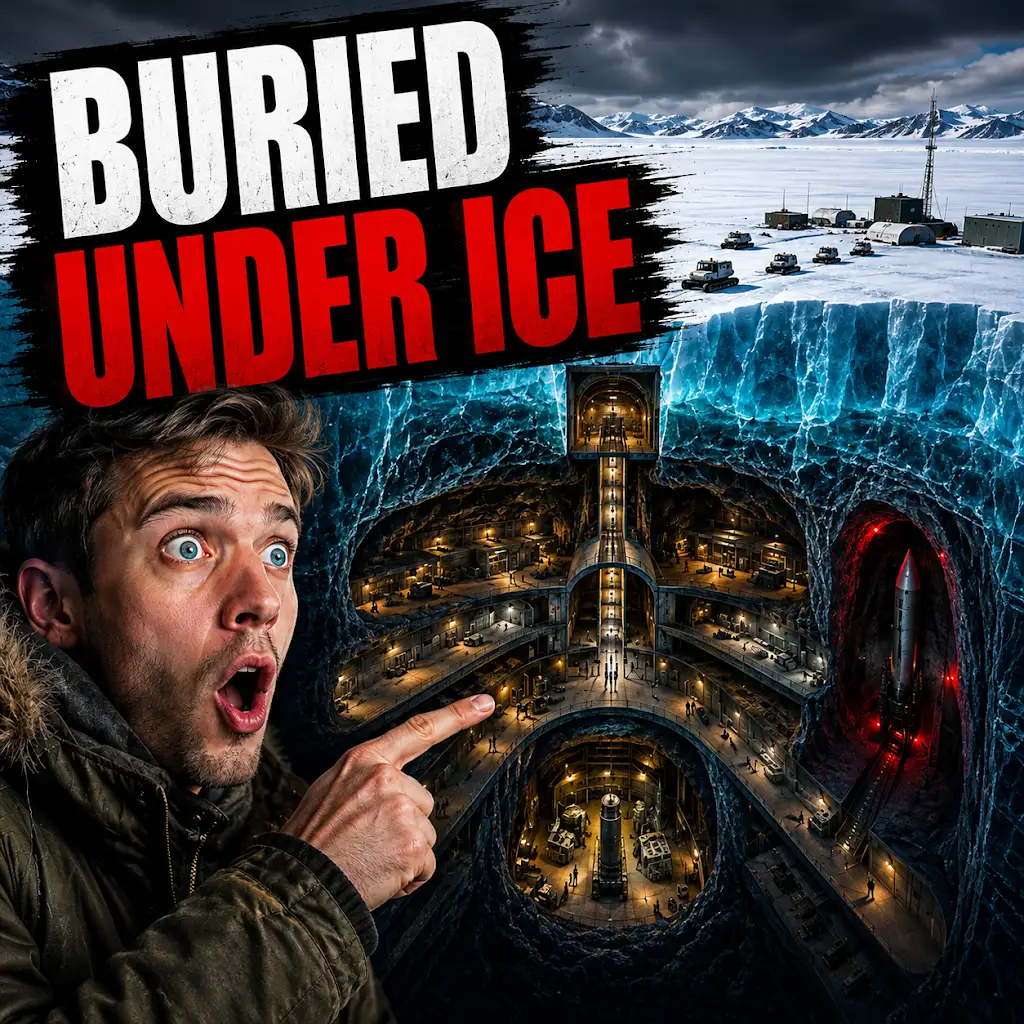
The U.S. Built a Nuclear City Under Greenland. The Ice Won.
FAQs
What is Camp Century Greenland?
Camp Century Greenland was a secret Cold War-era military base built by the United States Army Corps of Engineers in 1959. It was located beneath the ice of the Greenland Ice Sheet and was intended to house nuclear missiles and serve as a research facility.
Why was Camp Century Greenland built?
Camp Century Greenland was built as part of Project Iceworm, a top-secret plan to deploy nuclear missiles in Greenland as a deterrent against potential Soviet aggression. The base was also used for scientific research on the ice sheet.
What happened to Camp Century Greenland?
Camp Century Greenland was abandoned in 1967 due to concerns about the stability of the ice sheet and the environmental impact of the base. The nuclear reactor at the site was removed, but the rest of the infrastructure was left behind and is now buried beneath layers of ice.
What is the environmental impact of Camp Century Greenland?
The abandoned Camp Century Greenland has raised concerns about potential environmental contamination due to the presence of diesel fuel, PCBs, and radioactive waste at the site. As the ice sheet melts, there is a risk that these pollutants could be released into the surrounding environment.
What is the current status of Camp Century Greenland?
In 2016, the Danish government announced plans to clean up the Camp Century site and remove the remaining infrastructure and waste. However, the issue of responsibility for the site and its cleanup remains a subject of international debate between the United States and Denmark.