Secrets of Camp Century: Cold War’s Underground City
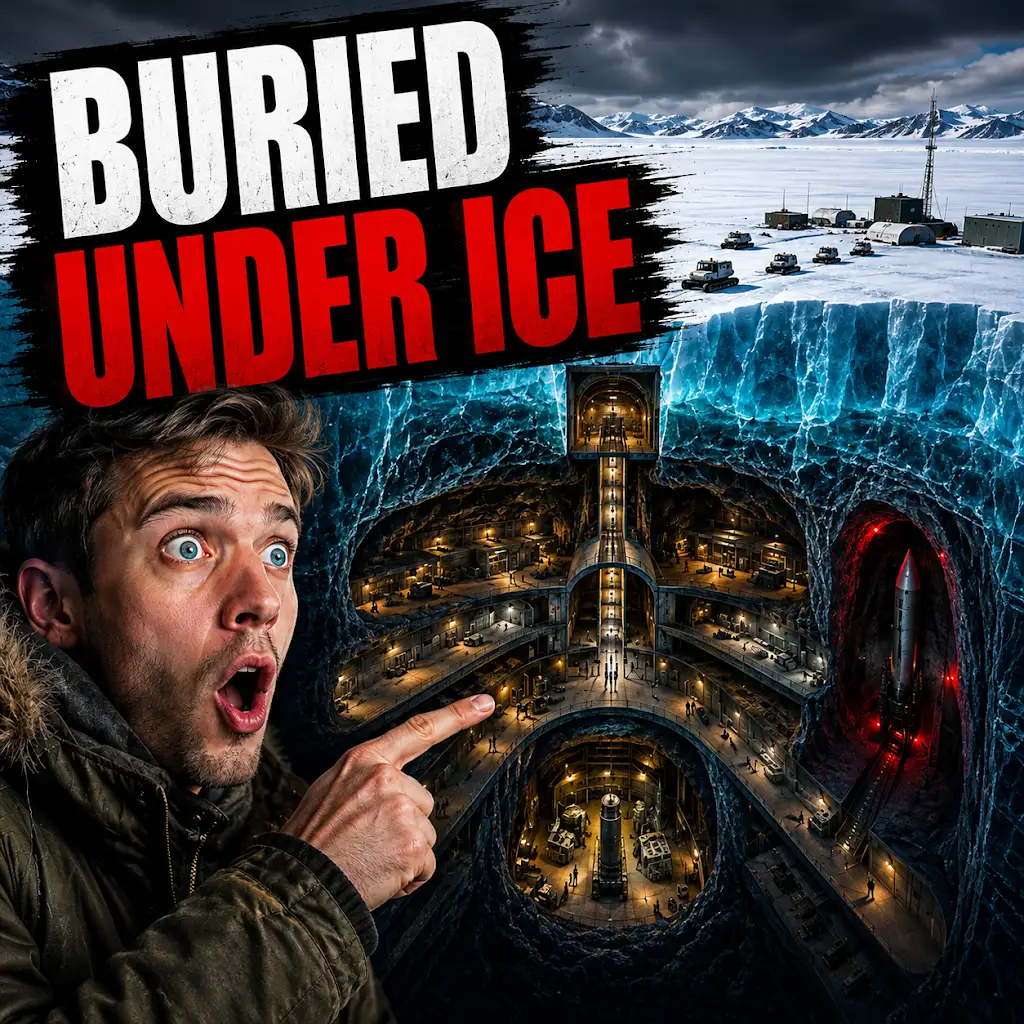
The windswept, frozen expanse of Greenland holds a secret, a chilling testament to the paranoia and ambition of the Cold War: Camp Century. More than just a military outpost, it was conceived as a hidden city, a testament to human ingenuity and a stark reminder of the world’s precarious balance. Buried beneath tons of ice and snow, this subterranean metropolis was designed to house thousands of soldiers and their equipment, shielded from nuclear attack and capable of launching devastating retaliatory strikes. Its existence, shrouded in secrecy for decades, reveals a fascinating chapter of history, where innovation met paranoia in the heart of the Arctic.
The story of Camp Century begins not with military necessity alone, but with a bold vision to harness the seemingly inhospitable Arctic. The prevailing geopolitical climate of the Cold War fueled a desperate need for advanced military infrastructure, capable of surviving and projecting power in the face of an existential threat. This desire for resilience and strategic advantage led to the exploration of unconventional solutions, and Greenland, with its vast, remote, and icy landscape, presented itself as a prime candidate for such an endeavor.
The Strategic Imperative: Project Iceworm
The primary driver behind Camp Century’s construction was Project Iceworm, a top-secret United States Army initiative launched in the late 1950s. The project’s ultimate objective was to establish a network of intercontinental ballistic missile (ICBM) launch facilities beneath the Greenland ice sheet. The rationale was twofold: to provide a secure and survivable platform for nuclear retaliation, shielded from a first strike, and to position these missiles closer to Soviet targets, significantly reducing launch warning times. The sheer scale of this ambition—placing an entire missile base and its supporting infrastructure within the moving ice—was unprecedented.
The Illusion of Invisibility
The architects of Project Iceworm recognized that a surface-based missile silo in such a strategically sensitive location would be a prime target. The solution, they believed, lay in the concealing power of the Greenland ice sheet. By burying the entire complex deep within the ice, they aimed to create an invisible deterrent, a phantom threat that the Soviets could neither easily locate nor reliably destroy. The idea was to disappear beneath the surface, becoming an unseen force waiting to unleash devastation. This pursuit of ultimate concealment was a hallmark of Cold War strategic thinking.
The Engineering Challenge: Taming the Ice
The engineering challenges presented by such an ambitious undertaking were monumental. The sheer weight of the ice, the extreme cold, and the constant movement of the glacier posed significant obstacles. Scientists and engineers had to devise methods for excavating, stabilizing, and maintaining a habitable environment within this dynamic and unforgiving setting. The very ground upon which the base would be built was not static, but a slowly flowing river of ice, requiring constant adaptation and innovative solutions.
Camp Century was a secret U.S. Army base established in the 1950s in Greenland, primarily designed for military research and to test the feasibility of nuclear missile launch sites in the Arctic. The camp, which was built under the ice, has since become a subject of interest due to its implications for climate change and the melting of Greenland’s ice sheet. For those intrigued by the hidden aspects of polar research, a related article can be found at Exploring Antarctica’s Hidden Coastline, which delves into the mysteries and challenges of studying remote regions in our changing world.
Building a City Under the Ice
The construction of Camp Century was a feat of engineering prowess, a testament to what could be achieved when faced with seemingly insurmountable odds. It involved the creation of a network of tunnels, the establishment of power generation, and the development of sophisticated life support systems, all designed to sustain a thriving community in one of the planet’s harshest environments.
Excavation and Tunneling: Carving a Home
The initial phase of construction involved the painstaking excavation of tunnels through the ice. Specialized equipment, including mobile tunnel boring machines, was employed to cut through the dense ice. These machines, essentially mobile sawmills, were designed to operate in sub-zero temperatures and to handle the immense pressure of the ice. The excavated ice was then used as building material or strategically relocated to maintain the structural integrity of the surrounding ice. This process was slow, arduous, and fraught with danger.
The Atomic Heart: Powering the Subterranean City
To sustain a city of thousands, a reliable and substantial power source was essential. Camp Century was powered by a small, portable nuclear reactor, a common feature of remote military installations during the Cold War. This Silex reactor provided a consistent and powerful energy supply, enabling the base to operate its heating, lighting, ventilation, and all other essential systems without dependence on external fuel deliveries, which would have been logistically challenging and vulnerable.
Life Support and Habitation: Creating an Arctic Oasis
Beyond power, the creation of a livable environment was paramount. Sophisticated life support systems were installed to provide fresh air, heat, and water. The tunnels were lined with prefabricated sections, creating insulated living quarters, workshops, and recreational areas. These modules were designed for rapid assembly and provided a degree of comfort and normalcy in the extreme environment. Imagine living in a self-contained city, miles from anywhere, powered by a miniature sun.
The Ice Sheet as a Shield: Defense Against the Unthinkable
The very ice that presented so many challenges was also the base’s greatest defense. The immense thickness of the ice sheet acted as a natural shield against conventional and nuclear attacks. The plan was that any enemy missile would detonate far above the buried base, with the ice absorbing the brunt of the blast and radiation. This layered defense strategy was a crucial element of Project Iceworm’s strategic calculus.
A Thriving, Secret Metropolis
For a period, Camp Century thrived as a self-sufficient and remarkably advanced military installation. Soldiers lived and worked in the subterranean city, conducting research, maintaining equipment, and living lives far removed from the outside world. The isolation, while a strategic advantage, also presented unique social and psychological challenges for its inhabitants.
Daily Life in the Deep Freeze
Life in Camp Century was structured and demanding. Soldiers were assigned to various duties, from maintaining the reactor and life support systems to conducting scientific research and preparing for the base’s strategic mission. Despite the harsh environment, efforts were made to foster a sense of community and normalcy. Recreational facilities, including a cinema and a gymnasium, were available, and regular communications with the outside world, albeit controlled, were maintained.
Scientific Endeavors: A Cold War Laboratory
Beyond its military purpose, Camp Century also served as a hub for scientific research. The unique environment of the Greenland ice sheet provided unparalleled opportunities for glaciology, meteorology, and other polar sciences. Researchers collected ice core samples, studied the movement of the ice sheet, and monitored atmospheric conditions, contributing valuable data to our understanding of the Arctic and the Earth’s climate. This scientific output often served as a valuable cover for the true military nature of the base.
The Unseen Workforce: Maintaining the Machine
A significant portion of the camp’s population was dedicated to the unseen labor of keeping the subterranean city operational. Engineers, technicians, and mechanics worked tirelessly to ensure the reactor ran smoothly, the life support systems functioned flawlessly, and the infrastructure remained stable. Their efforts were crucial to the survival and success of the entire operation, often in conditions that would test the limits of human endurance.
The Psychological Toll of Isolation
The extreme isolation and the confined nature of life underground undoubtedly took a psychological toll on some of the inhabitants. While the scientific and recreational facilities helped, the constant awareness of being buried deep within the ice, far from family and friends, could be a heavy burden. The controlled environment, while necessary, also meant a lack of spontaneous interaction and the natural ebb and flow of surface life.
The Unraveling of Project Iceworm
Despite its initial promise and the ingenuity invested, Project Iceworm and Camp Century were ultimately doomed. The very ice that was meant to be their unmoving fortress proved to be their undoing, and the strategic landscape of the Cold War shifted, rendering the project obsolete.
The Shifting Ice: An Unpredictable Foundation
The most significant factor in Project Iceworm’s downfall was the inherent instability of the ice sheet. The ice was not static but a dynamic, flowing entity. Over time, the tunnels and structures began to buckle, crack, and deform under the immense pressure and constant movement of the glacier. The base was designed with the assumption of a relatively stable ice foundation, an assumption that proved to be fatally flawed.
The Strategic Pivot: ICBMs Find New Homes
As missile technology advanced, the need for buried ICBMs in Greenland diminished. The development of more accurate and longer-range missiles, coupled with the development of submarine-launched ballistic missiles (SLBMs), offered more flexible and survivable deployment options. The strategic thinking shifted from static underground bases to more mobile and elusive platforms, making Camp Century’s immense fixed infrastructure less appealing.
The Economic Realities: An Unaffordable Endeavor
Maintaining such a vast and complex subterranean facility in such an extreme environment was incredibly expensive. The logistical challenges of resupplying the base, coupled with the ongoing costs of repairs and maintenance due to ice movement, proved to be an unsustainable financial burden. The projected costs of continuing the project outweighed its perceived strategic benefits.
Decommissioning and Abandonment: A Frozen Ghost
By the early 1960s, it became clear that Project Iceworm was no longer viable. The decision was made to decommission Camp Century. The nuclear reactor was removed, and the base was largely abandoned. The intention was to leave the structures to be gradually consumed by the ice, burying the secret city once more. However, the environmental consequences of leaving behind industrial materials in such a sensitive ecosystem were a growing concern.
Camp Century was a secret U.S. military base established in Greenland during the Cold War, primarily designed for research and as a potential launch site for nuclear missiles. This fascinating site, buried beneath the ice, has drawn attention not only for its military significance but also for the implications of climate change as it becomes more exposed. For those interested in exploring how technological advancements impact various regions, a related article discusses the emergence of Guadalajara as Mexico’s Silicon Valley, highlighting the intersection of innovation and geography. You can read more about it here.
Echoes in the Ice: The Legacy of Camp Century
| Aspect | Details |
|---|---|
| Location | Greenland |
| Purpose | Research and military base |
| Construction | Started in 1959 |
| Abandonment | 1967 |
| Notable feature | Ice core research |
Today, Camp Century exists as a spectral presence beneath the Greenland ice. Its story serves as a powerful reminder of the Cold War’s intense ideological struggle and the extraordinary lengths to which nations would go to secure their perceived advantage. The remnants of this underground city continue to offer insights into a bygone era of military strategy and human ambition.
The Ghostly Remains: A Glimpse into the Past
As the Greenland ice sheet continues its slow march, the buried structures of Camp Century are gradually being exposed and eventually consumed. Occasional discoveries of its components, preserved in the ice, provide tangible links to this forgotten chapter of history. These artifacts offer a poignant glimpse into the lives of those who lived and worked in this extraordinary subterranean world.
Environmental Concerns: A Lingering Threat
The abandonment of Camp Century has left a potential environmental legacy. The buried structures contain various materials, including diesel fuel, lumber, and possibly even asbestos, that could pose a threat to the pristine Arctic environment if released as the ice melts. Ongoing research and monitoring are crucial to assess and mitigate these risks as the climate changes.
Lessons for the Future: Hubris and Innovation
Camp Century’s story is a complex tapestry woven with threads of technological innovation, strategic ambition, and ultimately, the humbling power of nature. It highlights the potential for human ingenuity to overcome immense challenges, but also serves as a cautionary tale about the limits of control and the potential unintended consequences of grand, ambitious projects.
A Cold War Enigma: Still Unfolding
The full story of Camp Century and Project Iceworm continues to unfold. As more information is declassified and as the ice slowly reveals its secrets, our understanding of this clandestine underground city deepens. It remains an enduring enigma, a testament to the Cold War’s hidden conflicts and the enduring allure of exploring the unknown, even beneath miles of frozen ice. The secrets of Camp Century are slowly but surely emerging from their icy tomb, offering a fascinating window into a past that continues to shape our present and future.
The U.S. Built a Nuclear City Under Greenland. The Ice Won.
FAQs
What was Camp Century in Greenland?
Camp Century was a military base built by the United States Army Corps of Engineers in northwestern Greenland during the Cold War. It was established in 1959 as part of a secret project known as “Project Iceworm” and was intended to study the feasibility of deploying nuclear missiles from the Arctic.
How was Camp Century constructed?
Camp Century was constructed by digging trenches and tunnels into the ice sheet, creating a network of underground facilities. The base included living quarters, a hospital, a chapel, a theater, laboratories, and a nuclear reactor to provide power.
What was the purpose of Camp Century?
The primary purpose of Camp Century was to conduct scientific research and to serve as a cover for the secret deployment of nuclear missiles in the Arctic. The base was also used to test construction techniques for building facilities in extreme cold and ice conditions.
What led to the abandonment of Camp Century?
Camp Century was abandoned in 1967 due to concerns about the stability of the ice sheet and the environmental impact of the base. The project was also deemed impractical and the nuclear missile deployment plan was ultimately scrapped.
What is the current status of Camp Century?
Camp Century has been abandoned and most of its structures have been buried under layers of ice and snow. However, the base has gained attention in recent years due to concerns about the environmental impact of its abandoned infrastructure and the potential release of pollutants as the ice sheet melts.