
The unforgiving windswept plains and glacial expanse of Greenland, a land sculpted by ice and cloaked in perpetual twilight for months each year, harbors a secret that chills the marrow of history. Beneath the seemingly pristine and uninhabited surface, a clandestine ambition once took root, a project of audacious scale and chilling purpose: Project Iceworm. This forgotten chapter of the Cold War reveals a daring, and ultimately failed, attempt by the United States to establish a forward operating base of unprecedented strategic importance, hidden within the very heart of the Greenland ice sheet.
The geopolitical landscape of the mid-20th century was defined by an ever-escalating tension between the United States and the Soviet Union. The specter of nuclear war loomed large, and the strategic advantage lay with the nation capable of striking the enemy with the greatest speed and efficiency. For the United States, the vast distances of the Arctic presented both a formidable barrier and a tantalizing opportunity.
The Tyranny of Distance and the Dawn of ICBMs
The advent of Intercontinental Ballistic Missiles (ICBMs) fundamentally altered the calculus of nuclear deterrence. These weapons, capable of traversing continents, demanded rapid deployment and proximity to the adversary. For the US, the Soviet Union’s vast territory meant that offensive missile sites would need to be situated far from American shores, vulnerable to early detection and potential pre-emptive strikes. Conversely, Soviet missile sites, once developed, could pose an immediate threat to American cities.
The Strategic Imperative of Proximity
The need for a deployment location closer to the Soviet Union became a paramount concern. While bomber bases in Europe and elsewhere offered some proximity, they were still subject to considerable flight times and potential interception. The Arctic, with its polar routes, offered the shortest path between North America and the Soviet Union. However, establishing and maintaining conventional bases in such an extreme environment presented significant logistical and operational challenges. The idea of utilizing the immense, naturally camouflaged ice sheet as a protective shield for military installations began to emerge.
The “Hidden Base” Concept
The concept of a “hidden base” or a “mobile base” that could be concealed from Soviet reconnaissance became particularly appealing. The sheer volume of the Greenland ice sheet, estimated to be over 1.6 kilometers deep in many areas, offered the perfect camouflage. The idea was to carve out a network of tunnels and chambers within the ice, creating a self-sufficient military facility that would be virtually undetectable from above or by conventional radar. This would allow for the placement of nuclear-tipped missiles within striking distance of key Soviet targets, with the added benefit of extreme survivability.
Project Iceworm was a covert U.S. military operation during the Cold War that aimed to establish a network of nuclear missile bases beneath the Greenland ice sheet. This ambitious project, which ultimately faced numerous logistical and environmental challenges, highlights the strategic importance of Greenland during a tense period in history. For a deeper understanding of the geopolitical complexities surrounding territories like Greenland, you can explore the article on border disputes in the context of international relations at Navigating Border Disputes: A Complex Challenge.
Project Iceworm: An Underground City of Ice
Project Iceworm, officially known as “Project Iceworm” and later referred to by its technical designation, USA-243, was the ambitious embodiment of this sub-glacial vision. Launched in 1959, it was a joint venture between the United States Army and the Danish government, which held sovereignty over Greenland. The project’s ultimate goal was to construct a vast network of ice tunnels capable of housing an entire missile base, complete with living quarters, power generation, and critically, a battery of Nike-Ajax and later, Nike-Hercules nuclear missiles.
The Technical Feasibility: Engineering the Unimaginable
The technical challenges of excavating and maintaining a habitable environment within a moving glacier were immense. The core of Project Iceworm involved using heated drills and excavation equipment to carve out a series of interconnected tunnels and caverns. These tunnels were intended to be several meters in diameter, allowing for the movement of vehicles and personnel. The concept envisioned a “train” that would shuttle missiles and equipment along the tunnels, allowing for rapid redeployment and a dispersed missile field.
The Excavation Process: A Battle Against the Ice
The excavation process was a Herculean task. Teams of engineers and construction workers braved extreme cold and harsh conditions. Heated drills, essentially giant augers, were used to bore into the ice. The excavated ice was then melted and pumped away, or in some early stages, simply pushed aside. The tunnels were not to be lined with traditional materials, as the sheer pressure of the ice and the constant movement of the glacier would render them useless. Instead, the ice itself was to be the structure.
Maintaining Stability: The Constant Threat of Creep
A fundamental challenge was the inherent instability of ice. Glaciers are not static entities; they flow and deform under their own weight. This phenomenon, known as glacial creep, meant that the tunnels would constantly be under pressure and prone to collapse. The project engineers had to develop innovative methods to manage this creep, including a system of regular surveying and controlled thawing and refreezing to maintain the integrity of the ice structures.
The Scale of Ambition: A Subterranean Metropolis
The vision for Project Iceworm was nothing short of constructing a subterranean city. The initial plans called for a base capable of housing approximately 200 men, with facilities for mess halls, barracks, recreational areas, and importantly, a sophisticated command and control center. The sheer scale of the undertaking highlights the desperation and strategic thinking of the Cold War era.
Missile Deployment: The Heart of the Operation
The primary purpose of Project Iceworm was the deployment of nuclear missiles. The plan was to house a battery of Nike missiles, a surface-to-air missile system that had been adapted for surface-to-surface roles. The intent was to have these missiles ready to launch on short notice, with the ice sheet providing an unprecedented level of protection. The mobility of the proposed missile train system was a key feature, allowing for rapid relocation of the launchers to avoid detection and counter-attack.
Power Generation and Life Support: Self-Sufficiency in the Ice
To sustain a military operation within the ice sheet, a reliable and self-sufficient power source was essential. The project planned to utilize a small nuclear reactor to generate electricity for lighting, heating, and the operation of all facilities. This presented its own set of challenges, including shielding the reactor from the ice and managing any potential radioactive waste in such a sensitive environment. Air purification and life support systems were also crucial to ensure the well-being of the personnel operating in a sealed environment.
The Unseen Enemy: The Destructive Power of Ice
Despite the meticulous planning and the engineering prowess, Project Iceworm was ultimately doomed by an enemy far more ancient and powerful than any human adversary: the relentless, inexorable force of the Greenland ice sheet itself. The very element that was meant to provide concealment and protection would prove to be the project’s undoing.
The Moving Fortress: Glacial Dynamics at Play
The fundamental flaw in Project Iceworm’s design was a severe underestimation of the dynamic nature of glaciers. The ice sheet is not a solid, static block; it is a living, breathing entity in constant motion. The glacial creep, initially accounted for in engineering plans, proved to be far more aggressive and unpredictable than anticipated.
The Creep Factor: A Constant Threat to Infrastructure
The constant flow of the ice sheet exerted immense pressure on the excavated tunnels. The structures, designed to be embedded within the ice, were subjected to shearing forces and deformation. The tunnels began to warp and buckle, and the carefully constructed chambers showed signs of stress. The rate of ice movement varied across the site, making it impossible to predict and compensate for the deformations consistently.
Thermal Expansion and Contraction: The Ice’s Breath
Beyond the slow creep, the ice sheet also undergoes significant changes due to temperature fluctuations. While the deepest parts of the ice sheet remain relatively stable, the surface layers experience cycles of freezing and thawing, expansion and contraction. These subtle, yet powerful, forces further stressed the tunnels and chambers, contributing to their gradual degradation.
The Unexpected Pace of Decay: A Race Against Time
The engineers monitoring the project quickly realized that the rate of decay and deformation was far exceeding their projections. The tunnels required constant maintenance and repair, a task that became increasingly difficult and dangerous. The dream of a stable, hidden missile base was slowly melting away, quite literally.
Structural Integrity Compromised: Tunnels Under Siege
Within a few years of construction, the structural integrity of the tunnels began to be seriously compromised. The ice walls started to bow inwards, and sections of the tunnels became impassable. The ambition of creating a permanent sub-glacial city was being thwarted by the very medium it was built within.
The Futility of Repair: An Ever-Shifting Foundation
Attempts to repair the damage proved to be a futile endeavor. As soon as one section was stabilized, another would begin to deform. The ice was a perpetually shifting foundation, making any permanent construction impossible. The cost and effort required for continuous repairs became unsustainable.
The Unveiling of the Secret: Discovery and Deception
While Project Iceworm was intended to be a secret, the sheer scale of the operation and the logistical requirements inevitably led to some level of exposure. However, the Danish government, and later the world, remained largely unaware of the full extent of the project until much later. The project was officially presented as a scientific endeavor, a research station studying the ice.
The Danish Connection: Sovereignty and Secrecy
Greenland, while an autonomous territory within the Kingdom of Denmark, was under Danish sovereignty. The establishment of such a significant military installation required Danish consent. The Danish government was informed of the project but was led to believe it was primarily a scientific research initiative, with the military aspect downplayed or omitted. This allowed for a degree of secrecy to be maintained.
Scientific Veneer: The Camouflage of Research
The Americans presented Project Iceworm as a joint scientific venture to study the Greenland ice sheet, its composition, and its dynamics. This provided a convenient cover for the extensive excavation and the presence of military personnel and equipment. Scientific data was indeed collected, but it was secondary to the overarching military objective.
Danish Awareness: A Calculated Omission
While the full strategic implications of Project Iceworm may not have been entirely conveyed to the Danish authorities, there was an awareness of its military purpose. However, the geopolitical pressures of the Cold War and the desire for American support likely led to a tacit agreement to maintain secrecy.
The “Camp Century” Deception: A Layer of Disguise
To further obscure the true nature of Project Iceworm, the operation was sometimes referred to as “Camp Century.” This designation evoked an image of a more conventional military encampment, perhaps on the surface or at the edge of the ice, rather than a vast sub-glacial network. This provided a plausible explanation for the presence of infrastructure and personnel.
Public Perception: A Feasible, Yet Mysterious, Outpost
The name “Camp Century” was used in official communications and even in some public discussions, portraying the site as a remote but functional military and scientific outpost. This fostered a perception of a tangible, albeit austere, facility, masking the true scale and ambitious nature of the sub-glacial construction.
The Real Purpose: Hidden in Plain Sight
The strategic importance of Camp Century was its ability to house a forward-deployed missile battery, capable of striking targets deep within the Soviet Union. The ice provided natural protection against detection and a significant degree of survivability against conventional attacks. The dual-use nature of the site, with scientific research as a public face, was a classic Cold War tactic.
Project Iceworm was a covert U.S. military operation during the Cold War aimed at establishing a network of nuclear missile bases beneath the Greenland ice sheet. This ambitious project sought to leverage the vast, remote landscape for strategic advantages, but it ultimately faced significant engineering challenges and was abandoned. For those interested in the broader implications of Arctic research and its historical context, a related article explores the ancient wisdom and knowledge of Earth’s polar regions, shedding light on how these areas have been understood over time. You can read more about this fascinating topic in the article here.
The Project’s Demise and Legacy
| Aspect | Details |
|---|---|
| Project Name | Project Iceworm |
| Location | Greenland |
| Purpose | To establish a network of mobile nuclear missile launch sites under the Greenland ice sheet during the Cold War |
| Duration | Started in 1959 and abandoned in 1967 |
| Outcome | The project was ultimately cancelled due to technical difficulties and environmental concerns |
By the early 1960s, it became undeniably clear that Project Iceworm was an unsustainable endeavor. The ever-accelerating decay of the ice tunnels, coupled with the immense costs of maintenance and the ever-present risk of collapse, forced the project’s abandonment. The dream of a hidden sub-glacial missile base was laid to rest, entombed within the moving ice.
The Inevitable Conclusion: Retreat from the Ice
The US Army officially terminated Project Iceworm in 1966. The decision was not made lightly, but the insurmountable engineering challenges and the inherent instability of the ice sheet made the continued operation impossible. The resources and manpower dedicated to the project were redirected to more viable strategic initiatives.
Abandonment and Contamination: A Lingering Threat
The abandonment of Project Iceworm left behind a considerable amount of infrastructure and equipment deep within the ice. This included diesel generators, a small nuclear reactor, fuel, and other materials. The concern was that as the ice sheet continued to move and melt, these materials could be released into the environment, posing a long-term contamination risk.
The Retreat of the Ice: Revealing the Past
As the Greenland ice sheet has begun to melt more rapidly due to climate change, the remnants of Project Iceworm are slowly, and disturbingly, being brought to the surface. What was once buried deep within the ice is now emerging, a stark reminder of the ambitious, and ultimately futile, Cold War gambit.
The Lessons of Iceworm: Hubris and the Power of Nature
Project Iceworm stands as a testament to human ingenuity and ambition, but also to the profound folly of underestimating the power of nature. The project represents a significant investment in resources and effort, all ultimately defeated by the fundamental forces of the planet.
A Cautionary Tale: Engineering Against the Unyielding
The story of Project Iceworm serves as a cautionary tale for future large-scale engineering projects in extreme environments. It underscores the importance of thoroughly understanding and respecting the natural forces at play, rather than attempting to subjugate them entirely. The ice, in its unyielding immensity, proved to be an insurmountable adversary.
The Specter of Cold War Hubris: A Nuclear Shadow
The project also highlights the extreme measures and the sheer audacity that characterized the Cold War. The drive for strategic advantage led to the conception and pursuit of projects that, in hindsight, seem almost fantastical. The ghost of Project Iceworm, with its buried nuclear reactor and missile components, serves as a lingering reminder of the potentially devastating consequences of such ambition. The world narrowly avoided a nuclear catastrophe not just through diplomacy, but also, in this case, through the very elemental forces that were so carelessly disregarded.
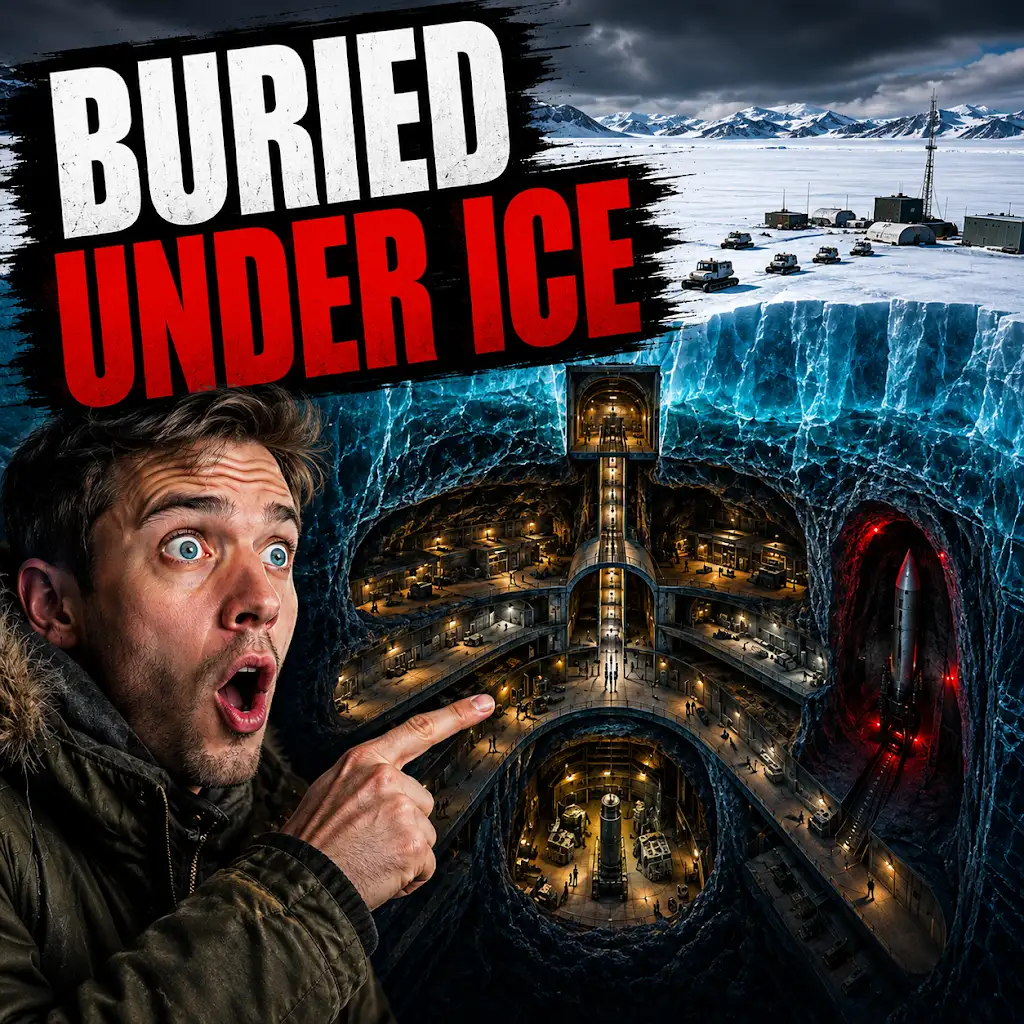
The U.S. Built a Nuclear City Under Greenland. The Ice Won.
FAQs
What was Project Iceworm in Greenland?
Project Iceworm was a secret United States Army program during the Cold War to build a network of mobile nuclear missile launch sites under the Greenland ice sheet.
When did Project Iceworm take place?
Project Iceworm was initiated in 1959 and continued until 1967 when it was abandoned due to technical difficulties and environmental concerns.
Where was Project Iceworm located?
Project Iceworm was located in northwestern Greenland, where the United States established Camp Century, an underground city that housed the nuclear missile launch sites.
What was the purpose of Project Iceworm?
The purpose of Project Iceworm was to establish a strategic nuclear missile launch capability close to the Soviet Union, allowing the United States to launch a surprise nuclear attack if necessary.
What happened to Project Iceworm?
Project Iceworm was ultimately abandoned in 1967 due to the unstable ice sheet and the logistical challenges of maintaining the underground facilities. The camp was eventually decommissioned and the remaining infrastructure was left to be buried under the ice.