Camp Century, a relic of a bygone era of Cold War ambition and scientific exploration, now stands as a poignant testament to the unforgiving and ever-changing nature of the Arctic. This once-thriving military installation, carved into the heart of Greenland’s ice sheet, was abandoned not due to strategic obsolescence or financial woes, but to an insidious and relentless enemy: melting ice. The very foundation upon which its existence was predicated began to erode, forcing a hasty retreat and leaving behind a silent, frozen ghost.
The Cold War Crucible
The mid-20th century was a period of intense geopolitical tension, commonly known as the Cold War. The United States and the Soviet Union engaged in a global struggle for influence, characterized by proxy wars, an arms race, and a constant push for technological and strategic superiority. In this climate, the Arctic region, with its vast, unexplored territories and strategic location, became a focal point of military interest. The ability to project power, gather intelligence, and potentially deploy advanced weaponry in the Arctic held immense strategic value.
Project Iceworm and the Nuclear Ambition
Within this strategic framework, the U.S. Army Corps of Engineers conceived of “Project Iceworm.” Its overt purpose was to explore the feasibility of constructing a vast network of underground facilities and railway tunnels beneath the Greenland ice sheet, capable of housing and deploying a significant number of nuclear missiles. The idea was audacious: an impenetrable, mobile, and undetectable nuclear arsenal hidden deep within the frozen expanse, offering a decisive strategic advantage. Camp Century was envisioned as the pilot project, a proof of concept that would pave the way for this massive undertaking. The sheer scale of the ambition was staggering, reflecting the immense resources and relentless drive that characterized the Cold War military-industrial complex.
The Construction Marvel
The construction of Camp Century was a remarkable feat of engineering in an exceptionally challenging environment. Beginning in 1959, the camp was built using a technique of tunneling into the ice sheet itself. Specialized equipment, including a steam drill capable of melting through ice, was used to create a network of interconnected structures. These structures, primarily made of prefabricated steel and aluminum, were then lowered into the excavated tunnels and covered with snow and ice. The camp was designed to be self-sufficient, featuring living quarters, laboratories, a power plant, and even a hospital. The goal was to create a stable and habitable environment, insulated from the harsh Arctic surface conditions. This subterranean city was a testament to human ingenuity and the determination to overcome the extreme limitations of the polar environment.
Camp Century, a U.S. Army base established in Greenland during the Cold War, was abandoned in the 1960s due to a combination of factors, including environmental concerns and the changing priorities of military strategy. The base, which was initially intended for nuclear missile testing and research, faced challenges such as melting ice and logistical difficulties. For a deeper understanding of how geopolitical dynamics influence infrastructure and trade, you may find the article on trade alignment insightful: USMCA: Shaping Trade Alignment.
Life Under the Ice
A Subterranean Society
Life within Camp Century was a unique and isolated experience. Over 200 military personnel and civilian scientists were stationed at the camp at its peak. They lived and worked in a world entirely enclosed by ice, a far cry from the open landscapes of their home countries. The interconnected tunnels created a surreal environment, where days were marked by artificial light and the constant hum of machinery. Despite the confinement, the inhabitants of Camp Century formed a cohesive community, bound by their shared experiences and the isolation of their remote outpost.
Scientific Pursuits Amidst Military Objectives
While the primary driver for Camp Century was military strategy, the unique environment also offered unparalleled opportunities for scientific research. The camp became a hub for a variety of scientific endeavors, including glaciology, meteorology, and even the study of cosmic rays. Scientists were able to collect ice cores, providing invaluable data on past climate conditions and the history of the ice sheet. The isolation and pristine nature of the Arctic environment made it an ideal location for observing and studying atmospheric phenomena. This dual purpose, military and scientific, contributed to the camp’s importance during its operational years.
The Challenges of Arctic Existence
Life in Camp Century was not without its challenges. The extreme cold, the perpetual darkness of winter, and the constant threat of mechanical failures in such a remote location demanded resilience and resourcefulness. Maintaining the camp’s infrastructure, particularly its power generation and waste management systems, was a constant undertaking. The psychological impact of living underground for extended periods also had to be managed. Despite these difficulties, the inhabitants of Camp Century performed their duties and pursued their scientific objectives with dedication and professionalism.
The Whispers of Change
Unforeseen Environmental Realities
The architects of Project Iceworm and the builders of Camp Century operated under a prevailing understanding of the Arctic environment that, with the passage of time, proved to be incomplete. Their calculations for the stability of the ice sheet and the long-term effects of the camp’s presence were based on assumptions that did not fully account for the subtle yet powerful forces of nature. The ice sheet, though seemingly immutable, is a dynamic entity, constantly flowing and responding to changes in temperature and pressure.
The Subtle Shift of the Ice
As years turned into decades, the ice beneath Camp Century began to betray the intentions of its creators. The sheer weight of the overlying snow and ice, combined with the heat generated by the camp’s operations and the ambient temperature of the Arctic, began to exert a subtle but persistent pressure. The ice was not static; it was slowly, inexorably, moving. This movement, initially imperceptible, began to stress the camp’s infrastructure. Tunnels that were once straight and stable started to warp and buckle. The prefabricated structures, designed to withstand immense forces, began to groan under the strain.
The Growing Threat of Instability
The initial optimism surrounding the camp’s long-term viability began to wane as the evidence of ice movement became more pronounced. The engineers and scientists at Camp Century observed increasing deformation in the tunnels, suggesting that the ice sheet was actively reshaping itself around the buried structures. What was intended to be a stable, permanent installation was proving to be a temporary imposition on a dynamic natural system. The very foundation of their subterranean city was becoming a source of instability, a threat that could not be ignored.
The Inevitable Departure
The Mounting Evidence of Decline
By the late 1960s, the signs of trouble at Camp Century were undeniable. The ice sheet’s movement was causing significant structural damage. Tunnels were collapsing, and the camp’s power plant and other critical infrastructure were becoming increasingly difficult to maintain. The cost of continuous repairs and the ongoing risk to personnel became prohibitive. The initial strategic advantage that the camp was meant to provide was being undermined by its own physical deterioration. The dream of a permanent, hidden fortress was succumbing to the reality of a melting world.
The Decision to Abandon
The decision to abandon Camp Century was not taken lightly. It represented a significant shift in strategy and a tacit acknowledgment of the limitations of human engineering in the face of natural forces. The U.S. Army, faced with mounting costs and increasing safety concerns, ultimately determined that the camp was no longer viable. The strategic purpose, which had once driven its construction, was now overshadowed by the practical challenges of maintaining it. The camp was officially decommissioned in 1966, though efforts to fully dismantle it continued for several more years.
The Legacy of a Frozen Relic
The abandonment of Camp Century left behind a vast, buried structure, frozen in time. The decision marked a turning point, a realization that even the most ambitious engineering projects were subject to the forces of climate and the environment. The camp’s story became a cautionary tale, a reminder that the Earth’s systems are complex and that our understanding of them is constantly evolving. The military objectives that had spurred its creation faded into historical footnotes, replaced by the enduring scientific and environmental implications of its existence.
Camp Century, a secretive military base established by the United States in Greenland during the Cold War, was ultimately abandoned due to a combination of environmental concerns and the changing geopolitical landscape. The base, which was designed to serve as a nuclear launch site, faced significant challenges related to its infrastructure and the melting ice that threatened its viability. For a deeper understanding of how such military projects can impact broader economic conditions, you might find this article on worst-case economic scenarios insightful. It highlights the interconnectedness of military spending and environmental factors, which can be explored further in this related article.
A Ghost in the Ice: Modern Concerns
| Reasons for Abandonment | Details |
|---|---|
| Environmental Concerns | Melting ice and permafrost threatened the stability of the tunnels and buildings. |
| Political Issues | The 1963 US-Denmark agreement led to the decision to abandon the camp. |
| Logistical Challenges | Maintaining the camp in the harsh Arctic conditions became increasingly difficult. |
| Technological Limitations | The limitations of the nuclear reactor technology used at the camp contributed to its abandonment. |
The Lingering Contaminants
The abandonment of Camp Century did not signify a complete cessation of its impact. Buried deep within the ice lay not only military structures and scientific equipment but also potential environmental hazards. The camp was powered by a nuclear reactor, and while it was supposedly defueled and removed, residual radioactive materials, along with other industrial chemicals and waste, were left behind. The assumption was that the immense depth and the frozen nature of the ice would contain these contaminants indefinitely.
The Accelerating Melt: A New Threat
However, the accelerating pace of global warming has introduced a new and alarming dimension to the legacy of Camp Century. As Arctic temperatures rise at a rate significantly higher than the global average, the ice sheet is beginning to melt at an unprecedented rate. The once-stable ice that entombed the camp is now receding, exposing it to the elements and the forces of thaw. What was once a frozen sanctuary is becoming a vulnerable relic, its buried secrets no longer securely contained.
The Potential for Environmental Catastrophe
The melting of the ice surrounding Camp Century poses a significant environmental risk. As the ice melts, the buried contaminants, including radioactive waste and other hazardous materials, could be released into the environment. This could contaminate meltwater, which eventually flows into rivers and the ocean, potentially impacting ecosystems and human health for generations to come. The military and scientific ambitions of the Cold War era are now shadowed by the very real possibility of an environmental disaster, a consequence of a warming planet that was not fully anticipated. The silent fortress of the past has become a ticking time bomb, its fate inextricably linked to the future of the Arctic climate. The story of Camp Century, once a tale of human endeavor, has transformed into a stark warning about the unintended consequences of our actions and the urgent need to address the challenges of a changing climate.
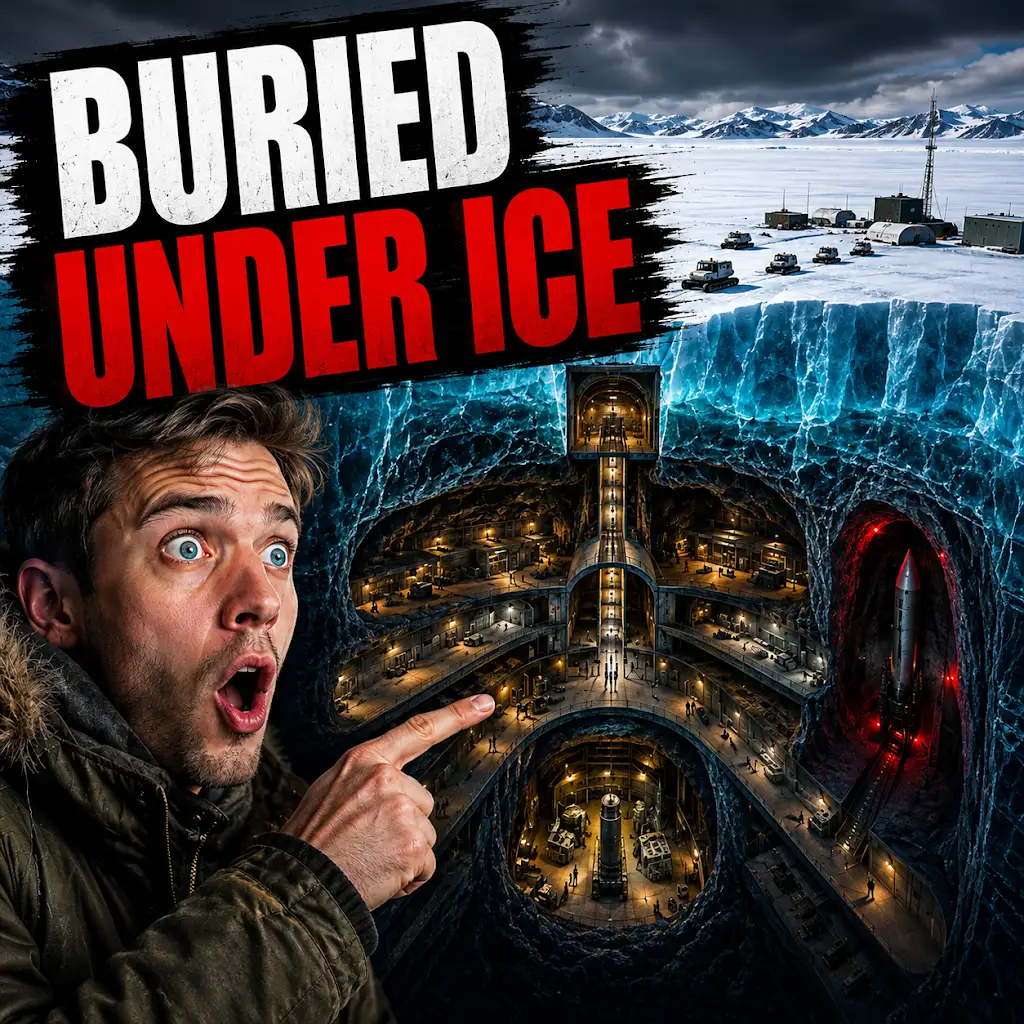
The U.S. Built a Nuclear City Under Greenland. The Ice Won.
FAQs
1. What was Camp Century?
Camp Century was a military base located in Greenland, built by the United States Army Corps of Engineers in 1959. It was designed to study the feasibility of deploying nuclear missiles from the Arctic.
2. Why was Camp Century abandoned?
Camp Century was abandoned in 1967 due to concerns about the stability of the ice sheet it was built on. The project was also rendered obsolete by the signing of the 1963 Antarctic Treaty, which prohibited the deployment of nuclear weapons in the Arctic.
3. What were the environmental concerns surrounding Camp Century?
The ice sheet on which Camp Century was built was found to be moving faster than previously thought, raising concerns about the stability of the base. Additionally, the melting of the ice sheet due to climate change posed a threat of releasing pollutants and radioactive waste stored at the base.
4. What happened to the nuclear reactor at Camp Century?
The nuclear reactor at Camp Century was removed and the site was cleaned up as much as possible before it was abandoned. However, concerns remain about the potential release of radioactive material as the ice sheet continues to melt.
5. What is the current status of Camp Century?
Camp Century remains abandoned and is now buried under layers of ice and snow. The site continues to be monitored for any potential environmental impact as the ice sheet melts.