
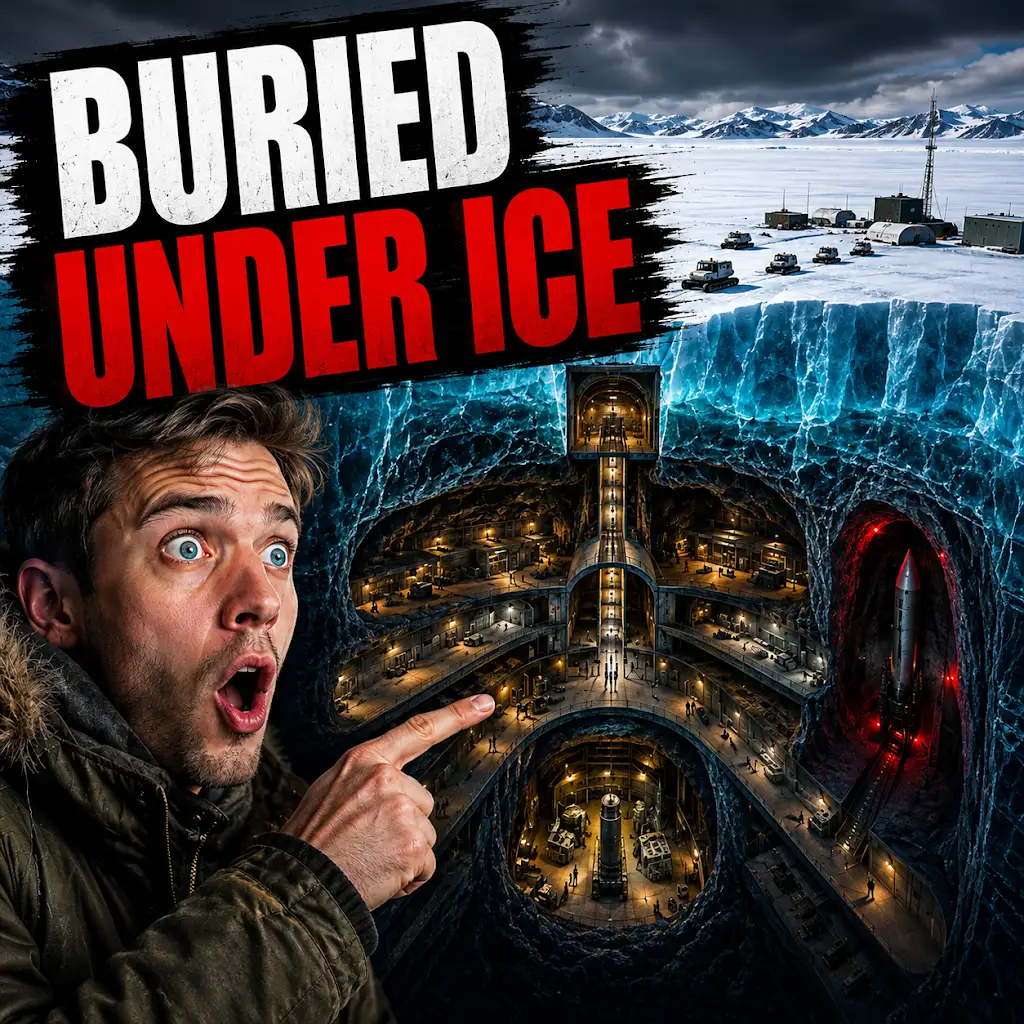
The vast, windswept expanse of Greenland, a land sculpted by millennia of ice and wind, holds secrets buried deep beneath its frozen surface. Among these, none is perhaps as intriguing or as illustrative of strategic overreach and misplaced ambition as Project Iceworm. This ambitious, yet ultimately doomed, undertaking represents a fascinating chapter in Cold War history, a testament to the lengths nations would go to gain a military advantage, and a stark reminder of the unforgiving power of nature. The dream was grand: to house a fleet of nuclear-tipped intercontinental ballistic missiles (ICBMs) within a sprawling subterranean city carved from the Greenland ice sheet, ready to strike the Soviet Union. The reality, however, proved far colder and more complex.
The genesis of Project Iceworm lay in the escalating tensions of the Cold War. The United States, acutely aware of the Soviet Union’s growing missile capabilities, sought ways to position its strategic deterrent closer to its adversary, minimizing warning times and increasing the survivability of its nuclear arsenal. Traditional missile bases, constructed on solid ground, were vulnerable to Soviet preemptive strikes. The ice sheet of Greenland, seemingly remote and impenetrable, offered a novel solution.
A Shield of Ice, a Sword of Fire
The core concept behind Project Iceworm, codenamed “Camp Century” for its surface installation, was to leverage the natural properties of the ice sheet for defense. The idea was to construct a vast network of tunnels and facilities beneath thousands of feet of ice, creating an almost invisible and seemingly invulnerable launch platform. This would not only shield the missiles from detection and attack but also provide a forward operating base that could significantly reduce the flight time of ICBMs aimed at Soviet targets. The immense thickness of the ice was perceived as an insurmountable barrier, offering a degree of security that surface installations could never match.
The Strategic Imperative: Closing the Missile Gap
During the late 1950s and early 1960s, the United States felt a pressing need to counter the perceived “missile gap” – a concern, later largely debunked, that the Soviet Union possessed a superior number of intercontinental ballistic missiles. Project Iceworm was conceived as a bold, innovative approach to overcome this perceived disadvantage. By placing a significant portion of the American ICBM arsenal in Greenland, the US aimed to:
- Reduce Warning Times: ICBMs launched from Greenland would have significantly shorter flight times to targets in the Soviet Union, potentially diminishing the effectiveness of Soviet air defenses and early warning systems.
- Enhance Survivability: The subterranean nature of the base was intended to make it highly resistant to nuclear attack. Even if a missile strike were to hit the surface installation, the underground facilities and missiles would likely remain intact, preserving the retaliatory capability.
- Provide a Forward Deployed Deterrent: Having a tangible presence of nuclear-capable missiles so close to Soviet territory would serve as a powerful deterrent, demonstrating the US’s commitment and capability to respond decisively.
Early Explorations and Technological Hurdles
The feasibility of such a monumental undertaking required extensive geological and engineering research. Scientists and engineers embarked on a series of surveys to understand the dynamics of the Greenland ice sheet, including its thickness, temperature gradients, and ice movement. The challenges were immense. Drilling through thousands of feet of solid ice presented significant technological hurdles. Furthermore, understanding how the ice itself would behave under the stress of construction and operation was crucial. The concern was not just about carving tunnels but about preventing their collapse due to the constant, albeit slow, movement of the ice.
Project Iceworm, a Cold War initiative aimed at establishing a network of nuclear missile bases beneath the Greenland ice sheet, ultimately failed due to a combination of technical challenges, environmental concerns, and logistical issues. The project’s ambitious scope was hindered by the unpredictable nature of the ice and the harsh Arctic conditions, which made construction and maintenance difficult. Additionally, the shifting political landscape and growing awareness of environmental impacts contributed to its demise. For a deeper understanding of how ancient civilizations adapted to extreme environments, which can provide context for modern projects like Iceworm, you can read more in this related article: Uncovering Evidence of Ancient Advanced Civilizations.
Camp Century: A City Beneath the Ice
The visible face of Project Iceworm was Camp Century, a seemingly innocuous research station on the surface of the ice sheet. However, this station was merely the gateway to the ambitious underground complex. It was from this surface hub that the real engineering marvel and the subsequent failures would emerge.
The Surface Facade: A Research Outpost
Camp Century itself was a remarkable feat of engineering. Constructed in 1959, it was designed to house a permanent contingent of personnel, primarily for scientific research related to glaciology, meteorology, and Arctic conditions. The base consisted of a series of prefabricated modules connected by covered walkways. These modules housed living quarters, laboratories, a power plant, and other essential facilities. The initial purpose was presented as purely scientific, a cover for the more significant military objectives.
The Subterranean Dream: Tunnels and Launchers
Beneath the surface, the true ambition of Project Iceworm began to unfold. A network of tunnels was to be excavated using specialized boring machines. These tunnels would house missile launch silos, command and control centers, and support facilities, all shielded from the elements and potential attack by the thick ice above. The plan envisioned a sprawling complex capable of housing 600 Minuteman ICBMs. This subterranean city was to be a self-sufficient entity, powered by a small nuclear reactor, and designed to operate independently for extended periods.
The Engineering Marvels and Their Limitations
The construction of Camp Century and its initial underground access tunnels was a testament to American ingenuity. Prefabricated sections were transported and assembled on-site, and specialized drilling equipment was developed to bore through the ice. The initial success in creating habitable spaces beneath the surface generated optimism. However, the inherent instability of ice as a construction medium, even in the seemingly stable conditions of the interior ice sheet, began to reveal its challenges.
Ice Movement: The Slow, Inexorable Force
One of the most significant underestimations was the dynamic nature of the ice sheet. While appearing static from the surface, the ice is constantly flowing under its own immense weight. This movement, though slow, exerts significant pressure on any structures built within it. The tunnels and silos, designed to be rigid, began to experience deformation as the ice shifted. This required constant monitoring and maintenance, a far more intensive undertaking than initially anticipated.
Temperature Fluctuations and Structural Integrity
Maintaining a stable internal environment within the subterranean complex was another critical challenge. While the ice provided insulation, temperature fluctuations, both natural and from the operation of equipment and personnel, could still impact the structural integrity of the ice. Cracking and refreezing cycles could weaken the ice walls, posing a risk to the tunnels.
The Unseen Enemy: The Shifting Ice
The greatest adversary of Project Iceworm was not a foreign power, but the very element that made its existence possible: the Greenland ice sheet itself. The dynamic and unpredictable nature of ice proved to be an insurmountable obstacle, relentlessly undermining the ambitions of the military strategists.
The Creep of the Ice: A Constant Threat
The glacial creep, the slow, continuous deformation of ice under pressure, proved to be the project’s undoing. The tunnels and silos, painstakingly carved into the ice, were not static environments. As the ice flowed, it exerted immense pressure, causing the walls of the tunnels to buckle and deform. This phenomenon was not merely a nuisance; it posed a direct threat to the stability of the entire underground complex.
Compaction and Sinking: A Gradual Demise
As the ice deformed, it also compacted. This compaction led to the gradual sinking of the surface structures of Camp Century. What began as a stable installation on the ice surface slowly began to be swallowed by the creeping ice. This meant that access to the underground facilities became increasingly difficult and dangerous, as the entrances were progressively buried and distorted.
The Unpredictability of Glacial Dynamics
Despite extensive research, the precise behavior of the ice sheet in the vicinity of Camp Century proved more complex than anticipated. Factors such as internal ice temperature variations, subglacial water flows, and the presence of crevasses and seracs all contributed to the unpredictable nature of the ice’s movement. These variables made long-term predictions of structural stability nearly impossible.
The Cost of Hubris: Financial and Environmental Concerns
Project Iceworm was not only an engineering and environmental challenge; it also represented a significant financial investment. The immense costs associated with construction, maintenance, and the eventual decommissioning of the base added to its unviability. Furthermore, the environmental implications of such a large-scale operation in a pristine Arctic environment, though less scrutinized at the time, would later become a point of concern.
The Bottomless Pit of Funding
The sheer scale of Project Iceworm demanded a colossal financial commitment. The construction of the underground facilities, the development of specialized equipment, and the ongoing operational and maintenance costs far exceeded initial projections. As the engineering challenges mounted and the ice continued its relentless work, the financial burden became increasingly unsustainable.
The Environmental Footprint: A Legacy of Waste
While the primary focus was on military advantage, the environmental impact of Project Iceworm was not insignificant. The operation of a nuclear reactor, the disposal of waste, and the potential for environmental contamination in such a sensitive ecosystem were all factors that would later be considered problematic. The base was eventually abandoned, leaving behind a significant amount of equipment and infrastructure that would slowly become entombed in the ice, posing a potential long-term environmental hazard.
A Shift in Strategic Thinking
Beyond the immediate practical and financial hurdles, Project Iceworm also became a casualty of evolving strategic thinking. The development of submarine-launched ballistic missiles (SLBMs) offered a more mobile and survivable platform for nuclear deterrence. The Polaris missile, launched from submarines, provided a dispersed and difficult-to-locate arsenal, rendering the fixed, subterranean nature of Project Iceworm less appealing and more vulnerable in comparison.
Project Iceworm, a covert U.S. military initiative aimed at establishing a network of nuclear missile sites beneath the Greenland ice, ultimately failed due to a combination of geological challenges and shifting political priorities. The ambitious project faced significant obstacles, including the realization that the ice sheet was not stable enough to support the necessary infrastructure. Additionally, changing attitudes towards military presence in Greenland and the growing awareness of environmental impacts contributed to its demise. For a deeper understanding of how geopolitical factors can influence large-scale projects, you might find this article on economic stabilization measures insightful, as it explores the broader implications of governmental decisions on infrastructure initiatives. You can read more about it here.
The Unveiling of Failure: Decommissioning and Legacy
| Reasons for Project Iceworm Failure |
|---|
| Unstable ice and harsh weather conditions |
| Logistical challenges in transporting materials |
| High cost and budget overruns |
| Environmental concerns and impact on local ecosystems |
| Technical difficulties in constructing and maintaining the underground network |
By the mid-1960s, it was becoming increasingly clear that Project Iceworm, in its grandest envisioned form, was not viable. The relentless pressure of the ice had rendered the subterranean complex unstable and prohibitively expensive to maintain. The dream of an impregnable missile base beneath Greenland began to crumble.
The Slow Realization of Failure
The realization of the project’s ultimate failure was not a sudden event but a gradual process. The continuous need for repairs, the increasing difficulty of accessing the underground facilities, and the spiraling costs all contributed to a growing understanding that the ambitious goals of Project Iceworm were unlikely to be met. The strategic advantages once perceived were being eroded by the realities of Arctic engineering and the evolving nature of warfare.
The Abandonment of the Dream
In 1966, the decision was made to abandon Project Iceworm. Camp Century was officially closed, and the personnel were withdrawn. The vast underground complex, once envisioned as a cornerstone of American nuclear deterrence, was left to the mercy of the ice. The decommissioning process was, by necessity, limited. The nuclear reactor was removed, but much of the infrastructure and equipment remained, buried deep within the ice sheet.
A Ghostly Legacy Beneath the Ice
The legacy of Project Iceworm is a complex one. It stands as a monument to audacious Cold War ambition and a stark reminder of the limitations of human engineering when pitted against the immense power of nature. The abandoned tunnels and facilities continue to be slowly reshaped by the moving ice, a subterranean ghost of a strategic dream. The potential for future environmental concerns, as the ice melts and potentially exposes buried materials, remains a lingering aspect of this failed Arctic endeavor. Project Iceworm serves as a fascinating case study in strategic planning, technological limitations, and the enduring power of the natural world to humble even the most ambitious of human endeavors.
The U.S. Built a Nuclear City Under Greenland. The Ice Won.
FAQs
What was Project Iceworm?
Project Iceworm was a top-secret United States Army program during the Cold War to build a network of mobile nuclear missile launch sites under the Greenland ice sheet.
Why did Project Iceworm fail?
Project Iceworm failed due to technical and logistical challenges, including the instability of the ice sheet, which caused the tunnels and facilities to become unsafe and impractical for use.
What were the environmental concerns surrounding Project Iceworm?
The environmental concerns surrounding Project Iceworm included the potential for radioactive contamination from the nuclear reactor used to power the base, as well as the impact of construction and waste disposal on the fragile Arctic ecosystem.
What was the political fallout of Project Iceworm’s failure?
The failure of Project Iceworm led to strained relations between the United States and Denmark, as the project was conducted without the knowledge or consent of the Danish government, which had sovereignty over Greenland.
What is the legacy of Project Iceworm?
The legacy of Project Iceworm includes the environmental impact of the abandoned base, ongoing concerns about the potential for radioactive contamination, and the broader implications for Cold War-era military projects in sensitive and remote locations.