Building Camp Century: Constructing Under Ice
The year is 1959. The Cold War is at its zenith, a tense geopolitical standoff casting a long shadow across the globe. In this era of burgeoning technological ambition and strategic maneuvering, a bold and unprecedented project took root in the frozen heart of Greenland: Camp Century. More than just a military outpost, it was a testament to human ingenuity and resilience, a city carved from ice, designed to operate beneath the unforgiving Arctic surface. The story of its construction is a saga of engineering marvels, logistical nightmares, and the sheer determination of the individuals who dared to build a civilization in one of Earth’s most extreme environments.
The initial impetus for Camp Century arose from a confluence of strategic interests during the Cold War. The United States, keenly aware of the Soviet Union’s growing military might and its advancements in nuclear technology, sought to establish a robust presence in the Arctic. Greenland, a vast and strategically located territory, presented an ideal, albeit challenging, canvas for such ambitions. The concept of a “city under ice” was not merely a fanciful notion; it was rooted in practical considerations.
Project Iceworm: A Foundation for Future Operations
Camp Century was officially conceived as part of Project Iceworm, a larger, more clandestine initiative with a dual purpose. On the surface, it was to serve as a research station and a demonstration of the feasibility of constructing and sustaining human life in extreme Arctic conditions. However, its deeper, classified objective was to house a network of U.S. Army ballistic missiles capable of reaching targets in the Soviet Union. This strategic imperative fueled the extraordinary efforts invested in its creation. The sheer audacity of building a permanent, self-sufficient base beneath kilometers of ice was designed to project American technological superiority and deter any potential aggression. It was a bold statement of capability, a silent threat buried beneath the frozen expanse.
The Appeal of the Subglacial Environment
The idea of building beneath the ice offered several perceived advantages. Firstly, it provided natural insulation against the extreme surface temperatures, which could plummet to -50 degrees Celsius and below. Secondly, it offered a degree of concealment from potential aerial surveillance. The immense weight of the ice sheet was also seen as a protective barrier. However, these perceived benefits masked a host of complex engineering challenges that would test the limits of contemporary technology and human endurance. The Arctic was not a passive canvas; it was a dynamic and hostile environment that demanded constant respect and meticulous planning.
Camp Century, a secret U.S. military base constructed beneath the Greenland ice sheet during the Cold War, serves as a fascinating example of innovative engineering in extreme conditions. The base was designed to explore the feasibility of nuclear-powered facilities in remote locations, but its existence was largely kept under wraps for decades. For those interested in uncovering more about suppressed technologies and the intriguing history behind such projects, an insightful article can be found at this link, which delves into the world of hidden inventions and their implications.
Engineering the Impossible: Techniques and Innovations for Arctic Construction
The construction of Camp Century was a masterclass in overcoming environmental obstacles through innovative engineering. The very act of excavating and stabilizing structures within a constantly moving ice sheet presented unique problems that required novel solutions. The engineers and workers at Camp Century were not just building with steel and concrete; they were wrestling with the fundamental properties of ice itself.
The Cut-and-Cover Method: Carving into the Glacier
The primary construction method employed was a sophisticated version of the “cut-and-cover” technique. Large trenches, some as deep as 25 meters, were excavated into the ice sheet using specialized heavy machinery like bulldozers, graders, and snow blowers. These trenches were not simply dug and left; they were meticulously engineered to provide stable foundations for the modular structures that would comprise the camp.
Excavation Challenges: The Moving Ice
The ice sheet was not a static block. It was a colossal, slowly flowing glacier. This inherent movement meant that the excavated trenches had to be constantly monitored and adjusted to prevent collapse or distortion. The sheer volume of ice that needed to be removed was staggering, measured in thousands of cubic meters. This material, once removed, was then strategically utilized to help support the walls of the trenches and create berms around the camp, further enhancing its protection from the elements. The constant battle against the ice’s relentless creep was a daily reality for the construction crews.
Prefabricated Modules: Efficiency in the Extreme
To maximize efficiency in the harsh Arctic environment, most of the camp’s structures were prefabricated on the mainland. These modular units, ranging from living quarters and mess halls to a power plant and a hospital, were then transported to Greenland and assembled on-site. This approach minimized the time spent on complex on-site construction, reducing exposure to the elements and the risks associated with it. The modules were designed to be robust, insulated, and easily connected, forming a cohesive subterranean network.
Supporting and Stabilizing the Subglacial Environment
Maintaining the integrity of the ice tunnels and the structures within them was a paramount concern. The weight of the ice, combined with thermal expansion and contraction, threatened to crush the camp.
Snow and Ice as Building Materials
Beyond excavation, snow and ice themselves became integral building materials. The excavated ice was used to construct internal walls and partitions within the tunnels, providing additional insulation and structural support. Specialized snow-compacting equipment was used to create a dense, stable matrix that could withstand the immense pressure. The engineers learned to “work with” the ice, rather than simply against it, leveraging its properties to their advantage.
Ventilation and Climate Control: A Breath of Fresh Air
A crucial aspect of subglacial construction was ensuring adequate ventilation and climate control. The camp needed to maintain a habitable internal environment despite being buried under ice. A sophisticated ventilation system was designed to circulate fresh air throughout the tunnels, remove stale air and moisture, and regulate temperature. This system was not only essential for the comfort and health of the inhabitants but also for preventing the accumulation of ice within the structures themselves, which could lead to structural damage. The removal of heat generated by equipment and human activity was as important as bringing in fresh air.
The Logistical Labyrinth: Supplying a City Under the Ice
The logistical undertaking of building and sustaining Camp Century was as formidable as the engineering challenges. Transporting personnel, equipment, and supplies to such a remote and unforgiving location, and then distributing them within the subglacial environment, required meticulous planning and execution.
The Ice Road: A Precarious Lifeline
The primary artery for supplies and personnel was a network of “ice roads.” These were essentially cleared and maintained pathways across the Greenland ice sheet. However, these roads were far from permanent. They were subject to the same forces that shaped the ice sheet – crevasses, snowdrifts, and thawing. Maintaining these routes required constant vigilance and a dedicated fleet of specialized vehicles.
Vehicle Fleets and Maintenance
A variety of heavy-duty vehicles, including tracked transporters and specialized snow-clearing equipment, were deployed. These machines had to be robust enough to traverse the icy terrain and resilient enough to withstand the extreme cold. The constant maintenance and repair of these vehicles in such a remote setting was a significant challenge in itself, requiring skilled mechanics and a readily available supply of spare parts. Breakdowns could be catastrophic, stranding crews and jeopardizing essential supply lines.
The Role of Aviation
While ice roads formed the backbone of overland transport, aviation played a vital role in supplementing supply lines and transporting personnel. Cargo planes and helicopters were used for rapid delivery of critical supplies and for personnel movement, especially during periods when ice roads were impassable. The ability to land and take off from the ice sheet, often under challenging weather conditions, was a testament to the skill of the pilots and the capabilities of the aircraft.
Internal Distribution: Navigating the Tunnels
Once supplies reached the camp, they had to be distributed within the network of ice tunnels. This involved a system of smaller vehicles and manual labor. The confined spaces of the tunnels presented their own logistical hurdles, requiring careful maneuvering of goods and efficient storage solutions. The movement of supplies was an ongoing process, with a constant flow of food, fuel, equipment, and research materials.
Life in the Subglacial Enclave: Daily Realities and Human Endurance
Beyond the engineering and logistics, the human element of Camp Century is a compelling part of its story. Living and working in a subglacial city presented unique psychological and social challenges, demanding a special kind of resilience from its inhabitants.
The Unique Living Environment
The prefabricated modules provided a relatively comfortable living environment, complete with sleeping quarters, a mess hall, recreational facilities, and even a small library. However, the constant presence of ice, the muffled sounds of the glacier, and the inherent isolation of the location undoubtedly created a distinct psychological experience.
Psychological Adaptations to Isolation
The isolation was profound. While connected to the outside world via radio, the sheer physical distance and the arduous journey made visits rare. Inhabitants had to adapt to a closed community, fostering strong bonds and coping mechanisms to mitigate the effects of isolation. The absence of natural light and the enclosed nature of the environment could also take a toll, requiring conscious efforts to maintain morale and mental well-being.
The Importance of Community and Recreation
To combat the psychological strain, a strong sense of community was fostered within Camp Century. Recreational activities, social gatherings, and shared responsibilities were crucial for maintaining morale. Sports, movies, and shared meals provided moments of normalcy and connection in an otherwise extraordinary setting. The camp was designed not just for survival but for a semblance of normal life, recognizing that human well-being was as critical as structural integrity.
The Scientific and Military Mission
While the isolation and engineering feats were remarkable, Camp Century was ultimately built for a purpose. It served as a vital hub for scientific research and military operations.
Scientific Endeavors Beneath the Ice
Scientists conducted a wide range of research at Camp Century, from glaciology and meteorology to studies on Arctic wildlife and the potential effects of nuclear fallout. The unique subglacial environment provided unparalleled opportunities for observing and understanding the dynamics of ice sheets and their impact on climate. The drilling cores extracted from the ice provided invaluable data about past climates, extending back hundreds of thousands of years.
Military Preparedness and Strategic Posturing
The military aspect of Camp Century remained a significant focus. It served as a base for training exercises and a platform for demonstrating U.S. military capabilities in the Arctic. The missile silos, though never fully operational or deployed with weapons, were a constant reminder of the strategic imperatives that drove the camp’s existence. The presence of the base was a clear signal to the Soviet Union of American commitment to the Arctic region.
Camp Century, a fascinating military installation built under the ice of Greenland, serves as a remarkable example of engineering ingenuity in extreme conditions. The construction of this base was not only a strategic move during the Cold War but also highlighted the challenges and complexities of working in such a harsh environment. For those interested in exploring more about how human endeavors intersect with the natural world, a related article discusses the intriguing topic of ancient cartography and its forbidden knowledge, which can be found here. This connection between past and present highlights the ongoing quest for understanding our surroundings, whether beneath ice or through ancient maps.
The Legacy of Camp Century: Lessons Learned and Enduring Impact
| Aspect | Details |
|---|---|
| Location | Greenland Ice Sheet |
| Construction Period | 1959-1960 |
| Construction Method | Drilling and excavation using a hot water drill |
| Size | Approximately 1.5 acres |
| Purpose | Research and testing of Arctic construction techniques |
Despite its eventual decommissioning, Camp Century left an indelible mark on engineering, logistics, and our understanding of the Arctic. The lessons learned from its ambitious construction and operation continue to inform projects in extreme environments today.
Technological Advancements and Future Applications
The innovations developed for Camp Century, from specialized excavation equipment to advanced insulation techniques and robust life support systems, had a lasting impact on the development of technologies for other harsh environments, including space exploration and deep-sea operations. The experience gained in building and maintaining structures under immense pressure and in sub-zero temperatures provided invaluable data for future endeavors.
Environmental Considerations and the Shifting Arctic Landscape
As the climate has changed, the fate of Camp Century has taken on a new significance. The melting ice sheet now threatens to expose the camp and its buried contents, including potentially hazardous materials. This presents a new set of environmental challenges and highlights the long-term consequences of human endeavors in the Arctic. The very ice that sheltered the camp is now a threat to its legacy.
A Symbol of Human Ambition and Resilience
Ultimately, Camp Century stands as a powerful symbol of human ambition and resilience. It represents a period of intense geopolitical competition, but more importantly, it showcases the extraordinary feats that can be achieved when faced with seemingly insurmountable challenges. The story of building a city under the ice is a testament to the human spirit’s capacity to innovate, adapt, and endure, even in the most unforgiving corners of our planet. It remains a compelling chapter in the history of exploration and engineering, a reminder of what is possible when humanity dares to dream beyond the ordinary.
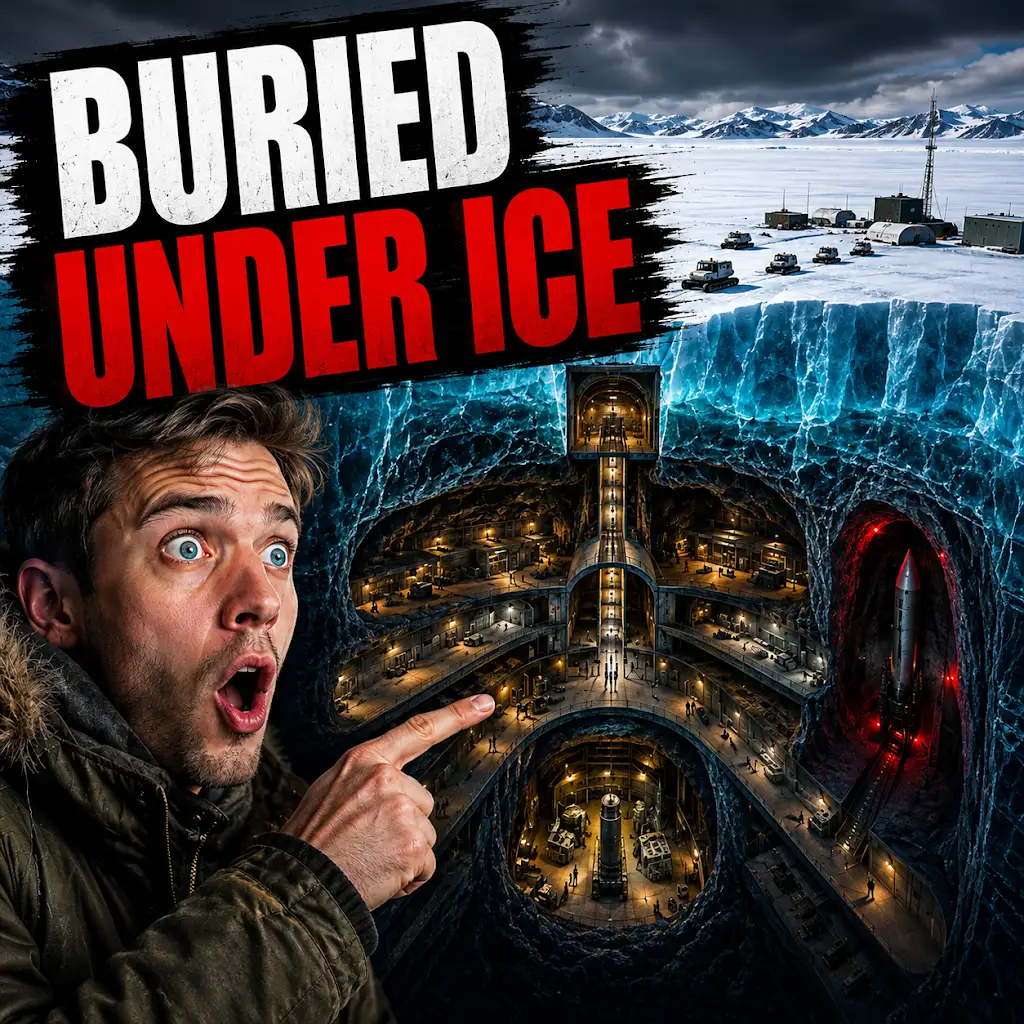
The U.S. Built a Nuclear City Under Greenland. The Ice Won.
FAQs
1. What is Camp Century?
Camp Century was a military base built under the ice in Greenland during the Cold War. It was constructed by the United States Army Corps of Engineers in 1959 as part of a secret project known as “Project Iceworm.”
2. How was Camp Century built under the ice?
Camp Century was built by drilling trenches into the ice and then covering them with arched roofs. The base was powered by a nuclear reactor and included living quarters, a hospital, a chapel, and a theater.
3. What was the purpose of Camp Century?
The primary purpose of Camp Century was to provide a strategic location for the deployment of ballistic missiles. It was also intended to serve as a research facility for studying the feasibility of deploying nuclear missiles in the Arctic.
4. What led to the abandonment of Camp Century?
Camp Century was abandoned in 1967 due to the unstable nature of the ice sheet. The project was also deemed impractical and the environmental impact of the nuclear reactor was a concern.
5. What is the current status of Camp Century?
Camp Century has been abandoned and is now buried under layers of ice and snow. However, the base has gained attention in recent years due to concerns about the environmental impact of the nuclear waste left behind.