The colossal ice sheet of Greenland, a frozen titan holding more freshwater than any other ice mass on Earth, is not a static entity. It is a dynamic, flowing landscape, an ever-shifting behemoth shaped by immense gravitational forces and subtle climatic shifts. For engineers and scientists alike, understanding and interacting with this colossal, moving ice presents a unique and formidable set of challenges, none more starkly illustrated than by the tale of Camp Century. This abandoned Cold War-era military installation, buried deep beneath the Greenland ice, serves as a poignant testament to the engineering prowess required to operate within a glacial environment, and the inherent difficulties posed by ice that refuses to remain still.
The Greenland Ice Sheet, second only in size to Antarctica’s, is not simply a vast frozen plain. It is a river of ice, flowing inexorably towards the sea. This movement, though often imperceptible on human timescales, is a constant force that dictates the very feasibility of any human endeavor built upon its surface or within its depths. Understanding this glacial flow is paramount to any engineering project, as failure to account for it can lead to catastrophic consequences.
The Mechanics of Glacial Motion
Basal Sliding: The Slippery Foundation
One of the primary drivers of glacial movement is basal sliding. This occurs when meltwater forms at the base of the ice sheet, lubricating the interface between the ice and the bedrock. This layer of water acts like ball bearings, allowing the immense mass of ice to slide more easily over the underlying terrain. The presence and distribution of this meltwater are influenced by geothermal heat from the Earth’s interior, as well as friction generated by the ice’s movement itself. For Camp Century, this meant that even though it was buried beneath hundreds of meters of ice, the foundation it rested upon was not entirely stable. The sheer weight of the ice exerted immense pressure, and any basal melt could potentially lead to a slow, insidious creep of the surrounding ice, subtly altering the geometry and stability of the buried structures.
Internal Deformation: The Creep Within
Even in the absence of significant basal sliding, ice itself deforms under pressure. The immense weight of the ice sheet causes the ice crystals to rearrange and flow over time, a process akin to a very slow-moving fluid. This internal deformation is governed by the rheological properties of ice, which are influenced by temperature and pressure. Denser, warmer ice flows more readily than colder, less dense ice. As ice flows towards the coast, it often thins and accelerates, creating complex stress patterns within the ice mass. Camp Century’s engineers would have had to contend with the slow, continuous squeezing and deforming of the ice around the buried facilities, a process that would exert constant pressure on walls, tunnels, and infrastructure.
Surface and Subsurface Ice Dynamics
The Impact of Snow Accumulation and Compaction
The surface of the Greenland Ice Sheet is constantly replenished by snowfall. Over time, this accumulated snow is compressed under its own weight, transforming into firn and eventually dense glacial ice. This process of densification is crucial for understanding how the ice sheet grows and how its thickness changes. For a facility like Camp Century, the rate of snowfall and subsequent compaction directly influenced how quickly the buried structures would be enveloped by ice. The initial construction phase might have been relatively straightforward, but the relentless accumulation of snow and the ongoing transformation into ice meant that the camp was destined to be slowly, but surely, engulfed. This presented a long-term engineering challenge, requiring robust construction that could withstand the ever-increasing pressure and the potential for ice to intrude into previously open spaces.
The Influence of Crevasses and Seracs
Glacial movement is not always a smooth, uniform process. The stresses within the ice can lead to the formation of crevasses – deep fissures that can extend hundreds of meters into the ice – and seracs – unstable blocks of ice formed by the widening and collapse of crevasses. These features are dynamic and can appear or disappear with little warning, posing significant hazards to surface operations and even impacting subsurface environments through their fracturing and potential to channel meltwater. While Camp Century was buried deep below the surface, the existence of these features above could indirectly affect the ice sheet’s overall stability and contribute to unpredictable shifts in the ice’s flow.
The engineering challenges associated with Greenland’s melting ice and the Camp Century project highlight the urgent need for innovative solutions in the face of climate change. As researchers continue to study the implications of ice loss on global sea levels, the importance of securing technological infrastructure becomes increasingly apparent. For a deeper understanding of how we can protect vital assets like commercial satellites from cyber threats, you can read more in this related article: Securing Commercial Satellites: Defending Against Cyber Attacks.
Constructing Beneath an Icy Canopy: The Camp Century Paradox
Camp Century, established in 1959, was conceived as a discreet military research facility and a demonstration of the United States’ technological capabilities in the Arctic. The audacious plan was to build a “city under the ice,” a seemingly permanent installation that would be shielded from the harsh Arctic environment by hundreds of meters of ice. However, this vision, while technologically impressive for its time, was inherently at odds with the dynamic nature of its chosen home.
The Pre-Fabricated Approach: A Modular Solution
To overcome the challenges of constructing in situ within the ice, engineers opted for a modular, pre-fabricated approach. Large, prefabricated sections of the camp were transported to Greenland and then maneuvered into place within trenches excavated into the ice. These sections were then covered with ice and snow, effectively burying the camp and creating an insulating layer. This method allowed for a relatively rapid construction process, but it also meant that the camp’s structure was dependent on the integrity of the ice surrounding it.
Managing Water and Heat: A Constant Battle
One of the most significant engineering hurdles was managing the heat generated by the camp’s operations and the constant presence of meltwater. The camp generated considerable heat from its power plant, living quarters, and research equipment. This heat, coupled with the natural geothermal heat from the Earth, created localized melting at the ice-ice interface. Engineers had to implement sophisticated drainage systems to remove this meltwater and prevent it from accumulating around the camp’s foundations, which could have led to instability. Furthermore, maintaining a stable temperature within the camp while surrounded by a sub-zero environment required robust insulation and heating systems.
The Threat of Ice Movement on Buried Structures
The core paradox of Camp Century lay in its attempt to create a static structure within a dynamic environment. Even though buried deep, the slow but persistent movement of the ice sheet exerted immense pressure on the camp’s infrastructure. The prefabricated modules, designed to be robust, were nonetheless subject to deformation and stress as the ice flowed around them. The tunnels connecting different parts of the camp, excavated into the ice, were particularly vulnerable to closure and distortion as the surrounding ice compressed and crept. This constant, subtle pressure was a silent engineer of the camp’s eventual demise.
The Unforeseen Consequences of Subglacial Engineering
The challenges of building and maintaining Camp Century were not solely about immediate construction. The long-term implications of creating a significant human presence beneath the ice, and the subsequent environmental changes, proved to be far more complex and enduring than initially anticipated.
Ice Deformation and Structural Integrity
The sheer weight of the ice, combined with its slow deformation, meant that Camp Century was under constant compressive stress. Over time, this pressure began to warp and distort the camp’s structures. Tunnels that were initially wide enough to walk through started to narrow, and walls began to bulge inward. Engineers attempted to mitigate these effects through regular maintenance and the use of reinforced structures, but the relentless pressure of the ice proved to be an unstoppable force. The very ice that was meant to protect the camp was slowly, inexorably, crushing it.
Water Management and Ice Melt: A Growing Concern
The heat generated by the camp, coupled with the natural geothermal gradient, led to increased ice melt around the facility. This meltwater, if not effectively managed, could pool and exert hydrostatic pressure on the camp’s foundations, further exacerbating the problem of ice movement. While initial drainage systems were implemented, the long-term accumulation of meltwater and the potential for its interaction with the surrounding ice created a growing concern for the camp’s structural integrity. The dynamic nature of the subglacial environment meant that water management was not a one-time fix but an ongoing, complex challenge.
The Accumulation of Snow and Ice: A Slow Burial
The most visible and inevitable consequence of building Camp Century was its progressive burial. As snow accumulated on the surface and compacted into ice, the camp was pushed deeper and deeper beneath the glacial canopy. What began as a facility partially exposed at the surface, accessible via ramps and tunnels, was eventually completely submerged. This constant deepening of the ice cover increased the pressure on the camp and made access more difficult, further complicating maintenance and repair efforts. It was a slow, relentless process of nature reclaiming its dominion.
The Legacy of a Buried Camp: Lessons in Glacial Engineering
While Camp Century was ultimately abandoned in 1967 due to structural concerns and the escalating costs of maintenance, its story offers invaluable lessons for future endeavors in glacial environments. The challenges faced by its engineers highlight the inherent difficulties of working with ice and underscore the need for a deep understanding of glaciological processes.
The Importance of Long-Term Glaciological Monitoring
The rapid onset of structural degradation at Camp Century served as a stark reminder that glacial ice is not a static medium. Future projects in similar environments must incorporate extensive and long-term glaciological monitoring to accurately assess ice movement, melt rates, and stress patterns. This data is crucial for designing structures that can withstand the dynamic forces at play and for predicting the long-term stability of any installation.
Redefining “Permanent” in a Changing Arctic
The concept of a “permanent” structure in a glacial environment needs to be fundamentally re-evaluated. The rapid changes occurring in the Arctic, driven by climate change, are only exacerbating the challenges of glacial movement. Engineers must consider the potential for accelerating ice flow and increased melt rates when planning any infrastructure. This might involve designing for obsolescence, modularity, and ease of deconstruction rather than a perpetual presence.
The Environmental Implications of Subglacial Activities
The story of Camp Century also raises important environmental considerations. The heat generated by the camp and the potential for leakage of fuel and waste into the ice raise concerns about the long-term impact on the subglacial environment. As humanity’s presence in the Arctic increases, rigorous environmental impact assessments and the development of sustainable technologies are paramount to minimize any detrimental effects on these sensitive ecosystems.
Recent discussions about Greenland’s shifting ice have brought attention to the engineering marvel known as Camp Century, a secret U.S. military base established in the 1950s. This facility, built beneath the ice, was intended for scientific research and military purposes, but its existence raises questions about the long-term impacts of climate change on infrastructure. For those interested in exploring the broader implications of such historical sites, a related article can be found at this link, which delves into uncovering ancient secrets and the lessons they hold for our future.
The Future of Engineering in a Melting World
| Metrics | Data |
|---|---|
| Year of Establishment | 1959 |
| Location | Greenland |
| Purpose | Studying ice sheet dynamics |
| Engineering Challenges | Dealing with moving ice and extreme weather conditions |
| Abandonment | 1967 |
Camp Century stands as a monument to human ingenuity and a cautionary tale of underestimating the power of nature. As the Earth warms, Greenland’s ice sheet is undergoing significant changes, with accelerating melt rates and shifts in ice flow. This presents both new challenges and new opportunities for engineers.
Adapting to Accelerating Ice Melt
The increased meltwater at the base of the ice sheet, driven by rising temperatures, is likely to accelerate glacial flow. This means that structures designed to withstand a certain rate of ice movement may find themselves vulnerable to much faster and more unpredictable shifts. Engineers will need to develop innovative solutions for monitoring and mitigating the effects of this accelerated flow.
The Rise of New Technologies and Approaches
The challenges of working in extreme cold and dynamic ice environments are driving the development of new technologies. These include advanced materials with enhanced resilience to extreme temperatures and pressure, novel methods for subsurface exploration and construction that minimize environmental impact, and sophisticated modeling techniques to predict glacial behavior with greater accuracy. Robotics and artificial intelligence will likely play an increasingly important role in remote monitoring and maintenance.
The Ethical Imperative of Sustainable Arctic Development
As the Arctic becomes more accessible and valuable for its resources, the ethical imperative to engage in sustainable development becomes ever more critical. The lessons learned from projects like Camp Century, coupled with a growing understanding of the interconnectedness of Earth’s systems, demand a responsible and forward-thinking approach to engineering in this fragile region. The goal must be to harness the potential of the Arctic while preserving its unique ecological and scientific value for future generations. The ghost of Camp Century, buried deep beneath the ice, continues to whisper its warnings and its wisdom, urging us to approach the moving ice of Greenland with both respect and a profound sense of responsibility.
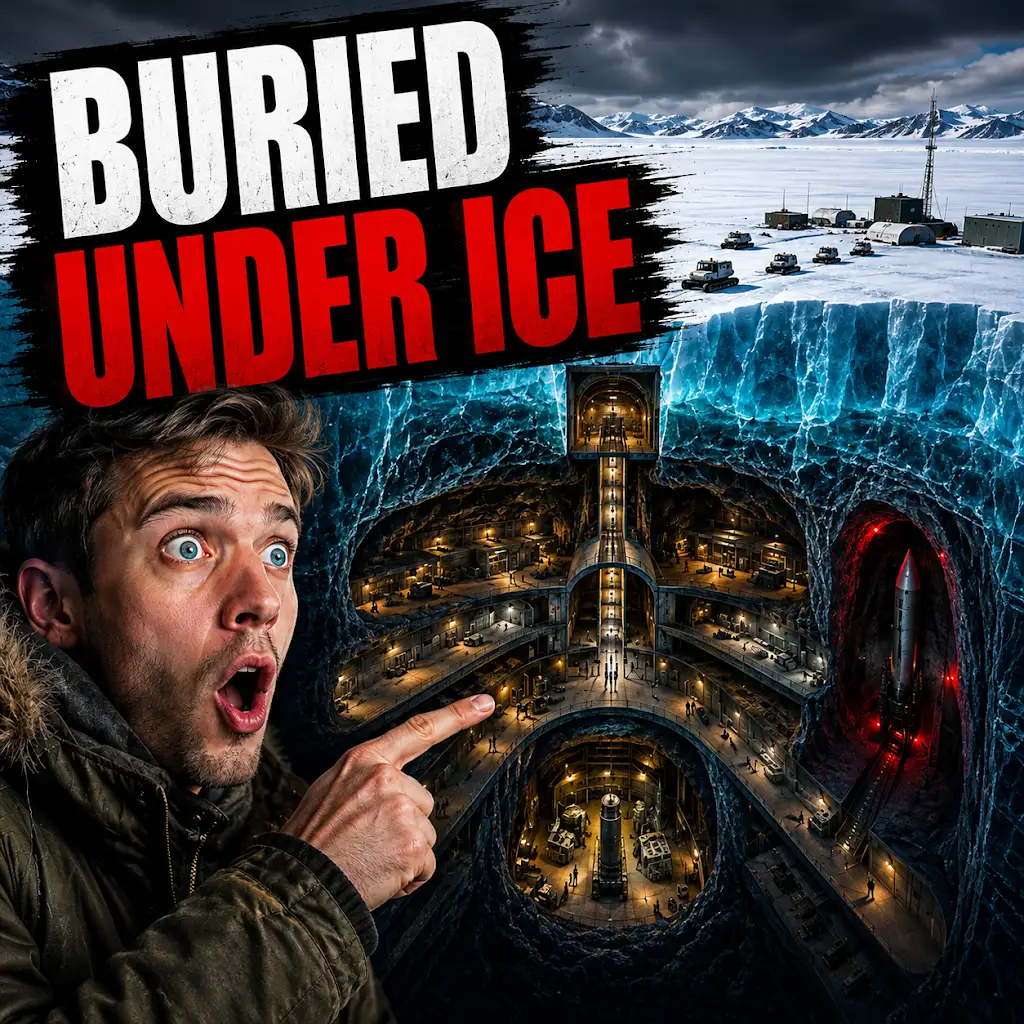
The U.S. Built a Nuclear City Under Greenland. The Ice Won.
FAQs
What is Camp Century in Greenland?
Camp Century was a military base built by the United States in Greenland in 1959 as part of a secret Cold War project known as “Project Iceworm.” It was intended to be a network of mobile nuclear missile launch sites under the ice sheet.
How is the ice in Greenland moving?
The ice in Greenland is constantly moving due to a combination of factors such as gravity, the weight of the ice itself, and the flow of meltwater. This movement can cause ice to flow from the interior of the ice sheet towards the coast.
What engineering challenges are associated with Camp Century in Greenland?
The engineering challenges associated with Camp Century in Greenland include the movement of the ice sheet, which can destabilize structures and infrastructure built on or within the ice. Additionally, the extreme cold and harsh environmental conditions present challenges for construction and maintenance.
What is the current status of Camp Century in Greenland?
Camp Century was abandoned in 1967, and the U.S. military removed the nuclear reactor and other hazardous materials. However, the camp’s infrastructure and waste were left behind, buried under the ice. The camp has since been the subject of environmental and political concerns.
What are the potential environmental impacts of Camp Century in Greenland?
The potential environmental impacts of Camp Century in Greenland include the release of pollutants and hazardous materials as the ice sheet melts and the infrastructure is exposed. This could have implications for local ecosystems and water quality in the region. Additionally, there are concerns about the long-term effects of climate change on the stability of the ice sheet and the potential release of pollutants.