
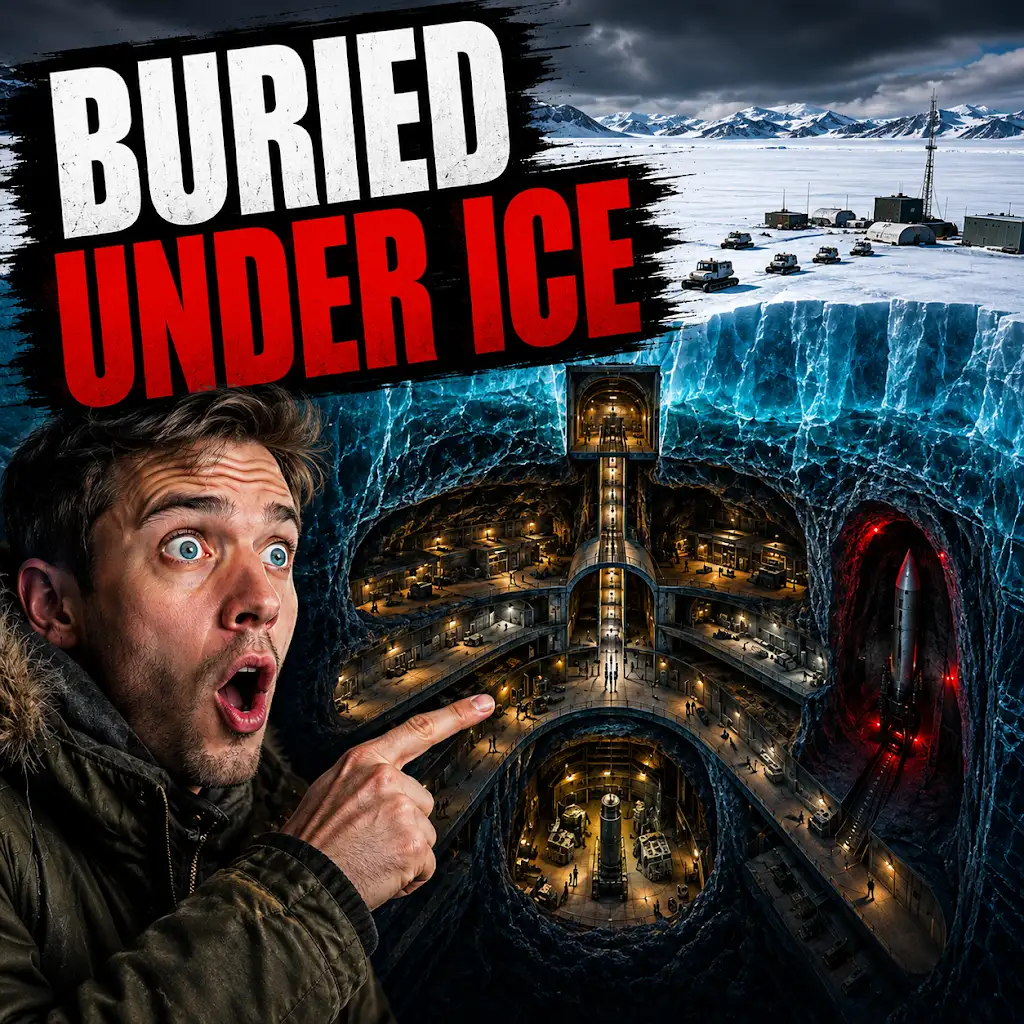
The windswept, frozen expanse of Greenland held a secret buried deep beneath its ice: a vast, ambitious, and ultimately unrealized military project that aimed to house a network of nuclear missiles within tunnels carved through the permanent frost. Known as Project Iceworm, this audacious undertaking was a testament to Cold War paranoia and technological ingenuity, a ghostly echo of a conflict that threatened to engulf the world. While its operational goals were never achieved, the story of Project Iceworm offers a fascinating glimpse into the strategic thinking, the engineering challenges, and the sheer scale of ambition that characterized the era.
The roots of Project Iceworm can be traced back to the height of the Cold War, a period defined by an escalating arms race and a constant search for strategic advantage. The United States, acutely aware of the Soviet Union’s growing missile capabilities, sought ways to secure its retaliatory strike force against a potential Soviet first strike. Traditional missile silos, while hardened, were still considered vulnerable to a direct nuclear attack. The idea of dispersing these weapons and concealing them within a mobile, unseen platform began to take shape.
The Dawn of Mobile Missile Systems
The concept of mobile missile launchers was not entirely new. Early efforts focused on truck-mounted and rail-mounted systems that offered some degree of concealment and mobility. However, these still operated on the surface, making them susceptible to detection and attack. The truly revolutionary aspect of Project Iceworm was the proposal to embed these mobile launchers within a vast, subterranean network.
Strategic Imperatives in a Nuclear Age
The primary strategic imperative driving Project Iceworm was the need for survivability. In the event of a nuclear exchange, the United States aimed to ensure that a significant portion of its Intercontinental Ballistic Missile (ICBM) arsenal could survive a Soviet pre-emptive strike and be launched in retaliation. This concept of “second-strike capability” was crucial for maintaining a delicate nuclear balance and deterring aggression.
The Threat of Soviet ICBMs
Soviet advancements in ICBM technology, particularly their development of large, powerful warheads and accurate delivery systems, presented a significant threat to existing American missile defenses. The fear was that a concentrated attack on US missile fields could cripple its retaliatory power.
The Concept of Mobility and Concealment
Project Iceworm aimed to overcome this vulnerability by making the missile launch sites themselves mobile and hidden. By excavating tunnels within the Greenland ice sheet, the missiles would be situated in a location difficult for the Soviets to target effectively and, more importantly, would be able to move within the ice, making pinpointing their exact location at any given time nearly impossible.
Early Explorations and Feasibility Studies
Before committing to such a monumental undertaking, extensive feasibility studies and exploratory missions were conducted. These initial phases were critical in assessing the viability of constructing and operating such a complex system in the harsh Greenland environment.
Geological Surveys and Ice Sheet Analysis
Understanding the properties of the Greenland ice sheet was paramount. Teams of geologists and glaciologists were dispatched to analyze ice thickness, density, stability, and the potential for ice movement. This data was essential for determining suitable locations for tunnel construction and predicting the long-term structural integrity of the proposed network.
Technological Innovations in Tunneling
The challenges of excavating through solid ice on such a massive scale necessitated significant technological innovation. Traditional tunneling methods were ill-suited to the extreme cold and the unique properties of ice. Engineers had to develop specialized equipment and techniques for drilling, excavating, and maintaining stable tunnels in this alien environment.
The Project Iceworm missile tunnel network, a covert operation during the Cold War, aimed to establish a series of underground facilities in Greenland to house nuclear missiles. This ambitious project highlights the lengths to which military strategists would go to secure a strategic advantage. For a deeper exploration of hidden technologies and secret military projects, you can read more in the article titled “Unearthed: The Lost Tech They Hid” available at this link.
The Grand Design: A Network Beneath the Ice
The vision for Project Iceworm was breathtaking in its ambition. It envisioned a vast network of interconnected tunnels, stretching for hundreds of miles beneath the Greenland ice sheet, capable of housing and transporting a fleet of nuclear missiles. This subterranean city would be a self-sustaining military installation, designed to operate independently for extended periods.
The Mobile Launcher System
At the heart of Project Iceworm was the concept of the mobile missile launcher. These were not static silos but rather large, self-propelled vehicles that could carry ICBMs through the network of tunnels. The idea was that these launchers would move on a regular basis, making it incredibly difficult for Soviet reconnaissance to pinpoint their location.
The “Agitator” Vehicle
The primary vehicle envisioned for transporting the missiles was a massive, tracked vehicle dubbed the “Agitator.” This colossal machine would be capable of carrying an ICBM and its associated launch equipment, as well as personnel and supplies. Its design had to account for the immense weight, the low temperatures, and the need for reliable propulsion within the icy tunnels.
Automated Launch and Redeployment
The system was designed to be highly automated. Missiles could be launched directly from within the tunnels, or the launchers could emerge at pre-determined points on the surface for launch. The mobility of the launchers also meant that they could be redeployed to different tunnel sections, further enhancing their survivability and operational flexibility.
The Tunnel Network: An Arctic Labyrinth
The proposed tunnel network was the most ambitious aspect of Project Iceworm. It was intended to be a sprawling labyrinth, miles beneath the surface, connecting various launch areas, support facilities, and living quarters. The scale of excavation required was unprecedented.
Tunnel Dimensions and Excavation Techniques
The tunnels were designed to be large enough to accommodate the mobile launchers and their support systems. Standard tunnel dimensions were estimated to be around 30 feet high and 30 feet wide. The excavation process would involve specialized drilling equipment capable of cutting through thousands of feet of ice, followed by the use of explosives and ice-melting techniques to clear the debris.
Environmental Control and Stability
Maintaining a stable and habitable environment within the tunnels was a significant engineering challenge. The extreme cold would require extensive insulation and heating systems. Furthermore, the movement of the ice sheet itself posed a threat to the structural integrity of the tunnels, necessitating constant monitoring and reinforcement.
Support Infrastructure and Habitability
Beyond the missile infrastructure, Project Iceworm envisioned a comprehensive support network to sustain the personnel and operations within the subterranean base. This included living quarters, power generation, waste disposal, and communication systems.
Power Generation and Life Support
The remote location and subterranean nature of the base demanded self-sufficient power generation. Nuclear reactors were considered as a primary source of power, providing the necessary energy for heating, lighting, and the operation of all systems. Advanced life support systems would be crucial for maintaining breathable air and providing a safe environment for the crews.
Communication and Command and Control
Establishing reliable communication channels within the tunnels and back to strategic command centers was a critical requirement. The thickness of the ice presented a barrier to conventional radio communication, necessitating the development of specialized systems, possibly involving buried antennas or fiber optic cables.
The Engineering Herculean Task

The sheer scale and unique environment of Project Iceworm presented a series of unprecedented engineering challenges. Overcoming these obstacles required ingenuity, innovation, and a deep understanding of glaciology and extreme environment engineering.
The Ice Sheet as a Construction Medium
Working with ice as a primary construction material was unlike anything undertaken before. The dynamic nature of the ice sheet, with its constant movement, accumulation, and melting cycles, posed significant structural and logistical hurdles.
Glacial Dynamics and Tunnel Stability
The movement of the Greenland ice sheet, though slow, is a constant force. Engineers had to develop methods to predict and mitigate the impact of this movement on the stability of the tunnels. This involved understanding ice flow patterns and designing structures that could accommodate or resist these forces.
Extreme Cold and Material Science
The sub-zero temperatures presented significant challenges for materials and equipment. Metals become brittle, lubricants freeze, and human exposure is severely limited. Specialized materials and operating procedures were required to ensure the functionality and longevity of all components.
Specialized Equipment and Techniques
The development of specialized equipment was a cornerstone of Project Iceworm’s engineering efforts. Conventional construction machinery was often ill-suited to the icy environment.
Ice-Cutting and Excavation Machinery
The creation of the tunnels required the development of innovative ice-cutting and excavation machinery. This included powerful drills designed to penetrate deep into the ice and specialized vehicles for removing the excavated ice. Some concepts involved using heated equipment or sonic drilling techniques.
Tunnel Lining and Reinforcement
To ensure the long-term stability of the tunnels, robust lining and reinforcement systems were necessary. This would likely have involved a combination of concrete, steel, and specialized insulation materials to protect against ice movement and maintain a stable internal environment.
Addressing Logistics and Environmental Challenges
The remote location of Greenland and the harsh environment presented formidable logistical and environmental challenges. Supplying a massive underground construction project in such a setting required meticulous planning and innovative solutions.
Transportation of Materials and Personnel
The transportation of enormous quantities of materials, equipment, and personnel to the remote construction sites was a major undertaking. This would have involved specialized ice-capable vehicles, aircraft, and potentially even custom-built icebreakers.
Waste Management and Environmental Impact
The environmental impact of such a large-scale project in a pristine arctic environment was also a consideration. Developing effective waste management systems and minimizing disruption to the fragile ecosystem were crucial aspects of the planning.
The Inevitable Demise: A Project Frozen in Time

Despite the immense effort and resources poured into Project Iceworm, the project was ultimately doomed to failure, not by Soviet intervention, but by the inherent limitations of the environment and the shifting geopolitical landscape.
The Shifting Nature of the Ice
The most significant factor in Project Iceworm’s demise was the realization that the Greenland ice sheet was not as static as initially assumed. Glaciologists began to gather more data indicating that ice movement and deformation were more dynamic and unpredictable than anticipated, posing a constant threat to the long-term stability of the tunnel network.
Ice Movement and Tunnel Deformation
Ongoing studies revealed that the ice sheet was subject to significant internal stresses and flow patterns. This movement could cause the tunnels to buckle, deform, or even collapse over time, making it an unreliable foundation for a permanent military installation.
Subsurface Melting and Instability
The possibility of subsurface melting, due to geothermal heat or other factors, also raised concerns about the long-term stability of the ice tunnels. This could lead to water accumulation and further compromise the structural integrity of the network.
The Escalating Costs and Shifting Priorities
The immense financial and logistical demands of Project Iceworm, coupled with evolving strategic thinking, ultimately led to its cancellation. The project was proving to be far more expensive and complex than initially estimated.
Budgetary Overruns and Resource Allocation
The sheer scale of the undertaking meant that costs were spiraling out of control. The allocation of vast resources to Project Iceworm also meant that other military programs were being sidelined, leading to internal debates about prioritization.
Evolving Strategic Doctrine and Missile Technology
As the Cold War evolved, so too did strategic doctrine and missile technology. The development of more accurate and reliable missile systems, including submarine-launched ballistic missiles (SLBMs), offered alternative and potentially more effective means of ensuring second-strike capability. The perceived need for a massive, static, subterranean missile network began to diminish.
The Rise of the Submarine Deterrent
The increasing effectiveness and stealth of the US Navy’s submarine-launched ballistic missile (SLBM) fleet provided a more flexible and survivable deterrent. Submarines, by their very nature, are mobile and difficult to track, offering a significant advantage in terms of survivability without the need for the massive infrastructure of Project Iceworm.
The Advantages of Naval Mobility
The inherent mobility and stealth of submarines offered a compelling alternative to fixed, albeit mobile, subterranean missile sites. They could operate from vast ocean expanses, making them a much harder target for a pre-emptive strike.
Reduced Infrastructure and Operational Costs
The operational costs and infrastructure requirements for an SLBM fleet were significantly lower than those for Project Iceworm. This made the submarine deterrent a more economically viable and strategically sound option.
The Project Iceworm missile tunnel network, a fascinating yet secretive Cold War initiative, has drawn attention not only for its military significance but also for its implications on Arctic exploration and infrastructure. In exploring the broader context of survival and resource management during this period, one can find intriguing parallels in the article about food rationing during wartime. This piece delves into how societies adapted to scarcity, much like the strategic considerations behind the Iceworm project. To learn more about this aspect of history, you can read the article on food rationing here.
Legacy of a Frozen Dream
| Location | Greenland |
|---|---|
| Length of tunnels | approx. 4,000 miles |
| Number of missile launch sites | up to 600 |
| Construction period | 1959-1967 |
| Purpose | Strategic missile deployment during the Cold War |
While Project Iceworm never achieved its operational objectives and was ultimately abandoned, its story remains a fascinating testament to the Cold War’s shadow and the lengths to which nations would go in pursuit of strategic advantage. The remnants of the project, though buried beneath the ice, serve as a silent monument to a bygone era of intense global tension.
The Scientific Legacy of the Ice Core Project
Ironically, the extensive drilling and exploration undertaken for Project Iceworm yielded valuable scientific data about the Greenland ice sheet. The ice cores extracted provided a rich historical record of Earth’s climate, contributing significantly to our understanding of past environmental changes and informing modern climate science.
Climate Reconstruction and Paleoclimatology
The ice cores provided invaluable information about past atmospheric composition, temperature fluctuations, and volcanic activity. This data has been instrumental in reconstructing Earth’s climate history and improving our models of future climate change.
Glaciological Research and Ice Sheet Dynamics
The studies conducted as part of Project Iceworm advanced the field of glaciology, providing crucial insights into ice sheet dynamics, melt rates, and the impact of climate on polar regions.
The Echoes in Modern Military Thought
While the specific concept of a missile tunnel network may seem like a relic of the past, the underlying principles of survivability, mobility, and concealment continue to inform modern military thinking. The constant pursuit of hardened and mobile strategic assets remains a core tenet of defense planning.
The Enduring Quest for Survivability
The fundamental goal of ensuring retaliatory capability against a first strike remains a constant in military strategy. The lessons learned from projects like Iceworm, even in their failure, contribute to the ongoing development of more resilient and survivable weapon systems.
The Evolution of Concealment and Deception
The emphasis on concealing military assets and deceiving potential adversaries is a timeless aspect of warfare. The innovative approaches explored in Project Iceworm, while not directly replicated, inform the broader understanding of how to achieve strategic surprise and maintain operational security.
A Cautionary Tale of Ambition and Environment
Project Iceworm serves as a potent reminder of the limits of human ambition when confronted with the overwhelming power and unpredictability of nature. It underscores the importance of thorough environmental assessment and a realistic understanding of the challenges posed by extreme environments. The frozen dream beneath Greenland’s ice is a testament to human ingenuity, but also a stark reminder of the forces that can ultimately dictate the success or failure of even the most ambitious endeavors. The story of Project Iceworm, a network that never saw a single missile launched, continues to intrigue and inform, a frozen chapter in the complex narrative of the Cold War.
The U.S. Built a Nuclear City Under Greenland. The Ice Won.
FAQs
What was Project Iceworm?
Project Iceworm was a top-secret United States Army program during the Cold War to build a network of mobile nuclear missile launch sites under the Greenland ice sheet.
When did Project Iceworm take place?
Project Iceworm was initiated in 1959 and was active until 1967 when it was abandoned due to technical difficulties and environmental concerns.
What was the purpose of the missile tunnel network?
The purpose of the missile tunnel network was to provide a hidden and mobile platform for launching nuclear missiles, allowing the United States to maintain a strategic advantage during the Cold War.
Why was the project ultimately abandoned?
Project Iceworm was abandoned due to the unstable and shifting nature of the ice sheet, which posed significant engineering challenges and made the project unfeasible. Additionally, concerns about the environmental impact of the project also contributed to its abandonment.
What is the legacy of Project Iceworm?
The legacy of Project Iceworm includes the environmental impact of the abandoned military infrastructure, as well as the historical significance of the project as a symbol of Cold War military strategy and the challenges of operating in extreme environments.