
Camp Century, a testament to human ambition and a stark reminder of environmental change, lies buried beneath Greenland’s ice sheet. This former U.S. Army base, established in the late 1950s, was initially conceived as a strategic military outpost, a “city under the ice” capable of housing hundreds of personnel and housing nuclear missiles. However, its true enduring legacy is not military, but environmental. Camp Century has become an invaluable archive, a frozen repository of centuries of climate data, and a silent witness to the accelerating impact of human-induced climate change on one of Earth’s most sensitive regions.
Cold War Ambitions and a Technological Marvel
The mid-20th century was a period of intense geopolitical tension, and the Cold War fueled a race for technological supremacy and strategic advantage. Within this context, the U.S. Army conceived of Camp Century as a bold experiment, a demonstration of engineering prowess in one of the planet’s most unforgiving environments. The idea was to build a semi-permanent military installation capable of operating year-round, insulated from the harsh Arctic weather and, crucially, hidden beneath the vast expanse of the Greenland ice sheet. The project, officially designated as Project Iceworm, aimed to explore the feasibility of constructing and maintaining facilities within the ice itself.
Engineering Under Pressure: Building in a Dynamic Environment
The engineering challenges were immense. The chosen location, approximately 150 miles inland from the northwest coast of Greenland, was a seemingly stable, albeit perpetually frozen, wilderness. However, the ice sheet is not a static entity; it is a dynamic, flowing mass. The initial construction involved excavating a vast network of tunnels and chambers within the ice. These were then lined with prefabricated structures, creating a habitable environment that, at its peak, could house over 200 personnel. Power was generated by a small nuclear reactor, a testament to the era’s faith in atomic energy. The concept was revolutionary, envisioning a future where military operations could be conducted from beneath the frozen surface, offering a degree of secrecy and protection. The sheer scale of the endeavor, carving out a functional city within a glacier, represented a remarkable feat of human ingenuity and perseverance.
Camp Century, a former U.S. military base in Greenland, has left a complex environmental legacy that continues to spark discussions about climate change and military activities in fragile ecosystems. The base, established during the Cold War, was designed for research and strategic purposes but has since raised concerns regarding the potential release of stored contaminants as the Arctic warms. For a deeper understanding of historical military operations and their implications, you can explore the related article on the Piri Reis map and its analysis in the context of U.S. military studies at this link.
Unforeseen Discoveries: A Frozen Scientific Goldmine
From Military Outpost to Scientific Hub
While the primary objective of Camp Century was military, the unique environment in which it was situated soon became apparent as a treasure trove for scientific research. The very act of drilling through the ice to establish the base yielded unexpected insights. As scientists and engineers worked, they encountered layers of ice that contained invaluable historical data. These frozen strata represented a chronological record of the Greenland ice sheet, capturing atmospheric conditions, dust particles, and even biological remnants from past millennia. The military’s operational needs inadvertently paved the way for a crucial scientific endeavor.
Cores of Climate History: Unlocking the Past
The most significant scientific contribution of Camp Century came through the analysis of ice cores extracted during its operation. These cylindrical samples, drilled deep into the ice sheet, provided an unprecedented window into Earth’s climate history. Each layer within the ice core represented a specific year or season, preserving a detailed record of atmospheric composition, temperature fluctuations, and precipitation patterns stretching back tens of thousands, and in some cases, hundreds of thousands of years. By analyzing the trapped air bubbles and chemical isotopes within these cores, scientists could reconstruct past climates with remarkable accuracy, offering invaluable context for understanding present-day climate change. This data became foundational for paleoclimatology, revolutionizing our understanding of natural climate variability and the long-term cycles that shape our planet.
The Shadow of Climate Change: An Accelerating Threat
The Ice Sheet’s Shifting Demeanor: Evidence of Warming
As Camp Century continued to operate, and subsequent scientific investigations were conducted in its vicinity, a concerning trend began to emerge. The very ice that provided the base’s foundation was not as stable as initially believed. The engineers who built Camp Century assumed a relatively stable ice sheet, but this assumption proved to be flawed in the face of a warming planet. The accumulation of scientific data, both from Camp Century itself and from ongoing monitoring of the Greenland ice sheet, revealed a disturbing reality: the ice was melting at an accelerated rate. This was not merely a cyclical fluctuation; it was a significant departure from historical patterns.
The Pace of Melting: A Global Indicator
The accelerated melting of the Greenland ice sheet, as evidenced by the dynamic behavior of the ice surrounding Camp Century and its eventual abandonment, serves as a critical bellwether for global climate change. The sheer volume of ice lost from Greenland has direct implications for global sea levels. Scientists have observed that the ice sheet is losing mass at an increasing rate, contributing significantly to rising sea levels worldwide. This phenomenon is driven by rising global temperatures, which are causing both surface melt and increased ice flow into the ocean. The insights gleaned from Camp Century’s existence and eventual fate underscore the urgency of addressing greenhouse gas emissions and mitigating the impacts of a warming planet.
Camp Century’s Fading Footprint: Environmental Concerns
The Legacy of Abandonment: A Growing Concern
The abandonment of Camp Century in the early 1970s was driven by the realization that the ice sheet was not a static platform but a dynamic, moving entity. The tunnels and structures, once buried deep, began to buckle and deform as the ice flowed. The realization that the base was not sustainable and posed a potential environmental risk emerged as the ice continued its inexorable movement. However, the problem of abandonment was not a clean one. The base was left behind, with its infrastructure, including its nuclear reactor, buried beneath the ice.
The Contamination Threat: A Ticking Time Bomb
The most significant environmental concern associated with Camp Century today is the potential for contamination as the ice melts. The base was constructed with various materials, including chemicals, fuels, and potentially radioactive waste from the nuclear reactor. As the ice sheet continues to melt at an accelerating rate, these buried materials are being exposed and could eventually be released into the surrounding environment. This presents a significant long-term risk to Greenland’s pristine ecosystems and potentially to downstream water sources. The prospect of toxic substances leaching into the Arctic environment, a region already highly sensitive to pollution, is a grave concern for scientists and environmentalists alike.
Camp Century, a former U.S. military base in Greenland, has left a complex environmental legacy that continues to raise concerns about the impact of human activity on fragile ecosystems. The melting ice in the region has revealed not only remnants of the camp but also the potential for toxic waste that could affect local wildlife and communities. For a broader understanding of how geographical changes can influence environmental issues, you might find this article on why world maps change to be insightful, as it explores the dynamic nature of our planet and the implications of such transformations.
Preserving the Past, Protecting the Future: Addressing the Challenge
| Environmental Impact | Details |
|---|---|
| Ice Melt | Due to climate change, the ice cap covering Camp Century is melting, potentially releasing pollutants and waste. |
| Potential Pollution | There is concern that pollutants and waste left at Camp Century could be released into the environment as the ice melts. |
| Radioactive Waste | The camp’s nuclear reactor and other radioactive waste pose a long-term environmental threat if not properly managed. |
| International Concern | The environmental legacy of Camp Century is an international concern, as it could impact the surrounding ecosystems and communities. |
The Call for Remediation: A Complex Undertaking
The potential environmental hazards posed by Camp Century have spurred calls for remediation. However, the logistical and technical challenges of undertaking such a project are immense. The base is buried deep beneath a moving ice sheet, making excavation and cleanup a daunting and expensive endeavor. Furthermore, the remote location and harsh Arctic conditions add further complexity. Any remediation efforts would need to be carefully planned and executed to avoid causing further environmental damage.
The Importance of Monitoring: Understanding the Ice’s Evolution
In the absence of immediate comprehensive remediation, ongoing monitoring of Camp Century and its surrounding environment is crucial. Scientists are actively tracking the melting of the ice sheet and observing any signs of contamination. This monitoring provides vital data to inform future decision-making regarding remediation strategies and to better understand the long-term impacts of climate change on buried infrastructure. The fate of Camp Century serves as a constant reminder of the need for diligent environmental stewardship and the far-reaching consequences of our actions, even those from decades past. The story of Camp Century is far from over; it continues to evolve as a powerful symbol of the complex interplay between human endeavors and the dynamic forces of our planet’s climate.
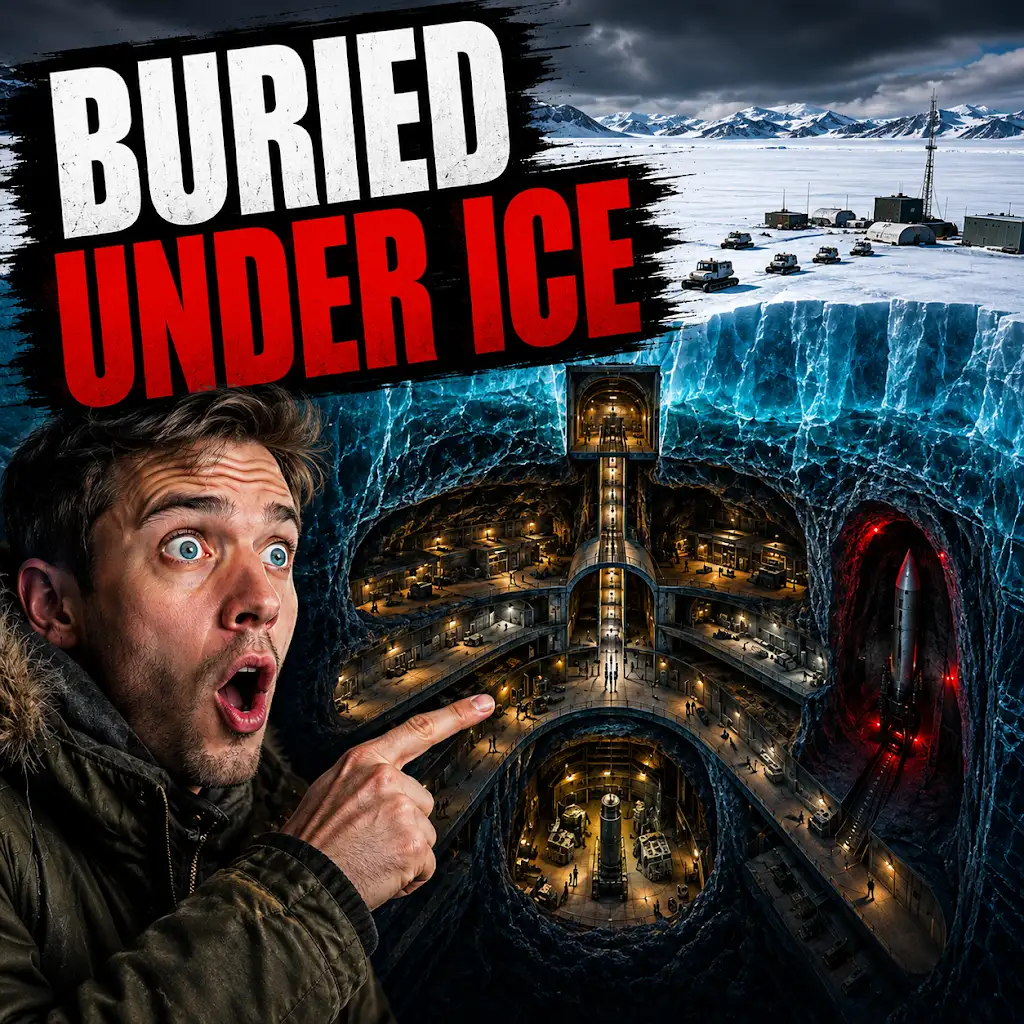
The U.S. Built a Nuclear City Under Greenland. The Ice Won.
FAQs
What is Camp Century in Greenland?
Camp Century was a military base built by the United States in Greenland in 1959 as part of a secret Cold War project. It was intended to house nuclear missiles and was also used for scientific research.
What is the environmental legacy of Camp Century?
The environmental legacy of Camp Century is significant. The base was powered by a nuclear reactor, and it is estimated that there are large amounts of nuclear waste and other pollutants left behind, including diesel fuel, sewage, and other hazardous materials.
What are the concerns about the environmental impact of Camp Century?
The concerns about the environmental impact of Camp Century include the potential release of radioactive material and other pollutants into the surrounding environment, as well as the impact on local wildlife and ecosystems.
What is being done to address the environmental legacy of Camp Century?
Efforts are being made to address the environmental legacy of Camp Century, including monitoring the site for potential leaks of radioactive material and other pollutants, as well as exploring options for cleaning up the site and mitigating its impact on the environment.
What are the implications for the future of Camp Century and its environmental legacy?
The implications for the future of Camp Century and its environmental legacy are still being determined. It is a complex and challenging issue that will require ongoing attention and resources to address effectively.