NASA Radar Reveals Secrets of Greenland’s Camp Century
Deep beneath the frozen surface of Greenland, a forgotten Cold War-era military outpost, Camp Century, lay buried for decades. Once a testament to human ambition and technological prowess, it was a secret city carved into the ice, intended as a forward operating base for potential nuclear missile deployment. However, nature’s slow but relentless power ultimately reclaimed the site, entombing it under a growing shroud of ice. Now, thanks to the sophisticated eyes of NASA’s radar technology, scientists are peeling back the layers of time and ice to uncover the hidden stories of this extraordinary place. This revelation is not just an archaeological curiosity; it offers invaluable insights into Greenland’s past and future climate, the dynamics of its ice sheet, and the long-term impact of human presence in extreme environments.
Genesis of a Secret Project
The story of Camp Century begins in the heart of the Cold War, a period of intense geopolitical tension and an escalating arms race between the United States and the Soviet Union. The strategic importance of Greenland, with its proximity to both continents, was recognized early on. In 1951, Greenland became a protectorate of the United States through a treaty with Denmark, granting the U.S. extensive military and strategic rights. This paved the way for a series of military installations across the island, designed to monitor Soviet activity and project American influence. Camp Century, however, was envisioned as something far grander than a mere listening post.
A City Beneath the Ice
The concept for Camp Century was audacious: an underground military base, not built on, but within, the Greenland ice sheet. The rationale was twofold: to shield the base from potential enemy attack and to leverage the natural insulating properties of the ice. Construction began in 1959, and the project was a marvel of engineering for its time. A network of tunnels and chambers was excavated, forming a sprawling complex that housed barracks, a hospital, a mess hall, a laundromat, a movie theater, and even a reactor – the first nuclear reactor ever deployed in the Arctic. The base was designed to be self-sufficient, capable of sustaining hundreds of personnel for extended periods. It was a testament to human ingenuity, a seemingly permanent human presence carved into an environment that had remained largely untouched for millennia.
The Promise and Peril of the Arctic
Camp Century represented more than just military strategy; it was also a scientific endeavor. The extreme environment offered a unique laboratory for studying the Arctic climate, glaciology, and the effects of prolonged cold on human physiology and technology. Researchers used the base to conduct vital scientific investigations, drilling ice cores that would later prove crucial for understanding Earth’s climate history. The presence of the “Sputnik” reactor, which provided power and heat, was also a demonstration of advanced nuclear technology in a challenging setting. Yet, beneath the surface of progress and scientific curiosity, the inherent fragility of the ice sheet and the unforgiving nature of the Arctic environment harbored a growing threat.
NASA’s radar technology has provided groundbreaking insights into the ice dynamics of Greenland, particularly at Camp Century, a former U.S. military base that has become a focal point for climate research. The data collected from this site reveals critical information about the melting ice sheets and their potential impact on global sea levels. For more in-depth information on this topic, you can read a related article at this link.
The Invisible Threat: Ice Dynamics and Environmental Change
The Ice Sheet’s Unceasing Movement
The Greenland ice sheet is not a static block of ice. It is a dynamic, ever-changing entity, constantly flowing under its own immense weight. Camp Century was established in a location that was perceived to be stable, a region of relatively slow ice flow. However, the ice sheet’s movement is influenced by numerous factors, including temperature, snowfall, and underlying topography. Over time, these subtle but persistent forces began to exert pressure on the structures buried beneath. The tunnels and modules of Camp Century, initially designed to withstand immense loads, found themselves in a slow-motion embrace with the encroaching ice.
Recent studies utilizing NASA radar technology have provided fascinating insights into Greenland’s Camp Century, revealing the complex dynamics of ice sheets and their implications for global sea levels. For those interested in understanding broader economic impacts, including potential consequences of climate change on financial systems, a related article explores predictions about the impending collapse of the US dollar. You can read more about this intriguing topic by visiting this article.
Compacting and Deforming Ice
As snow accumulated above the base and compacted into ice over the years
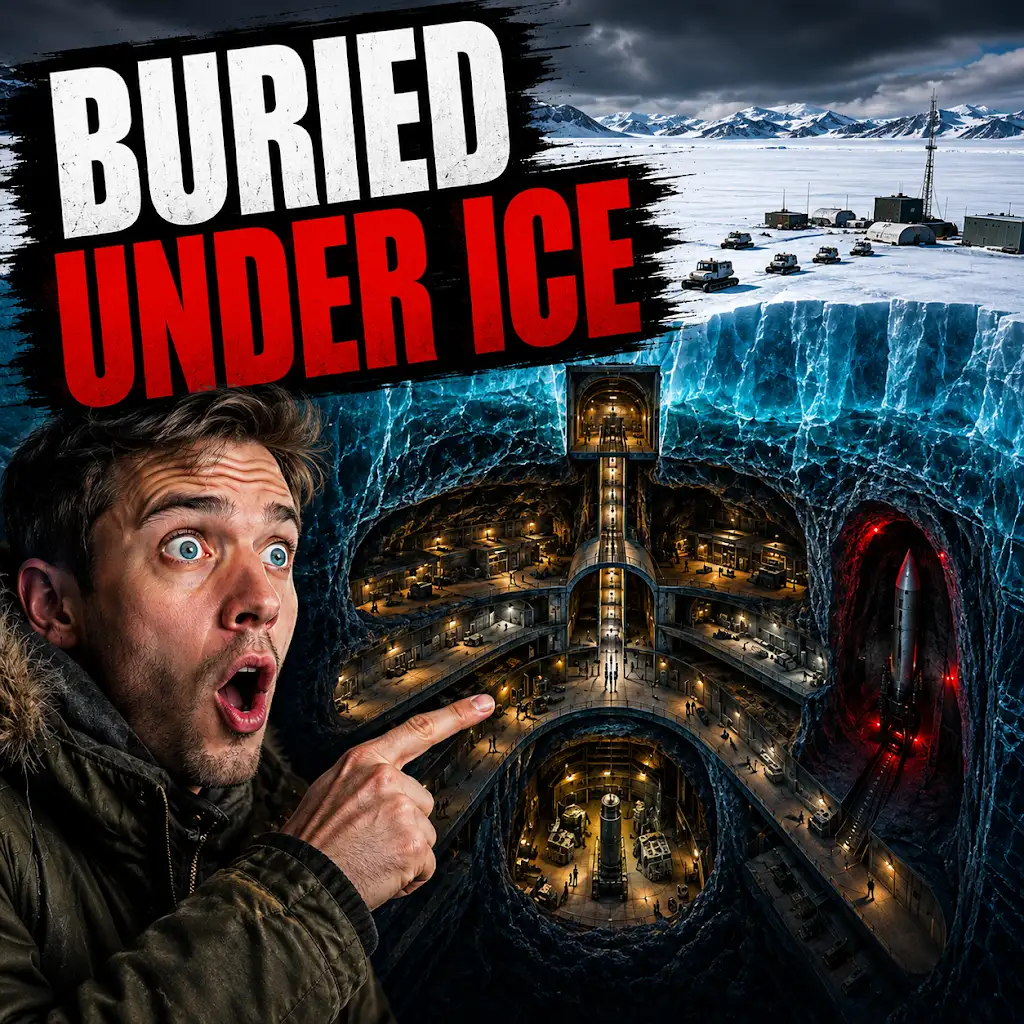
The U.S. Built a Nuclear City Under Greenland. The Ice Won.
FAQs
What is NASA’s radar Greenland Camp Century?
NASA’s radar Greenland Camp Century is a project that uses radar technology to study the ice sheet in Greenland. The project aims to understand the dynamics of the ice sheet and how it is changing over time.
Why is NASA studying the ice sheet in Greenland?
NASA is studying the ice sheet in Greenland to better understand the impact of climate change on the region. The melting of the ice sheet in Greenland has significant implications for global sea level rise, and studying it can provide valuable insights into the Earth’s changing climate.
How does NASA’s radar technology work in studying the ice sheet?
NASA’s radar technology uses airborne instruments to penetrate the ice and gather data about its thickness, internal structure, and how it is responding to environmental changes. This data helps scientists to create detailed maps of the ice sheet and monitor its changes over time.
What are the potential benefits of NASA’s research on the Greenland ice sheet?
The research on the Greenland ice sheet can provide valuable information for understanding the impacts of climate change on the region and its potential consequences for global sea level rise. This information can help policymakers and communities make informed decisions about adaptation and mitigation strategies.
How does NASA collaborate with other organizations in studying the Greenland ice sheet?
NASA collaborates with other organizations, such as the National Science Foundation and the University of Kansas, to conduct research on the Greenland ice sheet. These collaborations allow for the sharing of resources, expertise, and data, which can enhance the overall understanding of the ice sheet and its changes.