
For over 170 years, the fate of Sir John Franklin and his crew remained one of history’s most enduring mysteries. The ill-fated 1845 expedition, tasked with finding the Northwest Passage, vanished without a trace in the Arctic. Numerous searches and investigations yielded fragments of information, but the identity of many of the lost sailors, and indeed the precise circumstances of their demise, remained shrouded in the unforgiving ice. This silence has finally begun to break, however, thanks to groundbreaking advancements in DNA analysis, which have allowed modern science to whisper the names of some of the forgotten souls and shed new light on their tragic final chapter.
The Enduring Enigma of the Franklin Expedition
The Royal Navy’s search for the Northwest Passage, a legendary sea route connecting the Atlantic and Pacific oceans through the Arctic, was a persistent ambition of the British Empire. Sir John Franklin, a seasoned Arctic explorer with two previous voyages to the region, was given command of HMS Erebus and HMS Terror for this ambitious undertaking. The expedition, comprising 129 officers and men, set sail from England in May 1845, full of hope and equipped with the latest technology of the era. They carried enough provisions for three years, and their ships were reinforced with iron plating to withstand the crushing ice.
The initial reports were optimistic. The expedition successfully navigated through Baffin Bay and was last seen by whalers off the coast of Greenland in July 1845. After that, silence descended. As months turned into years with no word, concern grew, eventually igniting a series of increasingly desperate and expensive search expeditions funded by the Admiralty and private individuals. These searches, themselves fraught with peril, yielded the first tantalizing clues: abandoned camps, personal belongings, and skeletal remains discovered on King William Island and the surrounding Arctic archipelago. However, the sheer scale of the Arctic, the fragmented nature of the evidence, and the limited scientific tools available at the time made definitive identification of the individuals and the construction of a coherent narrative of their fate exceptionally challenging. The prevailing theories at the time, often based on Inuit testimony and the recovered artifacts, spoke of starvation, scurvy, and eventual cannibalism, a grim testament to the extreme conditions the men endured.
Early Theories and Conflicting Accounts
The earliest clues to the expedition’s fate emerged in the mid-19th century. In 1850, the first significant discovery was made by the Canadian explorer John Rae, who found a small group of Inuit on King William Island who spoke of seeing Europeans and a large number of dead men on the island’s western coast. Rae’s subsequent investigation uncovered skeletal remains and several items belonging to the Franklin expedition. His reports, though initially met with skepticism by some in Britain, painted a grim picture of a desperate struggle for survival.
Further searches, notably by Captain Leopold McClintock in 1859, recovered the famous Victory Point Note. This document, written in pencil and dated April 25, 1848, provided a crucial, albeit incomplete, account of the expedition’s dire straits. It revealed that both HMS Erebus and HMS Terror were trapped in the ice, that many men had died, and that the survivors intended to march south to the Back River. The note, however, offered no names of those who penned it, leaving the individual identities of the majority of the lost crew still a profound mystery.
The Role of Inuit Testimony
Invaluable though the written records and physical artifacts were, the oral traditions of the Inuit people played a pivotal role in guiding early searches and shaping understanding of the expedition’s fate. Inuit hunters and trappers were the first to encounter the remnants of the Franklin expedition and provided crucial information about the location of graves, abandoned camps, and the tragic circumstances surrounding the sailors’ deaths. Their accounts, often passed down through generations, spoke of desperate individuals struggling across the ice, succumbing to starvation and disease, and in some cases, resorting to cannibalism. While some of these testimonies were initially dismissed or misinterpreted by European investigators, later research has increasingly recognized their accuracy and importance. These accounts provided a vital human dimension to the tragedy, revealing the suffering and resilience of the lost mariners through the eyes of those who lived in and understood the harsh Arctic environment.
Recent advancements in DNA analysis have led to the identification of crew members from the ill-fated Franklin Expedition, a significant event in Arctic exploration history. This breakthrough not only sheds light on the fates of the crew but also highlights the potential of modern technology in uncovering historical mysteries. For more insights into how technology is revolutionizing our understanding of the past, you can read the related article here: Revolutionizing Technology: Advancements Beyond Modern.
The Dawn of DNA Analysis in Arctic Archaeology
The 20th century brought with it a revolution in scientific technology, and archaeology, like many other fields, benefited immensely. The ability to extract and analyze DNA from ancient remains opened up unprecedented possibilities for identifying individuals, tracing lineages, and understanding human migration patterns. For the Franklin expedition, this meant the potential to move beyond speculative identification based on recovered possessions and to provide irrefutable evidence of who these lost men were.
The early attempts to utilize DNA analysis on human remains were often hampered by the degradation of genetic material in the extreme Arctic environment. Centuries of exposure to cold, moisture, and thawing cycles can severely damage DNA, making extraction and sequencing a challenging endeavor. However, with advancements in forensic science and molecular biology, the ability to recover and analyze even highly degraded DNA has improved dramatically. This progress, coupled with a growing understanding of best practices for preserving and extracting ancient DNA, paved the way for the scientific re-examination of the Franklin expedition’s remains.
Challenges of Ancient DNA Extraction
Extracting viable DNA from ancient human remains presents a formidable task. The primary challenge lies in the degradation of the genetic material over time. DNA is a relatively fragile molecule, susceptible to breakdown by environmental factors such as ultraviolet radiation, chemical reactions, and enzymatic activity. In the Arctic, prolonged exposure to extreme cold, thawing and refreezing cycles, and the presence of microbial contaminants can all contribute to fragmentation and alteration of the DNA.
Furthermore, the excavation and handling of ancient human remains must be meticulously conducted to avoid contamination from modern DNA. Even a small amount of DNA from a researcher or technician can overwhelm the ancient signal, rendering the analysis inconclusive. Specialized cleanroom environments and stringent protocols are essential to minimize this risk. The small sample sizes that can often be obtained from fragmented remains also pose a significant challenge, requiring highly sensitive amplification techniques to generate enough DNA for sequencing.
The Power of Mitochondrial and Nuclear DNA
Understanding the different types of DNA and their applications is crucial for identifying individuals from historical remains. Mitochondrial DNA (mtDNA), found in the mitochondria of cells, is particularly useful for ancient DNA analysis. It is present in multiple copies per cell and is inherited maternally, meaning it can be traced through the maternal lineage. This makes it more resilient to degradation than nuclear DNA and provides a valuable tool for identifying individuals and their relatives.
Nuclear DNA, on the other hand, is found in the nucleus of cells and contains the vast majority of an individual’s genetic information. It is inherited from both parents and provides a more detailed picture of an individual’s identity, including sex and familial relationships. While more susceptible to degradation, advancements in techniques like Next-Generation Sequencing (NGS) have made it possible to recover and analyze even fragmented nuclear DNA, offering the potential for definitive identification and the reconstruction of family trees.
Project “Discovery” and the Scientific Breakthrough
The formal scientific investigation into the Franklin expedition utilizing modern DNA analysis gained significant momentum with initiatives like Project “Discovery,” a multi-disciplinary endeavor that brought together archaeologists, forensic anthropologists, geneticists, and historians. This project aimed to systematically re-examine existing artifacts and remains, as well as to investigate new discoveries, with the explicit goal of identifying the lost crew members.
The initial focus was on skeletal remains that had been recovered over the decades and were held in various museum collections. These remains, often fragmented and weathered by time, were subjected to rigorous scientific protocols for DNA extraction and analysis. The process involved meticulous cleaning of the bones to remove surface contaminants, followed by drilling small samples for DNA extraction. The recovered DNA was then amplified and sequenced using state-of-the-art technology.
The Role of Forensic Anthropology
Forensic anthropology played a crucial role in the initial stages of identifying the Franklin expedition remains. Before any DNA analysis could be performed, physical anthropologists were tasked with examining the skeletal material to determine basic characteristics such as age, sex, and stature. They also looked for evidence of trauma, disease, and any anomalies that might help in associating the remains with specific individuals or groups.
The condition of the bones, often fragmented and damaged by ice and animal activity, presented a significant challenge. However, skilled forensic anthropologists were able to piece together skeletal fragments, estimate body proportions, and identify features indicative of the historical period and the likely cause of death. This foundational work was essential for prioritizing which remains were most likely to yield valuable genetic information and for contextualizing the subsequent DNA findings.
DNA Sequencing and Analysis of Remains
The process of DNA sequencing and analysis for the Franklin expedition remains was a complex and painstaking undertaking. Once DNA was successfully extracted from the bone samples, it was subjected to a battery of tests. Mitochondrial DNA sequencing was often the first step, providing a powerful tool for tracing maternal lineages and for initial comparisons with known family lines. This allowed researchers to identify potential matches with living descendants of the expedition members.
Simultaneously, efforts were made to recover and analyze nuclear DNA. This involved using advanced techniques like shotgun sequencing, which randomly fragments the entire genome and then sequences these fragments. Sophisticated bioinformatics tools were then used to reassemble these fragments and identify specific genetic markers. The aim was not only to identify individuals but also to determine their sex, genetic ancestry, and to establish relationships between different sets of remains found at various sites.
Unveiling Identities: The Identification of Key Individuals
The application of DNA analysis to the remains associated with the Franklin expedition began to yield remarkable results, finally putting names to some of the ghostly figures from the past. The breakthrough came with the analysis of skeletal remains found at sites linked to the expedition’s final desperate days.
One of the most significant identifications was that of John Pope, a 20-year-old ordinary seaman from HMS Erebus. Remains discovered on King William Island, initially attributed to a younger man of unknown rank, were subjected to DNA analysis. By comparing the genetic material from these remains with that of a living descendant of Pope’s family, researchers were able to confirm his identity with a high degree of certainty. This marked the first definitive identification of a Franklin expedition crew member through DNA analysis, a monumental achievement that opened the floodgates for further discoveries.
John Pope: The First Confirmed Identity
The identification of John Pope was a pivotal moment in the re-examination of the Franklin expedition. The remains in question, recovered from a shallow grave on King William Island, had been the subject of speculation for years. Forensic examination indicated the individual was young and of relatively low stature. The crucial step was the successful extraction of DNA from these ancient bones.
Once the DNA was isolated, it was compared to samples from living descendants of John Pope. The meticulous process of genetic matching, focusing on both mitochondrial and nuclear DNA, provided irrefutable evidence of a familial link. This confirmation not only identified John Pope but also validated the power and accuracy of DNA analysis in solving historical mysteries. It demonstrated that even after more than a century and a half in the harsh Arctic environment, the genetic legacy of these lost mariners could still be uncovered.
Identifying Other Crew Members: A Growing List
Following the groundbreaking identification of John Pope, the scientific community redoubled its efforts, applying the same rigorous DNA analysis techniques to other recovered remains. This led to the identification of several other crew members, each discovery adding another piece to the complex puzzle of the expedition’s demise.
Among those identified through DNA analysis were individuals like John Wall, a midshipman aboard HMS Terror, and Thomas Blenkinsop, a stoker from HMS Erebus. The process involved careful examination of artifacts found with the remains, as well as detailed comparisons of DNA profiles with living relatives. The success in identifying these individuals underscored the growing understanding of how to extract and analyze ancient DNA from challenging Arctic samples. Each new identification brought a sense of closure for descendants and enriched our understanding of the human cost of the pursuit of the Northwest Passage.
Recent advancements in genetic research have shed light on the long-lost crew of the Franklin Expedition, with scientists successfully identifying remains through DNA analysis. This groundbreaking discovery not only provides closure for the descendants of the crew members but also enhances our understanding of this tragic chapter in Arctic exploration. For those interested in historical mysteries, a fascinating article explores the enigmatic Piri Reis map and its connection to ancient maritime navigation. You can read more about it in this insightful piece on uncovering the source documents of the Piri Reis map.
Implications and Future Directions
The successful identification of Franklin expedition crew members through DNA analysis has far-reaching implications, not only for historical understanding but also for scientific advancement and our relationship with the past. It has provided definitive answers to long-standing questions and opened new avenues for research.
The genetic profiles obtained from the identified crew members can provide valuable insights into the health, diet, and origins of the men who embarked on the expedition. This information can contribute to a more nuanced understanding of the factors that may have contributed to their demise, such as genetic predispositions to certain diseases or dietary deficiencies. Furthermore, the success of these investigations has inspired similar efforts to identify other lost explorers and individuals from historical periods.
Reconstructing Family Trees and Ancestry
The identification of individuals through DNA analysis has a profound impact on reconstructing family trees and understanding ancestral lines. For the descendants of the Franklin expedition crew, these discoveries offer a tangible connection to their ancestors and a sense of closure to a long-standing family mystery. Genetic data allows for the tracing of maternal and paternal lineages, enabling the creation of detailed genealogical charts and the understanding of how these families have dispersed and evolved over generations.
This process is not only about satisfying curiosity; it can also provide valuable information about historical migration patterns and the genetic makeup of populations in different regions. The ability to link individuals from the 19th century to their living descendants creates a bridge across time, enriching our understanding of human history and the interconnectedness of generations.
The Future of Arctic Exploration and DNA Forensics
The success in identifying the Franklin expedition crew members serves as a powerful testament to the evolving capabilities of DNA forensics, particularly in challenging archaeological contexts. The techniques and methodologies honed during these investigations are now being applied to other historical mysteries and archaeological sites around the globe. The ability to extract and analyze degraded DNA from even the most challenging environments is opening up new frontiers in human history research.
Looking ahead, the ongoing exploration of the Arctic continues to reveal new artifacts and potential remains associated with the Franklin expedition. The application of advanced DNA analysis techniques will undoubtedly play a crucial role in identifying any further individuals discovered and in piecing together the complete narrative of this tragic voyage. Furthermore, the ethical considerations surrounding the exhumation, analysis, and reburial of ancient remains will continue to be paramount, ensuring that scientific endeavors are conducted with respect for the deceased and their descendants. The silent Arctic, once a keeper of secrets, is slowly yielding its stories, thanks to the persistent efforts of scientists and the enduring power of human curiosity.
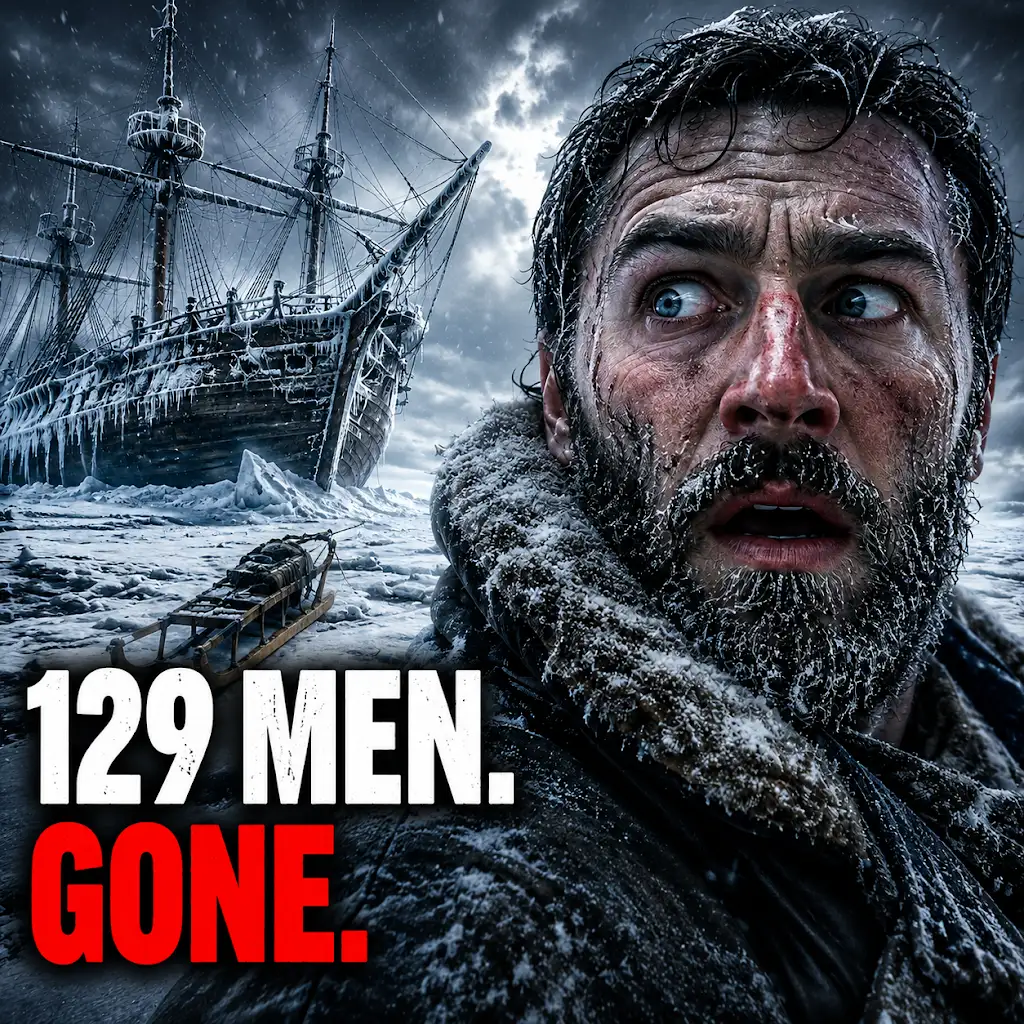
129 Men Vanished in the Arctic. Then We Found Their Ships.
FAQs
What is the Franklin Expedition?
The Franklin Expedition was a British voyage led by Captain Sir John Franklin in 1845 to find the Northwest Passage. The expedition’s two ships, HMS Erebus and HMS Terror, became trapped in ice and the entire crew perished.
How were the crew members identified?
The crew members were identified using DNA analysis of remains found on King William Island in the Canadian Arctic. The analysis was conducted on bone and teeth samples to match the DNA with living descendants of the crew members.
Why is the identification of the crew members significant?
The identification of the crew members is significant because it provides closure to the families of the lost sailors and sheds light on the fate of the Franklin Expedition. It also contributes to our understanding of the historical event and the challenges faced by explorers in the Arctic.
What were the findings of the DNA analysis?
The DNA analysis confirmed the identities of three crew members: Warrant Officer John Gregory, Able Seaman John Hartnell, and Royal Marine William Braine. The analysis also revealed that some crew members had Inuit ancestry, indicating interactions between the Franklin Expedition and the local Inuit population.
What are the implications of this discovery?
The discovery of the Franklin Expedition crew members has sparked renewed interest in the story of the ill-fated voyage and has the potential to uncover more details about the expedition’s final days. It also highlights the importance of DNA analysis in historical research and the potential for further discoveries in the Arctic region.