
The Arctic, a vast and unforgiving expanse of ice and snow, has long held secrets that have challenged humanity’s resolve and ignited its curiosity. Among the most enduring and poignant of these mysteries is the fate of the Franklin Expedition, a British naval enterprise that set sail in 1845 with the ambitious goal of discovering the Northwest Passage. The two ships, HMS Erebus and HMS Terror, laden with men and supplies, vanished without a trace, leaving behind a chilling enigma that continues to captivate and perplex historians, archaeologists, and the public alike. The story of their disappearance is not merely a tale of a failed expedition; it is a testament to the brutal power of nature, the courage of exploration, and the enduring human desire to uncover the unknown, even at the ultimate cost.
A Maritime Dream Becomes an Obsession
For centuries, European powers had dreamt of a navigable sea route through the Arctic to Asia, a shortcut that would revolutionize trade and global power. This elusive Northwest Passage, a series of waterways connecting the Atlantic and Pacific Oceans, was the maritime equivalent of the philosopher’s stone – a legendary prize that promised immense wealth and prestige. Numerous expeditions had attempted to chart this passage, often with tragic consequences. Yet, the allure of success, the potential for national glory, and the insatiable human drive for discovery kept the dream alive. By the mid-19th century, the Northwest Passage remained one of the last great uncharted frontiers of the world.
Sir John Franklin: A Leader Chosen for His Experience
Sir John Franklin, a seasoned naval officer with extensive experience in Arctic exploration, was chosen to lead this pivotal expedition. He had already participated in several Arctic voyages, including those of Sir John Ross and Sir William Parry, and had even served as governor of Tasmania. Despite being in his late 50s when he embarked on this final mission, Franklin was seen as an experienced and capable commander, possessing the leadership qualities deemed necessary to navigate the treacherous Arctic waters and overcome the formidable challenges that lay ahead. His appointment was met with widespread approval, and the nation eagerly anticipated news of his success.
The H.M.S. Erebus and H.M.S. Terror: Ships of Hope
The two ships chosen for the expedition, HMS Erebus and HMS Terror, were stout vessels, well-equipped and modified for Arctic service. They had previously been used in Antarctic exploration, demonstrating their resilience in icy conditions. These ships were outfitted with the latest technology of the era, including steam engines for auxiliary propulsion, a significant innovation that offered the potential to overcome the challenges of ice and wind. They carried provisions for three years, a vast library, and scientific instruments for charting, meteorology, and other observations. The hope was that these advanced vessels, combined with the experience of their commander and crew, would finally conquer the Northwest Passage.
The mystery surrounding the lost crew of the Franklin Expedition continues to captivate historians and adventurers alike, as new discoveries shed light on the challenges they faced in the Arctic. For those interested in the intersection of history and technology, a related article explores how advanced technology has been utilized to uncover the secrets of lost civilizations, offering insights that could parallel the search for the Franklin Expedition’s crew. You can read more about these ancient innovations in the article found here: Advanced Tech in Lost Civilizations: Uncovering Ancient Innovations.
The Disappearance: A Vanishing Act in the Frozen North
Last Known Sightings and Communications
The expedition departed from Greenhithe, England, on May 19, 1845, filled with optimism and the blessings of a nation. Sir John Franklin, accompanied by his second-in-command, Captain Francis Crozier, and a crew of 129 officers and men, sailed towards the Arctic. The last confirmed sighting of the expedition was by whalers in Baffin Bay in late July 1845, where they were observed sailing west. After this, radio communication, as we know it, did not exist. The only means of communication were letters carried by supply ships or left at predetermined rendezvous points. The initial period of silence was not immediately alarming, as long voyages in this era often meant extended periods without contact. However, as months turned into years, and no word of the expedition reached England, a growing sense of unease began to pervade.
The Unanswered Silence: Years of Growing Concern
As 1846 passed without any news, followed by 1847, the Royal Navy and the public began to express serious concern. Search expeditions were dispatched, funded by both the Admiralty and Lady Jane Franklin, Sir John’s devoted wife, who relentlessly campaigned for his rescue. These early search parties, however, found no trace of the missing ships. The sheer scale of the Arctic, the vast distances involved, and the extreme environmental conditions made locating a single expedition incredibly difficult. Each passing year amplified the dread and the growing realization that the worst might have occurred. The silence from the Arctic was no longer a sign of a successful, albeit isolated, voyage; it was a deafening testament to the expedition’s fate.
The Crucial Telegram: Early Signs of Trouble
One of the earliest tangible clues, albeit one that wouldn’t be fully understood for some time, came in the form of a telegram received in London in August 1850. This telegram, from Captain Erasmus Ommanney of HMS Enterprise, part of a search expedition, reported the discovery of various items on Beechey Island. Among these were abandoned tents, an ice anchor, and, significantly, three graves. This grim discovery provided the first concrete evidence that something had gone terribly wrong. The presence of graves suggested that the expedition had wintered at Beechey Island and that some members had succumbed to illness or other causes. The initial hope for a triumphant return began to be replaced by the grim reality of loss.
The First Clues: Whispers from the Ice

Beechey Island: A Stark Winter Camp
The discovery on Beechey Island in 1850 was a pivotal moment in the search for the Franklin Expedition. The abandoned campsite, meticulously preserved by the Arctic ice, offered a silent but eloquent narrative of a harsh winter spent in isolation. The remains of tents, a galley hearth, and discarded personal belongings painted a picture of a crew struggling against the elements and the creeping specter of disease. The presence of three graves, marked by simple cairns, provided undeniable proof of mortality. Analysis of the graves revealed the remains of Petty Officer John Torrington, Able Seaman William Braine, and Ordinary Seaman John Good. Their remarkably well-preserved bodies, due to the permafrost, allowed for later scientific examination, offering tantalizing insights into their health and the potential causes of death, which appeared to be related to tuberculosis and scurvy.
Inuk oral traditions: Echoes of a Tragic Encounter
Long before European explorers unearthed physical evidence, the Inuit people of the Canadian Arctic possessed oral traditions that spoke of a large ship trapped in the ice and of starving white men. These stories, initially dismissed or misinterpreted by some explorers, were crucial fragments of the puzzle. For generations, the Inuit had navigated and survived in this challenging environment, and their knowledge of the land and its inhabitants was unparalleled. While their accounts were often relayed through intermediaries and subject to the limitations of translation, they consistently described encounters with starving, desperate Europeans. These whispers from the ice, though difficult to decipher, were among the earliest indicators of the expedition’s catastrophic end.
The 1854 Expedition: Lady Jane’s Relentless Pursuit
Lady Jane Franklin, unwavering in her belief that her husband was alive and determined to discover his fate, funded a significant portion of the search efforts. In 1854, she sponsored Captain John Rae’s overland expedition through the Canadian Arctic. Rae’s journey proved to be tragically illuminating. Traveling across the Boothia Peninsula, he encountered Inuit who provided him with harrowing details of white men cannibalizing their own dead. They showed Rae silverware, buttons, and other artifacts that they had acquired from the remains of the Franklin expedition. This evidence, collected directly from Inuit who had interacted with the survivors, was the most compelling and disturbing confirmation yet of the expedition’s ultimate demise and the desperate measures to which the men had resorted.
The Tragic Narrative: A Descent into Despair

The Fate of the Ships: Trapped and Abandoned
The prevailing theory, supported by a growing body of evidence, suggests that HMS Erebus and HMS Terror became trapped in the ice in the late summer of 1846 in the Victoria Strait, north of King William Island. For years, the ships remained frozen in place, becoming tombs for their crews and silent witnesses to their suffering. The initial hope of breaking free with the spring thaw would have been repeatedly dashed. Eventually, as supplies dwindled and hope faded, the decision was made to abandon the ships. The surviving crew, numbering fewer than the original expedition, would have faced the daunting prospect of a long, arduous trek south across the ice, in search of rescue.
The Death March: The Ultimate Test of Survival
The survivors of the Franklin Expedition, led by Captain Crozier after Franklin’s likely death in 1847, embarked on a desperate march southward in the spring of 1848. This was not an organized retreat but a brutal, life-or-death struggle for survival. Carrying what little they could, and plagued by illness, starvation, and the harsh Arctic environment, the men faced an almost impossible challenge. The Inuit accounts of encountering these starving survivors speak of extreme emaciation, despair, and the grim reality of cannibalism, a desperate act born of unimaginable hunger. The journey across the ice, a vast and unforgiving landscape, would have been a slow, agonizing descent into oblivion.
The Scourge of Scurvy and Lead Poisoning
Modern scientific analysis of the remains has provided further insights into the expedition’s demise. Evidence of scurvy, a disease caused by vitamin C deficiency, was prevalent among the crew. While the ships were well-stocked, the canned food, a relatively new technology at the time, may have been poorly sealed, leading to spoilage and a lack of essential nutrients. Furthermore, studies of the bone and hair samples have indicated high levels of lead poisoning. This contamination likely stemmed from the lead solder used in the tin cans, as well as from lead pipes used in the ships’ water distillation systems. The combination of malnutrition and slow, insidious poisoning would have severely weakened the men, making them more susceptible to disease and less capable of enduring the rigors of Arctic survival.
The mystery surrounding the lost crew of the Franklin Expedition continues to captivate historians and explorers alike, as new discoveries shed light on their tragic fate. For those interested in the broader implications of exploration and survival, a fascinating article discusses the challenges of building and defending a lunar base, drawing parallels to historical expeditions. You can read more about these future challenges in the context of exploration by visiting this link: building and defending the lunar base. This connection highlights how the lessons learned from past adventures can inform our approach to new frontiers.
Unraveling the Enigma: Modern Investigations and Discoveries
| Metrics | Details |
|---|---|
| Total Crew Members | 129 |
| Ships | HMS Erebus, HMS Terror |
| Year of Expedition | 1845 |
| Lost Crew Members | all |
| Search Efforts | Ongoing |
The Underwater Search: Locating the Lost Vessels
The mystery of the Franklin Expedition remained largely unsolved for over a century, fueled by a series of unsuccessful search efforts and the compelling nature of the surviving oral traditions. However, the advent of advanced sonar technology and the dedicated efforts of researchers and institutions like Parks Canada have revolutionized the search. In 2014, a groundbreaking discovery was made: the wreck of HMS Erebus was located in the frigid waters of the Queen Maud Gulf. Two years later, in 2016, HMS Terror was found in similar condition, resting on the seabed in Herald Bay. These underwater discoveries were monumental, offering the first tangible link to the ships that had been lost for so long.
Artifacts of a Lost Era: A Glimpse into Daily Life and Desperation
The exploration of the wrecks has yielded an extraordinary trove of artifacts, providing an unprecedented glimpse into the lives of the Franklin Expedition’s crew and the grim realities of their final days. Submerged for over 170 years, the ships’ interiors have been remarkably preserved by the cold water. Divers have recovered a wide array of objects, from personal effects like combs and buttons to naval equipment, scientific instruments, and even food stores. The discovery of intact cans, carefully arranged personal belongings, and the sheer volume of artifacts has offered invaluable insights into the meticulous preparation of the expedition, the daily routines of the sailors, and the devastating circumstances that led to their demise. Each recovered item tells a story, contributing to the ongoing effort to piece together the final chapters of this tragic saga.
Scientific Analysis: Illuminating the Cause of Death
The scientific examination of the discovered wrecks and the remains of the crew continues to shed light on the specific causes of death. Analysis of the well-preserved bodies and skeletal remains, combined with the study of recovered artifacts and shipboard conditions, allows researchers to draw conclusions about the health, diet, and environmental factors that contributed to the expedition’s failure. The ongoing research incorporates disciplines such as forensic anthropology, toxicology, and historical analysis, aiming to provide a comprehensive understanding of the challenges faced by the crew and the ultimate reasons for their tragic end. The integration of Inuit knowledge with scientific discovery has been paramount, ensuring that the voices and experiences of the Arctic’s indigenous peoples are central to this ongoing quest for truth.
The Enduring Legacy: A Cautionary Tale and a Symbol of Resilience
A Reminder of Nature’s Power
The story of the Franklin Expedition serves as a stark and humbling reminder of the immense power of nature and the limitations of human endeavor when confronted by its raw, unyielding forces. The Arctic, with its unpredictable weather, vast ice fields, and unforgiving terrain, proved to be an insurmountable adversary. The expedition, despite its advanced technology and experienced crew, ultimately succumbed to the brutal realities of this extreme environment. It underscores the importance of respecting the natural world and the need for meticulous planning and adaptability when venturing into uncharted territories.
The Spirit of Exploration: A Continuing Quest
Despite the tragic outcome, the Franklin Expedition remains a powerful symbol of the enduring human spirit of exploration. The courage, determination, and unwavering resolve of Sir John Franklin and his crew, though ultimately leading to their demise, represent the innate human drive to push boundaries, seek knowledge, and venture into the unknown. Their quest for the Northwest Passage, though unfulfilled in their lifetimes, paved the way for future generations of explorers and contributed significantly to our understanding of the Arctic. The mystery itself has spurred continued research and investigation, demonstrating the persistent allure of the unknown.
The Human Element: Courage, Resilience, and Sacrifice
The enduring appeal of the Franklin Expedition lies not only in its geographical mystery but also in its profound human drama. It is a story of ambition, leadership, camaraderie, and ultimately, immense suffering and sacrifice. The accounts of the crew’s resilience in the face of overwhelming odds, their desperate struggle for survival, and the ultimate price they paid continue to resonate deeply. The legacy of the Franklin Expedition is therefore a complex tapestry woven with threads of scientific inquiry, historical investigation, and a poignant testament to the courage and sacrifices made by those who dared to explore the furthest reaches of our planet. The lost crew, though silenced by the ice, continues to speak to us across the centuries, their story an indelible part of human history and a perpetual source of wonder and reflection.
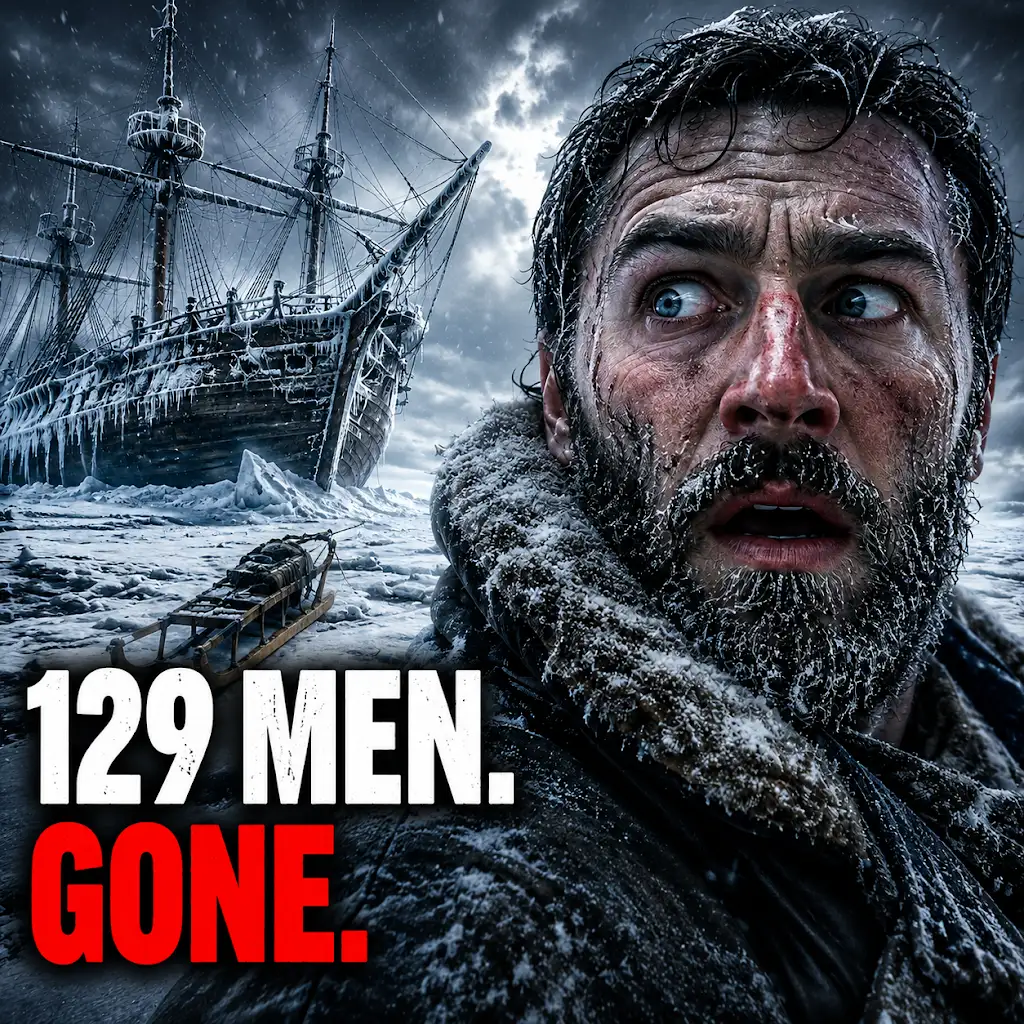
129 Men Vanished in the Arctic. Then We Found Their Ships.
FAQs
What was the Franklin Expedition?
The Franklin Expedition was a British voyage led by Captain Sir John Franklin in 1845 to find the Northwest Passage. The expedition consisted of two ships, HMS Erebus and HMS Terror, and a crew of 129 men.
What happened to the Franklin Expedition?
The fate of the Franklin Expedition remained a mystery for many years. The ships became trapped in ice and the entire crew perished. The exact circumstances of their deaths and the location of the ships remained unknown for decades.
When were the remains of the lost crew discovered?
The remains of the lost crew and the two ships were discovered in recent years. The wreck of HMS Erebus was found in 2014, and the wreck of HMS Terror was found in 2016. The discovery shed light on the final days of the expedition and the fate of the crew.
What caused the demise of the Franklin Expedition crew?
Examinations of the remains and artifacts suggest that the crew succumbed to a combination of factors, including exposure, scurvy, lead poisoning from canned food, and possibly tuberculosis. The harsh Arctic conditions and lack of resources also contributed to their demise.
What is the significance of the Franklin Expedition discovery?
The discovery of the lost crew and their ships has provided valuable insights into the history of Arctic exploration and the challenges faced by early explorers. It has also helped to solve the mystery surrounding the fate of the Franklin Expedition and its crew.